A document is decision-ready when its item, version, unit, boundary, arithmetic and approving owner agree. A polished quotation or report can still leave the next commitment unsupported. Use this library to find the gap before it becomes a purchase order, production release or claim.
Ask what decision this evidence can actually support.
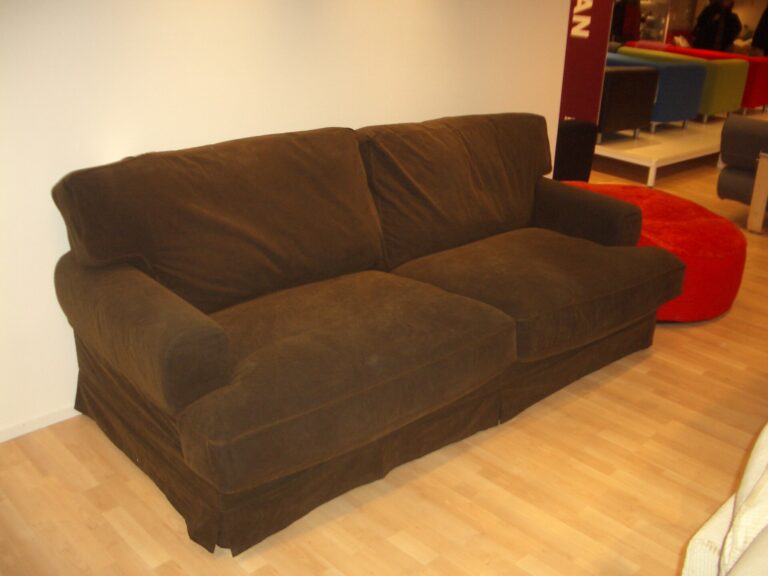
Many sourcing errors begin when one document is asked to prove something outside its scope. A furniture photograph may show a finish; it cannot establish the agreed substrate. A price column can support arithmetic; it cannot prove that four omitted rows were intentionally excluded. A planning schedule can show dates and dependencies; a blank template cannot prove that an order shipped on time.
Start with the decision you are about to make. Record the exact document revision, affected SKU or population, unit of measure, date and owner. Then test the claim against another record made for a different purpose: quotation against item specification, inspection photo against approved drawing, or schedule headline against its milestone table.

Two small checks changed what the paperwork could safely say.
These findings come from local document-structure reviews. They identify inconsistencies in the documents supplied for our research, not a supplier’s intent, an invoiced amount, an actual delay or a customer outcome.
Quote rows outside a total formula
In one quotation worksheet variant, the total formula stopped at row 18 while the item list continued through row 22. The four later item rows therefore fell outside that total calculation. A price total is not approval-ready until the row range and intended exclusions are reconciled.
Source: anonymised local quotation workbook variants; formula and line-item audit. Read the full quotation method.Lead-time label versus stage sum
A blank furniture progress schedule called the plan 90 days in its header. Its own consecutive stages show 10 days for confirmation, 60 for production and 30 for sea transit, with the final cumulative day at 100. No ten-day overlap is defined in the template.
Source: one-page blank “Master Progress Schedule of Furniture Manufacturer,” p. 1; all stage statuses read “Not Commenced.”| Decision | First record | Independent check | Safe next action |
|---|---|---|---|
| Approve quote total | Displayed grand total | Recalculate every item row and inspect the formula range | Resolve excluded rows in writing before deposit |
| Promise arrival date | “90 days” headline | Sum sequential stages, state any overlap and define end event | Obtain a revised, versioned schedule |
| Accept product claim | Marketing statement or photo | Match report to SKU, unit, boundary and approved specification | Hold the claim if the match is absent |

A scorecard that ends in a decision, not a score.
For each record, answer six questions: Which item and revision? Who created it and when? What unit and scope does it cover? What arithmetic or cross-document check was performed? Who owns the decision? What evidence would change the current status?
Use three states. Ready means the source supports this specific decision and a named owner has approved it. Open means evidence is still being gathered and no irreversible commitment should rely on it. Hold means records conflict, the scope is unclear, or a necessary acceptance rule is missing.
A decision can move between states as documents change. Keep the prior version, what changed, and who accepted the revision so a later reader can reproduce the reasoning.
| Check | Minimum answer to record | If absent |
|---|---|---|
| Identity | Order/project, SKU, drawing or document revision | Cannot tie the record to the proposed item |
| Authority | Author, issuer, approval owner and date | Cannot distinguish proposal from approval |
| Scope | Measured unit, boundary, method and affected population | Cannot generalise the claim |
| Consistency | Formula range, totals, dates and cross-document version | Recalculate or request revised record |
| Outcome | Ready/open/hold decision and follow-up link | Decision remains open |
Blank tools you can adapt to your own order.
The files contain field names and empty rows, not private supplier prices or invented case results. They are designed for a buyer, sourcing lead or inspector to complete alongside the original documents.
Open CSV files in Excel, Google Sheets or another spreadsheet tool. Before sharing an order-specific copy, remove private prices, names and customer identifiers that the recipient does not need.
Go from the question to the right record.
This hub is the map. Each resource below handles a narrower decision with its own source notes, English diagrams, photographs and reusable form. Begin at the point in the order where someone is about to say “approved.”

How this library was built.
We audited two local quotation workbook variants and a one-page blank furniture master progress schedule. For the workbook finding, we inspected the line-item sequence and total formula range; for the schedule finding, we compared the header with the “Total Cycle Breakdown” and cumulative-day column. The documents were used to derive buyer checks, not to publish private prices, customer identifiers or assertions about supplier intent.
The original files remain in the private Source Foshan research archive. The downloadable CSVs and three diagrams on this page are new, blank editorial tools. Photographs show furniture and workshop contexts only; they do not depict the audited workbook, the blank schedule or a verified order outcome. Individual linked resources identify their own source and evidence limits.
Can I treat a blank field as “not applicable”?
Only if the document owner says so and the scope is clear. Otherwise mark the field open, because a blank dimension, material, weight or approval cell cannot prove an intentional exclusion.
Does a matching total make a quotation complete?
No. Arithmetic can be correct while material, size, packing, delivery scope or approved revision is missing. Check the item-level specification and the final total as separate questions.
Can a schedule overlap make 90 days possible?
Mathematically, yes, if ten days are genuinely concurrent. The blank schedule reviewed here does not define such an overlap. Ask for a revised, dated milestone plan with named start and end events before using 90 days as a commitment.