Supplier guide
China Furniture Manufacturers: How to Find, Verify and Work With the Right Factory
Many companies that present themselves as China furniture manufacturers are trading companies or showroom brands reselling other factories' production. The reliable way to tell the difference is to check the supplier's business licence on the National Enterprise Credit Information Publicity System (gsxt.gov.cn), walk the plant, and confirm the bank account name matches the licence. This guide covers the four supplier types, where each product is actually made, and how to verify, brief and manage a factory.
- 300+vetted suppliers
- 60+projects delivered
- 18destination countries
- 100%inspected before loading
Updated by the Source Foshan sourcing team in Foshan.
At a glance
- 01
China’s furniture suppliers fall into four types: OEM/ODM export factories, domestic brand factories, small workshops and trading companies.
- 02
Verify every supplier’s 18-character unified social credit code on the National Enterprise Credit Information Publicity System (gsxt.gov.cn).
- 03
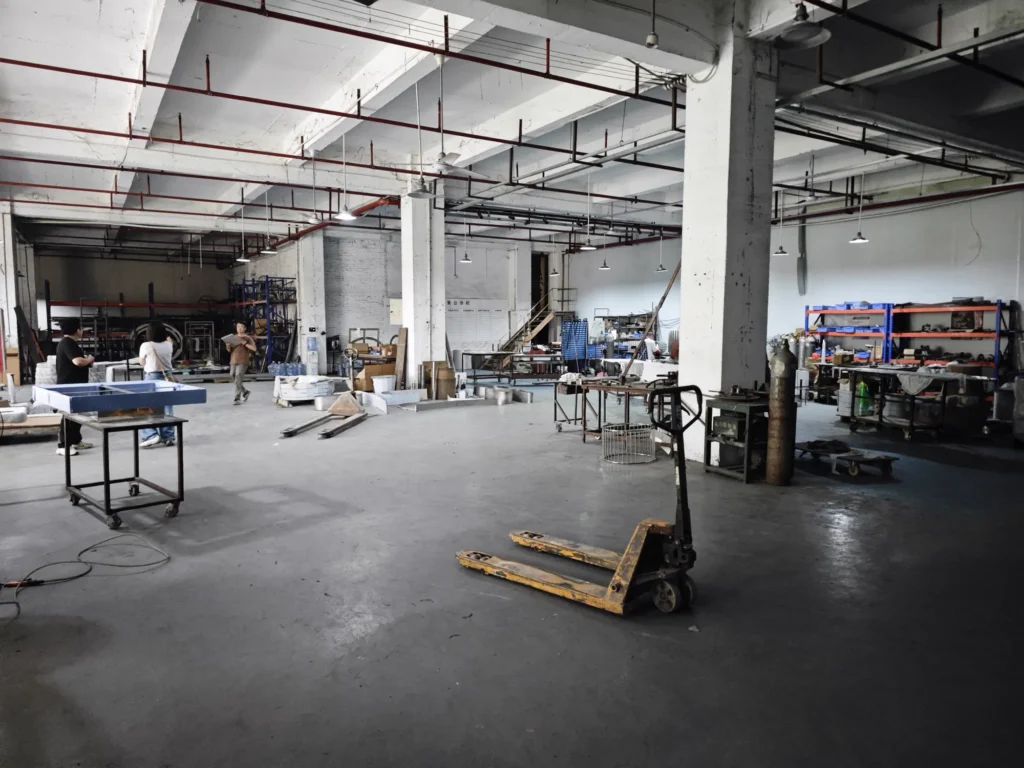
A real factory shows its own production lines, raw material stock and workers; a trader shows a showroom and a catalogue.
- 04
Pay only to a company bank account whose name matches the business licence, never to a personal account.
- 05
Protect drawings with a Chinese-law NNN agreement before sending them; a Western-style NDA is rarely enforceable in China.
There are four supplier types behind the label “China furniture manufacturer”, and only two of them own production lines. OEM/ODM export factories build to a buyer’s drawings or adapt their own designs for overseas brands; domestic brand factories sell finished collections through showrooms in China and export on the side; small specialist workshops make one thing well (solid-wood frames, stone tops, metal bases); and trading companies own no plant but present factory photos and catalogues as their own. Each is legitimate in the right role; the problem is paying a trader’s margin while believing you have a factory relationship.
The type also predicts how the supplier will behave. An export OEM factory expects a spec sheet, a first-article sign-off and an inspection; a domestic brand factory expects you to buy what is in the showroom with minor changes; a workshop expects you (or a local sourcing team) to bring drawings and handle everything else; a trader expects to manage the factory for you and will resist you meeting it. The wider industry map, including how these supplier types fit into China’s overall furniture trade, is covered in the guide to how China’s furniture industry works.
| Type | Owns production? | Typical MOQ | Best for | Watch out for |
|---|---|---|---|---|
| OEM/ODM export factory | Yes, often 5,000–50,000 m² plants | 20–100 pcs per model, or one container | Brands, retailers, hotel and contract projects with drawings | Slow on small orders; may subcontract components |
| Domestic brand factory with showroom | Yes, plus retail showrooms in Lecong or Longjiang | Low: 1–10 pcs from stock, 10–30 for custom finishes | Designers and homeowners buying finished collections | Export packing and paperwork may be weaker |
| Small specialist workshop | Yes, 500–3,000 m², one material or process | Often 1–5 pcs | Custom pieces, stone, solid timber, metal bases | No English, no export licence, no QC system |
| Trading company | No; buys from factories | Flexible, mixes suppliers | Small mixed orders where one contact matters more than price | Presents factory photos as its own; margin 10–30%; weak recourse on defects |
Why “factory” appears on so many websites There is no legal restriction in China on a trading company calling itself a factory in English marketing. The Chinese business licence is the only document that settles the question: a company whose registered name ends in 贸易有限公司 (Trading Co., Ltd.) and whose business scope lists sales rather than manufacturing is a trader, whatever its website says.
Chinese furniture manufacturing is concentrated in a handful of clusters, and each specialises. Guangdong (Foshan and Dongguan) is the largest all-round base for upholstery, casegoods, custom panel furniture and hotel FF&E; Zhejiang’s Anji county makes roughly one in three chairs produced in China and about half of the chairs exported, according to Xinhua; Hebei’s Xianghe and Shengfang serve North China with metal and glass furniture; and Sichuan’s Chengdu area produces panel bedroom and wardrobe furniture mainly for the domestic market. Finding the right cluster before you find the factory saves weeks, because factories outside their cluster usually buy components from inside it and add a margin.
Within Guangdong, Foshan’s Shunde district is the centre of gravity. Longjiang town alone has more than 1,200 furniture factories and is the historic base for sofas and upholstery, while Lecong runs the largest furniture trading-mall district and Shatou supplies panels and materials. Dongguan, about an hour east, is where Houjie and Dalingshan house the export-oriented OEM plants working from CAD drawings to US and EU compliance paperwork. A district-by-district picture of the Foshan side is in the Foshan furniture markets and districts guide.
| Product | Primary cluster | Why there |
|---|---|---|
| Sofas, upholstered beds, dining chairs | Foshan Shunde (Longjiang), Dongguan | Frame, foam, fabric and leather supply chains within 20 km; hotel and export experience |
| Office swivel and task chairs | Anji, Zhejiang | Vertically integrated gas-lift, mechanism and mesh component suppliers |
| Panel furniture, wardrobes, kitchen cabinets | Foshan (Shunde, Nanhai), Chengdu (Sichuan), Guangzhou | Board mills, edge-banding and hardware suppliers; large custom cabinetry factories |
| High-end veneered casegoods and contract seating | Dongguan (Houjie, Dalingshan) | OEM plants built for US and EU brands; compliance paperwork routine |
| Metal, aluminium and glass furniture | Foshan Nanhai (Dali), Hebei (Shengfang, Xianghe) | Aluminium profile extrusion and metalworking clusters |
| Stone and sintered-stone tops | Foshan (Nanzhuang, Shunde workshops), Yunfu (Guangdong) | Ceramics and stone processing heritage; slab supply |
| Outdoor aluminium, rope and rattan | Foshan Gaoming and Shunde, Zhejiang Linhai | Powder-coating lines and weaving labour |
There are five practical routes to a factory, and the best buyers combine at least two: trade fairs, showroom districts, B2B platforms, local sourcing teams and referrals. Each route delivers a different mix of factory and trader, so the route you choose shapes the verification work you will need to do afterwards.
- Trade fairs. CIFF Guangzhou, the Canton Fair furniture phase and the Dongguan fairs put hundreds of export factories in one hall, with sales staff who speak English and expect drawings. Exhibitor lists are a good first filter; dates and planning are covered in the guide to China’s furniture fairs.
- Showroom districts. Foshan’s Lecong malls and Longjiang’s factory-attached showrooms are open year-round. Many showrooms belong to domestic brand factories, so you see finished quality first and negotiate the factory relationship second.
- B2B platforms. Alibaba, Made-in-China and Global Sources list tens of thousands of furniture suppliers. Their limits: a paid “Gold Supplier” badge means the company paid for membership, not that it was audited; “Verified Supplier” means a third-party inspector visited, but does not tell you the factory can meet your spec. Treat platform listings as leads to verify, not as verified leads.
- Local sourcing teams. An independent team based in the cluster already knows which plants make which products and can walk a factory within days. Ask how they are paid: a stated service fee is cleaner than a hidden markup.
- Referrals. Designers, importers and freight forwarders who ship furniture from the same cluster often know which factories deliver on time. A referral shortens vetting but does not replace it.
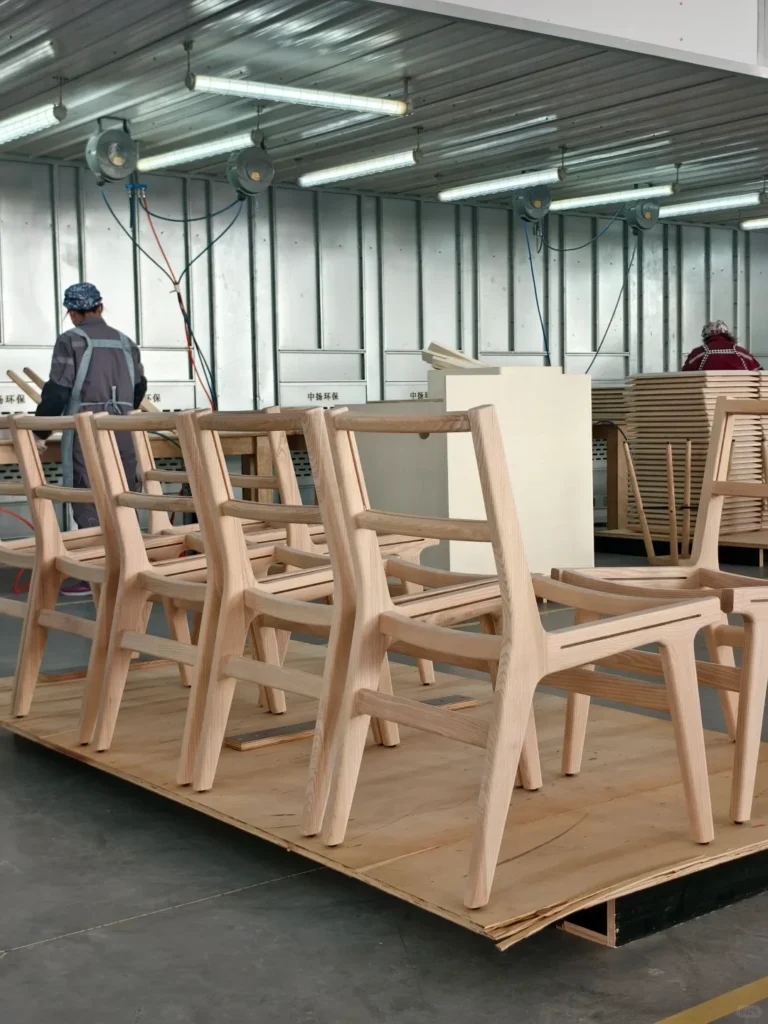
Whichever route you use, aim for a shortlist of three to five candidates per product group before verification. Fewer than three gives no price benchmark; more than five makes sampling cost hard to justify.
Send your list. Get compared options from Foshan within one business day.
Real suppliers, real prices and lead times side by side, from a local team that walks the showrooms and factories every week. No commitment.
Verification has four layers: the legal entity, the physical plant, the export capability and the certifications. Start with the entity, because the other three are meaningless if the company you are dealing with does not exist or is not the one you are paying.
1. Check the business licence and unified social credit code
Ask for a copy of the business licence (营业执照) and look up the company’s Chinese name or its 18-character unified social credit code on the National Enterprise Credit Information Publicity System, the official registry operated by China’s State Administration for Market Regulation at gsxt.gov.cn. The record shows the registered name, status (active, revoked or deregistered), legal representative, registered capital, establishment date and business scope. Compare four things: the name matches the licence exactly; the business scope includes manufacturing (生产 or 制造), not only sales; the registered address is an industrial zone, not a commercial tower; and the establishment date matches the “20 years of experience” claim. Note that registered capital is subscribed, not necessarily paid in, so treat it as a weak signal. Full access to the registry now requires Chinese real-name authentication, so buyers outside China usually ask a local partner or a company-check service to pull the record.
2. Audit the plant in person
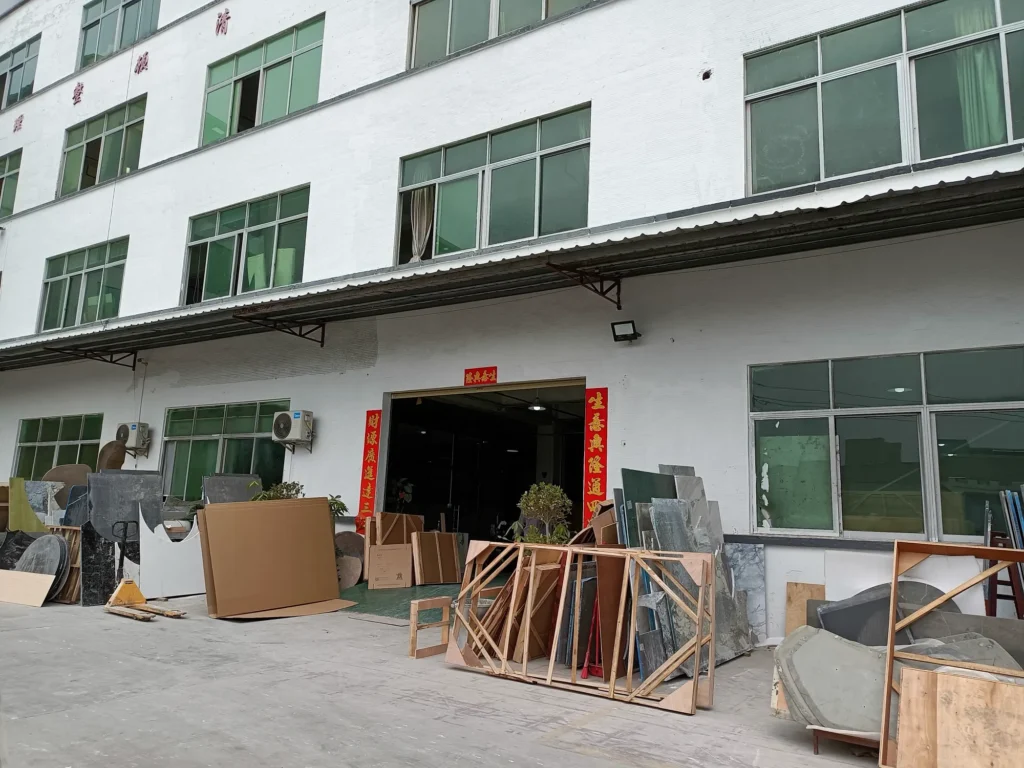
A factory audit does not need to be a formal social-compliance audit to be useful. A half-day walk-through with a checklist tells you whether the supplier can make your product to your standard.
- Raw material stock that matches your product: timber, board, foam blocks, fabric rolls, slabs.
- Machinery in use: CNC routers, edge-banders, sewing lines, spray booths or powder-coating lines, with operators at them.
- Work-in-progress for other customers, with labels or drawings visible, not just finished stock.
- A drawing or engineering office that can read and issue dimensioned shop drawings.
- A QC station: incoming material checks, in-line inspection records, a final inspection area with gauges and test rigs.
- Packing area with export cartons, foam, corner protection and crates, plus pallets stamped ISPM 15 if solid wood is used.
- The name on the factory gate, on the licence and on the pro-forma invoice are the same company.
3. Confirm export capability
Since 30 December 2022 China no longer requires a separate foreign trade operator registration, so any Chinese company may in principle export. What a factory still needs is customs registration as a consignor of exported goods (a customs registration code), plus experience with export packing, commercial invoices and packing lists. Ask which forwarder they use and for a redacted copy of a recent bill of lading. Many excellent workshops have neither, which is fine if an export agent or sourcing team handles shipment, but you should know which situation you are in before you pay.
4. Read certifications for what they prove
| Certificate | What it verifies | What it does not verify |
|---|---|---|
| ISO 9001 | A documented quality management system exists and was audited | That any specific product meets your spec |
| amfori BSCI audit | Working conditions, hours, health and safety against 13 performance areas (an audit report, not a certificate) | Product quality or durability |
| FSC chain of custody | Certified timber is tracked and separated through the plant | Anything about non-FSC timber or finished quality |
| CARB Phase 2 / EPA TSCA Title VI | Composite wood panels come from a certified mill and meet US formaldehyde emission limits | Solid wood, metal or upholstery components |
| ANSI/BIFMA or EN test reports | A specific sample passed strength, durability and stability tests at a lab | That production units match the tested sample |
Always ask for the certificate number and check it with the issuing body; forged ISO and BSCI certificates are common enough that certifiers publish lookup tools. And check that the bank account on the pro-forma invoice is in the company’s registered name. A request to pay a personal account, a Hong Kong entity with a different name, or a “sister company” is the single most common precursor to a lost deposit.
Red flags that should stop a deal
- Registered name ends in Trading Co., Ltd. while the website says “our factory”.
- Refusal to allow a visit, or a visit that is steered to a showroom only.
- Factory photos that also appear on other suppliers’ websites (reverse image search takes a minute).
- Prices well below the shortlist without a technical reason, or an MOQ of one piece on a product that plainly needs tooling.
- Payment requested to a personal account or to a company name that differs from the licence.
- No drawing office, no first-article process and no inspection records.
- A rush to collect a deposit before drawings and a spec sheet are agreed.
A factory quotes what it is given, so the quality of your specification sets the ceiling on the quality of your quote. A good brief is a one-page spec sheet per item, with a dimensioned drawing and reference photos, sent to every shortlisted factory in identical form so quotes are comparable. The order of the sheet matters less than completeness; a factory that receives an incomplete brief will fill the gaps with its lowest-cost standard option.
- Identity: item code, description, quantity, target unit price and delivery date.
- Dimensions: overall and critical internal dimensions in millimetres, with tolerances where they matter (for example ±3 mm on table height).
- Structure and materials: frame species or board grade (E1 or CARB Phase 2 board named explicitly), foam density in kg/m³, webbing or spring type, hardware brand if specified.
- Finishes: fabric or leather reference with abrasion rating, lacquer sheen and colour reference, metal coating type and colour code.
- Performance: the test standard the item must meet (for example ANSI/BIFMA X5.1 for task chairs or EN 16139 for non-domestic seating), fire regulation of the destination market, and any load rating.
- Packing and labels: carton or crate type, knock-down or assembled, room or unit labelling, marking language.
- Commercial: Incoterm (EXW or FOB), payment split, warranty period and what happens to defective units.
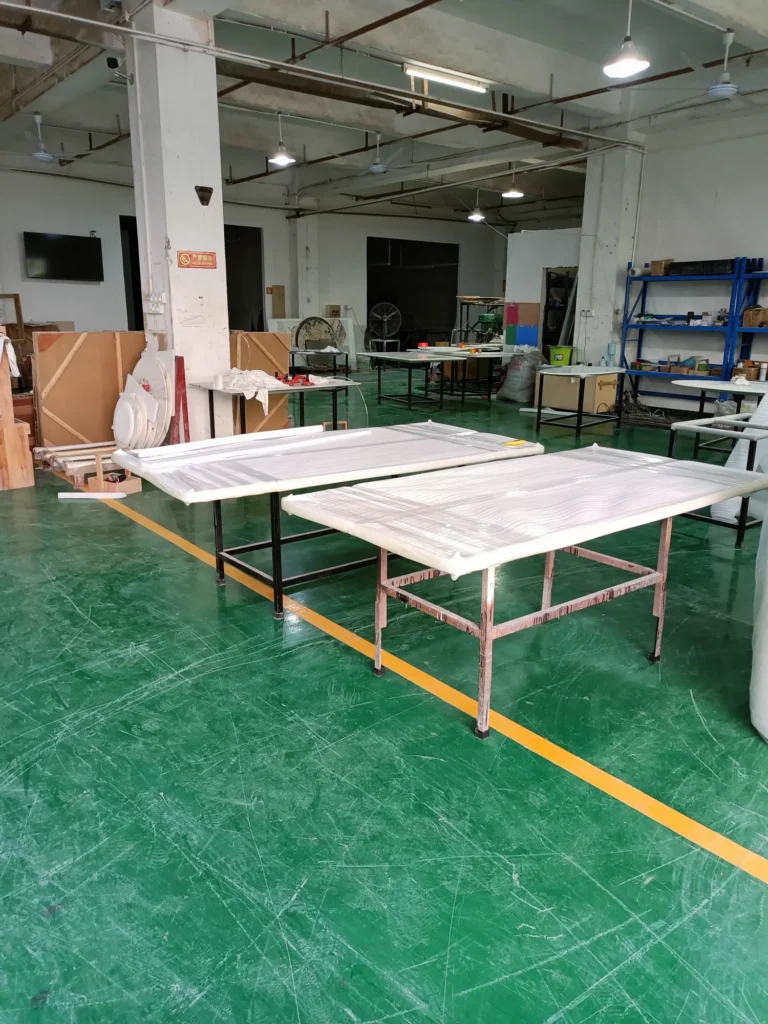
For custom pieces, the brief is the start of a development sequence: reference, dimensioned shop drawing, material and sample approval, first article, batch production and inspection. How that sequence typically runs, including indicative lead times of four to ten weeks depending on complexity, is described on the custom furniture development page. For volume orders, quantity breaks, fabric standardisation and container planning are covered in the China furniture wholesale guide.
The single most effective quality control on a furniture order is approving a first article before batch production starts, and the second is inspecting during production rather than only at the end. Sampling typically adds two to four weeks and a sample fee of one to three times the unit price, often credited against the order. A fault found in a sample costs one chair; the same fault found in a container costs the order.
- Material samples first. Approve fabric, leather, timber finish, board edge and metal colour swatches before the factory builds anything. Keep a signed set in your office and one at the factory.
- Pre-production sample or first article. One complete unit built on the production line, not in the sample room. Check dimensions against the drawing, sit on it, open and close it, weigh it if foam density matters, and photograph every face. Sign a first-article approval that names the sample as the production reference.
- Production start and in-line inspection. Ask for weekly photo updates by item and at least one in-line inspection when frames or carcasses are complete but not yet upholstered or finished, because that is when structural faults are still visible and fixable.
- Final inspection before balance payment. A pre-shipment inspection against the first article and the spec sheet, item by item for project orders or on an AQL sample for volume orders, with a photo and video report. Pay the balance after the report, not before.
- Packing verification and loading supervision. Confirm carton counts, labels and protection match the packing spec, then photograph the loaded container and seal number.
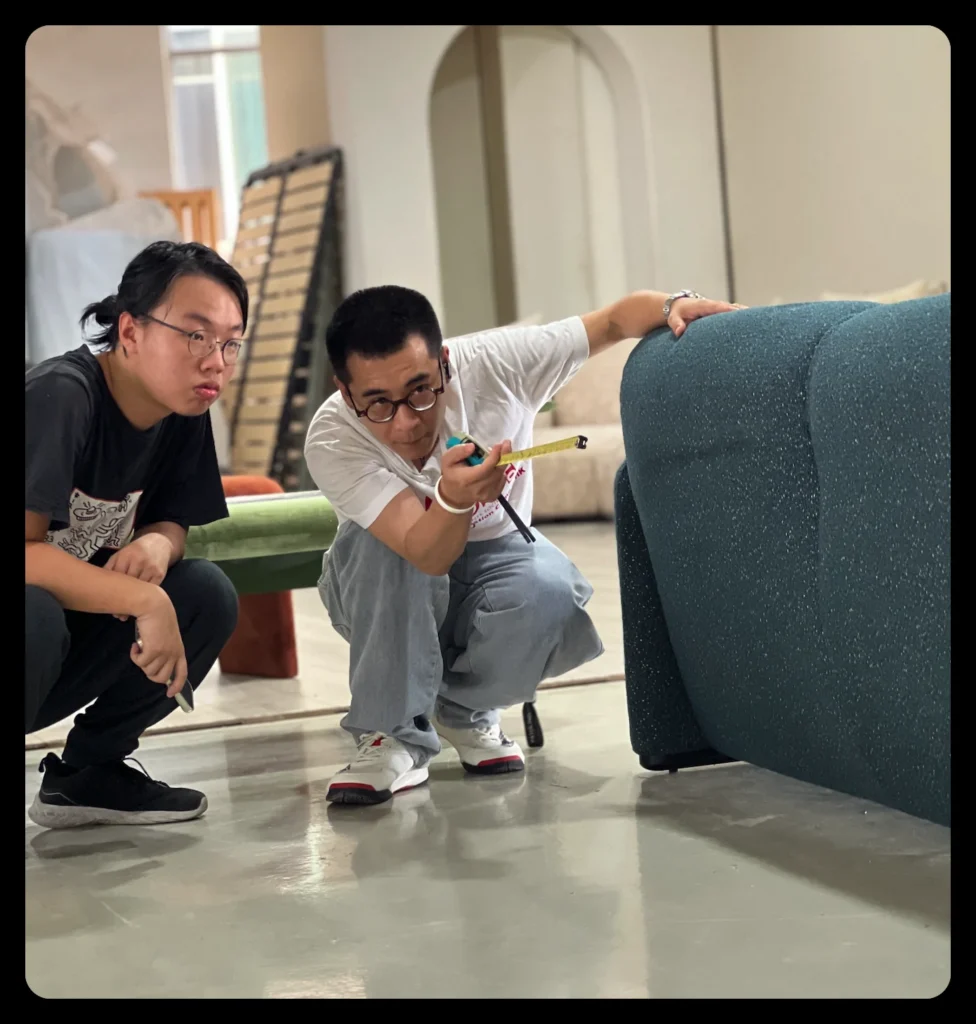
Factories respond to what is measured: inspect at frame stage on the first order and the second is usually built to that standard unasked. The transaction side of this sequence, including payment splits, pro-forma invoices and shipping documents, is set out step by step in the guide to buying furniture from China, and the packing standard and inspection checkpoints a buyer should expect are described on the quality and shipping page.
Protecting designs: NNN agreements and exclusivity
A Western NDA is rarely enforceable in China because it typically prohibits disclosure but not use, is governed by foreign law and names a foreign court. The standard instrument for a factory relationship is an NNN agreement: non-disclosure, non-use and non-circumvention. It bars the factory from using your drawings to make product for others, from copying the design for its own catalogue, and from selling directly to your customers. To be enforceable it should be written in Chinese, governed by Chinese law, name a Chinese court, and set contract damages in a fixed amount. Sign it before drawings are sent, not with the purchase order. Exclusivity on a design is a separate, negotiated term and usually requires a minimum annual volume; without that volume, expect the factory to offer the design to others once your order is shipped.
Source Foshan is an independent local sourcing team based in Foshan and working in Dongguan. It does not manufacture furniture and does not own a factory; it sources from independent showrooms, factories and specialist workshops and manages the project on the buyer’s behalf. The team has a vetted base of more than 300 suppliers across the two cities and more than ten product categories, and because it is local it can walk a candidate factory the same week a buyer asks, checking the plant, the licence and the bank details before any deposit is paid.
The service runs as seven managed steps from brief to door: brief, source and compare, confirm quote, order, production tracked with weekly photo updates, inspected and packed, and one consolidated shipment. Quotes are presented as transparent, compared pricing with a stated service fee and no hidden markups. Quality control follows seven checkpoints from material selection to shipment approval, with a full pre-shipment photo and video report that the buyer approves before loading and before the balance is paid. Buyers who want to see factories themselves can book a guided Foshan buying visit at USD 99 or 199 per day. The operating company, Xianpei (Foshan) Home Furnishing Co., Ltd., publishes its own business licence on the about page, which is the same check it recommends buyers run on every supplier.
Frequently asked questions
How can I tell if a Chinese furniture supplier is a factory or a trading company?
Check the business licence. A registered name ending in Trading Co., Ltd. (贸易有限公司) and a business scope listing sales rather than manufacturing means a trader. Look up the name on the National Enterprise Credit Information Publicity System, check the registered address is in an industrial zone, and ask to visit. A factory shows production lines, raw material and work-in-progress; a trader shows a showroom and a catalogue.
What is a unified social credit code?
It is the 18-character identifier printed on every Chinese business licence and used across tax, customs and company registration. Entering it, or the company’s Chinese name, on the National Enterprise Credit Information Publicity System (gsxt.gov.cn) returns the registered name, status, legal representative, registered capital and business scope. Matching that record against the licence and the bank account name is the basic identity check before paying any deposit.
Do Chinese furniture factories need an export licence?
Not a separate one. China removed the foreign trade operator registration requirement on 30 December 2022, so any registered company may export. Factories that ship on their own account still need customs registration as a consignor of exported goods and practical experience with export documents and packing. Many small workshops have neither, in which case an export agent or a local sourcing team handles the shipment.
What is a reasonable MOQ from a Chinese furniture factory?
It depends on the supplier type. Export OEM factories typically ask 20–100 pieces per model or a full container; domestic brand factories sell 1–10 pieces from showroom stock and 10–30 for custom finishes; specialist workshops make one-off pieces. Trading companies are flexible because they mix suppliers. MOQs fall when you use the factory’s standard fabrics, finishes and dimensions instead of custom ones.
How much does a factory sample cost and how long does it take?
A pre-production sample typically costs one to three times the unit price and takes two to four weeks, longer for upholstery with custom fabric or stone. Many factories credit the sample fee against a confirmed order. Ask for the sample to be built on the production line, not in a sample room, and sign it off as the first-article reference for the batch.
Is an ISO 9001 certificate proof of quality?
No. ISO 9001 shows that the factory has a documented quality management system that was audited; it does not test any product. Treat it as one positive signal alongside a plant visit, a first-article sample and an independent pre-shipment inspection. Always ask for the certificate number and verify it with the certification body, since forged certificates circulate.
Should I sign an NDA with a Chinese factory?
Sign an NNN agreement instead: non-disclosure, non-use and non-circumvention, written in Chinese, governed by Chinese law and enforceable in a Chinese court with fixed contract damages. A standard Western NDA usually forbids disclosure only, not use, and is hard to enforce in China. Sign before sending drawings. Exclusivity is a separate term that factories grant only against a minimum annual volume.
What deposit is normal and how should I pay?
A 30% deposit with the balance before shipment is the common structure for furniture orders, with the balance released only after a pre-shipment inspection report. Pay by bank transfer to the company account named on the business licence. Requests to pay a personal account, or a different company, are the most frequent cause of lost deposits and should stop the deal.
Sources and further reading
- China Justice Observer — What Is China’s National Enterprise Credit Information Publicity System? — Official registry name, operator (SAMR), URL and what a search returns
- China Briefing — China Cancels Foreign Trade Operator Registration — Foreign Trade Law amendment of 30 December 2022 removing the registration requirement
- General Administration of Customs of China — Registration of a Consignee or Consignor of Imported or Exported Goods — Customs registration still required for companies declaring exports
- Xinhua — How smart chair manufacturing in east China county sits at heart of sustainability (8 September 2025) — Anji produces one in three chairs made in China and half of those exported
- US EPA — Formaldehyde Emission Standards for Composite Wood Products (TSCA Title VI) — Scope of TSCA Title VI and CARB-aligned limits for panels in finished goods
- Harris Sliwoski — China NNN Agreements: Essential and NOT for Trade Secrets — Structure and enforceability of NNN agreements versus Western NDAs
Field notes · from the blog
What buying in Foshan is actually like, from people who paid for the lesson.
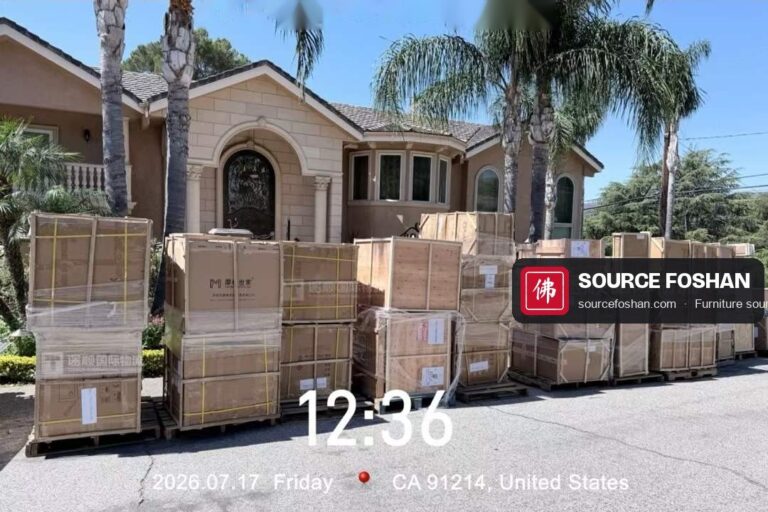 Shipping Furniture From Foshan to France: LCL vs FCL, Ports, EU Duty, French VAT and the Delivery Leg (September 2026)
In short Sea freight from Shenzhen or Nansha to Le Havre or Fos-sur-Mer takes about 25–35 days in September 2026, with most services routed…
Shipping Furniture From Foshan to France: LCL vs FCL, Ports, EU Duty, French VAT and the Delivery Leg (September 2026)
In short Sea freight from Shenzhen or Nansha to Le Havre or Fos-sur-Mer takes about 25–35 days in September 2026, with most services routed…
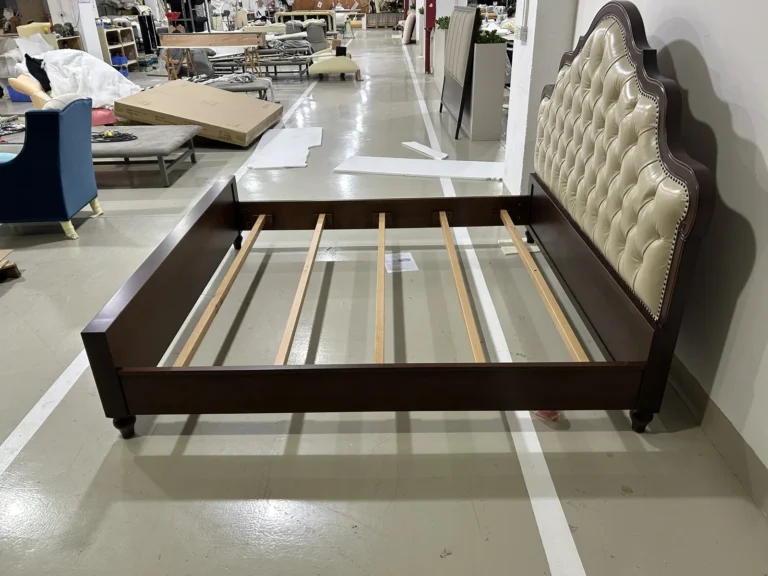 Factory-Direct Furniture From Foshan: A Six-Step SOP, the Traps at Each Step and How to Close Them
Value ÷ price, the six-layer channel mark-up that turns a ¥5,000 sofa into ¥20,000, why Foshan, five hard quality indicators, and the four traps…
Factory-Direct Furniture From Foshan: A Six-Step SOP, the Traps at Each Step and How to Close Them
Value ÷ price, the six-layer channel mark-up that turns a ¥5,000 sofa into ¥20,000, why Foshan, five hard quality indicators, and the four traps…
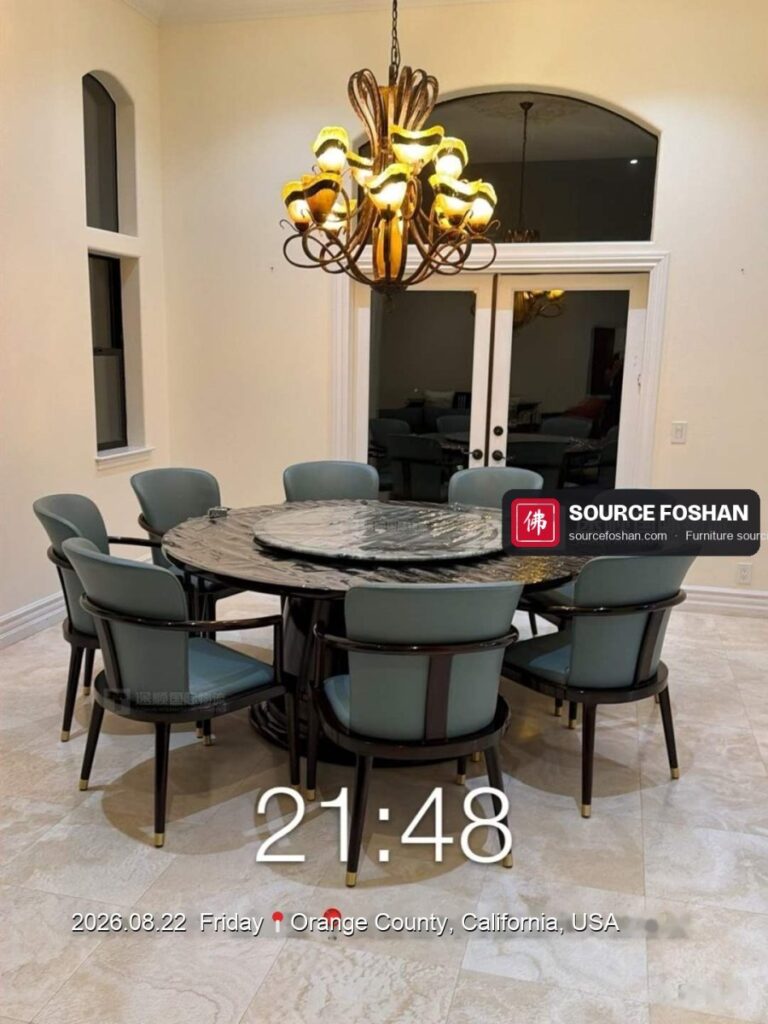 Foshan to Orange County: A Full Container Unloaded at 09:41, Every Room Furnished by 21:48 — Same Day
In short A full container of Foshan furniture for a house in Orange County, California: a marble-top desk and leather chair, a round marble…
Foshan to Orange County: A Full Container Unloaded at 09:41, Every Room Furnished by 21:48 — Same Day
In short A full container of Foshan furniture for a house in Orange County, California: a marble-top desk and leather chair, a round marble…
Send your list. We will tell you honestly how it would run.
A floor plan, an FF&E schedule, a product link or a rough brief is enough. Our local team in Foshan replies within one business day with real options, prices and lead times — no commitment.
Start Your ProjectWhatsApp +86 151 9256 9580 · hello@sourcefoshan.com · WeChat 15192569580