Commercial projects
Office Furniture Sourcing in China: Workstations, Task Seating and Fit-Out Packages
Office furniture sourced from China typically costs USD 90–180 per workstation seat and USD 35–150 per task chair ex-works, with production of 30–45 days for a 100-seat fit-out after drawings are approved. Foshan and Dongguan make workstations, desks and storage; Anji in Zhejiang makes one in three chairs produced in China. This guide covers categories, standards, pricing bands, MOQ, phasing, knock-down logistics and warranty.
- 300+vetted suppliers
- 60+projects delivered
- 18destination countries
- 100%inspected before loading
Updated by the Source Foshan sourcing team in Foshan.
At a glance
- 01
Specify ANSI/BIFMA X5.1 (task chairs) and X5.5 (desks) for North America, EN 1335 and EN 527 for Europe.
- 02
Indicative ex-works prices: mesh task chair USD 35–150, workstation USD 90–180 per seat, executive desk USD 350–1,200.
- 03
Foshan Longjiang and Lecong, Dongguan and Guangzhou make desking and storage; Anji in Zhejiang makes chairs at volume.
- 04
MOQs are typically 20–50 workstations or 50–100 chairs per model; standard laminates and fabrics lower them.
- 05
A 100-seat office needs about 30–45 days production plus 20–45 days transit; order knock-down with installation drawings.
Chinese factories supply every category in a commercial fit-out: workstations and benching, task and meeting chairs, executive desks, storage, meeting and boardroom tables, soft seating for collaboration areas, reception counters and acoustic pods. The categories differ in who makes them and how they are specified. Workstations, desks, storage and reception counters are panel-based products made by casegoods factories in Foshan, Dongguan and Guangzhou; task chairs are mechanism-based products made by chair specialists, most of them in Anji; soft seating comes from upholstery factories in Foshan’s Longjiang town; and acoustic pods are a newer category made by a small number of specialist plants.
| Category | Typical construction | Key specification points | Usual maker |
|---|---|---|---|
| Workstations and benching | 25 mm melamine-faced board tops, steel leg frames, fabric or acrylic screens | Board grade (E1 or CARB Phase 2), edge banding thickness, cable tray, power module cut-outs, screen height | Casegoods factories, Foshan and Dongguan |
| Task chairs | Nylon or aluminium base, class 3 or 4 gas lift, synchro or multi-tilt mechanism, mesh or upholstered back | Test standard, mechanism type, gas lift class, arm adjustment, seat slide, headrest | Chair specialists, Anji; some Foshan and Dongguan |
| Executive desks | Veneer or high-gloss lacquer on MDF, steel or timber pedestals, return and credenza | Veneer species and matching, lacquer sheen, drawer runners (soft close), wire management | Casegoods factories, Dongguan and Foshan |
| Storage | Steel or melamine pedestals, lockers, tambour and hinged cabinets | Steel gauge, powder-coat colour, lock type, anti-tilt, load per shelf | Steel furniture plants, Foshan Nanhai and Guangzhou |
| Meeting and boardroom tables | Veneer, laminate or sintered-stone tops on steel or timber bases, 2.4–6 m | Top material, seam positions, power and data modules, delivery access (sectional tops) | Casegoods and stone workshops, Foshan |
| Soft and collaborative seating | Hardwood or steel frames, 35–45 kg/m³ foam, contract fabric | Fabric abrasion, fire treatment, modular connectors, power in arms | Upholstery factories, Foshan Longjiang |
| Reception counters | Custom panel and solid-surface construction, LED detail | Height for accessibility, solid-surface brand, shop drawings, site dimensions | Custom cabinetry factories, Foshan |
| Acoustic pods | Steel and panel shell, glass door, ventilation, lighting, power | Acoustic rating in dB, ventilation air changes, electrical certification, delivery size | Specialist pod plants, Guangdong and Zhejiang |
Because a fit-out mixes these makers, a single office order usually involves three to five factories. That is normal, but it means someone must coordinate drawings, colours and delivery dates across them, which is where a project buyer, a designer’s FF&E team or a local sourcing team earns its fee. How this fits within the wider commercial procurement path is covered in the contract furniture sourcing guide.
Specify the destination market’s standard by name and edition: ANSI/BIFMA X5.1-2017 (R2022) for task chairs and ANSI/BIFMA X5.5-2021 for desks and tables in North America; EN 1335 for office chairs and EN 527 for office desks in Europe and much of the Middle East and Asia. Both systems test strength, durability and stability, but they are not interchangeable: BIFMA X5.1 is based on a 125 kg (275 lb) user, EN 1335-2 on 110 kg and eight hours of daily use, and EN 1335-1 additionally classes chairs by adjustability (Types Ax, A, B and C). A factory report to one standard does not prove compliance with the other.
| Item | North America | Europe / UK | What the test covers |
|---|---|---|---|
| Task and office chairs | ANSI/BIFMA X5.1-2017 (R2022) | EN 1335-1:2020+A1:2022 (dimensions); EN 1335-2 (safety, strength, durability) | Static loads, seat and back cycling, swivel and caster durability, tilt, stability; 125 kg (BIFMA) or 110 kg (EN) user |
| Desks, workstations, tables | ANSI/BIFMA X5.5-2021 | EN 527-1:2011 (dimensions); EN 527-2:2016 (safety, strength, durability) | Load, stability, drawer and door cycling, leg strength, height-adjustment cycling |
| Lounge and collaborative seating | ANSI/BIFMA X5.4-2020 (R2025) | EN 16139:2013 | Non-domestic seating strength and durability |
| Board and panel materials | CARB Phase 2 / EPA TSCA Title VI certified panels | E1 class, formaldehyde ≤ 0.124 mg/m³ under EN 13986; E0 or ENF where specified | Formaldehyde emission from composite wood |
| Indoor air quality | UL GREENGUARD Gold or BIFMA e3 (LEVEL) certification | Often specified via GREENGUARD or national labels | VOC emissions from the finished product |
| Upholstered parts (fire) | CAL TB 117-2013 smoulder test | EN 1021-1 and -2; BS 5852 for UK contract | Ignition resistance of cover and filling |
Ask for test reports on the specific model, issued by a named laboratory (SGS, Intertek, TÜV and BV all test to these standards in Guangdong and Zhejiang), and check that the report photographs match the chair or desk you are buying. Many Anji and Foshan factories hold reports on their standard models and will test a customised version for USD 1,500–4,000 per model; that fee is worth building into a 100-seat order and pointless for ten chairs.
Confirm requirements locally Fire, formaldehyde and electrical rules for office furniture vary by country, state and landlord, and change over time. Confirm the current requirement with your local authority, the building’s fit-out guide and your customs broker before you specify.
Office furniture is made in two kinds of cluster: the Guangdong casegoods belt of Foshan, Dongguan and Guangzhou for desking, storage, meeting tables and soft seating, and Zhejiang’s Anji county for chairs. Foshan’s Lecong town is where office systems are displayed to buyers; Longjiang and the wider Shunde district hold the factories, along with steel-furniture plants in Nanhai. Dongguan’s Houjie and Dalingshan towns run export-oriented OEM lines for desking systems and contract seating, often working from a foreign brand’s CAD files. Guangzhou has several large integrated office-furniture groups with plants spread across the province.
Anji, about two hours from Shanghai, is the world’s largest swivel-chair production base. Xinhua reports that the county makes one in every three chairs produced in China and half of those exported, with chair manufacturing worth 31.19 billion yuan in 2024 and more than 1,700 enterprises in its home industry. The concentration matters for buyers because gas lifts, mechanisms, castors, mesh and nylon bases are all made within the county, which keeps prices low and lead times short on standard models but also means that many chairs sold under Foshan or Dongguan brands are Anji-made.
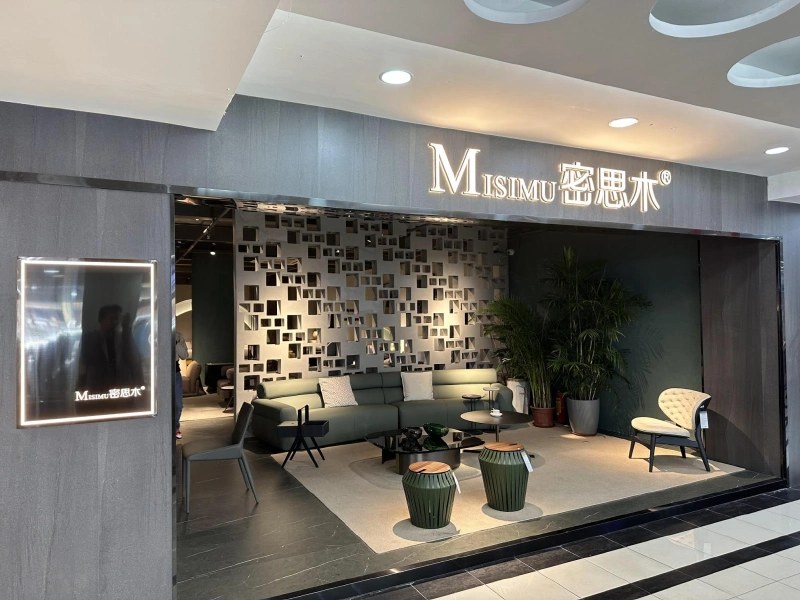
For a buyer this produces a simple rule: see and sit in Lecong, buy desking from Foshan or Dongguan, and buy chairs from Anji or from a Foshan chair specialist who sources components there. Lecong venues such as Misimu Kufansen (office, hotel and medical furniture) and Longjiang’s Yudao Home (villa, hotel, clubhouse and office) display complete office ranges, and the surrounding Lecong showroom district has several floors of task seating. How to verify that a showroom’s factory is what it claims is covered in the guide to finding and verifying China furniture manufacturers.
Send your list. Get compared options from Foshan within one business day.
Real suppliers, real prices and lead times side by side, from a local team that walks the showrooms and factories every week. No commitment.
Ex-works prices for standard office furniture from Guangdong and Zhejiang factories are indicatively USD 35–60 for a basic mesh task chair, USD 70–150 for a BIFMA- or EN-tested ergonomic chair, USD 90–180 per seat for a melamine bench workstation with screen, and USD 350–1,200 for a 1.8–2.4 m veneered executive desk. These bands reflect factory and B2B platform quotations in 2026 and Source Foshan’s own compared quotes; treat them as a planning range and confirm against a written quotation for your specification, because fabric grade, mechanism brand, board grade and order quantity move each line by 30–50%.
| Item | Basic | Mid-range (tested, contract fabric or finish) | Notes |
|---|---|---|---|
| Mesh task chair | 35–60 | 70–150 | Mid-range adds synchro tilt, 4D arms, class 4 gas lift, BIFMA or EN report |
| Executive chair (leather or PU) | 80–150 | 150–300 | Genuine leather and aluminium base at the upper end |
| Workstation, per seat (1.2–1.4 m bench with screen) | 90–130 | 130–180 | Adds cable tray, power module cut-outs, thicker board, fabric screen |
| Workstation with pedestal and electrics, per seat | 150–220 | 220–350 | Includes mobile pedestal and pre-wired power and data |
| Executive desk 1.8–2.4 m with return | 350–600 | 600–1,200 | Veneer matching, soft-close runners and high-gloss lacquer at upper end |
| Meeting table 3–4 m, 10–12 seats | 400–800 | 800–1,500 | Sectional tops for site access; sintered stone tops higher |
| Steel mobile pedestal or locker door | 40–70 | 70–120 | Gauge, lock type and powder-coat colour drive price |
| Lounge or collaborative seat, per seat | 150–300 | 300–600 | Contract fabric and fire treatment at upper end |
| Single-person acoustic pod | 2,500–4,000 | 4,000–6,000 | Indicative only; confirm acoustic rating and electrical certification |
Two costs sit outside the table. Freight is significant because desking is heavy and chairs are bulky: a 40 ft high-cube container (about 76 m³ / 2,690 cu ft) holds roughly 250–350 knock-down task chairs or workstations for around 60–90 seats with pedestals, so per-seat freight lands between USD 15 and 40 depending on route and rates. Duties depend on the tariff line and origin rules of the importing country; classification of office seating under HS 9401 and metal or wooden office furniture under 9403 is explained in the furniture HS code guide, and your customs broker should confirm the applicable rate.
Typical MOQs are 20–50 workstations or desks per model and 50–100 task chairs per model for a customised specification, falling to showroom-stock quantities of 5–10 pieces when you accept the factory’s standard laminates, fabrics and dimensions. The reason is set-up: a custom laminate colour means buying a minimum quantity of board, a custom fabric means a minimum roll, and a custom chair mesh colour means a dyeing minimum. Standard options cost nothing extra and ship faster.
- Laminate colours: factories stock 20–40 standard melamine finishes; anything else is a special order of 50–100 boards and adds one to two weeks.
- Fabrics: standard contract fabrics in 10–30 colours are held in stock; a specified brand fabric can be imported or supplied by the buyer (customer-supplied material) at the buyer’s freight cost.
- Cable management: under-desk trays, vertical umbilicals and top-access flip lids are standard; specify the country’s socket type and whether power modules must carry a national certification mark.
- Power and data: pre-wired power modules are factory-fitted in China but certified to Chinese or CE standards; for North America, many buyers fit certified modules locally instead.
- Sizes: 1.2, 1.4 and 1.6 m desk widths and 600 or 700 mm depths are standard; non-standard widths waste board and cost more per seat.
- Branding: logo embossing on chair backs or screen fabrics is available at low cost on orders over 100 pieces.
The most effective customisation is at the specification level rather than the product level: choose two laminates and one fabric for the whole floor, one chair model in two variants (with and without headrest), and one storage system. Factories reward that discipline with lower MOQs, shorter lead times and fewer colour-matching problems at installation.
A 100-seat office order typically takes 30–45 days in production after shop drawings and samples are approved, preceded by two to four weeks of drawings and sampling and followed by 20–45 days of ocean transit, so about three to four months from order to site is realistic. Anji chair factories are often faster on standard models (15–25 days), while veneered executive furniture and reception counters are slower (45–60 days), so a mixed order should be sequenced so the slow items start first.
| Stage | Duration | Who | Output |
|---|---|---|---|
| Specification and quotes | 2–3 weeks | Designer, procurement or sourcing team | Options sheet with unit prices, lead times and deviations |
| Shop drawings and samples | 2–4 weeks | Factories, approved by designer | Approved drawings, laminate and fabric samples, one sample chair and one workstation |
| Production | 30–45 days | Factories, tracked weekly | Weekly photos; in-line inspection at carcass and frame stage |
| Pre-shipment inspection and consolidation | 1–2 weeks | Inspector or sourcing team, forwarder | Inspection report, consolidated container with labelled cartons |
| Ocean transit | 20–45 days by route | Forwarder | Bill of lading, packing list, commercial invoice |
| Clearance, delivery, installation | 1–3 weeks | Broker, installer | Assembled and positioned furniture, snagging list, spares handed over |
Phasing matters when the office is fitted out floor by floor or when the tenant moves in stages. Order in two or three call-offs against one framework price, standardise finishes so material can be bought once, and have the factory hold 3–5% spare chairs and 2% spare desk tops. Avoid production windows that cross Chinese New Year (late January to mid February) or the early-October holiday, when factories close for two to four weeks. The fairs that many office buyers combine with a factory visit run in March and September; dates are in the guide to China furniture fairs.
How do knock-down packing, installation drawings and on-site assembly work?
Ask the team about thisOffice furniture ships knock-down: desk tops, legs, screens, pedestals and chair components packed flat in cartons, which roughly halves shipping volume compared with assembled product and is why installation drawings and an assembly partner are part of the order, not an afterthought. A workstation bench for six people typically ships as 8–12 cartons; a task chair ships in one carton of about 0.15–0.25 m³ with the base, gas lift and back separate from the seat.
- Installation drawings: ask the factory for an exploded assembly drawing per model and a floor plan with carton numbers mapped to positions. Good factories provide these in English as PDF; check them against the designer’s layout before shipment.
- Carton labelling: label by floor, zone and workstation number as well as by model, so installers can stage cartons on the correct floor without opening them.
- Hardware packs: request a separate, itemised fixings pack per model plus 5% extra, and the specific tools (usually Allen keys and a Torx bit) in the first carton.
- Assembly partner: local office-furniture installers charge per workstation or per day; give them the drawings and a sample assembled unit photo two weeks before delivery. A crew of four typically assembles 25–40 bench workstations per day.
- Electrics: if power modules are fitted in China, confirm the certification mark your electrician or landlord requires; otherwise ship the cut-outs empty and fit locally.
- Damage handling: photograph cartons on arrival before opening and agree with the factory in advance that damaged tops or panels are replaced by air freight of parts, not whole units.
Export packing standards, moisture barriers and the inspection and loading checkpoints that keep knock-down parts intact are described on the quality and shipping page; the documents, Incoterms and payment steps behind the shipment are in the guide to buying furniture from China.
Chinese office furniture factories typically offer 3–5 years on desking structure and 1–3 years on chair mechanisms and gas lifts, with fabric and foam at 1 year; Western contract brands commonly offer 5–12 years on chairs, so the difference is a negotiation point. A written warranty is only as useful as its remedy, and the practical remedy for furniture shipped 10,000 km is spare parts held locally rather than returns. Negotiate the two together.
- Warranty terms to write down: period per component (structure, mechanism, gas lift, castors, laminate delamination, fabric), what counts as a defect, the remedy (parts, replacement unit or credit) and who pays freight.
- Spare-parts pack with the order: 3–5% of gas lifts, mechanisms and castors, 2% of desk tops and screens, touch-up lacquer for veneered items, and fabric off-cuts for future repairs.
- Spares availability: ask how long the factory will keep the model and its laminate in production; five years is a reasonable request for a standard range.
- Claims process: photographs and carton or serial numbers by email, factory response within a stated number of working days, parts by courier at the factory’s cost within the warranty.
Buyers who inspect at carcass stage and before shipment, and who buy from a factory rather than a trader, get warranty terms honoured far more often, because the factory knows the product left in good condition and has a named contact who approved it. Interior designers running fit-outs for clients can use the for designers service to keep warranty, spares and delivery documents in their own name.
Source Foshan is an independent local sourcing team in Foshan, also working in Dongguan; it does not manufacture furniture. For office projects it takes the designer’s or project buyer’s specification, shortlists workstation, storage, chair and soft-seating suppliers from a vetted base of more than 300 across the two cities, and returns an options sheet per line item with FOB unit price, frame and cover options and lead time. Pricing is transparent and compared, with a stated service fee and no hidden markups.
The team then places and confirms orders with each supplier, manages shop drawings, samples and first-article approval, tracks production with weekly photo updates, and runs seven quality checkpoints ending in a full pre-shipment photo and video report that the buyer approves before the balance is paid. Furniture from several factories is consolidated in a warehouse into one shipment, export-packed to a written standard with bilingual, zone-by-zone labels and installation drawings. Design studios can source under their own brand with NDAs and trade pricing. Buyers who want to sit in the chairs first can book a guided Foshan buying visit at USD 99 or 199 per day, with showroom and factory appointments arranged in advance.
Frequently asked questions
Is office furniture from China good quality?
It ranges from basic to contract grade, and the specification decides which you get. Factories in Foshan, Dongguan and Anji supply many Western office brands, so the capability exists; the buyer must name the standard (ANSI/BIFMA X5.1, EN 1335, EN 527), the board class and the fabric grade, approve a sample, and inspect before shipment. Unspecified orders default to the factory’s basic option.
How much does a task chair cost from a Chinese factory?
Indicatively USD 35–60 ex-works for a basic mesh chair and USD 70–150 for an ergonomic chair with synchro tilt, adjustable arms and a BIFMA or EN test report, based on 2026 factory and platform quotations. Executive leather chairs run USD 80–300. Add roughly USD 15–40 per chair for ocean freight and the destination duty, and confirm with a written quote for your specification.
What is the MOQ for office workstations?
Typically 20–50 workstations per model for a customised laminate, screen fabric or size, and as few as 5–10 when you accept standard finishes and dimensions. Task chairs usually start at 50–100 per model for custom colours, or showroom quantities for standard ones. Using one or two standard laminates and one fabric across the whole floor lowers MOQs and shortens lead time.
Do Chinese office chairs meet BIFMA or EN standards?
Many do, but only on the models that were tested. Ask for the lab report on the exact model, check that the photographs and specification in the report match the chair quoted, and confirm the edition (ANSI/BIFMA X5.1-2017 R2022 or EN 1335-2). A report to one standard does not prove compliance with the other, because the user weights and test cycles differ. Testing a customised model costs about USD 1,500–4,000.
Can office furniture from China arrive in under three months?
Sometimes. Standard Anji task chairs and stock-laminate workstations can be produced in 15–25 days, and with air or fast ocean routes an order can land in eight to ten weeks. Anything with custom laminates, veneer, reception counters or test reports on a new model needs the full three to four months. The practical shortcut is to accept standard finishes and split the order so quick items ship first.
Does office furniture from China come assembled?
Almost all of it ships knock-down to halve freight volume: desk tops, legs, screens and pedestals flat-packed, chairs with base, gas lift and back separate. Lounge seating and some reception counters ship assembled. Ask for exploded assembly drawings and a carton map per floor, a separate hardware pack with 5% extra fixings, and book a local installation crew before the container arrives.
Can power and data modules be fitted at the factory?
Yes, Chinese factories fit power modules and cable trays, but the modules are certified to Chinese or CE standards. For North America and some other markets, buyers often ship the desks with cut-outs and have certified modules fitted locally to satisfy the electrician and the landlord. Confirm which certification mark your market requires before you specify factory-fitted electrics.
How do Chinese office furniture warranties compare with Western brands?
Typically 3–5 years on desk and storage structure, 1–3 years on chair mechanisms and gas lifts, and about 1 year on fabric and foam, compared with 5–12 years from Western contract brands. Negotiate the period per component in writing, and pair it with a spare-parts pack of 3–5% gas lifts, mechanisms and castors and 2% desk tops, since parts held locally are the practical remedy.
Sources and further reading
- Accuris Standards Store — ANSI/BIFMA X5.1-2017 (R2022) General-Purpose Office Chairs — Current edition of the office chair test standard
- iTeh Standards — EN 1335-1:2020+A1:2022 Office furniture, office work chair, Part 1: Dimensions — Current edition and chair types Ax, A, B, C
- Eureka Ergonomic — US vs EU Office Furniture Compliance: Procurement Guide — EN 527-1:2011 and EN 527-2:2016 scope; EN 1335 110 kg basis; BIFMA 125 kg basis
- BIFMA — Revised Desk/Table Products Standard for Safety and Performance Released (ANSI/BIFMA X5.5-2021) — Current edition and scope of the desk and table standard
- Xinhua — How smart chair manufacturing in east China county sits at heart of sustainability (8 September 2025) — Anji: one in three chairs made in China, half of exports; 31.19 billion yuan chair output in 2024; 1,700+ enterprises
- European Parliament — Parliamentary question E-004321/2017 on the mandatory E1 standard — E1 limit of 0.124 mg/m³ under EN 13986
Field notes · from the blog
What buying in Foshan is actually like, from people who paid for the lesson.
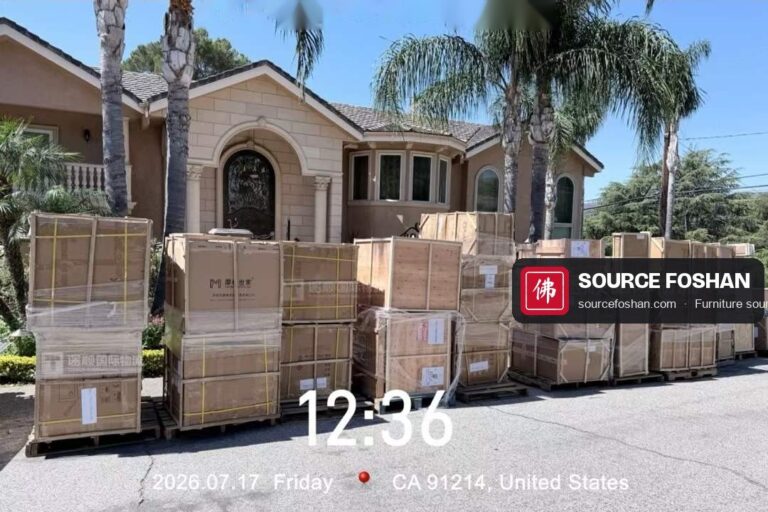 Shipping Furniture From Foshan to France: LCL vs FCL, Ports, EU Duty, French VAT and the Delivery Leg (September 2026)
In short Sea freight from Shenzhen or Nansha to Le Havre or Fos-sur-Mer takes about 25–35 days in September 2026, with most services routed…
Shipping Furniture From Foshan to France: LCL vs FCL, Ports, EU Duty, French VAT and the Delivery Leg (September 2026)
In short Sea freight from Shenzhen or Nansha to Le Havre or Fos-sur-Mer takes about 25–35 days in September 2026, with most services routed…
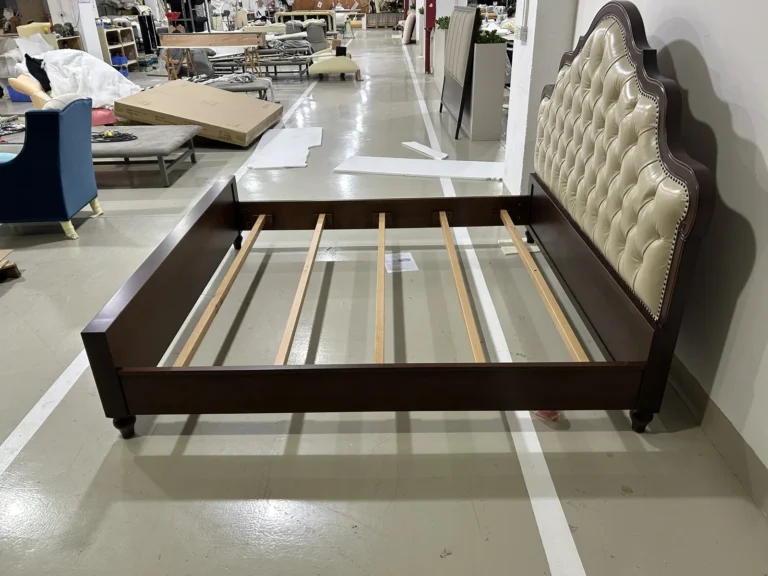 Factory-Direct Furniture From Foshan: A Six-Step SOP, the Traps at Each Step and How to Close Them
Value ÷ price, the six-layer channel mark-up that turns a ¥5,000 sofa into ¥20,000, why Foshan, five hard quality indicators, and the four traps…
Factory-Direct Furniture From Foshan: A Six-Step SOP, the Traps at Each Step and How to Close Them
Value ÷ price, the six-layer channel mark-up that turns a ¥5,000 sofa into ¥20,000, why Foshan, five hard quality indicators, and the four traps…
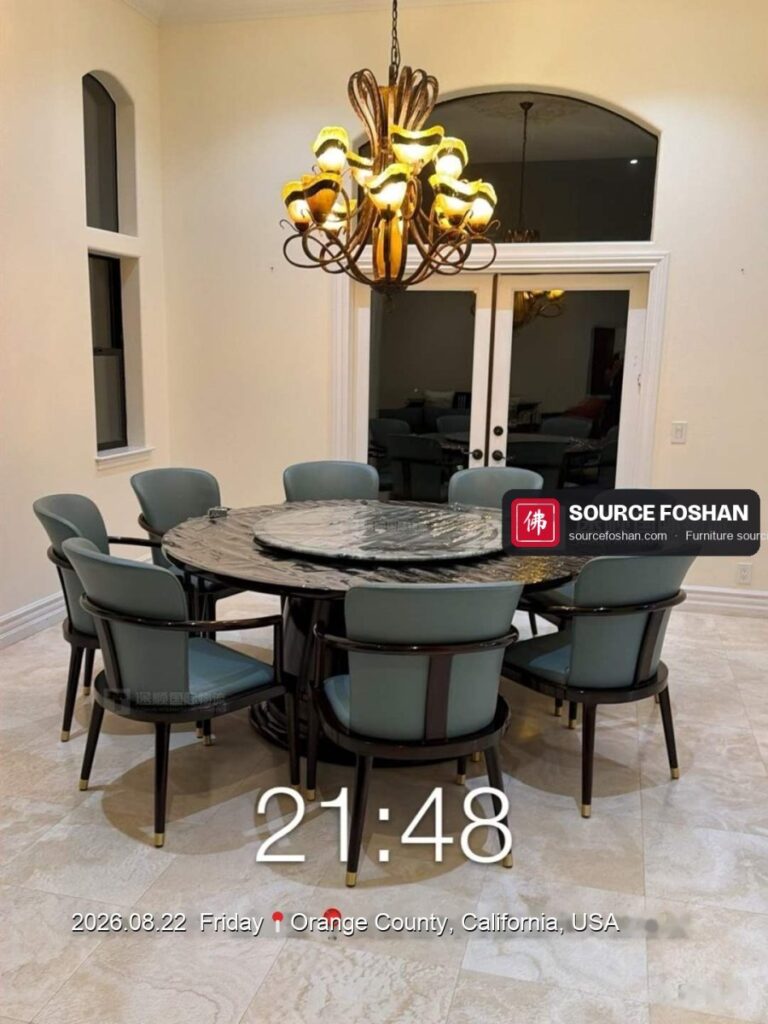 Foshan to Orange County: A Full Container Unloaded at 09:41, Every Room Furnished by 21:48 — Same Day
In short A full container of Foshan furniture for a house in Orange County, California: a marble-top desk and leather chair, a round marble…
Foshan to Orange County: A Full Container Unloaded at 09:41, Every Room Furnished by 21:48 — Same Day
In short A full container of Foshan furniture for a house in Orange County, California: a marble-top desk and leather chair, a round marble…
Send your list. We will tell you honestly how it would run.
A floor plan, an FF&E schedule, a product link or a rough brief is enough. Our local team in Foshan replies within one business day with real options, prices and lead times — no commitment.
Start Your ProjectWhatsApp +86 151 9256 9580 · hello@sourcefoshan.com · WeChat 15192569580