Destination guide
Foshan Furniture: Markets, Districts and How to Buy in China’s Furniture Capital
Foshan, in Guangdong's Pearl River Delta, is China's furniture capital: the city is estimated to make about 35% of the country's furniture, and its Shunde district holds the world's largest furniture trading district at Lecong, more than 4 million m² of malls, next to over 1,200 sofa and upholstery factories in Longjiang. Showrooms are open year-round, so you can buy on any date rather than waiting for a fair. This guide maps the districts and markets, explains how a 2–3 day trip works, and shows what furniture costs in Foshan.
- 300+vetted suppliers
- 60+projects delivered
- 18destination countries
- 100%inspected before loading
Updated by the Source Foshan sourcing team in Foshan.
At a glance
- 01
Foshan is estimated to produce about 35% of China’s furniture, with roughly 30,000 related companies across its five districts.
- 02
Lecong’s furniture district covers more than 4 million m² with 180+ malls and over 10,000 dealers, open every day of the year.
- 03
Longjiang town holds over 1,200 sofa and upholstery factories 15–20 minutes from Lecong; Shatou supplies panels and materials.
- 04
Guangzhou Baiyun airport is 45–60 minutes by car; direct high-speed trains from Hong Kong reach Foshan West in under 1.5 hours.
- 05
Two to three days covers Lecong, Longjiang and one specialist area such as Nanzhuang tiles or Luocun lighting.
Foshan is known for three things at once: the world’s largest furniture trading district, the densest sofa and upholstery factory cluster in China, and a building-materials base that supplies tiles, sintered stone, aluminium and lighting to the same buyers. Industry estimates reported by UPI in May 2026 put the city at about 35% of China’s furniture production and roughly 30,000 related companies. The Chinese customs and trade-fair context for those numbers is in the China furniture industry overview; this page stays on the ground in Foshan.
The scale is easiest to grasp in Lecong, a town in Shunde district about 25 km south of Foshan’s city centre. Guangdong’s official GDToday portal describes Lecong Furniture City as more than 4 million m² of operating area across 180-plus malls, with over 10,000 domestic and foreign dealers, some 3,000 manufacturers represented, more than 20,000 visitors a day and annual transactions of around RMB 80 billion. Malls line National Highway 325 for over 5 km. Fifteen minutes west, Longjiang town is where much of what Lecong sells is made: over 1,200 factories, mostly sofas, beds and upholstery, with a 1 million m² furniture marketplace and a 300,000 m² materials market of its own.
Foshan is also China’s ceramics capital. Nanzhuang in Chancheng district is lined with tile and sintered-stone showrooms, Dali in Nanhai produces aluminium profiles and metal furniture, and Luocun hosts a large lighting market. A buyer furnishing a whole home or fitting out a hotel can therefore source furniture, flooring, stone tops, lighting and hardware within a 40-minute radius, which no other Chinese city offers.
Consolidation is under way UPI reported that an estimated 300 Foshan furniture companies closed in 2025, about double the year before. Established showrooms and factories are not affected in the same way, but it is a reason to verify any supplier’s licence and trading history before paying a deposit.
Foshan has five districts, and only two of them, Shunde and Chancheng, matter for most furniture trips; Nanhai matters if you need metal furniture, lighting or mattresses. The specialisations are town-level, so it pays to plan by town rather than by district. The table gives the practical map; the Foshan districts page has a fuller description of each area.
| District | Town or area | Specialty | Best for |
|---|---|---|---|
| Shunde | Lecong | Furniture malls and trading; every category under one roof | First-time buyers, whole-home orders, comparing brands quickly |
| Shunde | Longjiang | Sofa, bed and upholstery factories; Ma’ao Exhibition Center; D+ Home Art park | Custom upholstery, hotel and villa furniture, factory visits |
| Shunde | Shatou | Panels, boards, foam, fabric and hardware markets | Manufacturers and buyers checking material grades |
| Shunde | Beijiao | Home appliances (Midea headquarters); metro gateway from Guangzhou South | Arrival point by Guangzhou Metro Line 7 |
| Chancheng | City centre (Zumiao, Jihua Road) | Hotels, flagship brand showrooms, the Foshan International Furniture Expo Center | Base for the trip; evening showroom visits |
| Chancheng | Nanzhuang | Ceramic tiles, sintered stone, sanitaryware showrooms | Flooring, wall cladding, stone table tops, bathrooms |
| Nanhai | Dali | Aluminium profiles, metal furniture, hardware and fittings, mattresses | Outdoor and metal-frame furniture, contract projects |
| Nanhai | Luocun | South China International Electric Light & Lighting City | Decorative and architectural lighting |
| Nanhai | Foshan West station area | High-speed rail hub (Guiyang–Guangzhou and Nanning–Guangzhou lines; direct Hong Kong trains) | Arrival by train from Hong Kong or western China |
| Sanshui | Various | Raw materials, warehousing, logistics parks | Consolidation warehouses and container loading |
| Gaoming | Various | Timber processing; growing outdoor-furniture cluster | Solid timber and outdoor sets at factory level |
Distances are short but traffic is real. Chancheng to Lecong takes 30–40 minutes by car, Lecong to Longjiang 15–20 minutes, Chancheng to Nanzhuang about 20 minutes and to Dali or Luocun 30 minutes. Dongguan’s Houjie furniture area is roughly 1–1.5 hours east.
Start at the Louvre International Furniture Exhibition Center in Lecong, then choose one or two malls that match your budget tier. Lecong’s malls sit along the 325 highway and Lecong Avenue, so moving between them is a 5–10 minute drive. Each mall is organised by floor and category, with brand showrooms of 100–2,000 m² run by the manufacturer or its regional dealer. Most sell from stock as well as to order, and most will quote a trade or project price 20–50% below the ticket on request.
| Market or mall | Location | What you find | Best for |
|---|---|---|---|
| Louvre International Furniture Exhibition Center (罗浮宫) | Lecong, National Highway 325 | About 380,000 m², 2,000+ brands: home, office, new Chinese style, kids, lighting, bedding; upper price tier | Designers and homeowners wanting high-end finished pieces in one building |
| Sunlink Furniture City, North Section (顺联北区) | Lecong | About 200,000 m²: living, bedroom, mahogany, office, accessories; mid to upper tier | Broad mid-market comparison shopping |
| Sunlink Furniture City, South Section (顺联南区) | Lecong, Xinlong section of the 325 | About 20,000 m²: sofas, hotel, contemporary and neo-classical | Sofas and hotel ranges at mid prices |
| Shunde Empire Furniture Wholesale Center (帝标) | Lecong, 325 highway | About 60,000 m²: sofas, hotel, home, neo-classical; trade-oriented | Wholesale and project buyers |
| Lecong International Furniture Exhibition Center (IFEC, 乐从国际家具展览中心) | Lecong, South Lecong Road | About 100,000 m²: upholstery, hotel, suites, outdoor, office, mahogany; mid tier | Hotel and apartment packages, outdoor |
| Lecong Tuanyi International Furniture City (团亿) | Lecong, Guangzhan Road section | About 100,000 m²: sofas, office, mahogany | Budget-to-mid sofas and office |
| Red Star Macalline Foshan | Shunde, Guangzhan Road | National chain mall: home, hotel, office, kids brands | Familiar retail format, branded goods |
| Foshan International Furniture Expo Center (佛山国际家居博览中心) | Chancheng, Foshan Avenue | Very large mixed home and building-materials mall including tiles and lighting | Buyers based in Chancheng with limited time |
| Ma’ao Exhibition Center and D+ Home Art Industrial Park | Longjiang | Factory-owned showrooms for sofas, beds, villa and hotel furniture | Custom upholstery and project furniture close to production |
| Huatian Hotel Furniture, Gelaimei, Yudao, Misimu Kufansen | Lecong and Longjiang | Specialist hospitality, apartment, office and medical furniture showrooms | Hotel, restaurant, clubhouse and office projects |
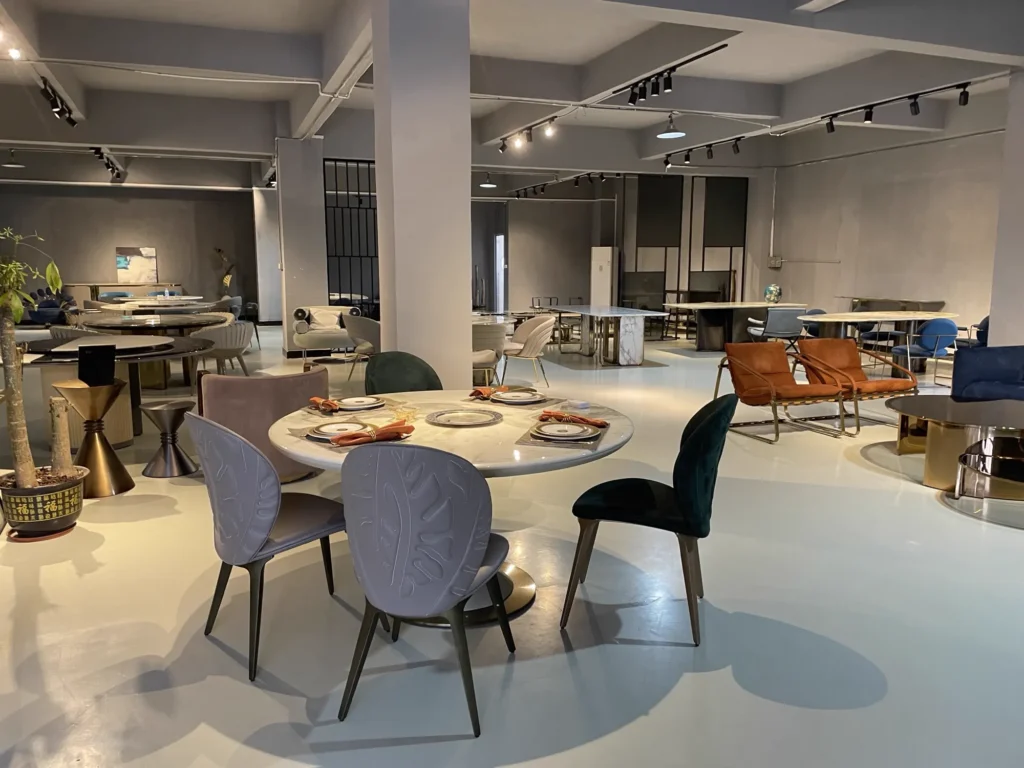
Hospitality buyers should add the dedicated venues. Huatian, Gelaimei, Yudao and Misimu display guestroom sets, lobby seating, restaurant chairs and office systems built to project specifications, and their showrooms lead directly to factories in Longjiang. The venue pages in this site’s directory, for example the Louvre furniture centre listing, give floor plans and categories, and the hotel furniture sourcing guide explains how a model-room order works.
Send your list. Get compared options from Foshan within one business day.
Real suppliers, real prices and lead times side by side, from a local team that walks the showrooms and factories every week. No commitment.
Buy standard pieces from mall showrooms, custom upholstery and casegoods from factory-attached showrooms, and one-off stone, metal or joinery items from specialist workshops. Each has a different price, minimum and level of control, and a whole-home or hotel order typically uses all three.
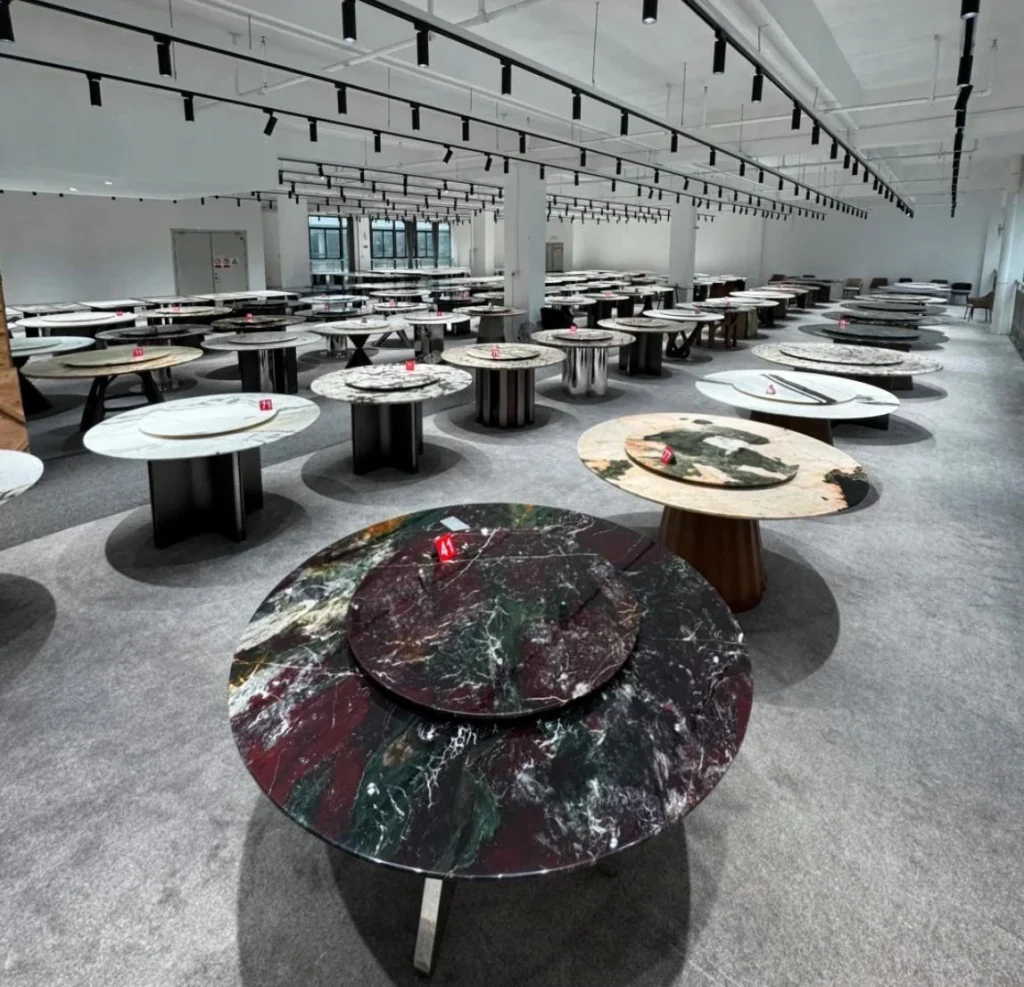
A mall showroom in Lecong is the fastest route to a finished product you can see and sit on. Prices are the highest of the three because they include the dealer’s margin and the mall rent, but there is no minimum, delivery from stock takes days, and colour or fabric changes on a displayed model take 3–5 weeks. A factory-attached showroom, common in Longjiang and at venues such as the Ma’ao Exhibition Center, sits at or near the production line. Prices run 15–30% below the mall for the same piece, minimums are modest (often 5–10 pieces of a sofa model, 20–30 chairs), and the factory can change dimensions and internal construction, not just the cover. A workshop, for example a stone yard in Nanhai or a joinery in Longjiang, makes exactly what your drawing says, at the lowest unit price, but offers no English, no export packing and no paperwork; you or your local team supply those.
Whichever you choose, the checks are the same: ask for the business licence and confirm the company name matches the bank account you will pay; ask where the piece is made and whether you may visit; and ask for the product specification in writing (frame, foam density, fabric composition and abrasion rating, finish). Many showroom brands subcontract production to Longjiang factories, which is normal, but you should know who is actually building your order. The guide to verifying China furniture manufacturers lists the documents and red flags.
Fly into Guangzhou Baiyun (CAN), stay in Chancheng or Lecong, and spend day one in Lecong malls, day two in Longjiang factories and factory showrooms, and an optional day three in a specialist area such as Nanzhuang for tiles and stone, Luocun for lighting or Dali for metal and outdoor furniture. Book showrooms and factories before you arrive: a factory visit without an appointment often ends at the gate, and a mall visit without a shortlist turns into a long walk.
| From | How | Time | Notes |
|---|---|---|---|
| Guangzhou Baiyun Airport (CAN) | Taxi or DiDi | 45–60 min to Chancheng; 60–75 min to Lecong | About 50 km; indicative fare RMB 130–200; metro alternative via Line 3 and the Guangfo Line takes about 80 min |
| Guangzhou South railway station | Guangzhou Metro Line 7 to Beijiao or Meidi Dadao (Shunde), then taxi | 20–30 min metro plus 20 min taxi to Lecong | Line 7’s western extension into Shunde opened in May 2022; a direct taxi is 45–60 min, about RMB 100 |
| Guangzhou city centre | Guangfo Line (intercity metro) | 40–60 min to Chancheng | 39.6 km, 25 stations, interchanges with Guangzhou Lines 1, 2, 3, 8, 10, 11 and 22 |
| Hong Kong West Kowloon | Direct high-speed train to Foshan West (Nanhai) | Under 1.5 hours | Some services run via Guangzhou South; Foshan West connects to Foshan Metro Line 3 |
| Shenzhen | High-speed rail to Guangzhou South, then Line 7 or taxi | 1.5–2 hours | Convenient after Shenzhen Creative Week in March |
| Within Foshan | Private car with driver or DiDi | Chancheng–Lecong 30–40 min; Lecong–Longjiang 15–20 min | Lecong has no metro station; a car with a driver saves 1–2 hours a day |
| Foshan to Dongguan Houjie | Car | 1–1.5 hours | Add a day if you want the export factories or the 3F fair |
Language and payment need a plan. English is workable in the Louvre and at export-oriented factories, and rare in smaller mall showrooms and workshops, so bring a bilingual companion or use a local team. Almost every supplier accepts WeChat Pay and Alipay, both of which now link to foreign Visa and Mastercard cards; deposits for orders are better paid by bank transfer to the company account, never to an individual’s account, and never in cash. Business cards still matter, but a WeChat QR code matters more, since every follow-up happens there.
If you can choose your dates, mid-March and mid-August coincide with the Longjiang furniture fairs and, in March, with CIFF Guangzhou, the Dongguan 3F fair and Shenzhen Creative Week; the China furniture fairs guide has the next editions. Avoid the three weeks around Chinese New Year (6 February 2027) and the first week of October, when factories and many showrooms close. Use the 55-venue Foshan showroom directory to build a shortlist by category and area before you fly.
Indicatively, a well-built three-seat fabric sofa costs USD 600–1,500 ex-works in Foshan, a 1.8–2.0 m stone-top dining table USD 500–1,500, and an upholstered king bed frame USD 500–1,400, before packing, shipping and duty. Prices vary with the mall tier, the specification and whether you are quoted the ticket price, the trade price or a factory price, so the ranges below are a guide for planning a budget rather than a price list. Published examples from a real whole-home options sheet are marked.
| Item | Indicative EXW Foshan | What moves the price |
|---|---|---|
| L-shaped sectional, about 3.8 m, cream performance fabric | About 2,400 (published example) | Frame timber, foam density, fabric brand, feather or foam back cushions |
| Three-seat fabric sofa, kiln-dried hardwood frame | 600–1,500 | Fabric abrasion rating, down blend, size |
| Three-seat top-grain leather sofa | 1,200–3,000 | Leather grade and origin, thickness, metal or wood base |
| Accent lounge chair | About 275 each (published example) | Fabric, swivel base, size |
| Low coffee table | About 450 (published example) | Stone versus wood top, base metalwork |
| Dining table 1.8–2.0 m, sintered stone or marble top | 500–1,500 | Natural marble grade, edge profile, base finish |
| Dining table 1.8 m, solid ash or oak | 450–1,200 | Timber species, thickness, finish |
| Upholstered dining chair, solid wood legs | 60–180 | Fabric, foam, timber species, quantity |
| Upholstered king bed frame with headboard | 500–1,400 | Headboard height, fabric, storage base |
| Pocket-spring mattress, 180 cm | 250–700 | Latex or memory-foam layers, spring count, fabric |
| Custom wardrobe or kitchen cabinetry, per linear metre | 300–700 | Board grade (E0/E1), door material, hardware brand |
| Area rug 4 × 3 m, short pile | About 350 (published example) | Wool content, density, hand-tufted versus machine |
| Side table | About 125 each (published example) | Stone or metal, finish |
Three habits make a real difference. First, ask for the price in writing with the specification attached, because the same sofa in two fabrics can differ by 40%. Second, ask whether the quote is EXW or includes delivery to a Foshan consolidation warehouse; local delivery is usually cheap or free. Third, compare like with like across two or three suppliers rather than accepting the first quote, since Lecong prices for the same specification commonly spread by 20–30%. Volume buyers negotiate on a different footing, covered in the China furniture wholesale guide.
Compare on the written specification, not the lowest number Any showroom can be undercut by a workshop with a thinner frame. Compare quotes on the same written specification and judge the price against that, not against the lowest number in the mall.
After the visit, orders are confirmed supplier by supplier, production is tracked for 4–10 weeks, every item is inspected and packed, and goods from all suppliers are consolidated into one shipment. This phase decides whether the trip pays off, and it is where buyers without a local presence most often lose control.
- Confirm each order in writing: drawing or photo, dimensions, materials, finish, quantity, unit price, packing method, lead time and payment terms. Pay the deposit (typically 30%) to the company bank account.
- Track production with dated photos each week; for upholstery, request a photo of the bare frame and of the foam before covering.
- Inspect before the balance: every item photographed and videoed, defects listed and fixed, then the 70% balance released.
- Pack to a written export standard: foam and corner protection, moisture barriers, wooden crates for stone and glass, bilingual labels, room-by-room marking.
- Consolidate: goods from 5–10 suppliers arrive at one Foshan or Sanshui warehouse, are measured and loaded into one container or one LCL booking.
- Ship and clear: commercial invoice, packing list and bill of lading, plus any destination requirements; typical ocean transit is 20–45 days depending on the route.
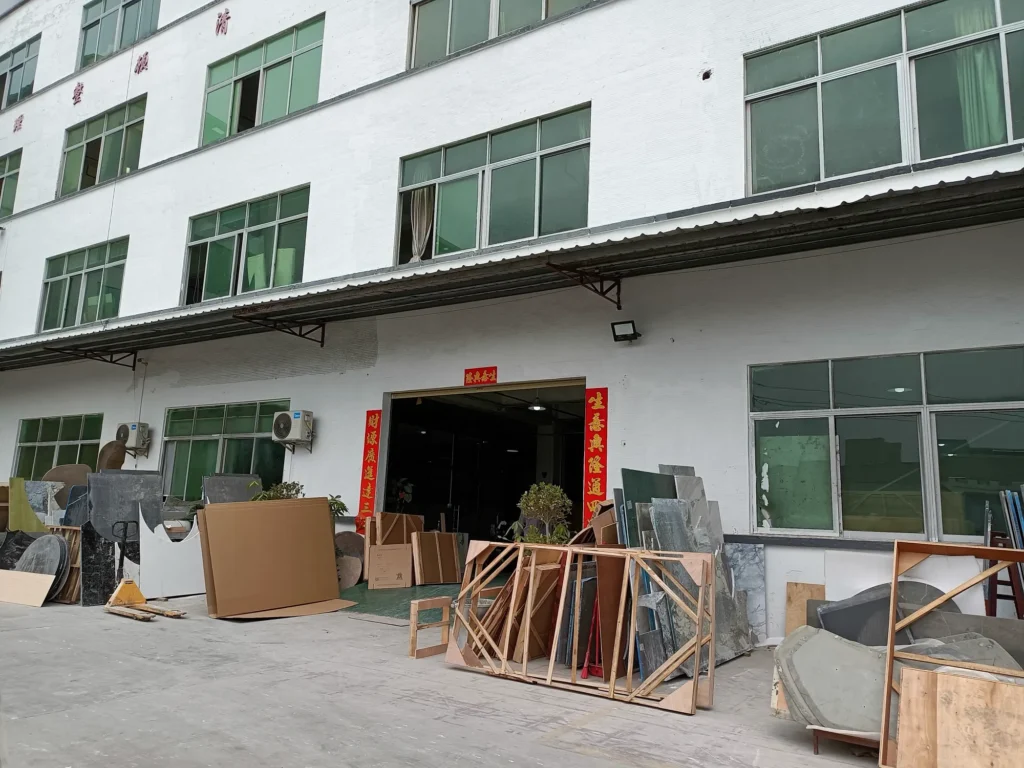
A whole home of 40–60 items from 8–10 suppliers often fits one 40 ft HQ container (about 76 m³ / 2,690 cu ft); smaller orders ship LCL by the cubic metre. Inspection standards, packing specifications and the pre-shipment report format are described on the quality control and shipping page, and the full transaction sequence with payment safeguards, Incoterms and import documents is in how to buy furniture from China.
Choose Foshan when you need range, finished stock and mixed categories in one trip; choose Dongguan when you need an export OEM factory with deep experience of Western specifications and audits; and go to Zhejiang only for a single high-volume category such as office chairs or outdoor sets. For most residential, boutique-hotel and design-studio orders, Foshan on its own is enough.
Dongguan’s Houjie and Dalingshan towns, about an hour east of Foshan, host large factories that manufacture for American and European brands under OEM and ODM contracts. They excel at casegoods, high-end upholstery and hospitality packages in quantity, and they speak the language of tech packs, third-party audits and container programmes. Their weakness for a smaller buyer is minimums: a Dongguan export factory rarely wants an order below one container of a single programme. Foshan’s Longjiang factories are smaller, faster on custom pieces and more willing to take 10–30 units, while Lecong’s showroom brands sell single pieces from stock. Prices for a comparable specification are similar; the difference is who will take your order.
Further afield, Anji in Zhejiang makes over a third of China’s exported chairs, Linhai in Zhejiang leads in outdoor furniture, Qingdao in Shandong ships solid-wood dining sets by the container, and Nankang in Jiangxi builds budget solid wood for the domestic market. Each is a day’s travel from Foshan and worth it only when one of those categories is the bulk of your order. A practical rule: if your list has more than three categories, base yourself in Foshan and let a local team bring the outliers to you as samples.
Source Foshan is a local sourcing team based in Foshan’s Chancheng district and working across Shunde, Nanhai and Dongguan. It is not a manufacturer, a marketplace or a broker directory. For buyers who visit, the team runs guided Foshan buying visits: the Standard tour at USD 99 a day covers a private electric sedan for 1–2 guests, and the Premium tour at USD 199 a day a business MPV for 2–6 guests, both including a sourcing expert, route planning, showroom and factory appointments, airport pickup, local transport, negotiation support and written notes with supplier records; hotels, meals and purchases are excluded. For buyers who cannot visit, the same team shortlists from 300+ vetted suppliers across Foshan and Dongguan, compares quotes with a stated service fee and no hidden markups, places and confirms orders, tracks production with weekly photos, runs a 7-checkpoint inspection with a full pre-shipment photo and video report, packs to a written export standard and consolidates everything into one shipment. The team has delivered 60+ projects to 18 countries, including a Greater Bay Area whole-home residence of 54 items from 9 suppliers in one container.
Frequently asked questions
Is Foshan or Guangzhou the better place to buy furniture?
Foshan, for buying. Guangzhou hosts the fairs, above all CIFF in March and the Canton Fair in April and October, and it has whole-house cabinetry headquarters, but its retail furniture malls are smaller and pricier than Lecong’s. Most buyers fly into Guangzhou, spend a fair day there if the dates fit, then base themselves in Foshan for showrooms and factories 40–60 minutes away.
Can I buy a single sofa or one dining set in Foshan?
Yes. Lecong mall showrooms sell single pieces from stock or make one to order in your fabric, typically within 3–5 weeks. The constraint is shipping rather than buying: a single sofa ships LCL by volume, and freight plus destination charges can equal 30–60% of the sofa’s price. Buyers with a few items usually consolidate with other purchases or accept the higher freight share for a piece they cannot find at home.
Do Foshan showrooms sell to foreigners at the same price as locals?
The ticket price is the same, but the price you pay depends on how you ask. Chinese trade buyers routinely receive a project or wholesale price 20–50% below the ticket, and a foreign buyer who asks for the trade price with a clear specification and quantity is usually offered the same. Arriving with a local companion, a written shortlist and a realistic quantity changes the conversation more than nationality does.
What is the best time of year to visit Foshan for furniture?
March and August to early September. In March the Longjiang fairs, CIFF Guangzhou, the Dongguan 3F fair and Shenzhen Creative Week run within two weeks, and factories are fully staffed after the New Year break. Late August has the second Longjiang fair and lower hotel prices. Avoid mid-January to mid-February for Chinese New Year (6 February 2027) and the first week of October, when suppliers close.
How much can I save by buying furniture in Foshan?
For custom and mid-to-high-end pieces, landed cost typically comes in 30–60% below comparable Western retail for the same materials, depending on shipping volume and destination duty. Savings are largest on upholstery, stone tables and cabinetry, and smallest on cheap flat-pack items that Western retailers already import at scale. US buyers should budget for Section 301 tariffs, which reduce but rarely eliminate the difference.
Do I need a visa to visit Foshan?
Citizens of 50 countries, including most of Europe, the UK, Canada, Australia, Japan and South Korea, can enter China visa-free for up to 30 days for business until 31 December 2026 under the current unilateral policy. US and Indian citizens need a visa or must use the 240-hour visa-free transit rule, which covers Guangdong. Confirm the current rules with the Chinese embassy before booking, since the policy is reviewed annually.
Is Lecong the same as Foshan Furniture City?
In practice, yes. Lecong International Furniture City, often shortened to Lecong furniture market or Foshan Furniture City, is the cluster of 180-plus malls along National Highway 325 in Lecong town, Shunde district. Individual malls inside it have their own names, such as the Louvre, Sunlink North and South, Shunde Empire and Tuanyi. There is also a separate large mall in Chancheng, the Foshan International Furniture Expo Center.
Sources and further reading
- GDToday (Southern Daily) — Lecong Furniture City, world’s largest furniture trading hub (16 Oct 2025) — 4 million m², 180+ malls, 10,000+ dealers, RMB 80 bn annual transactions
- UPI — China’s furniture hub Foshan faces deepening economic crisis (11 May 2026) — Foshan est. 35% of China’s furniture production; ~30,000 companies; ~300 closures in 2025
- Foshan.furniture — About Foshan (market facts) — Longjiang 1,200+ factories; 1 million m² furniture and 300,000 m² materials marketplaces; Lecong malls over 5 km
- Simonsense — Top 8 Malls in Lecong Furniture Market — Mall names, locations and floor areas (Louvre, Sunlink, Empire, IFEC, Tuanyi, Red Star, Foshan Intl Furniture Expo Center)
- Wikipedia — Guangfo line — 39.6 km, 25 stations, opened 2010; interchanges with Guangzhou Metro
- Wikipedia — Meidi Dadao station (Guangzhou Metro Line 7 western extension) — Line 7 from Guangzhou South into Shunde opened 1 May 2022
Field notes · from the blog
What buying in Foshan is actually like, from people who paid for the lesson.
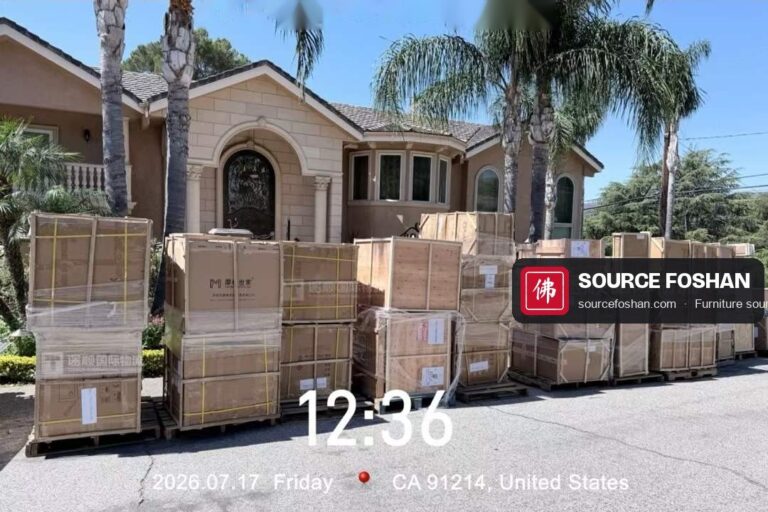 Shipping Furniture From Foshan to France: LCL vs FCL, Ports, EU Duty, French VAT and the Delivery Leg (September 2026)
In short Sea freight from Shenzhen or Nansha to Le Havre or Fos-sur-Mer takes about 25–35 days in September 2026, with most services routed…
Shipping Furniture From Foshan to France: LCL vs FCL, Ports, EU Duty, French VAT and the Delivery Leg (September 2026)
In short Sea freight from Shenzhen or Nansha to Le Havre or Fos-sur-Mer takes about 25–35 days in September 2026, with most services routed…
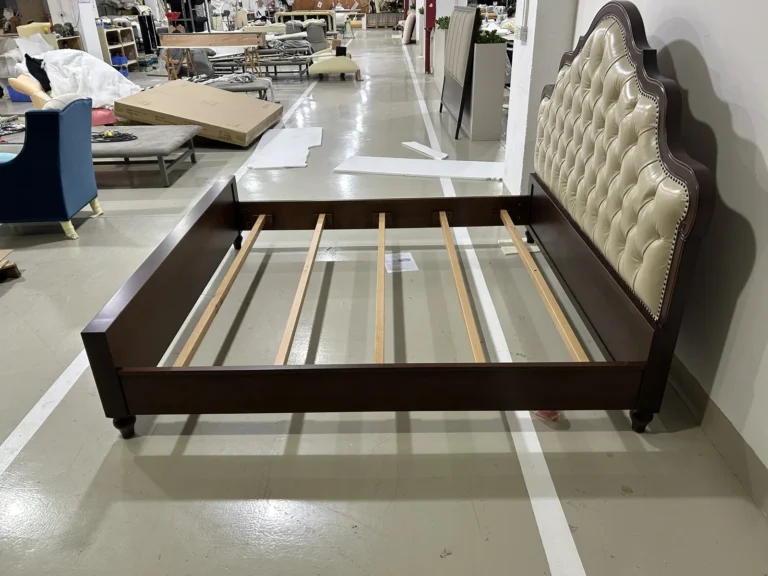 Factory-Direct Furniture From Foshan: A Six-Step SOP, the Traps at Each Step and How to Close Them
Value ÷ price, the six-layer channel mark-up that turns a ¥5,000 sofa into ¥20,000, why Foshan, five hard quality indicators, and the four traps…
Factory-Direct Furniture From Foshan: A Six-Step SOP, the Traps at Each Step and How to Close Them
Value ÷ price, the six-layer channel mark-up that turns a ¥5,000 sofa into ¥20,000, why Foshan, five hard quality indicators, and the four traps…
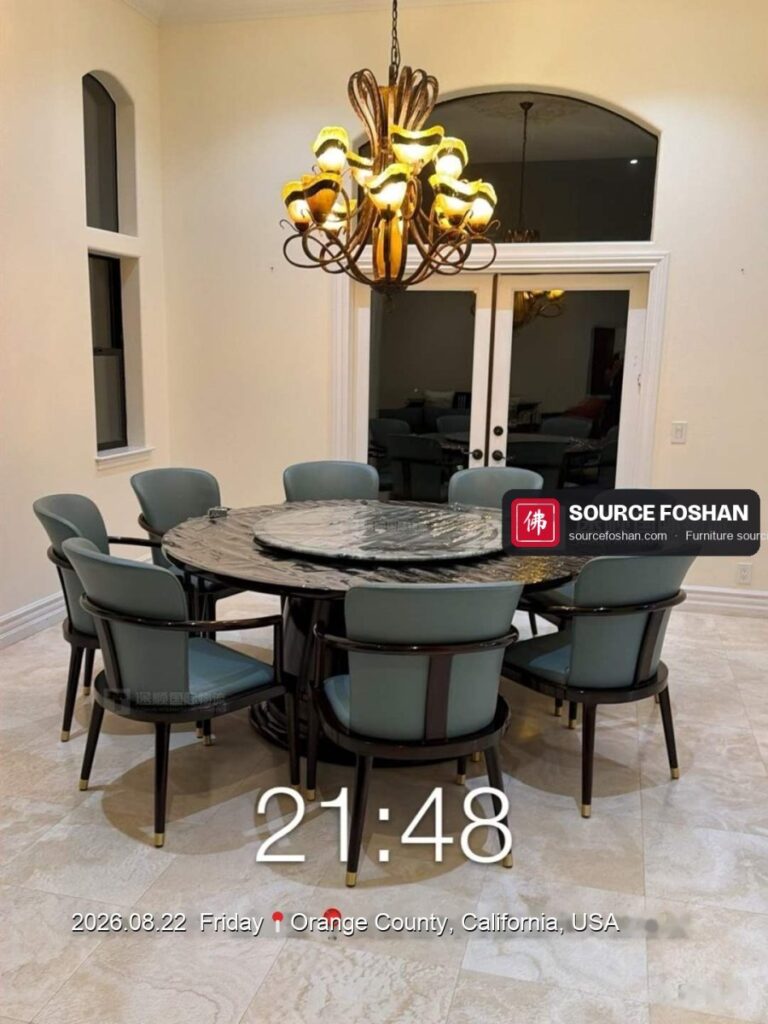 Foshan to Orange County: A Full Container Unloaded at 09:41, Every Room Furnished by 21:48 — Same Day
In short A full container of Foshan furniture for a house in Orange County, California: a marble-top desk and leather chair, a round marble…
Foshan to Orange County: A Full Container Unloaded at 09:41, Every Room Furnished by 21:48 — Same Day
In short A full container of Foshan furniture for a house in Orange County, California: a marble-top desk and leather chair, a round marble…
Send your list. We will tell you honestly how it would run.
A floor plan, an FF&E schedule, a product link or a rough brief is enough. Our local team in Foshan replies within one business day with real options, prices and lead times — no commitment.
Start Your ProjectWhatsApp +86 151 9256 9580 · hello@sourcefoshan.com · WeChat 15192569580