Free checklist
Furniture Inspection Checklist: Pre-Production, In-Production and Pre-Shipment
A furniture inspection has three moments: before production starts, during production, and before the container is loaded. This checklist gives the specific items to confirm at each one, from moisture content and foam density to shipping marks and the seal number, so nothing is left to a factory's own judgement. Print it, put the order number at the top, and tick each line with a photo.
- 300+vetted suppliers
- 60+projects delivered
- 18destination countries
- 100%inspected before loading
Updated by the Source Foshan sourcing team in Foshan.
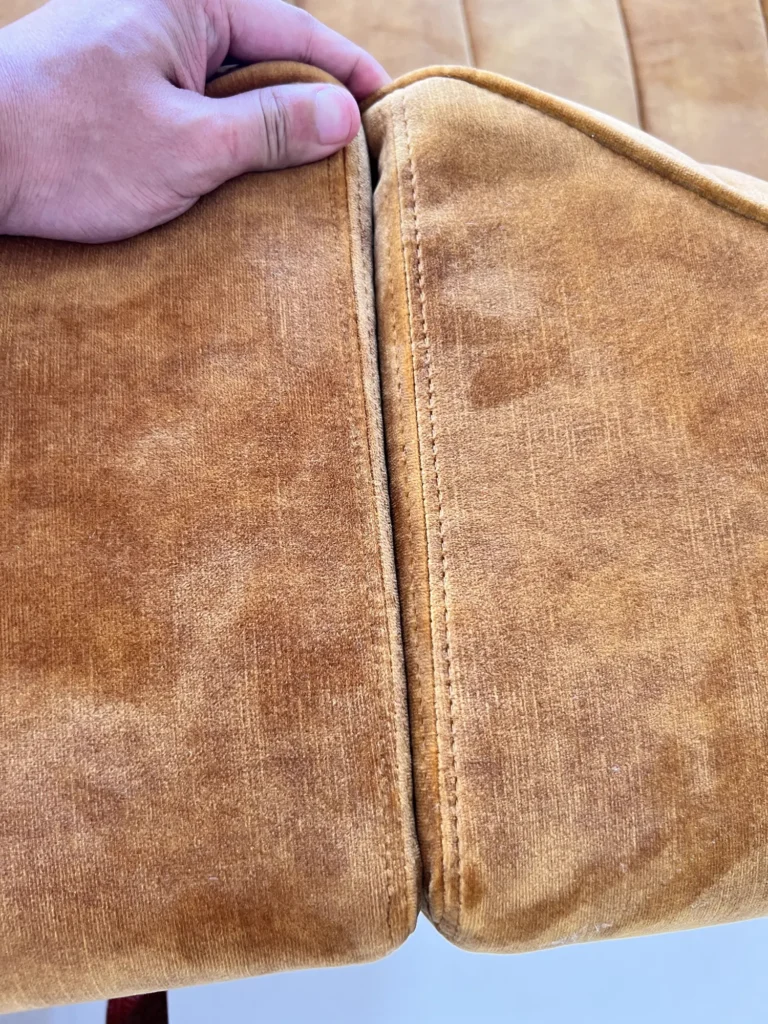
At a glance
- 01
Most furniture defects are prevented at pre-production by freezing drawings, samples, colour standards, hardware and packing in writing.
- 02
Made-to-order furniture is inspected 100%; AQL sampling applies only to runs of identical items, typically 50 pieces or more.
- 03
Interior timber should measure 8–12% moisture; door and drawer gaps typically 2–3 mm; casegoods within about ±2 mm of drawing.
- 04
Every carton needs a label with item code, room, carton n of N, dimensions, weight and ISO 780 handling symbols.
- 05
Solid-wood crates and pallets must carry a printed ISPM 15 mark; the balance is paid only after you approve the report.
Use it in three passes, each tied to a payment or approval point: pre-production before the deposit is released to production, in-production at the first article, and pre-shipment before the balance. Each pass has an owner, a timing and an output, and each line should be closed with a photo or a measurement, not a tick alone. The checklist is written for a buyer, a designer or an inspector standing at a factory in Foshan or Dongguan; it works equally for a single custom piece or a 300-chair contract order.
| Pass | When | Who normally does it | Output | Payment link |
|---|---|---|---|---|
| Pre-production | After deposit, before material is cut; typically 3–7 working days per supplier | Sourcing team or project manager with the factory’s technical lead | Signed drawing, retained samples, colour panel, hardware list, packing spec | Production released |
| In-production | Frame, upholstery, finishing and first-article stages; weekly | Sourcing team QC, with weekly photo update to buyer | Stage photos, first-article report with measurements | First article approved; batch continues |
| Pre-shipment | 2–5 days before loading; 100% on made-to-order, AQL sampling on volume runs | Sourcing team QC, optionally with a third-party inspector | Item-by-item report, defect log, packing and loading photos, load plan | Balance released after your approval |
- Bring the signed drawing, the colour panel, the retained fabric and finish samples, a tape measure, a moisture meter, a spirit level and a straight edge. A phone camera is enough for photos; take them in daylight.
- Record every measurement in a table with the drawing value, the measured value and the tolerance. A photo of the tape on the piece is the evidence.
- Classify each finding as critical, major or minor and agree the action before leaving the factory. The classes and the AQL sampling table are explained on the quality control and shipping page.
- Do not sign off packing you have not seen closed. The last photo of each item is the sealed carton with its label.
| Item code | Dimension | Drawing (mm) | Measured (mm) | Tolerance | Result |
|---|---|---|---|---|---|
| LR-01 sofa | Overall width | 3,200 | 3,206 | ±10 mm | Pass |
| LR-01 sofa | Seat height, compressed | 430 | 428 | ±5 mm | Pass |
| DR-02 table | Top length | 2,400 | 2,403 | ±2 mm | Fail; rework edge |
| BR-03 wardrobe | Door gap, each side | 2.5 | 2.0–3.0 | 2–3 mm | Pass |
Confirm these twelve items in writing before any material is cut. They take a few days and prevent the disputes that cost weeks later. On custom work the shop-drawing step is described in more depth on the custom furniture page.
- Dimensioned shop drawing for every custom item, checked against the brief: overall size, seat height, clearances, door swing, cut-outs, and the room it must fit through (door and lift openings measured at the destination).
- Physical material samples approved and retained: fabric or leather with batch number, veneer or solid timber species and cut, stone slab photo with slab number, metal finish coupon, foam density label (typically 28–35 kg/m³ for seats, 20–25 kg/m³ for backs on residential sofas; confirm per piece).
- Colour standard: a signed finish panel for each stain, lacquer or powder coat, viewed under neutral daylight, with an agreed acceptable range (light and dark limit panels where possible).
- Hardware list by brand and model or agreed equivalent: hinges, drawer slides, mechanisms, castors, glides, locks, bolts and keys.
- Timber moisture content target agreed (typically 8–12% for interior furniture; lower for dry heated climates) and the meter to be used.
- Construction method stated: joint types, glue, screw and dowel pattern, back-panel fixing, corner blocks on frames, spring or webbing type on seats.
- Finish specification: sanding grade, number of coats, sheen level in gloss units, edge treatment, and whether undersides and interiors are finished.
- Quantity, item codes and room codes fixed and matched to the options sheet or FF&E schedule.
- Tolerances agreed per product type (indicatively casegoods ±2 mm, sofa overall ±10 mm, stone tops ±1.5 mm, drawer and door gaps 2–3 mm) as the factory’s working standard.
- Compliance requirements for the destination confirmed with the supplier and documented: formaldehyde class for composite boards, upholstery flammability standard, timber species declaration, glass tempering marks.
- Packing specification agreed and priced: carton grade, foam thickness, corner protection, crate or pallet, moisture barrier, label content, ISPM 15 for any solid wood.
- First-article point agreed: which piece, when, what will be measured, and that the batch waits for approval.
Frames are checked bare, before foam and cover hide them, and upholstery is checked before the final closing seam so foam and webbing can still be seen. If you can only visit once during production, this is the visit to make.
Frame and structure
- Timber species and grade match the sample; no bark, large knots or splits on load-bearing rails.
- Moisture content measured on three rails and recorded; within the agreed range.
- Joints as specified: dowels, mortise and tenon or screwed and glued blocks; glue squeeze-out cleaned; no gaps.
- Corner blocks on all frame corners; centre rails on seats over about 1.6 m.
- Frame square: diagonals equal within 3 mm; no rock on a flat floor.
- Panel products: thickness as specified (for example 18 mm carcass, 9–12 mm backs); edge banding continuous with no lifting.
- Load test: sit, lean and push; no creak, flex or movement at any joint.
- Legs and feet: fixing plates or threaded inserts secure; leg height equal within 2 mm; glides fitted.
- Weight-bearing hardware (bed slats, table extension rails) fitted and tested.
Upholstery
- Foam density and thickness match the label and the approved cushion sample; cut a corner of one seat cushion cover to see the foam label if it is not visible.
- Seat suspension as specified: serpentine springs, pocket springs or elastic webbing at the agreed spacing.
- Cover fabric batch number matches the sample; no shade difference between pieces of one order when placed side by side.
- Pattern matched across seat, back and arms; pile direction consistent on velvet.
- Seams straight, stitch density even, no puckering; topstitching and piping consistent in width.
- Cushions fill the cover with no bagging or corner voids; zips run freely and are hidden.
- Leather: hide grade as sample, no unsightly scars or brands on visible panels, consistent grain and colour between panels.
- Underside: dust cover fitted and stapled straight; no exposed staples or sharp edges.
- Flammability or fibre-content label attached where the destination requires it.
Send your list. Get compared options from Foshan within one business day.
Real suppliers, real prices and lead times side by side, from a local team that walks the showrooms and factories every week. No commitment.
These checks are done at finishing and again at final inspection, under daylight and with the retained samples beside the piece. Colour and figure faults on visible faces are major defects; the same fault on an underside is minor.
Timber and veneer
- Species, cut and figure match the approved sample; veneer leaves on one face book-matched or slip-matched as agreed.
- No colour mismatch between panels of one piece, or between pieces intended for one room, when viewed together.
- Veneer fully bonded: no bubbles, lifting edges or telegraphing of the substrate.
- Solid-timber tops flat within 2 mm over 1 m, checked with a straight edge; breadboard ends and expansion allowance where specified.
- Sanding scratches, glue lines and filler invisible at arm’s length under daylight.
- Drawer boxes: solid or plywood sides as specified; dovetail or dowel joints tight; bottoms fixed, not floating loose.
Stone and sintered stone
- Slab number matches the approved slab photo; vein direction and colour as agreed; sintered stone pattern and thickness as sample.
- Dimensions within about ±1.5 mm; edges square; corners as specified (radius or chamfer).
- Edge profile polished to the same sheen as the top; no chips, fissures or filled cracks on visible faces.
- Cut-outs and drill holes positioned per drawing; undersides sealed where specified.
- Top sits flat on its base without rocking; fixing method (silicone, brackets, dowels) as agreed.
- Weight recorded for packing and handling; two-person lift points marked.
Metal
- Tube or bar section and wall thickness match the specification (measure with callipers at a cut end where possible).
- Welds continuous, ground smooth on visible faces; no pinholes or spatter.
- Powder coat or plating even, with no runs, thin spots or orange peel; thickness as agreed; cross-hatch adhesion test on a coupon.
- Colour matches the approved metal coupon; gloss level consistent across parts.
- Threads clean; fixings stainless or plated as specified for outdoor use.
- Frames level and square; no twist when placed on a flat floor; glides or caps fitted.
Function is tested on every piece, not sampled, because a binding drawer or a soft-close that slams is the fault an end user notices first. Finish and colour are judged against the signed panel, never against memory or a phone screen.
Hardware and function
- Hardware brand and model match the list; no unlisted substitution.
- Every door opens and closes fully; soft-close engages; doors align at top and bottom.
- Every drawer runs the full extension, self-closes, and does not sag or rattle; fronts level with each other.
- Door and drawer gaps within the agreed range (typically 2–3 mm) and even along their length.
- Mechanisms cycled at least five times: recliners, sofa beds, extension tables, lift-top tables, swivels, height adjusters.
- Locks operate with both keys supplied; keys bagged and labelled with the item code.
- Adjustable feet, glides and castors fitted and working; piece level on a flat floor.
- Shelves supported at the agreed pin spacing; no deflection under a light load.
- Loose hardware and assembly tools counted, bagged and labelled for knock-down items; assembly sheet included.
Finish and colour
- Colour within the light and dark limit panels under daylight; check each piece against the panel and against the other pieces for the same room.
- Sheen level as specified; consistent between top, sides and edges.
- Surface free of dust nibs, runs, sags, orange peel, pinholes and fisheyes at arm’s length.
- Cross-hatch adhesion test passed on an offcut of the same finish batch.
- Edges and corners fully coated; no bare timber at the back edge of tops.
- Interior surfaces and undersides finished to the agreed level; no strong solvent odour at inspection.
- No scratches, dents or pressure marks from handling in the factory; protective film still on glass and mirrors.
Packing is inspected open and then closed, and loading is photographed in sequence. Half of the arrival damage on furniture from China comes from packing that was never specified, so this section is checked against the written packing spec from pre-production.
Packing and marks
- Inner protection as specified: foam or EPE on all faces, corner boards, film or non-woven wrap on upholstery, glass taped and boarded.
- Loose parts (legs, shelves, hardware, keys, assembly sheet) bagged, labelled and packed inside the main carton or crate, and listed on the packing list.
- Carton grade and crate construction as agreed; stone and glass in timber or plywood crates; tops separated from bases.
- Every solid-wood crate, pallet and bearer carries a printed ISPM 15 mark (IPPC symbol, country code, producer number, HT); the treatment certificate is on file.
- Desiccant inside cartons; VCI wrap on metal parts; timber at 8–12% moisture before it is sealed.
- Label on at least two adjacent faces: consignee or project, order number, item code and description, room code, carton n of N, external dimensions in cm, gross weight in kg.
- ISO 780 handling symbols printed: this way up, fragile, keep dry, stacking limit; centre of gravity marked on crates.
- Country of origin marked as the destination requires (Made in China).
- Carton count, dimensions and weights match the packing list line by line; total cubic metres calculated from actual cartons.
Container loading
- Container inspected empty: dry, clean, no holes (check for daylight with doors closed), floor sound, doors and seals working; container number photographed.
- Load plan followed: heavy crates and cabinetry on the floor at the front, upholstery on top and last; last room to be installed loaded first.
- Stacking limits respected; no carton on its side or on an unsupported edge; stone A-frames strapped to the container lashing points.
- Gaps filled with air bags, timber bracing or foam; nothing can move more than a few centimetres in any direction.
- Photos at empty, one-quarter, half, three-quarters and full, then doors closed with the seal.
- Seal number recorded, photographed and matched to the bill of lading draft.
- Load plan document issued: container and seal number, each carton’s position, item code, room and weight, total m³ and gross weight.
- Count in equals count on the packing list; any shortage resolved before the doors close, not at the destination.
The balance to each supplier is released only when the inspection is approved and the paperwork that the shipment depends on is in hand. Check the set below; missing compliance files are the most common reason a container clears production on time and then waits at a port. The wider import process and Incoterms are covered in the guide to buying furniture from China.
| Document | Issued by | What to check |
|---|---|---|
| Pre-shipment inspection report | Sourcing team QC (and third party if booked) | Item-by-item, measurements, defect log closed, packing and loading photos, your sign-off |
| Commercial invoice | Each supplier, consolidated | Item codes, quantities, unit and total prices, currency, Incoterm match the confirmed quote |
| Packing list | Each supplier, consolidated | Carton count, dimensions, net and gross weights, item and room codes match labels |
| Load plan and seal record | Consolidation warehouse | Container number, seal number, carton positions, totals |
| ISPM 15 treatment certificate | Crate or pallet maker | Provider number matches the stamp on the wood |
| Bill of lading (draft, then original or telex release) | Freight forwarder / carrier | Consignee, notify party, container and seal numbers, description, gross weight |
| Certificate of origin | Supplier via chamber of commerce or CCPIT | Required only where the destination or a preference scheme asks for it; confirm with your broker |
| Product compliance files | Suppliers | Composite-wood formaldehyde certificates, upholstery flammability statements, timber species and origin declarations, glass tempering marks, as the destination requires |
| Marine insurance certificate | Forwarder or insurer | Insured value, all-risks cover, named consignee |
| HS code list per item | Importer with customs broker | Suggested codes from the sourcing team reviewed and confirmed by your broker; see the HS code guide |
Classification and duties are the importer’s responsibility; the furniture HS code guide explains how Chapter 94 splits seats, other furniture and mattresses. Confirm the final code and rate with your customs broker on the date of entry.
Source Foshan is a local sourcing team based in Foshan and working in Dongguan. It is not a factory, marketplace or broker directory, and it manufactures nothing. Its quality control runs the checks on this page as 7 checkpoints on every order: material selection, incoming inspection, production monitoring, assembly inspection, final quality check, packaging verification and shipment approval. Luke leads the QC team at the factories; Wolina Zhang and Shin Yu Goh manage timelines and orders; Forest is the accountable contact.
You receive weekly photo updates during production and a full pre-shipment photo and video report item by item. You approve it before anything ships, and the balance is paid after QC. Export packing follows a written standard with foam and corner protection, moisture barriers, custom wooden crates, bilingual labels and room-by-room labelling, and goods from several suppliers are consolidated into one shipment: 120+ containers shipped, 100% inspected before loading. Designers and studios get the same report under their own brand, as described on the page for designers. Send your item list through start your project to get the checklist applied to your order.
Frequently asked questions
Can I do the inspection myself on a buying trip?
Yes, for showroom stock and the first-article visit, and this checklist is written for that. Bring the signed drawing, colour panel, retained samples, a tape measure and a moisture meter, and photograph every line. The pre-shipment inspection is harder to do yourself because suppliers finish on different dates over 1–3 weeks; most buyers have a local team or a third-party inspector cover that pass and review the report remotely.
How long does a pre-shipment inspection take?
Indicatively half a day for a single custom piece, one day for a room of 10–15 items, and two to three days for a whole home of 50–60 items spread across several suppliers, plus a day at the consolidation warehouse for packing and loading. Volume runs inspected to an AQL plan take about one man-day per 80–200 sampled pieces depending on the product. Reports are issued 2–5 days before loading.
What tolerance should I expect on furniture from China?
Typical workshop standards in Foshan are about ±2 mm on casegoods and cabinetry, ±10 mm on overall sofa dimensions, ±1.5 mm on stone tops and 2–3 mm door and drawer gaps. These are working standards rather than published norms, so write the tolerance into the order for each product type and record the drawing and measured value for every critical dimension in the report.
What should I do if the report shows defects?
Reply with a decision on each line of the defect log: rework, remake, accept with a credit, or reject. Rework is re-inspected and photographed before packing, and the supplier’s balance stays on hold until you approve the re-inspection. A typical rework such as re-veneering two doors takes about six days; the loading plan usually carries a one-to-two-week buffer so a single rework rarely moves the sailing date.
Sources and further reading
- ISO — ISO 2859-1:2026 Sampling procedures for inspection by attributes, Part 1: Sampling schemes indexed by acceptance quality limit (AQL) — Basis for AQL sampling on volume runs
- US Department of Defense — MIL-STD-105E, Sampling Procedures and Tables for Inspection by Attributes (1989), Tables I and II-A — Sample size code letters and accept/reject numbers referenced from the quality page
- IPPC/FAO — Explanatory document for ISPM 15 (Regulation of wood packaging material in international trade), February 2017 — Heat treatment 56 °C for 30 minutes, 6 mm and processed-wood exclusions, mark contents, printed not hand-drawn
- ISO — ISO 780:2015 Packaging, Distribution packaging, Graphical symbols for handling and storage of packages — Handling symbols on cartons and crates
- US eCFR — 19 CFR Part 134, Country of Origin Marking — US origin marking requirement
Field notes · from the blog
What buying in Foshan is actually like, from people who paid for the lesson.
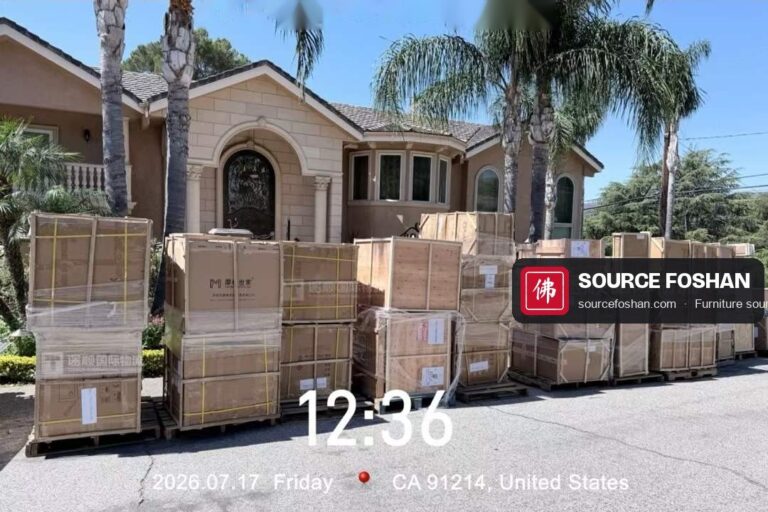 Shipping Furniture From Foshan to France: LCL vs FCL, Ports, EU Duty, French VAT and the Delivery Leg (September 2026)
In short Sea freight from Shenzhen or Nansha to Le Havre or Fos-sur-Mer takes about 25–35 days in September 2026, with most services routed…
Shipping Furniture From Foshan to France: LCL vs FCL, Ports, EU Duty, French VAT and the Delivery Leg (September 2026)
In short Sea freight from Shenzhen or Nansha to Le Havre or Fos-sur-Mer takes about 25–35 days in September 2026, with most services routed…
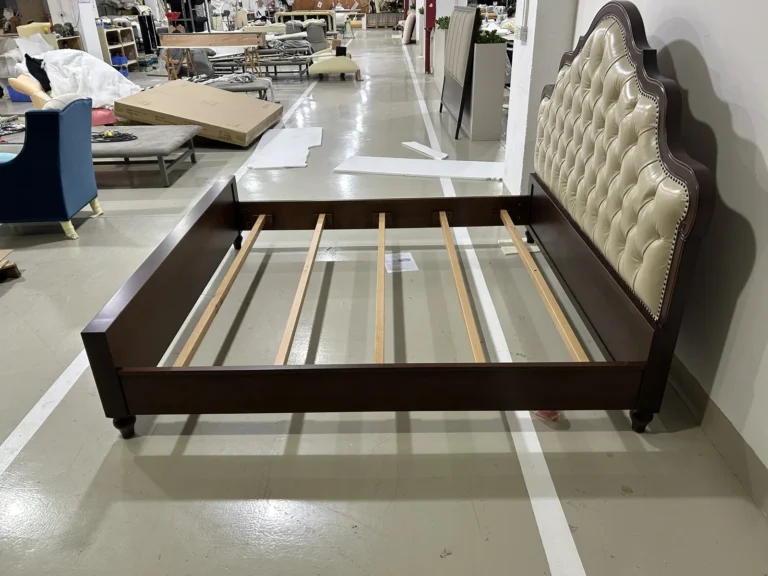 Factory-Direct Furniture From Foshan: A Six-Step SOP, the Traps at Each Step and How to Close Them
Value ÷ price, the six-layer channel mark-up that turns a ¥5,000 sofa into ¥20,000, why Foshan, five hard quality indicators, and the four traps…
Factory-Direct Furniture From Foshan: A Six-Step SOP, the Traps at Each Step and How to Close Them
Value ÷ price, the six-layer channel mark-up that turns a ¥5,000 sofa into ¥20,000, why Foshan, five hard quality indicators, and the four traps…
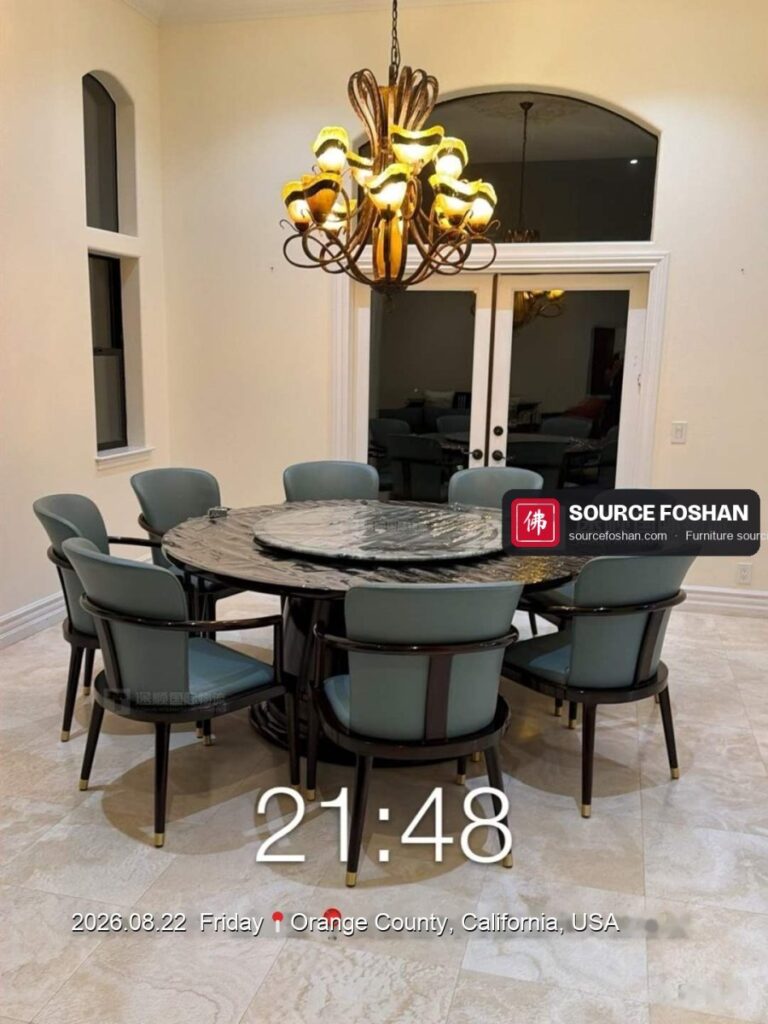 Foshan to Orange County: A Full Container Unloaded at 09:41, Every Room Furnished by 21:48 — Same Day
In short A full container of Foshan furniture for a house in Orange County, California: a marble-top desk and leather chair, a round marble…
Foshan to Orange County: A Full Container Unloaded at 09:41, Every Room Furnished by 21:48 — Same Day
In short A full container of Foshan furniture for a house in Orange County, California: a marble-top desk and leather chair, a round marble…
Send your list. We will tell you honestly how it would run.
A floor plan, an FF&E schedule, a product link or a rough brief is enough. Our local team in Foshan replies within one business day with real options, prices and lead times — no commitment.
Start Your ProjectWhatsApp +86 151 9256 9580 · hello@sourcefoshan.com · WeChat 15192569580