Wholesale guide
China Furniture Wholesale: Prices, MOQs, Mixed Containers and Where to Buy
Wholesale furniture from China means buying at the factory or trading-company tier, where ex-works prices typically sit at 30–40% of the Western retail price for comparable goods, in return for volume: usually 20–50 pieces per model or a mixed container worth USD 15,000–40,000. Foshan's Lecong and Longjiang districts and Dongguan's Houjie are where most overseas volume buyers source. This guide covers price tiers, MOQs, consolidation, timing and inspection for retailers, e-commerce sellers, developers and project buyers.
- 300+vetted suppliers
- 60+projects delivered
- 18destination countries
- 100%inspected before loading
Updated by the Source Foshan sourcing team in Foshan.
At a glance
- 01
Factory ex-works prices typically sit at 30–40% of the Western retail price for comparable furniture, before freight, duties and delivery.
- 02
Factory MOQs run 20–50 pieces per model for seating and 10–20 for case goods; showrooms sell from one piece at higher prices.
- 03
A 40 ft high-cube container (about 76 m³) can be filled from 5–10 suppliers if one party consolidates, packs and plans the load.
- 04
Avoid confirming orders in late December or late September: Chinese New Year (6 February 2027) and Golden Week (1–7 October) stop production.
- 05
For volume orders, a random-sample pre-shipment inspection across every model and colour is the norm, and the balance follows the report.
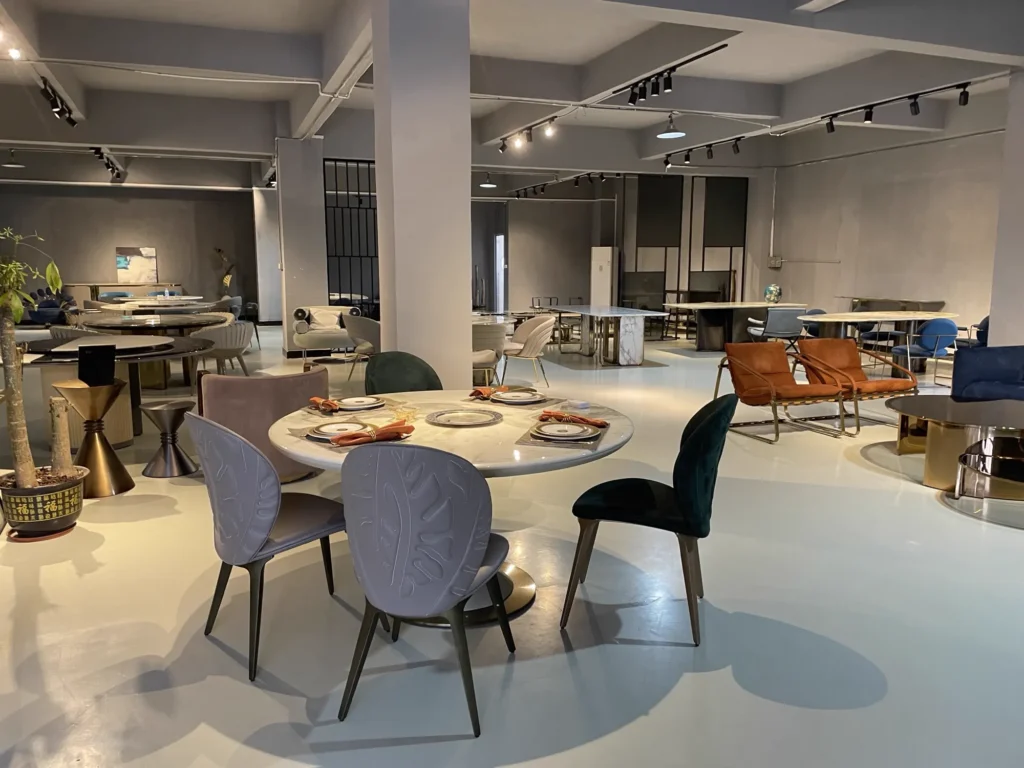
In China, ‘wholesale’ is not one price but a ladder of at least four tiers: factory ex-works, trading-company FOB, showroom ‘project price’ and showroom retail. The word on a shop sign in Lecong (批发, pifa) usually means the showroom will discount for quantity, not that you are buying at factory cost.
Factories sell ex-works to anyone who meets the minimum order, but many do not export directly, work in English or handle documents. Trading companies and export agents add 8–15% for that service and often hold the export licence. Showroom brands in the Lecong malls sell the same or similar goods to Chinese dealers at a ‘project price’ 15–30% below listed retail, and to walk-in buyers at retail with room to negotiate. A local sourcing team sits outside this ladder: it charges a stated fee and lets you buy at whichever tier fits your quantity.
Which tier you should buy at depends on three things: quantity per model, how much customisation you need, and whether you can handle export logistics yourself. A retailer ordering 200 chairs in two colours belongs at the factory. A developer furnishing 30 apartments with 40 different items is better served by a trading company or a sourcing team that can place small quantities with many factories and consolidate them. A designer buying 15 statement pieces will find the showroom project price faster and safer than chasing factory minimums.
The infrastructure for volume is mature. China exported RMB 483 billion of furniture in 2024, about USD 68 billion and up 7% on 2023 according to China Customs data, so consolidation warehouses, export packers and forwarders exist in every cluster. For an industry-wide map of where each product is made, see how China’s furniture industry works.
Indicatively, a piece that retails for USD 1,000 in the US or Europe costs USD 300–400 ex-works at a Foshan factory, USD 350–450 FOB through a trading company, and USD 450–600 on a showroom floor before negotiation. Landed at your warehouse with freight and duties, the same piece typically costs USD 450–650. The index below is a working guide, not a quotation.
| Tier | Index | Who buys here | What is included |
|---|---|---|---|
| Western retail | 100 | Consumers | Retailer margin, showroom, returns, marketing |
| Western trade or designer net | 60–75 | Designers, contractors | Trade discount off retail |
| China showroom retail (Lecong, Longjiang) | 45–60 | Walk-in buyers | Domestic display price; negotiable 10–20% |
| Showroom project price | 35–50 | Chinese dealers, project buyers | Quantity or project discount; export packing often not included |
| Trading company FOB | 35–45 | Overseas importers | Export packing, documents, loading; 8–15% service margin |
| Factory ex-works | 28–40 | Volume buyers meeting MOQ | Product only, standard carton, at the factory door |
| Landed in a US or EU warehouse (from factory tier) | 45–65 | — | Adds freight, insurance, duties, port charges and delivery |
The gap is widest on upholstery, solid timber and stone, where labour and materials dominate, and narrowest on commodity items already imported at scale by Western chains. Hotel and contract-grade pieces follow the same ladder with tighter specifications; contract and hospitality projects add testing and warranty requirements that sit above the residential ladder.
Factory MOQs are usually 20–50 pieces per model for chairs and sofas, 10–20 for beds and case goods, and 5–10 for large tables, with lower figures when you accept the factory’s standard fabrics and finishes. Showrooms sell one piece; trading companies sit in between and often accept a mixed order if the total value is high enough.
| Product | Factory MOQ (per model) | Trading company | Showroom stock |
|---|---|---|---|
| Dining chairs (wood or metal frame) | 50–100 pcs | 20–50 pcs | 4–6 pcs |
| Fabric sofa (standard model) | 20–30 sets | 10 sets | 1 set |
| Custom sofa (your fabric or size) | 30–50 sets | 20 sets | 2–5 sets |
| Beds and headboards | 20 pcs | 10 pcs | 1 pc |
| Wardrobes, sideboards, TV units | 10–20 pcs | 5–10 pcs | 1 pc |
| Dining tables (stone or timber top) | 5–10 pcs | 5 pcs | 1 pc |
| Office task chairs | 100–200 pcs | 50 pcs | 5–10 pcs |
| Outdoor aluminium or rope sets | 20–30 sets | 10 sets | 1–2 sets |
| Mattresses | 50–100 pcs | 20–50 pcs | 1 pc |
Two levers lower MOQs without raising the price much: standardising on the factory’s in-stock fabric and finish cards, and combining models from the same factory so that the total order, not each model, reaches the factory’s minimum run, typically USD 8,000–15,000. To make sure the ‘factory’ quoting you is in fact the maker, read how to verify a Chinese furniture manufacturer.
Send your list. Get compared options from Foshan within one business day.
Real suppliers, real prices and lead times side by side, from a local team that walks the showrooms and factories every week. No commitment.
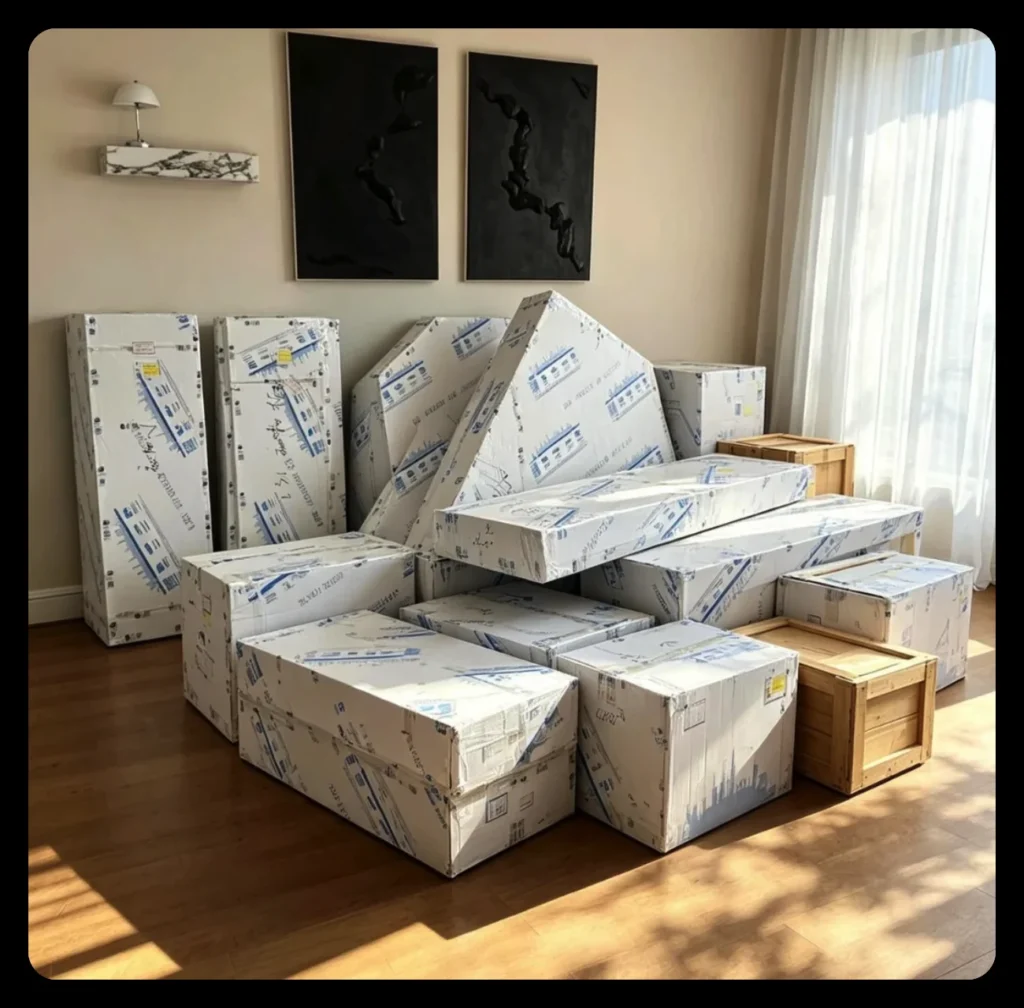
A mixed 40 ft high-cube holding goods from 5–10 suppliers is the standard model for a small retailer or a project buyer, and it works when one party, your forwarder or a local sourcing team, receives, checks, repacks and loads everything at a single warehouse. Suppliers deliver ex-works to that warehouse; the consolidator plans the load and issues one set of export documents.
- Volume planning: collect carton dimensions from every supplier before ordering. A three-seat sofa carton is 1.6–2.2 m³; a stacked pack of four dining chairs 0.6–0.9 m³; a knock-down wardrobe 0.5–0.8 m³. A 40 ft high-cube offers about 76 m³ (2,690 cu ft), in practice 65–70 m³ once loading gaps and crates are counted.
- Consolidation cost: warehouse receiving, inspection, repacking and loading typically run USD 15–30 per m³, plus USD 300–600 for the load plan and documents on a 40 ft container; export crating for stone and glass is extra.
- Timing: suppliers finish on different dates. The consolidator holds early goods for two to four weeks; longer storage is charged per m³ per week.
- Labelling: every carton carries the PO number, item code, room or store location and carton count (for example 3 of 7), in English and Chinese, so unloading at destination is fast.
- Documents: one commercial invoice and one packing list covering all suppliers, with the consolidator or exporter as shipper of record.
Below about 15 m³ the same logic applies but the goods ship LCL, consolidated again at the port with other shippers’ cargo. Between 15 and 28 m³ a 20 ft container is usually cheaper than LCL and far safer for stone and solid wood. From 30 m³ upward the 40 ft high-cube wins on cost per cubic metre, and most mixed residential orders land between 45 and 70 m³ once sofas, mattresses and wardrobes are counted.
For the full sequence of payments, inspection, export documents and import clearance behind a container shipment, see how to buy furniture from China step by step.
Overseas volume buyers use five channels: Foshan’s Lecong furniture malls, the Longjiang factory zone, Dongguan’s Houjie export factories, online B2B platforms and the trade fairs. Most serious importers combine two or three of them.
| Channel | Best for | Pros | Cons |
|---|---|---|---|
| Lecong malls (Louvre and neighbouring centres) | Retailers, designers, mixed orders | Thousands of styles in one district; sit-test everything; stock available; low MOQ | Showroom prices; export packing and documents often not included; quality varies by brand |
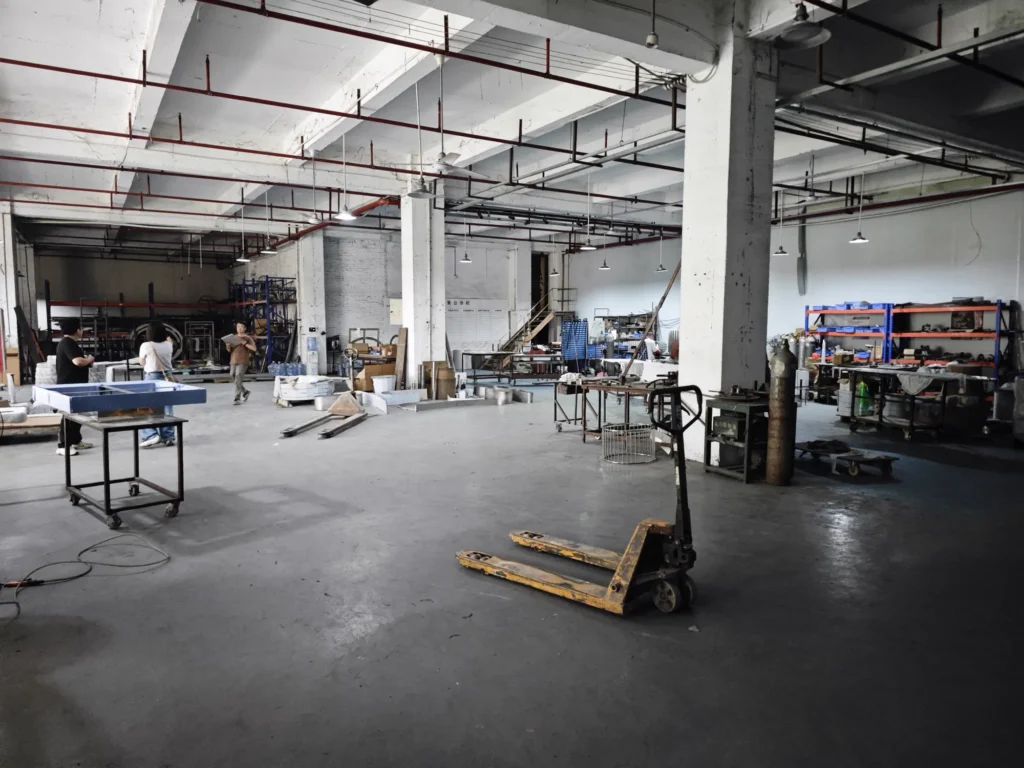
| Longjiang factory zone (Shunde) | Upholstery, beds and dining in volume | Factory prices; custom fabrics and sizes; see production | MOQs; less English; appointments and a translator needed |
| Dongguan Houjie export factories | Retail chains, hotel projects, private label | Export-ready OEM and ODM; compliance paperwork; consistent batches | Highest MOQs, often one container; less flexible on small runs |
| Online B2B platforms | First contact, price discovery | Broad reach; quick quotes | Trading companies dominate; samples costly; verification falls on you |
| Trade fairs (CIFF Guangzhou, Dongguan, Shenzhen) | Discovering new suppliers and lines | The whole industry in one week; new collections | Twice a year only; fair prices are opening offers; follow-up needed |
Within Foshan, the Lecong showroom district is where you compare finished products, while Longjiang is where you visit the sofa and bed factories behind them; the two towns are about 20 minutes apart by car. The largest single venue is the Louvre International Furniture Exhibition Center, where many showroom brands quote a project price for quantity. For a district-by-district map and trip planning, read the Foshan furniture guide.
Price breaks in China come from quantity per model, standardisation of fabrics and finishes, and timing, roughly in that order. A supplier will typically move 5–8% between 20 and 50 pieces of one model, another 3–5% at 100, and little after that. Asking for 30% off a fair factory quote signals inexperience and usually buys a thinner frame or lower-density foam, not a discount.
- Standardise: two fabrics across five sofa models beats five fabrics across two. Each extra fabric or finish adds a purchasing minimum on the supplier’s side.
- Ask for the ladder: unit price at 20, 50 and 100 pieces, and the surcharge for your own fabric or colour. Compare like for like, same Incoterm and same packing.
- Trade payment terms for price: a 40% deposit or a faster balance can be worth 2–3% to a factory financing its materials.
- Time the fairs: quotes given in the two weeks before CIFF Guangzhou (18–21 and 28–31 March 2027 for the 59th edition; confirm with the organiser) are opening offers, and the best deals on stock and display models come in the month after a fair.
- Respect the holidays: Chinese New Year falls on 6 February 2027, and Guangdong factories typically stop for two to four weeks around it; workers travel home and the first production after the break is slower. National Day Golden Week (1–7 October in both 2026 and 2027) closes factories for a week and squeezes port space for two. Confirm orders by early December or after mid-February, and by late August or after mid-October.
- Get written price validity: 30–60 days is standard, because foam, timber and steel prices move.
For the full calendar of fairs and how to combine a fair with a Foshan visit, see China furniture fairs: dates and planning.
Private label is straightforward at the factory tier: woven or printed labels, engraved logos, branded cartons and hang tags typically add USD 0.5–3 per piece and 3–7 days, with artwork minimums of 300–1,000 labels. What takes longer is protecting the product specification so that batch two matches batch one.
Consistency between batches is the real test of a wholesale supplier. Foam suppliers, fabric mills and hardware brands change, and a factory under price pressure will substitute quietly unless the specification is written down and checked. Buyers who reorder successfully keep a golden sample, a one-page spec per model and a photo record of each inspection, and they pay a little more to stay with a factory that has passed twice rather than switching to save 5%.
- Samples: pay for a pre-production sample (usually the unit price plus 30–100%, refundable against the order) and keep it as the golden sample. Photograph it with a tape measure in frame.
- Spec sheet: frame timber and moisture content, foam density in kg/m³, fabric composition and abrasion rating, hardware brand, finish system, packing method. Attach it to the pro-forma invoice.
- In-line inspection at 30–50% completion for first orders and any custom item; a first-article check catches frame or dimension errors before upholstery hides them.
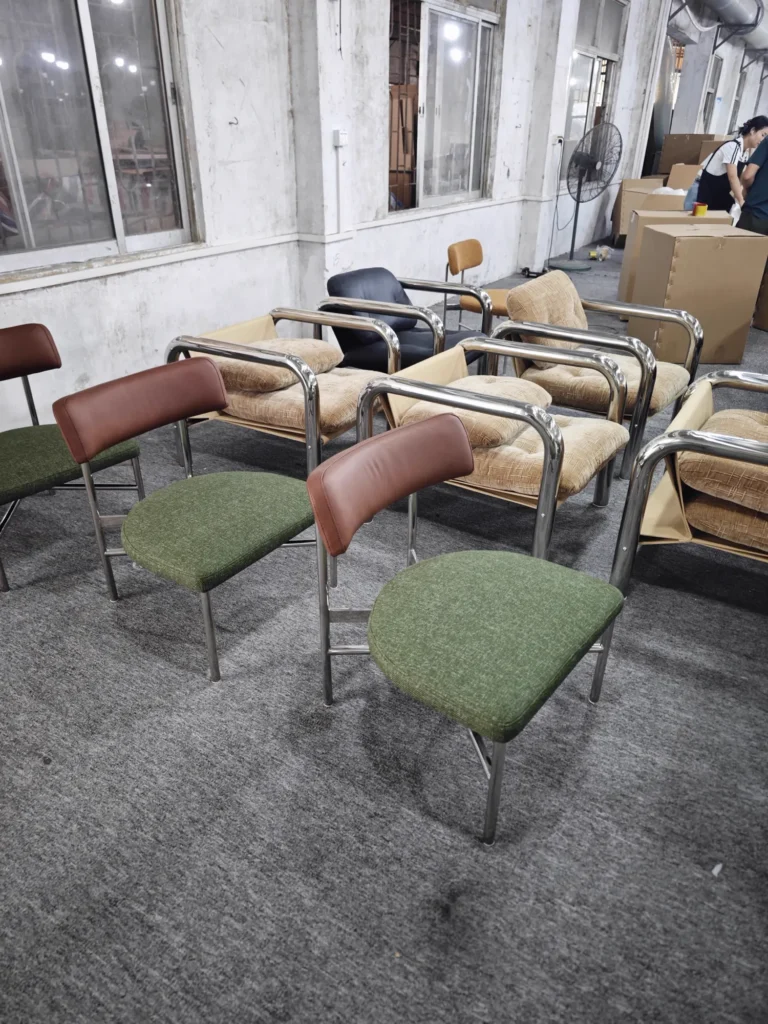
- Pre-shipment inspection: a random sample sized to the batch (AQL-based, often 20–30 pieces for 200–500 units), checking dimensions, finish, function, labels and carton drop resistance. The balance is paid after the report.
- Market compliance: fire labels, formaldehyde certification and timber declarations are ordered with the goods, not afterwards. The quality control and shipping page lists the checkpoints a proper inspection covers.
A worked example for a 40 ft high-cube of mid-range residential furniture, bought at factory and showroom project tiers and shipped FOB South China to a US West Coast warehouse in 2026, lands at roughly 1.5–1.9 times the ex-works value. To Northern Europe, with low EU duty but 19–25% import VAT, the multiple is similar. Every figure is indicative and depends on your codes and freight quotes.
| Line | Indicative USD | Notes |
|---|---|---|
| Goods ex-works (12 sofa sets, 40 dining chairs, 10 tables, 12 beds, 20 case goods) | 32,000 | Mix of factory and showroom project prices |
| Export packing, consolidation, load plan | 2,400 | About USD 30 per m³ plus documents |
| Inland trucking and export clearance (to FOB) | 900 | Foshan to Shenzhen or Nansha |
| Ocean freight, 40 ft HQ | 3,500–7,500 | Drewry’s World Container Index put Shanghai–Los Angeles at about USD 7,350 per 40 ft on 10 September 2026 and the composite near USD 2,100 in March; confirm at booking |
| Marine insurance | 200 | Around 0.5% of insured value |
| US duties | 8,000–16,000 | Section 301 at 25% on most codes; Section 232 at 25% on upholstered wooden seats and cabinets; a further 12.5% Section 301 duty on many other Chinese goods since 24 July 2026; confirm the stack with your broker |
| Customs broker, ISF, port and terminal fees | 1,200 | Includes a single-entry bond if no annual bond is held |
| Drayage to warehouse and unloading | 1,200 | Within about 80 km of the port |
| Total landed | 49,400–61,400 | 1.5–1.9 times ex-works value; per-item landed cost still well below comparable retail |
US importers should note that the base (MFN) duty on most Chapter 94 furniture is free, but in 2026 Chinese-origin goods carry Section 301 duties and, for upholstered wooden seats, kitchen cabinets and vanities, Section 232 duties as well. The furniture HS code guide explains the codes and the current duty picture with dated sources; classification remains your broker’s call.
Source Foshan is a local sourcing team based in Foshan and working in Dongguan. It is not a factory, marketplace or broker directory, and it does not manufacture anything. For volume buyers the team’s core jobs are supplier search and shortlisting across 300+ vetted suppliers in two cities, quote comparison and negotiation with transparent, compared pricing and a stated service fee, and order placement and confirmation with every supplier. During production each order is tracked with weekly photo updates, then passes a 7-checkpoint quality process ending in a full pre-shipment photo and video report; you approve before loading and pay the balance after QC. Goods from several suppliers are consolidated in one warehouse, export-packed to a written standard with bilingual location-by-location labels, and loaded into one planned container. To date the team has shipped 120+ containers across 60+ projects to 18 countries. Retailers and studios can buy under their own brand with NDAs, using an options sheet per line item that states FOB unit price, frame or cover and lead time. Read about the furniture sourcing service or start your project.
Frequently asked questions
Can I buy wholesale furniture in China without a registered company?
Yes. Chinese factories and showrooms sell to individuals, and the export side is handled by the supplier, a trading company or your consolidator, who acts as shipper of record. What you need is an importer of record at destination: in most countries a private individual can import a container, but a customs broker will need your tax or importer number, and commercial quantities may trigger business registration or VAT obligations locally.
Is it cheaper to buy from a factory or from a Lecong showroom?
A factory is cheaper per piece, typically 25–40% below the showroom’s listed price, but only once you meet its MOQ of 20–50 pieces per model and accept standard finishes. A showroom sells from one piece, lets you sit-test the product and usually offers a project price 15–30% below listed retail for quantity. Mixed orders often combine both: seating from factories, accent pieces and stock items from showrooms.
How many suppliers can go in one container?
There is no technical limit; the featured whole-home project on this site combined 54 items from 9 suppliers in one container. Practically, 5–10 suppliers is the sweet spot for a 40 ft high-cube. Beyond that, coordination time, storage while waiting for the slowest supplier and the number of inspection visits rise faster than the savings. Every supplier must deliver ex-works to the same consolidation warehouse.
What deposit do wholesale furniture suppliers in China expect?
Thirty percent on order confirmation is standard for factories and trading companies, with 70% due after the pre-shipment inspection and before loading. Showrooms selling from stock may ask 50% or full payment for small amounts. Pay only to the company’s registered bank account, matched against the business licence, and never in full upfront. Larger orders above about USD 100,000 can justify a letter of credit.
Can I put my own brand on furniture from China?
Yes. At the factory tier, woven or printed labels, engraved logos, branded cartons and hang tags typically add USD 0.5–3 per piece, 3–7 days and artwork minimums of 300–1,000 labels. Ask for a written agreement that your designs and artwork will not be sold to others (an NNN agreement), keep the golden sample, and register your trademark in your home market and in China before printing.
When is the best time of year to place a wholesale furniture order in China?
March to May and September to early December give the smoothest production. Avoid confirming orders in late December or January, because Chinese New Year (6 February 2027) closes Guangdong factories for two to four weeks, and avoid late September, when Golden Week (1–7 October) stops production and fills vessels. Prices for display and stock models are often best in the month after CIFF Guangzhou in March.
Do Chinese furniture wholesalers ship small orders?
Trading companies and showrooms will, as LCL cargo priced per cubic metre, usually with a minimum of 1–2 m³. Factories rarely handle small exports directly. The catch is cost: fixed charges for documents, port handling and customs entry make LCL 2–3 times the per-m³ cost of a full container, so a small order lands at a price closer to Western wholesale than the factory ladder suggests.
Sources and further reading
- CEIC / China General Administration of Customs — China Export: Furniture & Parts thereof — 2024 export value RMB 483 billion, up 7% year on year
- Travel China Guide — China Public Holidays 2026 and 2027 — Chinese New Year 6 February 2027; National Day Golden Week 1–7 October; 2027 arrangement provisional until the State Council notice
- CIFF Guangzhou — China International Furniture Fair official site — 59th edition, March 2027, two phases; confirm dates with the organiser
- FreightAmigo — 40ft High Cube Container: Dimensions, Weight and Capacity Guide — Internal volume about 76 m³ (2,694 cu ft)
- Drewry — World Container Index, 10 September 2026 — Shanghai–Los Angeles about USD 7,350 per 40 ft; composite about USD 2,100 in March 2026
- Honigman — Section 122 tariffs expire; new Section 301 tariffs on 60 economies effective 24 July 2026 — 12.5% on products of China stacking with the existing 25% Section 301 duty; Section 232 goods exempt from the new duty
Field notes · from the blog
What buying in Foshan is actually like, from people who paid for the lesson.
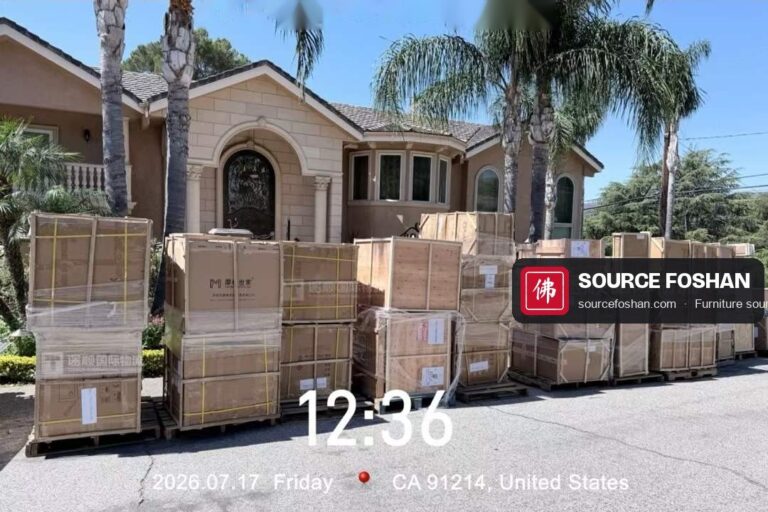 Shipping Furniture From Foshan to France: LCL vs FCL, Ports, EU Duty, French VAT and the Delivery Leg (September 2026)
In short Sea freight from Shenzhen or Nansha to Le Havre or Fos-sur-Mer takes about 25–35 days in September 2026, with most services routed…
Shipping Furniture From Foshan to France: LCL vs FCL, Ports, EU Duty, French VAT and the Delivery Leg (September 2026)
In short Sea freight from Shenzhen or Nansha to Le Havre or Fos-sur-Mer takes about 25–35 days in September 2026, with most services routed…
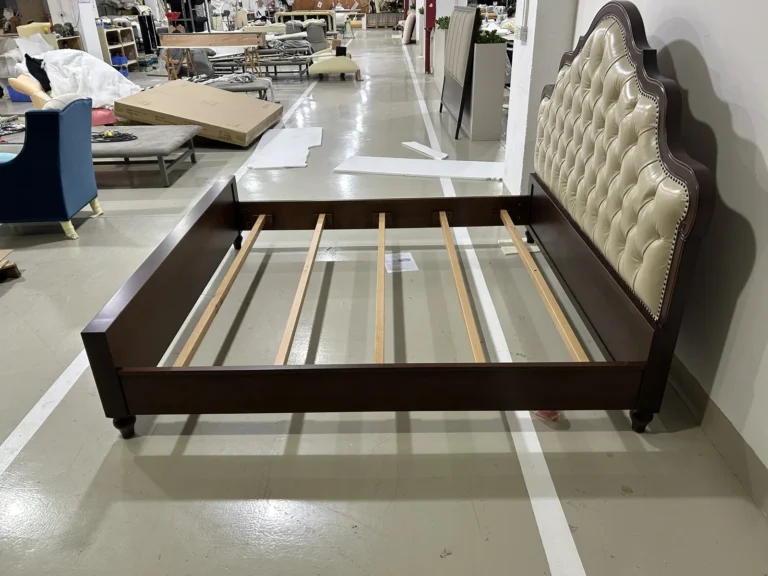 Factory-Direct Furniture From Foshan: A Six-Step SOP, the Traps at Each Step and How to Close Them
Value ÷ price, the six-layer channel mark-up that turns a ¥5,000 sofa into ¥20,000, why Foshan, five hard quality indicators, and the four traps…
Factory-Direct Furniture From Foshan: A Six-Step SOP, the Traps at Each Step and How to Close Them
Value ÷ price, the six-layer channel mark-up that turns a ¥5,000 sofa into ¥20,000, why Foshan, five hard quality indicators, and the four traps…
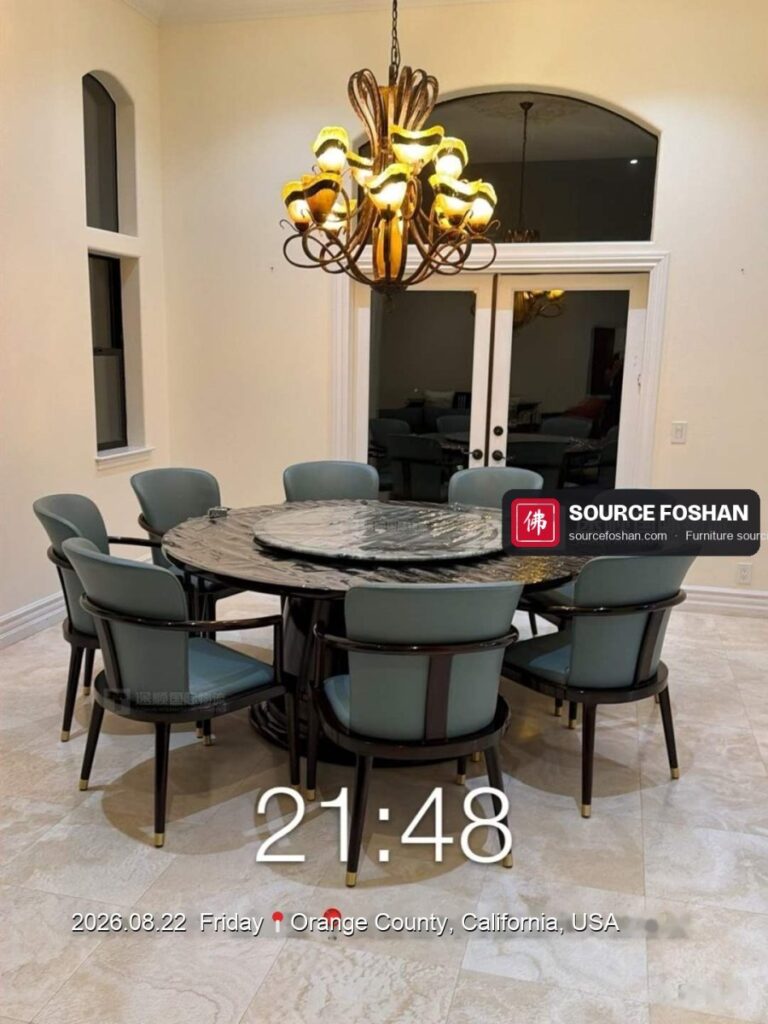 Foshan to Orange County: A Full Container Unloaded at 09:41, Every Room Furnished by 21:48 — Same Day
In short A full container of Foshan furniture for a house in Orange County, California: a marble-top desk and leather chair, a round marble…
Foshan to Orange County: A Full Container Unloaded at 09:41, Every Room Furnished by 21:48 — Same Day
In short A full container of Foshan furniture for a house in Orange County, California: a marble-top desk and leather chair, a round marble…
Send your list. We will tell you honestly how it would run.
A floor plan, an FF&E schedule, a product link or a rough brief is enough. Our local team in Foshan replies within one business day with real options, prices and lead times — no commitment.
Start Your ProjectWhatsApp +86 151 9256 9580 · hello@sourcefoshan.com · WeChat 15192569580