Fabric, wood, stone and metal checked batch by batch against your approved sample.
Quality control & shipping · Foshan, China
Furniture Quality Control, Consolidation & Shipping from China
Quick answer: Furniture quality control should connect approved specifications to inspection evidence and a release decision. Check materials before production, workmanship during production, dimensions and finish before packing, then verify labels, quantities, packaging and loading. Record defects, corrective action, reinspection status and the person authorised to release the balance payment.
The QC scope should be agreed before production: which stages are checked, which units or samples are inspected, what evidence is delivered and who authorises shipment and payment. Source Foshan coordinates the agreed checks and reports findings for your release decision.
- Agreed scopeinspection coverage recorded for your order
- QC checkpoints to plan for your order
- Before releaseagree time to review the report and close findings

You approve before it shipsReport identifies inspected items or samples
Why it matters
Buying overseas means trusting what you can't see.
We document these four risks through agreed checks, findings and release decisions. Payment milestones follow the written supplier terms.
Size, colour, finish and structure verified against the confirmed drawings, before and during production.
In-production inspection catches structural and finishing problems while they are still cheap to fix.
Export packing, moisture barriers and crating specified for a long sea voyage, not a truck ride.
The system
Seven checkpoints, one accountable process.
Our standard documented workflow runs from the first material sample to the sealed container, coordinated by the same project team.
- Material selectionFabric, timber, stone, metal and foam approved as physical samples.3–7 days per supplier
- Incoming inspectionMaterials checked on arrival at the factory against the retained sample.Before cutting
- Production monitoringFrame, foam and upholstery, finishing: photos with a tape measure in every weekly update.Weekly photos
- Assembly inspectionJoints, gaps, hardware fit and stability on the assembled piece.Doors 2–3 mm gap
- Final quality checkDimensions, finish, function and photos checked to the agreed item or sampling plan.Coverage agreed before inspection
- Packaging verificationFoam, corner guards, moisture barrier, crate and label checked against the written spec.ISPM 15 crates
- Shipment approvalReport reviewed before the agreed release milestone; record approval and any held items.Your signature
Step one · before the deposit
What is checked before production starts?
Five things are frozen in writing before a factory cuts the first panel or frame: the dimensioned shop drawing checked against your specification, physical material samples, a colour standard, the hardware list and the packing specification. On a managed project this pre-production check typically takes 3–7 working days per supplier, and it is where most later disputes are prevented rather than argued about.
Every custom piece gets a dimensioned shop drawing (plan, elevation, section, exploded view where relevant). It is checked line by line against the brief: overall size, seat height, clearances, door swing, cable cut-outs, weight limits. Nothing goes into production on a reference photo alone.
Drawing rules: custom furniture developmentFabric, leather, veneer, solid timber, stone, metal finish and foam density are approved as physical samples, not screen images. A retained sample of each is labelled with the order number and kept for the final inspection.
Stains, lacquers and powder coats are matched to a signed sample panel viewed under neutral daylight (typically D65 or 5,000–6,500 K), because a warm showroom lamp hides a cool-grey cast that a client will see at home.
Hinges, slides, castors, glides, locks, mechanisms and bolts are listed by brand and model, or by an agreed equivalent. Hardware is a frequent silent substitution, so the list is part of the order, not a note.
Carton type, foam thickness, corner protection, crate or pallet, moisture barrier and label content are agreed before production so the packing cost is in the quote and not a surprise at the end.
Free checklistPrint or save our furniture inspection checklist: pre-production, in-production and pre-shipment items, the same structure our QC team works through.
Open →
Why packing is agreed first
Packing is the single largest cause of arrival damage on furniture from China, and a factory quoting ex-works has no incentive to over-pack. Agreeing the standard before the deposit means the factory prices it in and the inspector has something written to check against.
Step two · in the workshop
What is checked during production?
Production is checked at four points where a defect is still cheap to fix: frame or carcass, foam and upholstery, finishing, and first article. Each checkpoint produces evidence you receive, usually as part of the weekly photo update. A typical made-to-order sofa passes through all four in 30–45 days; full cabinetry takes 8–10 weeks and adds a hardware-fit check.
 01
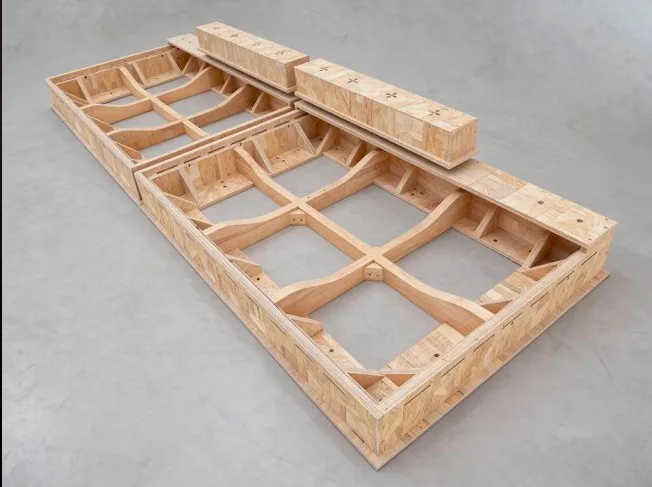
Frame / carcass
Timber species and moisture (typically 8–12% for interior furniture), joint type, glue and screw pattern, squareness, panel thickness, edge banding.
Photos of bare frames with tape measure; moisture-meter reading where timber is solid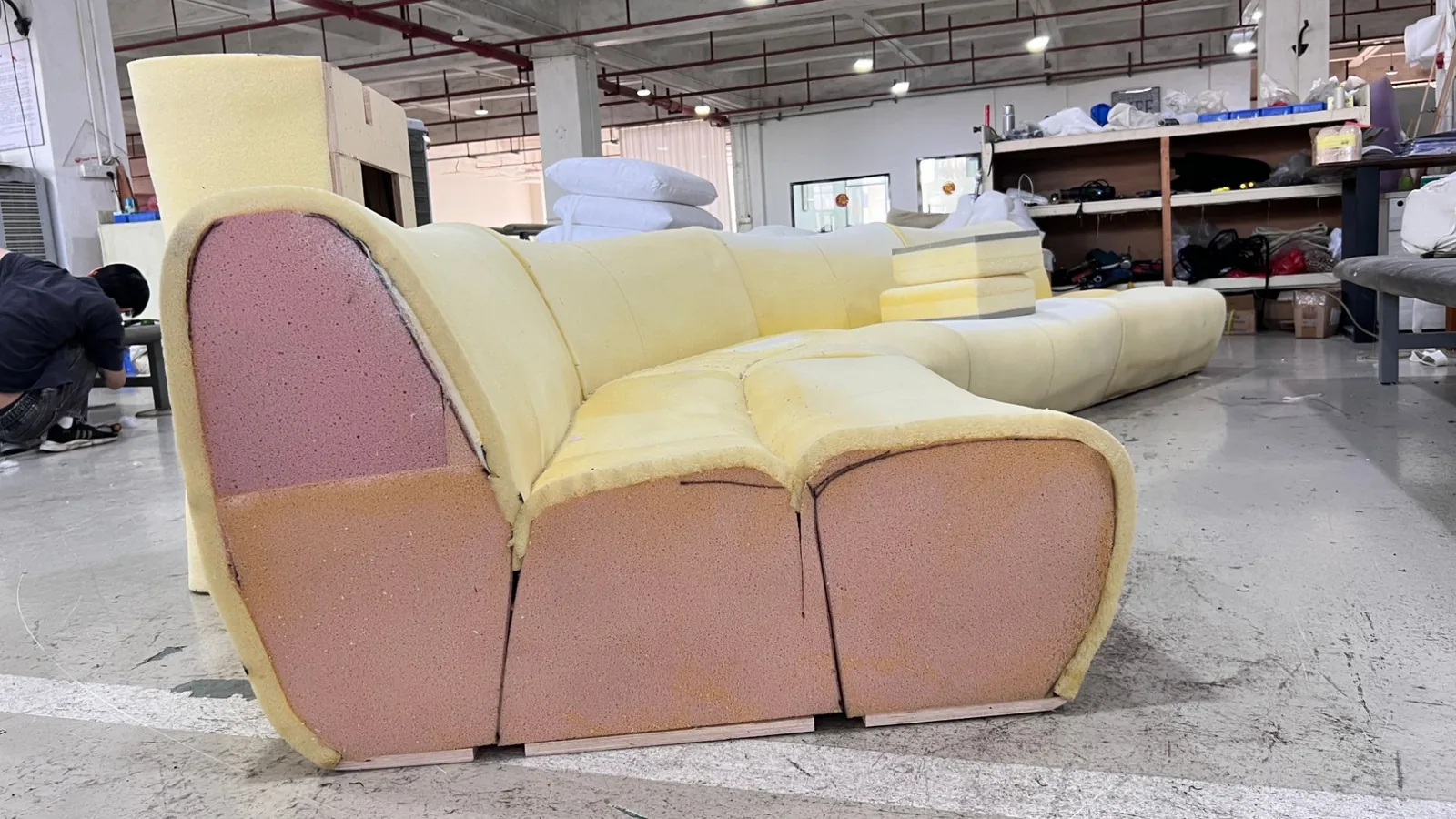 02
Foam and upholstery
Foam density and thickness against sample, webbing or spring type, seam alignment, pattern matching, stitch density, pull-test on cover.
Photos of cut foam with labels, seat cushion cross-section, cover before final closing 03
Finishing
Sanding grade, stain colour against standard panel, lacquer build and sheen, cross-hatch adhesion test on a sample offcut, powder-coat thickness on metal.
Side-by-side photo with the signed colour panel under daylight; adhesion test photo 04
First article
One complete piece measured, sat on, opened and closed, photographed front, back, side and underside before the batch is finished.
First-article report with measurements; record the agreed approval before releasing the batch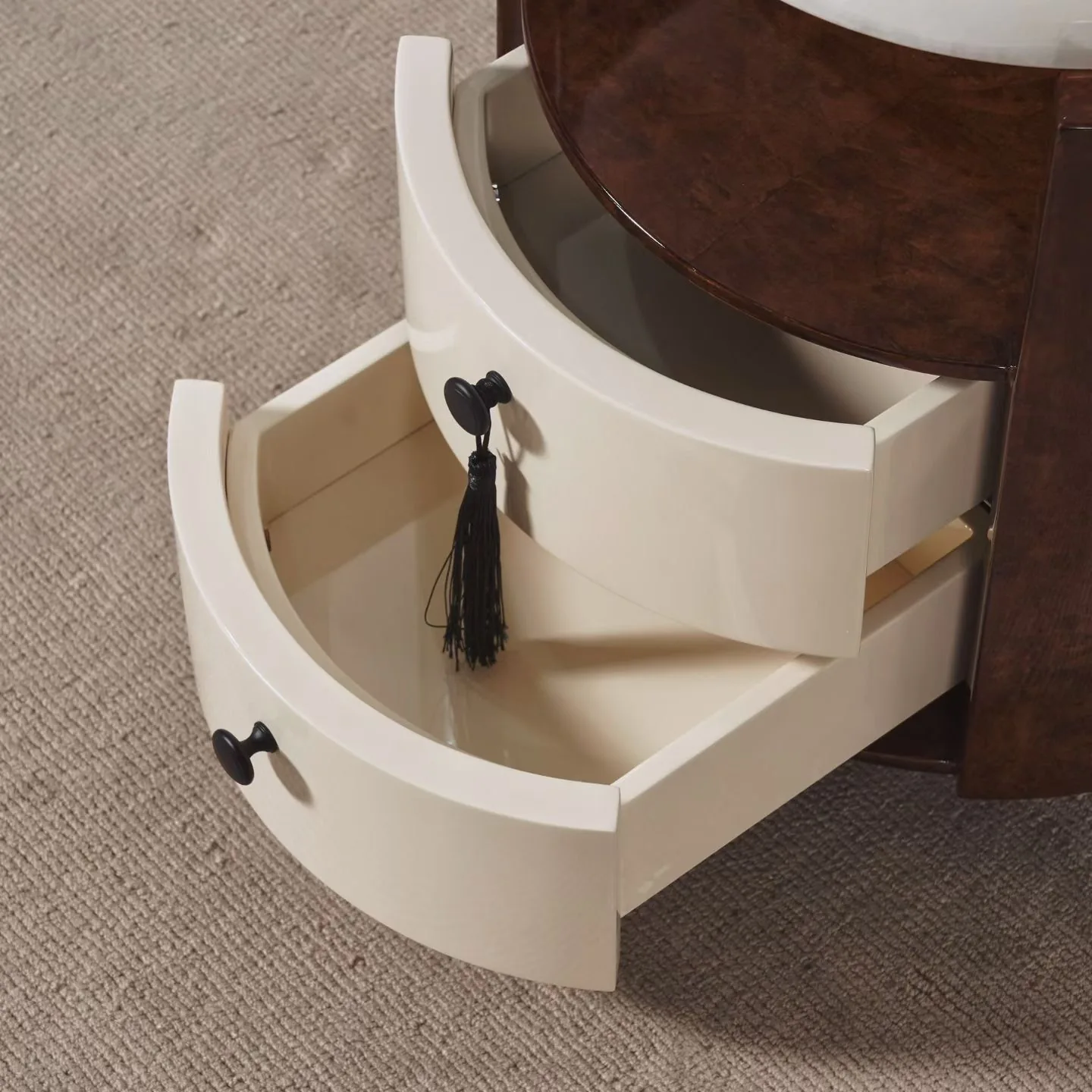 05
Hardware fit (cabinetry)
Door and drawer gaps (typically 2–3 mm), soft-close action, drawer full-extension, shelf pin spacing, back-panel fixing.
Video of doors and drawers operating; gap measurement photosThe first article is the checkpoint that matters most on custom work.
It is one finished piece, inspected and approved before the factory completes the batch, so a wrong seat height or a stain that reads too red is corrected on one unit rather than on twenty. Factories generally accept this on batches of five pieces and above; on single custom pieces the first article and the final inspection are the same event.
Step three · final inspection
What does the final inspection cover, and how much is sampled?
Scope firstAgree whether every unit or a defined sample will be checked, which tests are included and how defects trigger rework or a hold. Custom and mixed-item orders often need item-specific checks; repeated production can use a documented sampling plan. A count or visible-condition check is not a full specification inspection, and neither proves the absence of every defect.
AQL means acceptance quality limit. ISO 2859-1:2026 describes acceptance sampling schemes for lot-by-lot inspection. Record the standard edition, lot definition, inspection level, severity and acceptance/rejection plan before drawing a sample. AQL is not a promise that each accepted shipment has no defects; the buyer and inspector must agree the plan for the product and risk.
Agree the inspected products, unit or sample coverage, checks, tolerances and approved drawing or sample revisions in writing before work starts. The scope may include dimensions, colour, finish, structure, function, hardware, labels and packing. A full unit count does not mean every characteristic or hidden part has been tested; destructive, laboratory or specialist tests require a separate agreed scope.
Receiving checks cover quantity and visible condition against the order list. Detailed specification inspection against approved drawings or samples is a separate scope: agree the products, unit or sample coverage, checks, report date and fees in writing. The report identifies what was checked, findings and limitations. Use the furniture inspection checklist to agree the checks, and the illustrative QC report and blank form to see how coverage, findings and limitations are recorded.
Worked example
300 dining chairs for a restaurant fall in the 281–500 band, code letter H, so 50 chairs are pulled at random. The lot is accepted if the sample shows no more than 3 major and no more than 5 minor defects; 4 majors or 6 minors and the whole lot is held for sorting or rework. Lot acceptance is not the same as zero defects, which is why the defect classes and the rework rule must be agreed with the supplier before the order, not at the inspection.
Illustrative AQL sampling referenceNormal single sampling, general level II; verify the adopted standard and plan before use
| Lot size (pieces) | Code letter | Sample size | AQL 2.5 major: accept / reject | AQL 4.0 minor: accept / reject |
|---|---|---|---|---|
| 26–50 | D | 8 | Table arrow: use plan C, sample 5, accept 0 / reject 1 | Table arrow: use plan E, sample 13, accept 1 / reject 2 |
| 51–90 | E | 13 | Table arrow: use plan F, sample 20, accept 1 / reject 2 | 1 / 2 |
| 91–150 | F | 20 | 1 / 2 | 2 / 3 |
| 151–280 | G | 32 | 2 / 3 | 3 / 4 |
| 281–500 | H | 50 | 3 / 4 | 5 / 6 |
| 501–1,200 | J | 80 | 5 / 6 | 7 / 8 |
| 1,201–3,200 | K | 125 | 7 / 8 | 10 / 11 |
| 3,201–10,000 | L | 200 | 10 / 11 | 14 / 15 |
Reading the arrows
Where the standard's master table shows an arrow instead of numbers, it tells you to use the first plan above or below. If that plan's sample size equals or exceeds the lot, inspect 100%. There is no universal 50-piece threshold that decides whether full inspection or sampling is suitable. Confirm the selected plan against the current standard and the agreed inspection scope.
Frame crack, loose leg, glass without tempering mark where specified, missing flammability label for a regulated market, sharp exposed staple.
Not allowed in any quantity; piece rejected and lot re-inspectedColour outside the signed standard, veneer mismatch on a visible face, seam puckering on a seat, drawer that binds, dimension outside tolerance, wobble.
Rework or remake before shipment; counted against AQL 2.5Slight sanding mark on an underside, thread end, small glue spot inside a cabinet, label crooked, carton dent.
Fix on the spot where possible; counted against AQL 4.0Craftsmanship
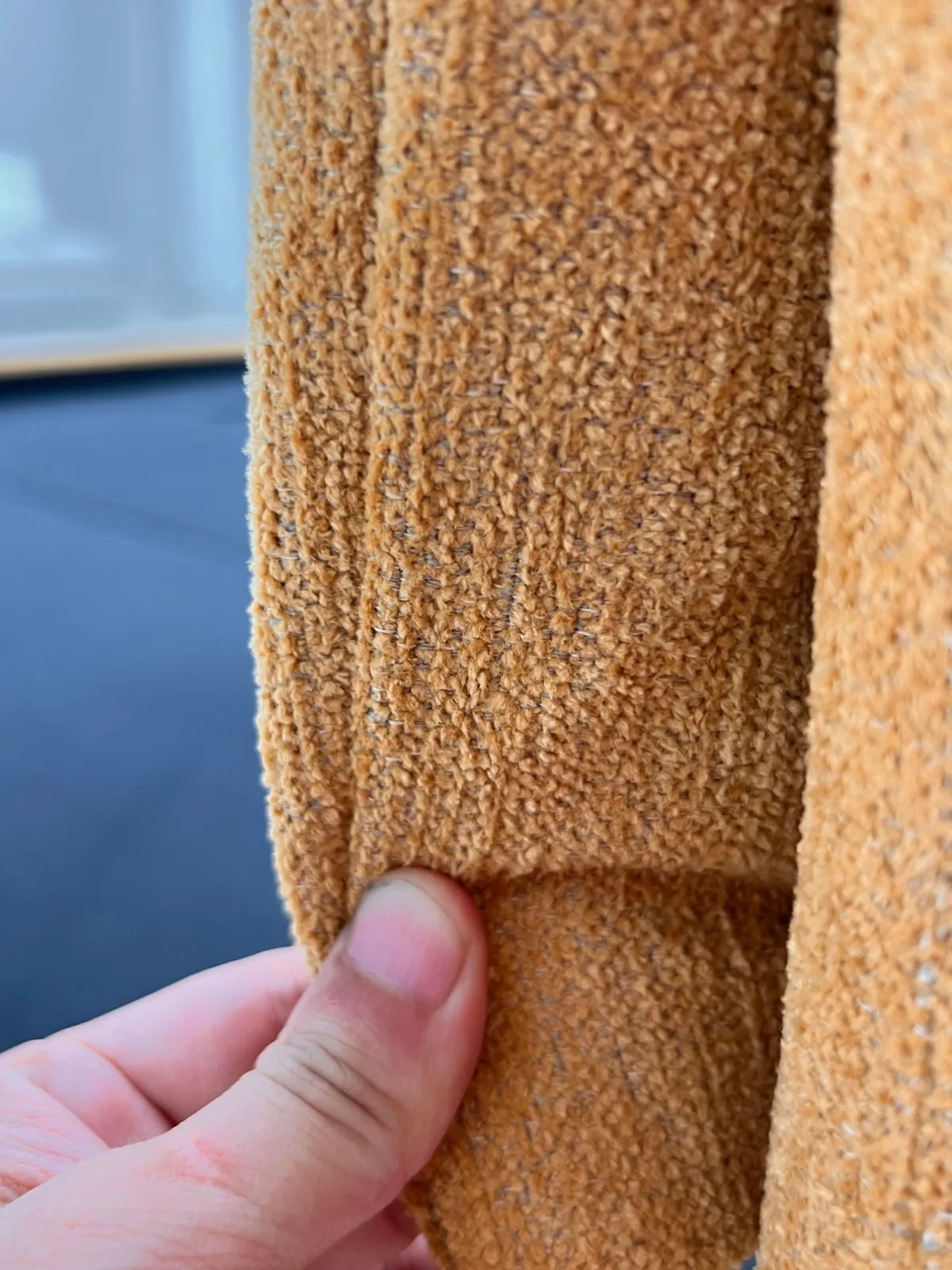
Details define quality.
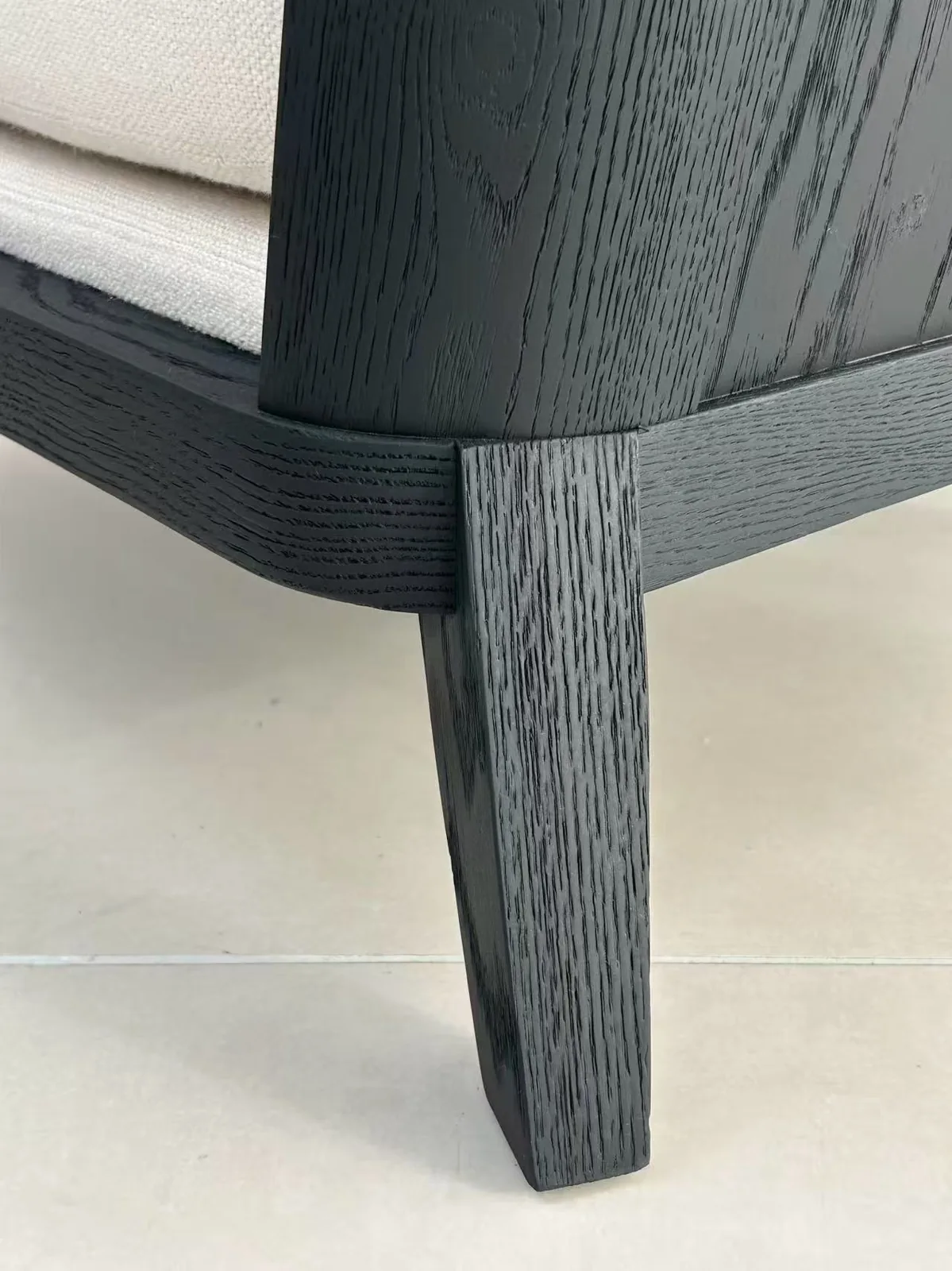
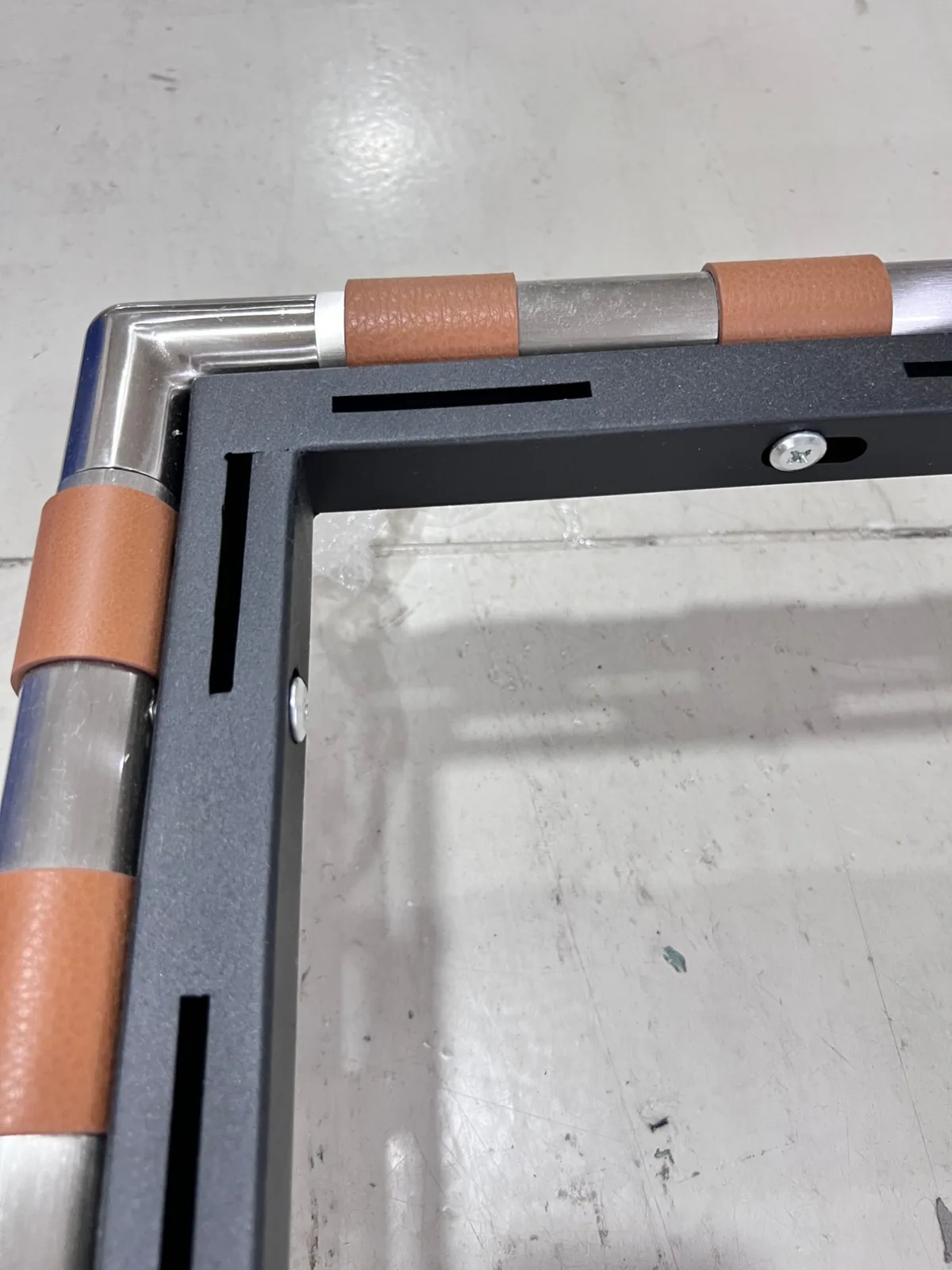
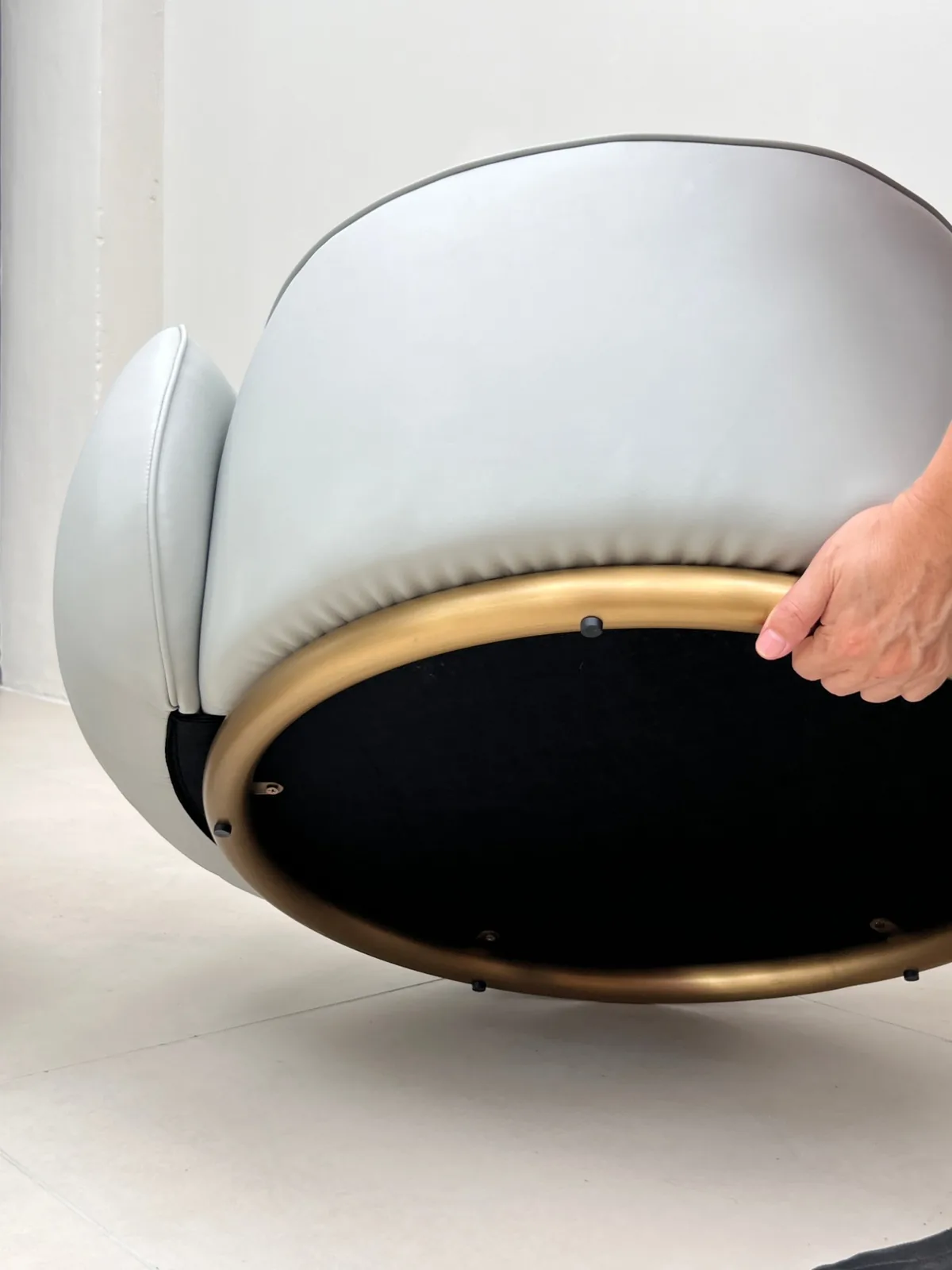
What the inspector checks up close on the agreed items or samples before wrapping.

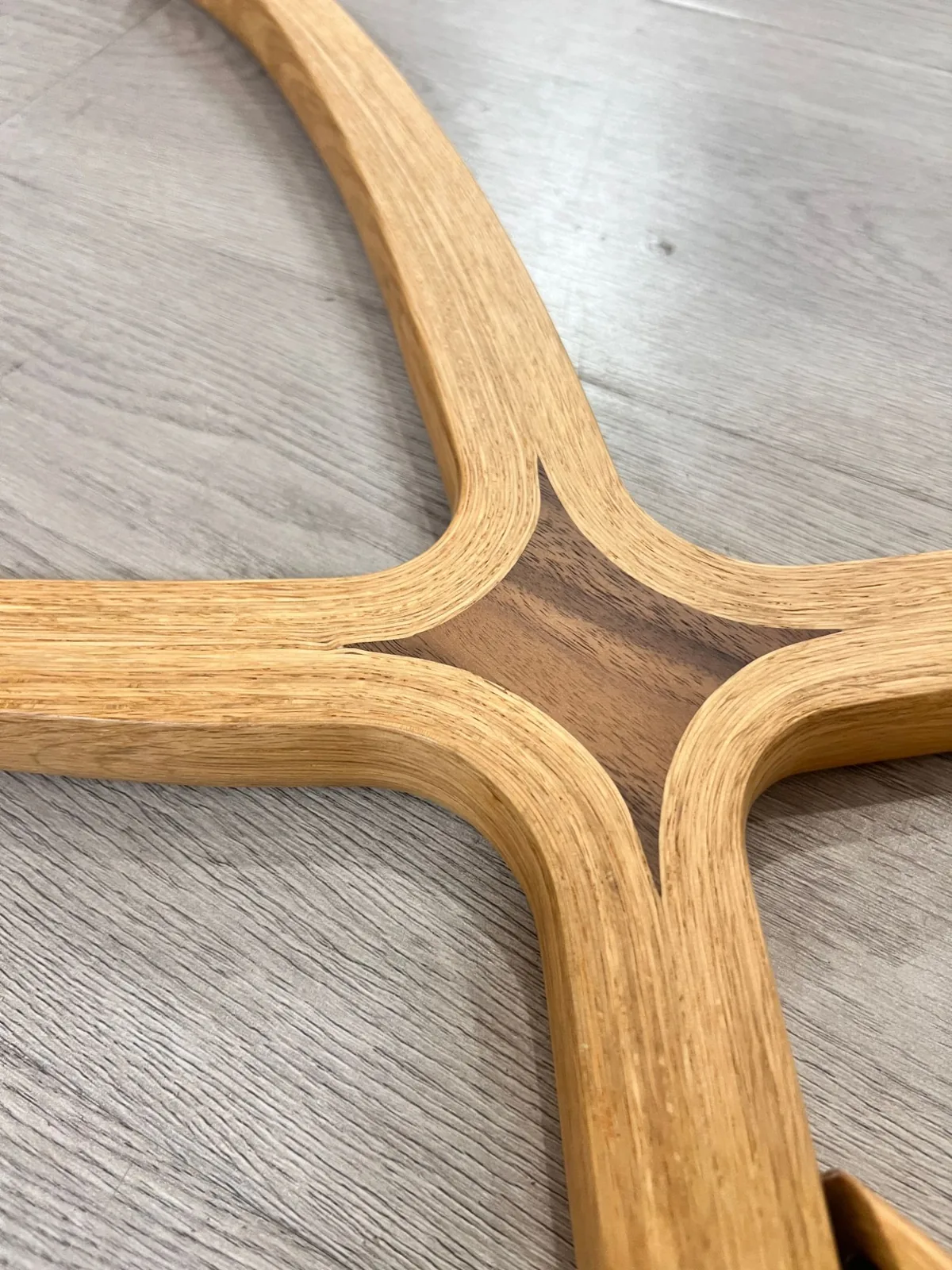
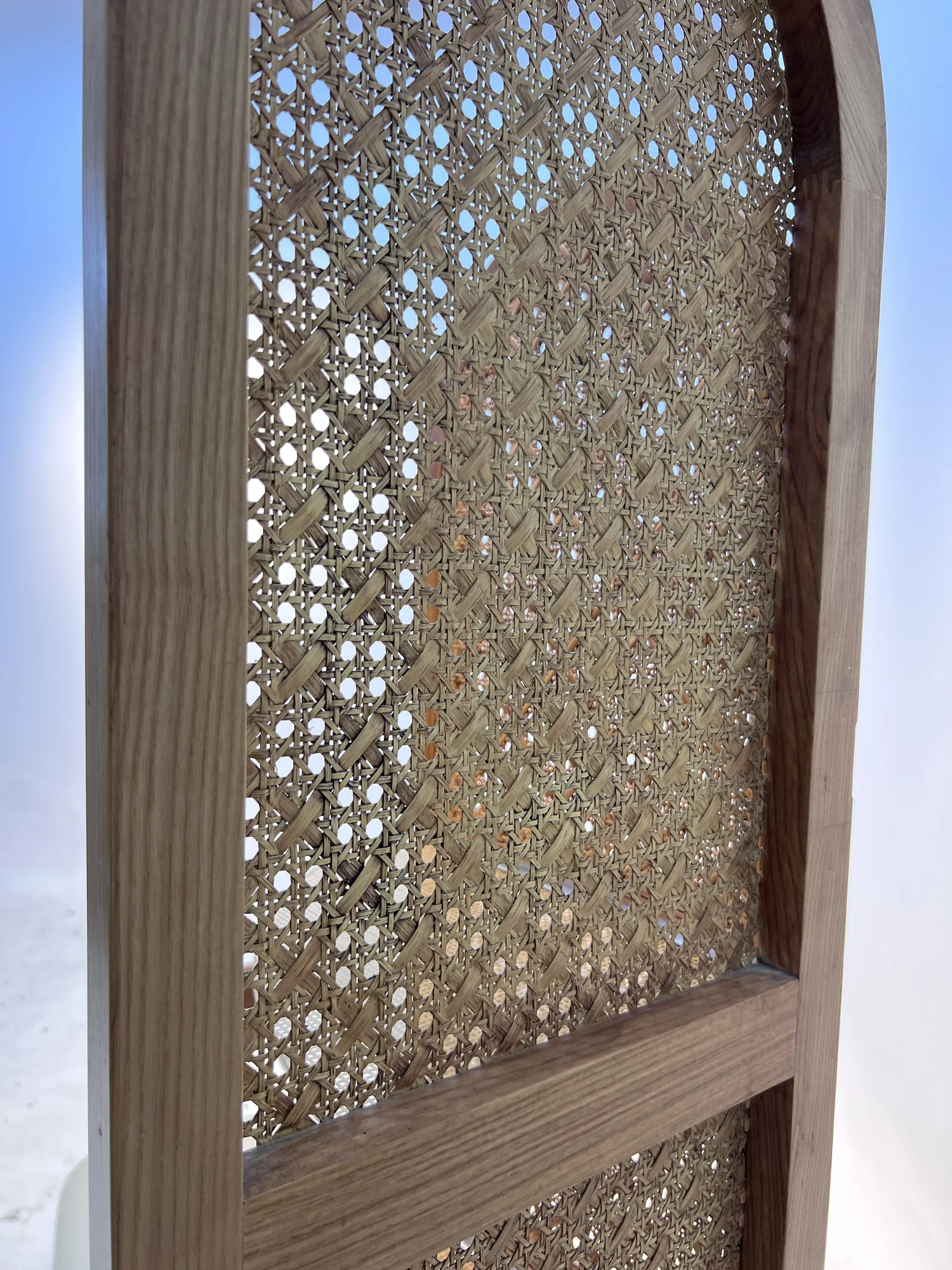
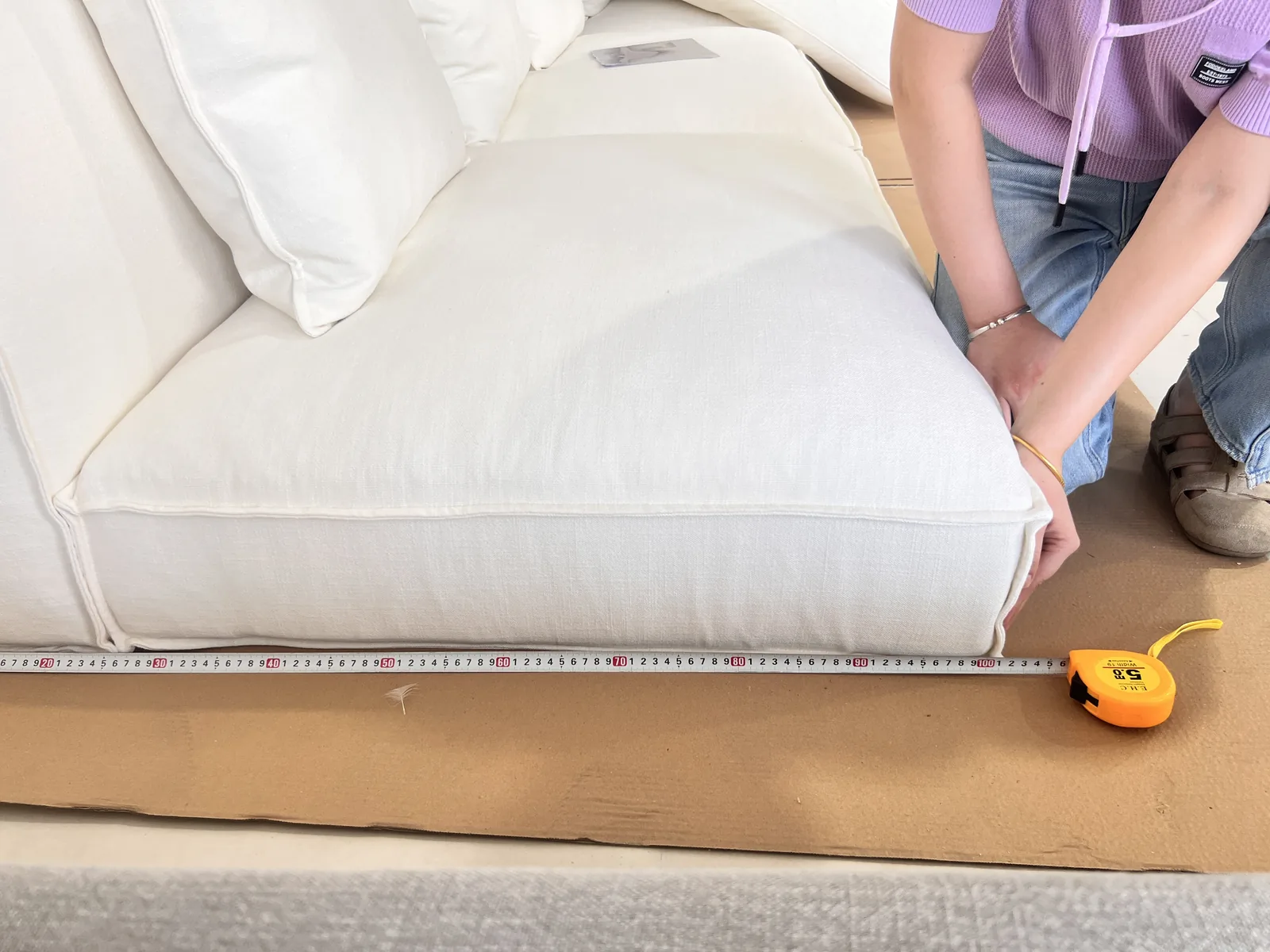
From the inspection floor
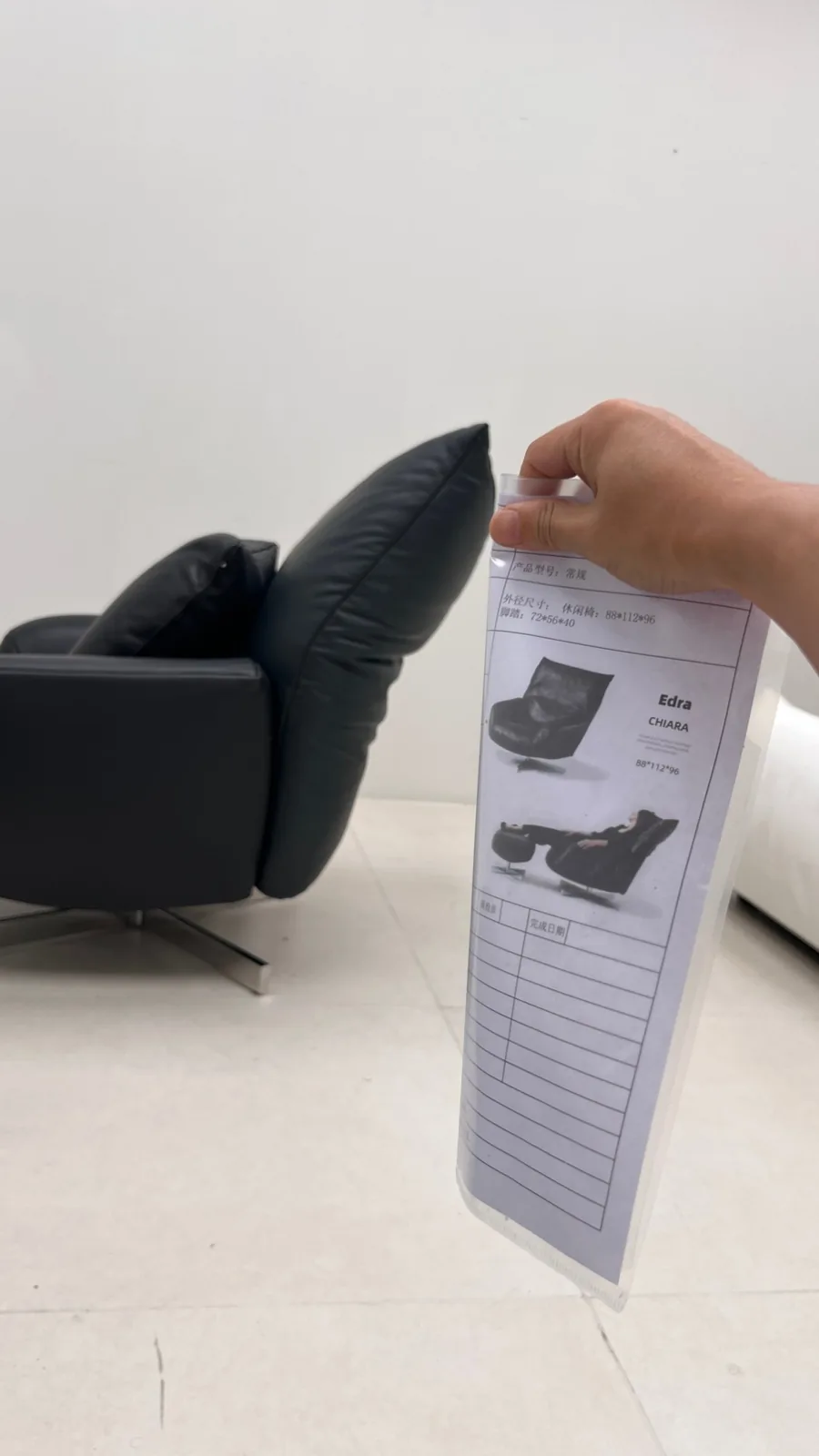
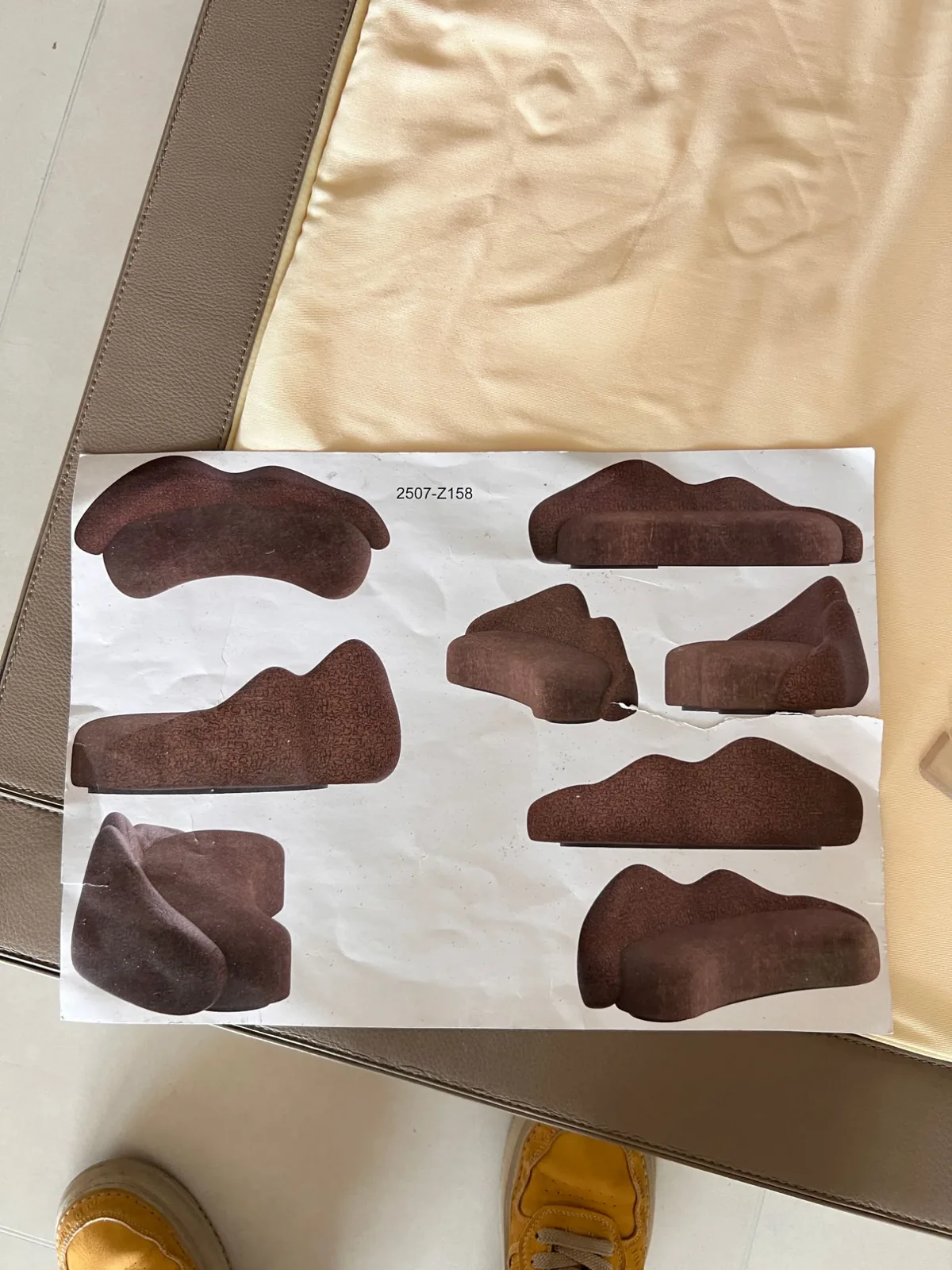
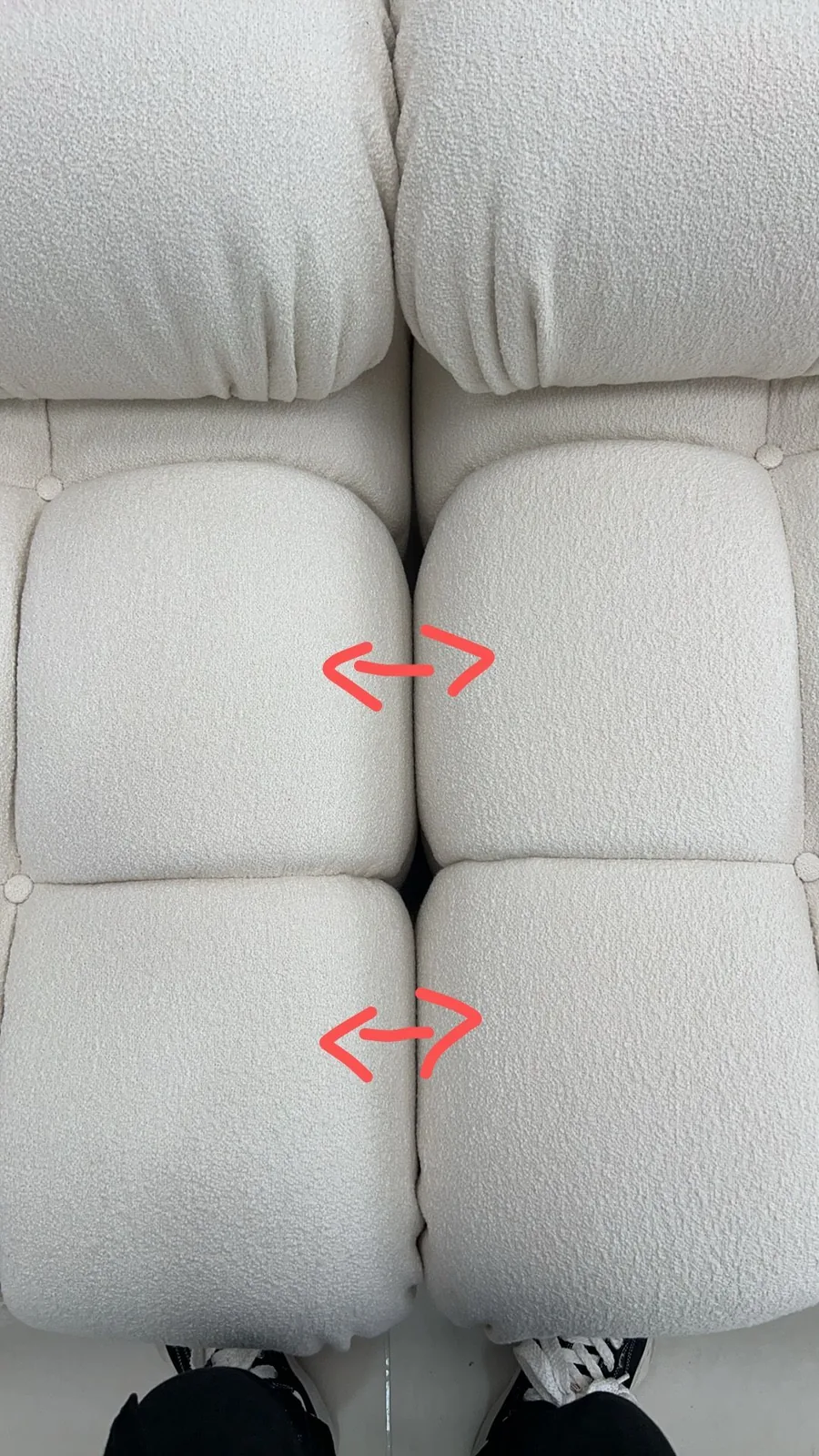
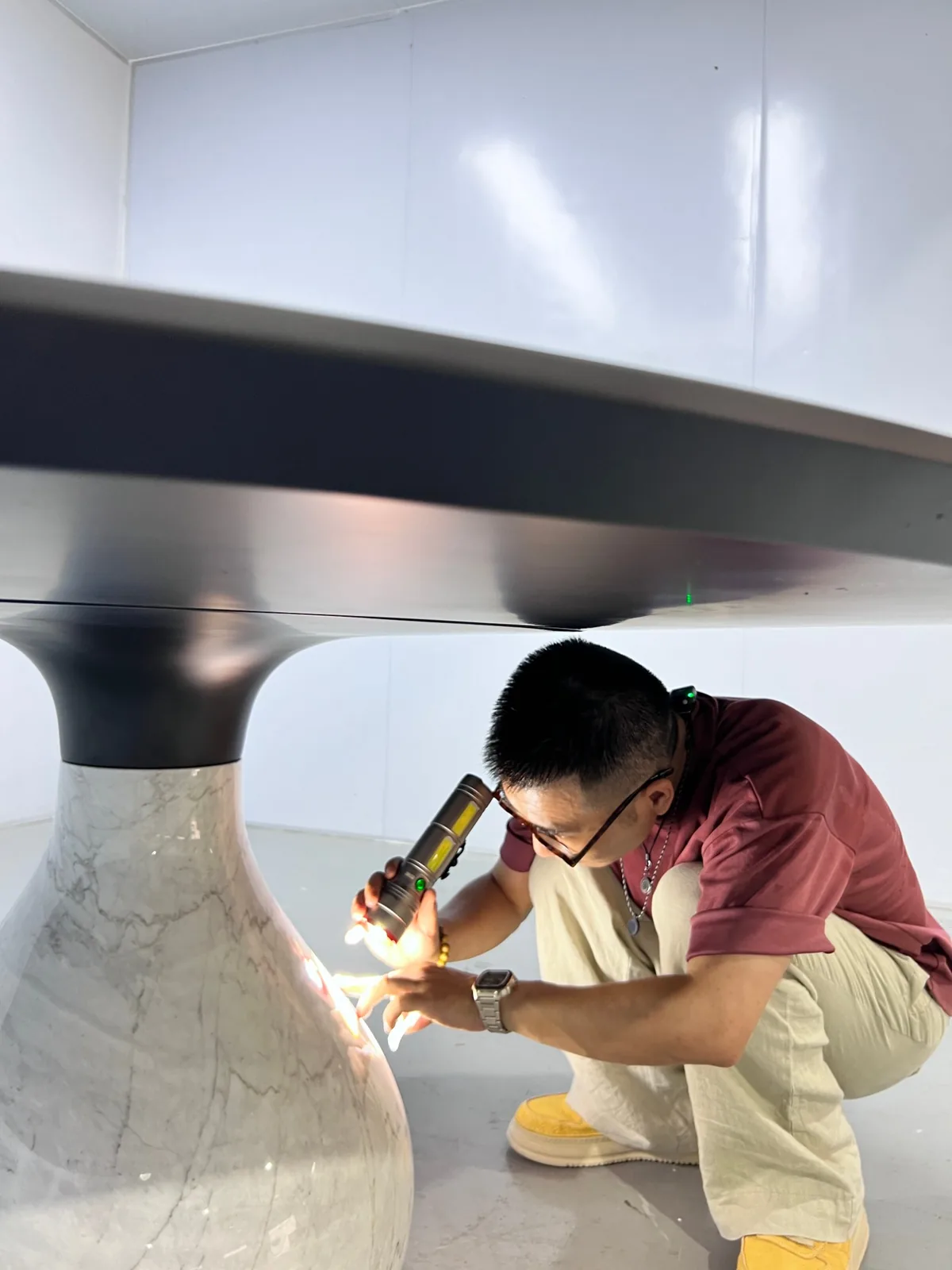
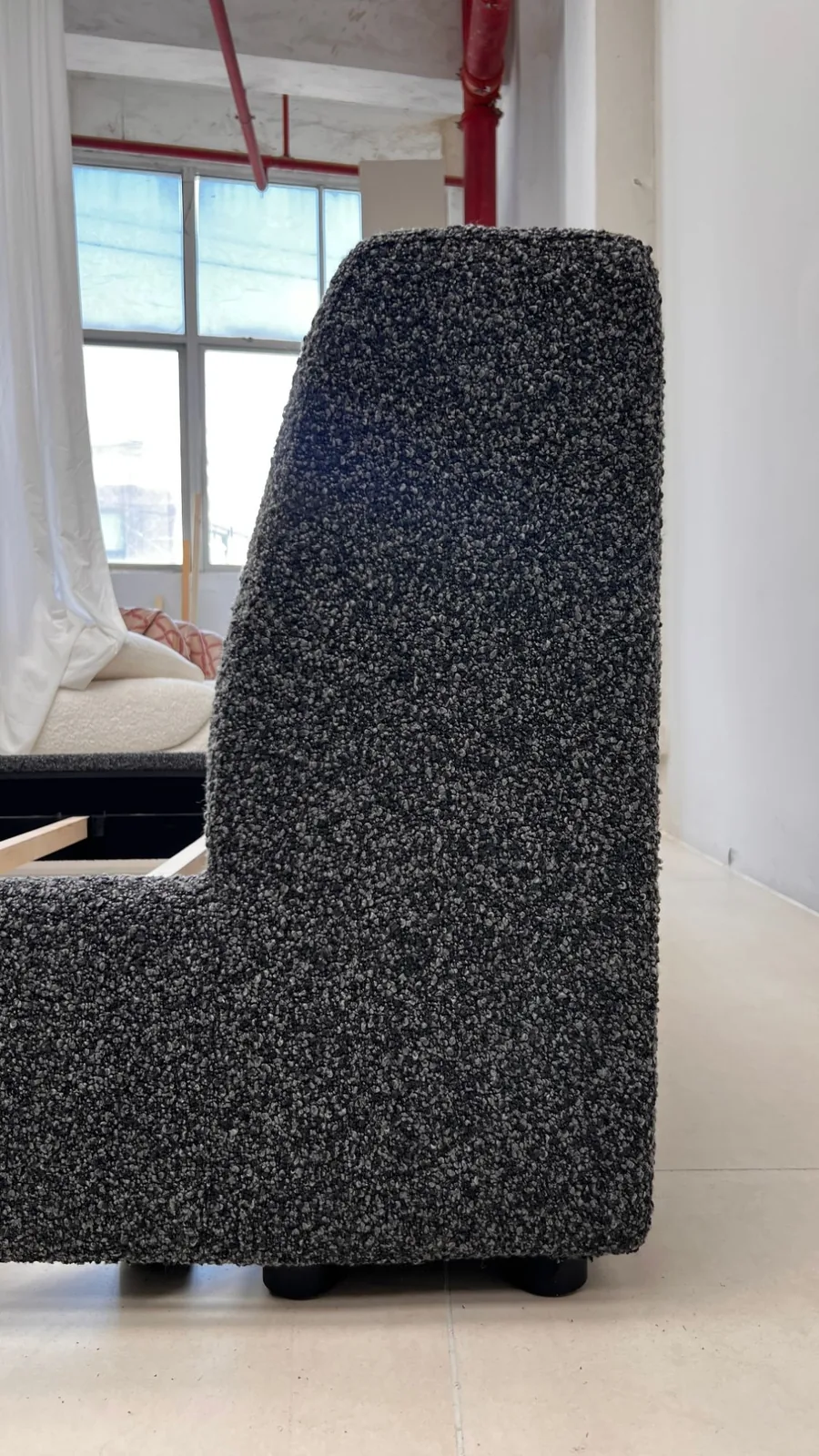
What our inspectors actually photograph.
Unedited process photos from Source Foshan inspections in Foshan and Dongguan factories. This is what lands in your weekly update and in the final report.
Step four · export packing
What are the packing and shipping-mark standards?
The biggest risk isn't production — it's transit. Every product type gets a written packing method, and the method is part of the order. Below is the typical standard applied to household and contract furniture leaving Foshan for a 3–6 week sea voyage; the exact spec is adjusted for the destination, the season and whether the container is full or shared.
- Inner
- Cover wrapped in non-woven fabric or PE film; foam sheet on arms and back; cardboard corner boards; legs removed and bagged inside.
- Outer
- 5-ply corrugated carton, or open timber frame for pieces over about 2.2 m.
- Note
- Do not stack heavy cartons on upholstery; mark stacking limit.
- Inner
- Top and base packed separately; foam board both faces of top; corners protected; hardware bagged and taped to base.
- Outer
- Carton plus timber frame for tops over 1.6 m.
- Note
- Top packed flat with a rigid board under it.
- Inner
- Foam or EPE sheet on both faces, edge protectors, tops paired face to face with a foam separator.
- Outer
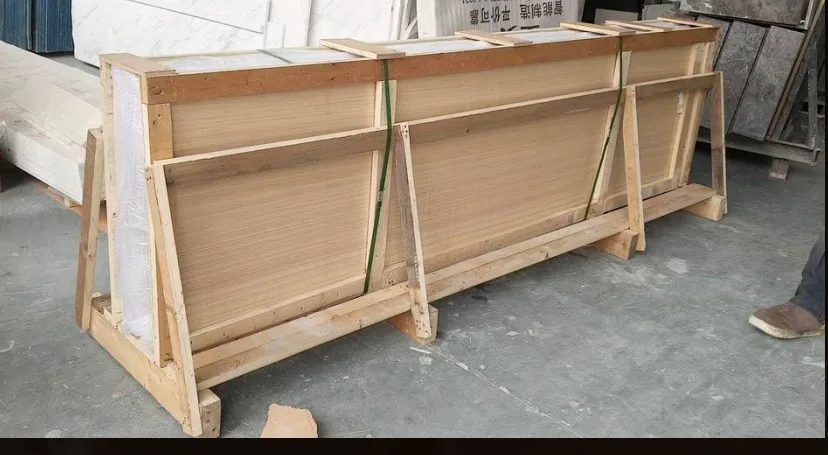
- Plywood or timber crate, packed upright on an A-frame for slabs over about 1.2 m, flat with a rigid base for smaller tops.
- Note
- Crate marked with weight and centre of gravity; forklift from the long side only.
- Inner
- Each part foam-wrapped; seats stacked with separators; bolts and keys in a labelled bag.
- Outer
- Carton, typically 2–4 chairs per carton.
- Note
- Assembly sheet inside the first carton of each item code.
- Inner
- Foam on all faces, corner protectors, drawers and doors taped closed, shelves wrapped and strapped inside, loose hardware bagged.
- Outer
- Carton with timber frame or full crate for mirrored or glass-fronted units.
- Note
- Never laid on its front; upright arrows on all four faces.
- Inner
- Glass taped in a grid, foam on both faces, corner blocks.
- Outer
- Timber crate, packed upright, one or two pieces per crate.
- Note
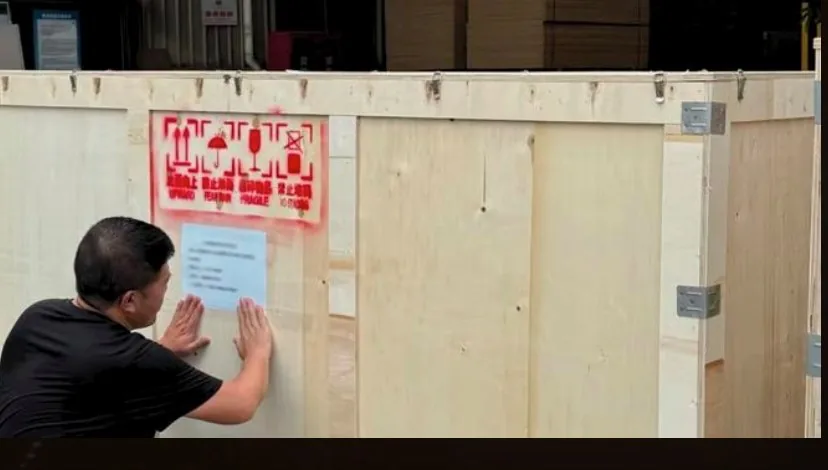
- Fragile symbol and upright arrows; never floor-loaded under other cargo.
Anatomy of a shipping mark
Shipping marks turn a stack of cartons into a shipment that can be unloaded room by room.
Each carton or crate carries a printed label on at least two adjacent faces with the same content, in English and Chinese, and the contents match the packing list line for line. There is no single international standard for the layout of a shipping mark; the content below is the trade convention, with the handling symbols taken from ISO 780:2015 and the country-of-origin mark required by the importing country (in the US, 19 CFR Part 134 requires it to be conspicuous, legible, indelible and permanent).
- Consignee or project name and the order number
- Item code and short description, matching the packing list and the options sheet
- Room or location code (for example B2 for bedroom 2, or a hotel room type), which is what makes room-by-room delivery possible
- Carton number as n of N for that item (for example 2 of 3), so a missing carton is noticed at receiving, not at installation
- External dimensions in cm and gross weight in kg
- Handling symbols to ISO 780: this way up, fragile, keep dry, stacking limit, and centre of gravity on crates
- Country of origin (Made in China) and, on solid-timber crates and pallets, the ISPM 15 mark described below
Moisture is the second cause of damage after impact.
Interior timber furniture is typically shipped at 8–12% moisture content, sealed in PE film with desiccant sachets inside the carton, and the container itself carries desiccant poles or bags when it is loaded in Foshan's humid months (roughly April to September). Metal parts get a VCI (vapour corrosion inhibitor) wrap or oiled paper. Cartons that will sit in a shared container get an extra pallet or bearer so they are never on the container floor.
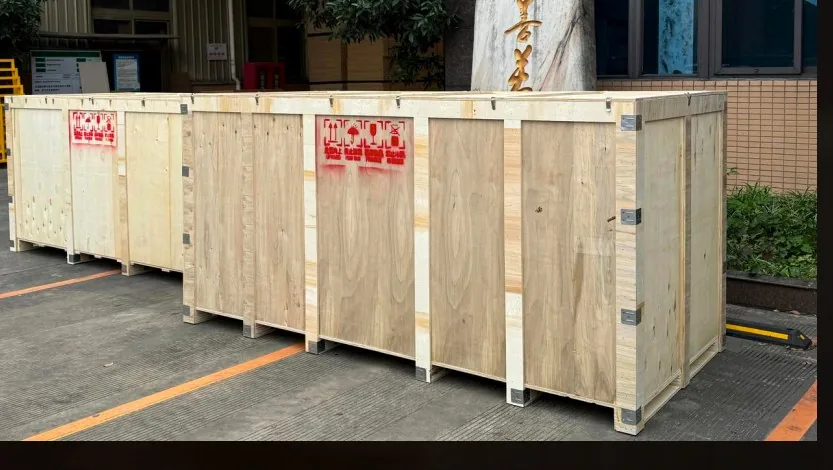
Any solid-wood crate, pallet, bearer or dunnage must comply with ISPM 15.
The wood is heat-treated to a core temperature of 56 °C for at least 30 continuous minutes (or 60 °C for 60 seconds by dielectric heating), then stamped with the IPPC mark showing the country code, the treatment provider's number and the treatment code HT. Wood thinner than 6 mm and processed materials such as plywood, OSB and fibreboard are outside the standard. The mark must be printed, not hand-drawn, and should appear on two opposite faces.
Non-compliant wood can have the whole shipment re-exported or destroyed at the port of arrival, so the crate maker's ISPM 15 certificate is checked before loading.
Step five · one warehouse, one container
What is checked at consolidation and container loading?
Consolidation is where an order from nine suppliers becomes one shipment, and every carton is checked twice: once when it arrives at the warehouse and once as it goes into the container. On a whole-home project the receiving window is typically 1–3 weeks as suppliers finish at different times; showroom stock arrives first, custom cabinetry last.
- Receiving check against the packing list
Carton count, item codes and n-of-N numbers are ticked off against the supplier's packing list. A missing, unlabelled or mislabelled carton is logged for follow-up before the affected goods are released.
- Damage on arrival
Every carton is checked for crush, wet marks and punctures. Any suspect carton is opened, the contents photographed, and the supplier informed before it is accepted into stock.
- Cubic planning
Actual carton dimensions are entered into a load plan. A 40 ft high-cube holds about 76 m³ (2,690 cu ft) nominal; irregular furniture typically loads 60–68 m³ in practice, which is the number the plan is built on.
- Loading sequence
Heavy crates and cabinetry go on the floor at the container's front; upholstery and cartons that cannot be stacked go on top and last. The sequence follows unloading order, so the last room to be installed is loaded first and the first room comes out first.
- Bracing and dunnage
Gaps are filled with air bags, timber bracing or foam so nothing shifts; ratchet straps are used on A-frame stone crates.
- Photos of loading
Photographs are taken empty, at one-quarter, half, three-quarters and full, plus the closed doors with the seal in place, and added to the report.
- Seal number
The seal number is recorded, photographed and cross-checked against the bill of lading so the consignee can confirm the container was not opened in transit.
- Load plan document
The final document lists the container number, seal number, every carton by position, item code, room and weight, and the total cubic metres and gross weight. It goes to you and to the forwarder with the packing list.
Step six · the document you approve
What does the inspection report contain?
The pre-shipment report connects each inspected item or sample to its approved drawing, actual checks, evidence, open findings and release decision. Agree the inspection coverage, reporting date and review time before booking shipment. If a payment milestone depends on approval, that condition must also be written into the supplier terms.
- Cover pageProject name, order numbers, supplier names, inspection dates, inspector, location and overall result (approved, approved with rework, held).
- Item listEvery line from the options sheet with quantity ordered, quantity inspected, result and a link to its photo set.
- Per-item photosFront, back, both sides, underside, and detail shots of joints, seams, hardware and finish; for upholstery, a cushion opened to show the foam label.
- Measurements tableDrawing dimension, measured dimension and tolerance for each critical size; pass or fail marked per line.
- Defect logOne row per finding: item code, location on the piece, defect class (critical, major, minor), photo reference, action agreed (rework, remake, accept as is, credit) and status at report date.
- Function checksVideos of drawers, doors, mechanisms, extension tables, recliners and swivels operating.
- Packing photosEach item before the carton closes, the closed carton with its label, and any crate with its ISPM 15 mark.
- Loading photos and load planThe container sequence photos, seal number and the load plan described above.
- Sign-offYour written approval, or your list of items to be held, which becomes the rework schedule.
Furniture report exampleHold
- Width · 900 ±3 mm902 mmPASS*
- Door gap · 2–3 mm5.0 mmFAIL*
- Gap after adjustment2.5 mmPASS*
- Material & packingPendingHOLD
*Illustrative values. Photo labels P-04 and P-05 describe the before/after evidence a real report needs; no files are supplied. These tolerances apply only to this example.
Release remains pending. No signature or shipment authorisation is supplied.
Read the complete furniture report example and download its free blank PDF or HTML form. It shows the approved specification, a failed measurement, correction, reinspection and the checks still required for release. For remote orders, use the six written approval points to keep these records connected.
When something is wrong
How are defects handled? A worked example
The following is a fictional workflow illustration, not an anonymised client record. Its quantities and day-by-day timing demonstrate the sequence only; they are not measured results or service commitments. Actual timing, costs and payment decisions follow the written order.
Two of six sideboard doors read lighter with a different flame figure. Each is within the standard alone; side by side they are not. Logged as major, batch on hold, milestone stays open.
Re-veneer the two doors from the same flitch as the others and refinish (about six days), or accept the variation with a credit. The client chooses the rework.
New leaves pressed, sanded and finished. Other suppliers' goods keep arriving at the warehouse and are receiving-checked as normal; a six-day slip is logged on one supplier.
Colour re-checked against the standard panel and the four approved units, door gaps measured again after re-hanging. Photos issued, the defect log line closed as reworked, the balance released.
At the final inspection of a six-piece sideboard batch, the inspector puts the pieces side by side under daylight and finds that two of the six have door veneer noticeably lighter and with a different flame figure from the other four. Individually each door is within the colour standard; together they are not, and the pieces are for one open-plan living area. The finding is logged as a major defect with photos of all six doors in one frame, the batch is put on hold, and the deposit-and-balance milestone stays open.
The same day, the client receives the photos with two options and a cost and time note for each: re-veneer the two doors from the same flitch as the others and refinish (about six days), or accept the variation with a credit. The client chooses the rework. The factory pulls new leaves from the matching flitch, presses, sands and finishes the two doors, and the inspector returns to re-check colour against the standard panel and against the four approved units, then measures door gaps again after re-hanging. The re-inspection photos go to the client, the defect log line is closed as 'reworked and re-inspected', and the balance for that supplier is released.
- Day 0Defect found at final inspection; batch held; photos and options sent to the client the same day.
- Day 1Client decision; factory schedules re-veneering; consolidation warehouse informed of a six-day slip on one supplier.
- Days 2–6Rework; other suppliers' goods continue to arrive and are receiving-checked as normal.
- Day 6Re-inspection; measurements repeated; photos issued; defect log closed.
- Day 7Balance released to the supplier; batch packed to the agreed standard and moved to the consolidation warehouse; container loading date confirmed.
Agree the payment milestone in writing.
If report approval controls a balance payment, put that condition and the authorised decision-maker in the supplier terms. An inspection report records findings; it does not change a payment obligation by itself.
Allow time for correction before booking.
Agree a review and correction window before shipment. If work is late, record whether the affected item is held, moves on a later shipment or needs another agreed option, and who pays under the order terms. Confirm any storage, repeat-inspection or extra-freight cost before changing the plan. See the service commitments for the wider scope.
Paperwork
Who is responsible for HS codes, customs and duties?
Name the importer and customs representative for the destination, then confirm classification, valuation, entry documents and who pays the charges under the contract. A sourcing team and forwarder provide supporting product and shipment records. The table below is a planning example; duties, statutory responsibility and DDP arrangements must be confirmed for the actual destination and named parties.
| Task | Source Foshan | Freight forwarder | Customs broker (destination) | You (importer of record) |
|---|---|---|---|---|
| Commercial invoice and packing list per supplier, consolidated | Compiles and checks | Receives | Uses for entry | Approves |
| Product descriptions, materials and photos for classification | Provides | — | Advises code | Confirms code |
| Suggested HS code (Chapter 94: 9401 seats, 9403 other furniture, 9404 mattresses) | Indicative only | — | Determines with you | Legally responsible |
| China export declaration | Coordinates | Files via export agent | — | — |
| Ocean booking, bill of lading, container tracking | Instructs | Executes | — | Receives B/L |
| ISPM 15 crates and pallets, certificate on file | Checks before loading | — | — | — |
| Certificate of origin, product compliance files (formaldehyde, flammability, timber declarations) | Collects from suppliers | — | Checks against entry | Responsible for compliance |
| Marine cargo insurance | Recommends; arranges via forwarder at cost | Places policy | — | Decides and pays |
| Import entry, duties, taxes, port fees | — | Can arrange broker | Files entry, pays on your behalf | Pays |
| Destination delivery and installation booking | Coordinates | Arranges trucking | — | Receives |
HS codes and duty rates change, and the same sofa can fall under different subheadings depending on frame material and cover. The furniture HS code guide walks through Chapter 94 line by line, and the step-by-step guide to buying furniture from China covers Incoterms, landed cost and the documents an entry needs. Duty rates should always be confirmed with your customs broker or the destination tariff schedule on the date of entry.
How your order travels
Six steps from the factory floor to your door.
The project team coordinates the agreed shipping scope. Name the owner and required photos or documents at each handover, including the forwarder, customs representative and destination crew.
- 01
Final QC & packing photos
Complete the agreed unit or sample checks before wrapping. The report identifies inspection coverage, findings, packing-list references and any limitations.
- 02
Export crating
Foam lining, corner guards and moisture barriers on every piece; plywood crates for casegoods, glass and stone. Stone tops travel on A-frames.
- 03
Consolidation & loading
Suppliers deliver to one warehouse. The load plan is checked and the cargo lashed before the container is sealed; smaller orders travel as LCL.
- 04
Freight & insurance
Sea freight to your nearest port as standard, air freight when time matters. Cargo insurance is arranged on your instruction; confirm the issued policy, insured value, exclusions and deductible.
- 05
Customs clearance
Commercial invoice, packing list, fumigation and origin documents prepared for your market. Record estimated and confirmed charges separately; the broker checks the applicable classification, origin and entry-date measures.
- 06
Delivery & placement
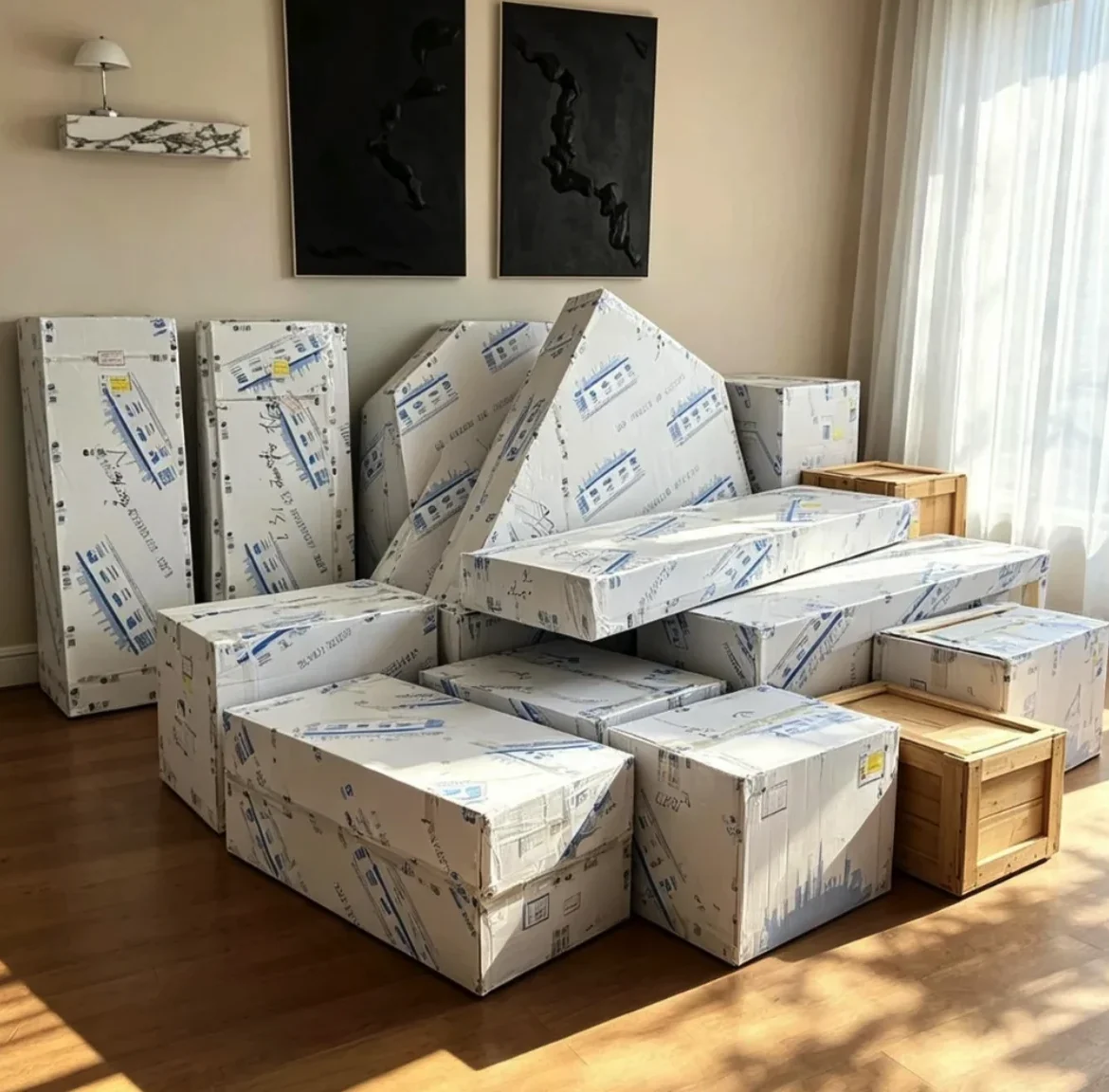
Delivered to your address and, where a local crew is arranged, carried in, unpacked and placed by room with the packaging taken away.
Buying from several factories? See how we receive, check and load them as one container: furniture consolidation in Foshan.

Shipping terms
Choose how much of the journey we manage.
Experienced importer with your own forwarder, or first overseas project: the quotation states the term, so there is no argument later about who does what.
You ship, we load
FOB delivery and risk transfer occur on board the vessel at the named shipment port. Discuss FCA if the handover to the carrier happens earlier.
- Export-grade packing to a written standard
- Export documents and customs filing at origin
- Container loading and lashing plan
We ship to your port
The seller pays freight and required insurance to the named destination port; risk transfers on board at origin. Confirm destination clearance and delivery separately.
- Everything in FOB
- Ocean freight booking and tracking
- Insurance cover and limits confirmed in the issued policy
Agree the destination scope
The seller handles import clearance and duties under DDP. Confirm the lawful importer arrangement; unloading, carry-in and installation need an explicit scope.
- Named place and Incoterms version in the contract
- Destination customs and duties
- Delivery appointment confirmed with the destination crew
Where we deliver
One origin, every market you build in.
Custom pieces take 4–10 weeks to produce and inspect in Foshan depending on category; showroom stock is ready in 1–3 weeks. Transit below runs from container departure to your address and depends on sailings and customs. Your quotation confirms both.
| Region | Typical cities | Transit · door to door | Notes |
|---|---|---|---|
| Australia & New Zealand | Sydney, Melbourne, Brisbane, Perth, Auckland | 3–5 weeks | Fumigation and timber-packaging declarations included |
| United States & Canada | Los Angeles, New York, Miami, Vancouver, Toronto | 4–6 weeks | West Coast fastest; East Coast and inland via rail; ISF filing and customs bond coordinated |
| Middle East | Dubai, Abu Dhabi, Riyadh, Doha, Kuwait City | 3–4 weeks | Certificates of conformity where required |
| Europe & United Kingdom | London, Rotterdam, Valencia, Athens | 5–6 weeks | Delivered duty paid available on request |
| Southeast Asia | Singapore, Kuala Lumpur, Bangkok, Jakarta, Manila, Malé | 2–3 weeks | LCL practical for smaller orders |
| Other destinations | Tell us the address | On request | Port to port or door to door; we quote the route |
Transit times are indicative and exclude production. Routes, destination services and access are confirmed case by case.
Insurance & transit damage
Confirm cover before the cargo moves.
Cargo insurance can be arranged through the forwarder on your instruction. Ask for the issued policy, insured value, clauses, deductible, exclusions and claim deadlines. Compensation depends on the cause, contract and policy; inspection and insurance do not guarantee recovery for every loss.
- Record damage on receipt where possible; retain packaging and notify the named contacts within the carrier and policy deadlines
- We help compare the arrival evidence with the pre-shipment inspection and packing records
- Confirm responsibility and an agreed repair, parts or replacement plan under the contract and claim outcome
- Workmanship issues are followed up under our service commitments
Your quotation scope
Check what the quoted price includes.
Ask for itemised goods, packing, freight, insurance, customs coordination and delivery. Mark each charge included, excluded, estimated or unknown, with its source and validity. Confirm import charges and destination services before comparing delivered totals.
- Sea freight as standard; air freight quoted on request for urgent pieces
- Cabinetry, furniture, lighting and rugs consolidated into one shipment
- Delivery scheduled to your move-in, handover or opening date
- Service fee shown separately from factory prices — see how our fee works
After delivery
Support that crosses borders with you.
A project contact stays responsible after the container is unloaded, not just until it is loaded.
A named claim contact
Send photos and the item and shipment references to the agreed contact. Confirm acknowledgement, next steps and response timing under the project terms.
Spare parts from the original factory
Ask the original supplier about compatible hardware, cushions, glides and components. Confirm availability, cost, lead time and freight responsibility before ordering replacements.
Installation options
For full projects a factory installation team can travel with the order, quoted separately; for smaller deliveries we brief and supervise trusted local crews where available.
Do I need to arrange anything at my end?
Confirm the importer and customs representative, required documents, delivery access, unloading crew and receiver before booking. Door-to-door does not automatically include carry-in, assembly or installation. For FOB, agree the named shipment port and on-board handover with your forwarder.
Are duties and taxes included?
Check the written quotation and named Incoterms rule. DDP assigns import clearance and duties to the seller, subject to a workable importer arrangement; other terms may leave these charges to the buyer. Ask the broker to confirm the national tariff line, origin and entry-date charges, and distinguish estimates from confirmed amounts.
What if something is damaged in transit?
Photograph the item and packaging, record delivery exceptions, retain evidence and notify the named claim contacts within the applicable deadlines. The project team can help compare the arrival condition with pre-shipment records. Repair, parts, replacement or compensation depend on the contract, cause and issued insurance policy; recovery is not guaranteed.
Can you deliver to an apartment or a site with difficult access?
Share stair, lift, doorway, loading-dock, vehicle and time-window details before booking. Confirm crate sizes, unloading equipment, crew, carry-in and placement in the delivery scope; availability and additional charges depend on the site and destination.
Inspection records
From an approved specification to a release decision
A useful furniture inspection record shows what was approved, what was checked, what needs correction and who may release the goods. Keep the drawing revision, item code, evidence and decision connected throughout the order.
01
Agree the checks at each stage
Record the scope and acceptance criteria before the work starts.
- Before production: confirm drawings, physical samples, finish codes, hardware and critical requirements.
- During production: document construction and dimensions before covering or finishing conceals them.
- Before shipment: inspect the agreed items for size, finish, function, quantity and packing; log missing checks.
- At loading: reconcile released item codes, package labels and quantities with the packing list, then record condition and loading details.
Choose full inspection, sampling or specialist checks to fit the actual product and order. Record the quantity inspected and any exclusions; one checked sample is not a record for every unit.
02
Keep the failed finding and its correction together
A supplier saying “fixed” is the start of a recheck, not the end of the record.
| Record | What to include |
|---|---|
| Approved requirement | Item code, drawing revision, retained sample and agreed tolerance. |
| Observed finding | Actual measurement or condition, location on the piece, date and photo/video reference. |
| Decision | Agreed defect class; hold, rework, replacement or a specific authorised exception. |
| Correction | Method, responsible person, target date and agreed cost or schedule change. |
| Reinspection | Repeated check, new result, dated evidence and review of any new issue caused by the correction. |
| Release | Items released or held, outstanding checks, named reviewer and written approval reference. |
03
Confirm responsibilities before ordering
Agree who checks, who decides and which costs are included.
Is factory self-inspection the same as independent inspection?
No. Identify the person or organisation performing each check, their scope, supplier access and the report recipient. Discuss an independent visit before ordering if you need one.
Who pays for samples, rework and repeat checks?
Confirm sample production, courier delivery, inspection visits, laboratory tests and repeat visits in the quotation. Rework and delay costs follow the order terms and agreed responsibilities.
Can a failed inspection stop a balance payment?
Only where the written payment terms and authorised decision allow it. Record the findings, affected items and agreed action; the report itself does not rewrite the contract.
How is production damage distinguished from transit damage?
Compare the item's pre-shipment condition, packing and loading records with its condition on receipt. Preserve the original photographs and packaging evidence before assigning responsibility.
Before it leaves China
Review the evidence before shipment.
Send your list or floor plan to agree the inspection coverage, evidence, reporting date and release authority. You can read the furniture report example and download the blank form before contacting us.

Case notes · delivery & after-sales
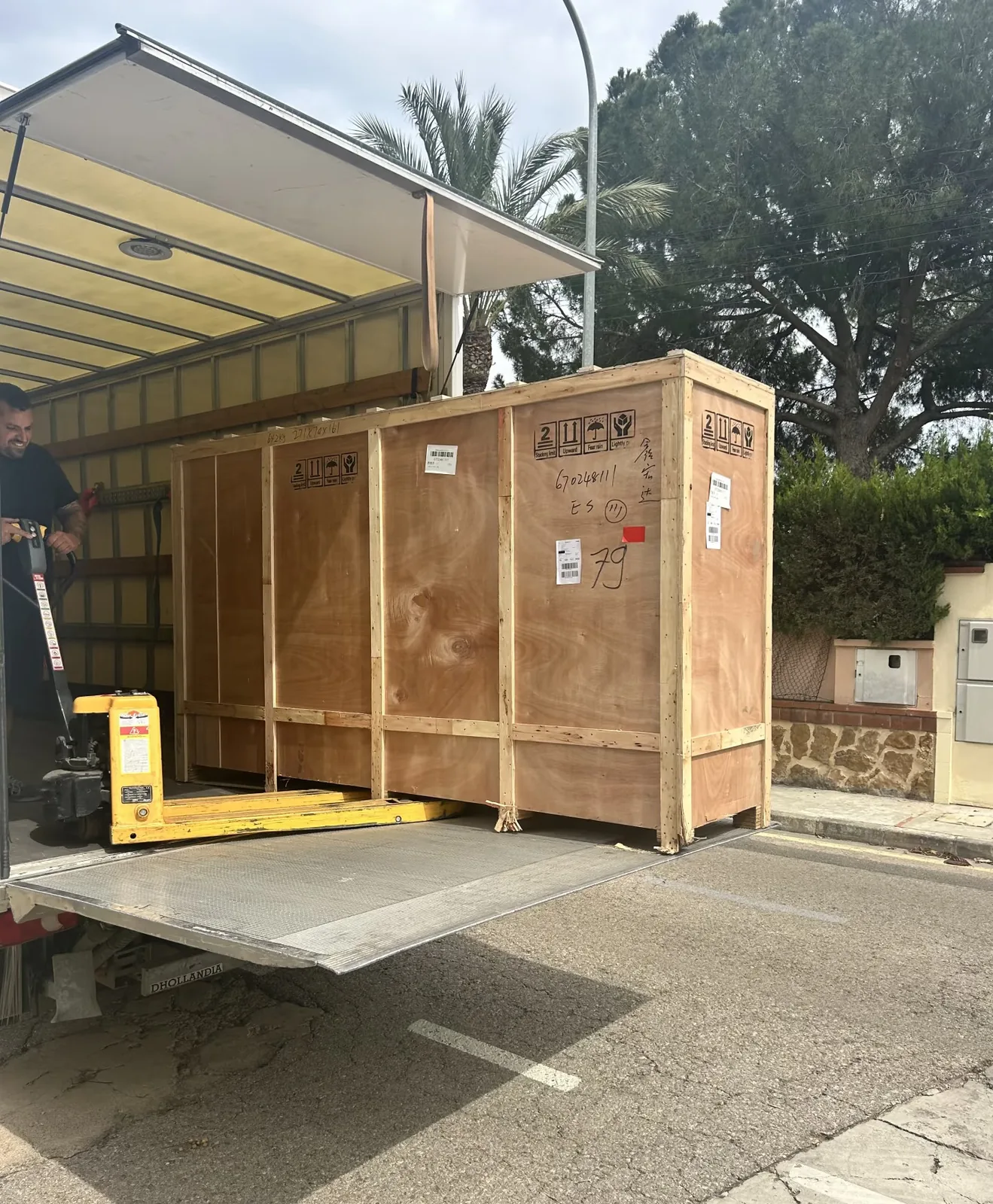
Real shipments, documented: inspected and crated in Foshan, repaired on site when transit damage happens.
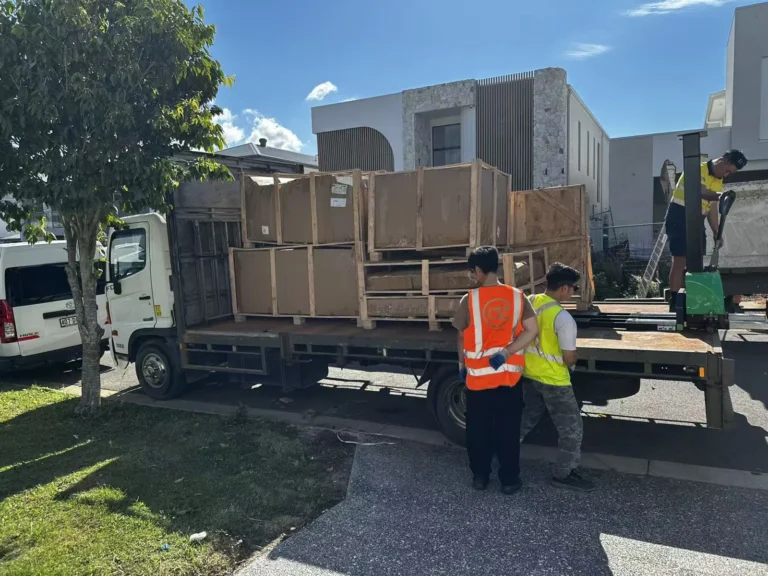 Foshan to Melbourne: Furniture Delivered on 15 October 2026, Packaging Taken Away
A Melbourne home delivery on 15 October 2026: protected furniture on the local truck, unloading at the property and collection of the timber and…
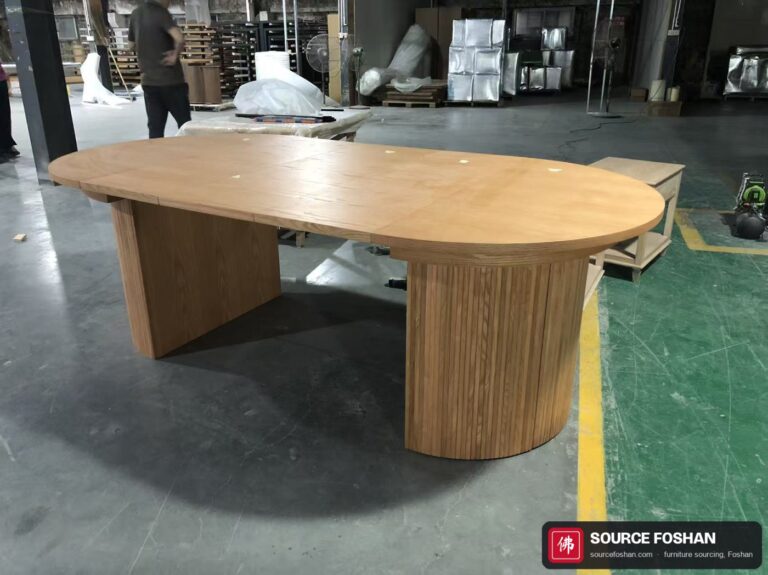 Inspecting a Custom Extending Oak Table in Foshan: What We Check Before It Ships
How we inspect a custom round oak extending table in Foshan before it ships: slide action, leaf alignment, top flatness under load, door gaps,…
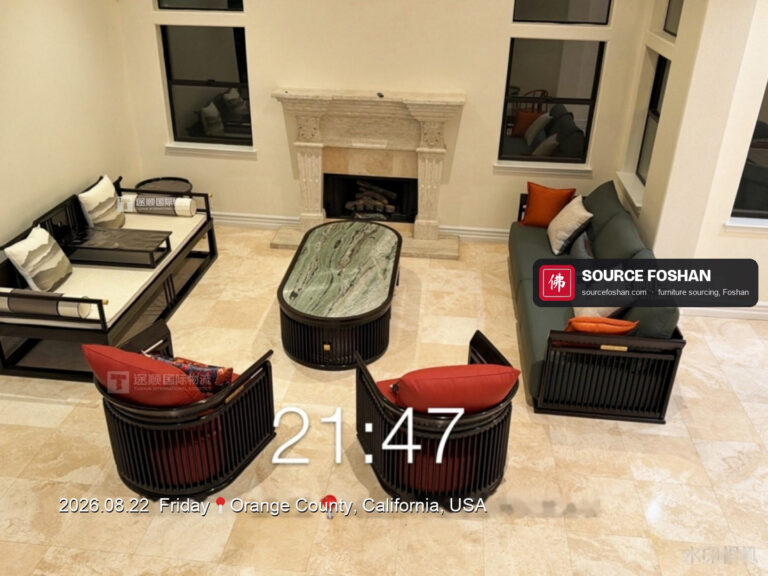 Foshan to Orange County: A Full Container Unloaded at 09:41, Every Room Furnished by 21:48 — Same Day
A 40 ft container of Foshan furniture opened at a house in Orange County at 09:41 on 22 August 2026; every room furnished and…
Field notes · from the blog
Why the inspection exists: the substitutions, swaps and skipped checks buyers have paid for.
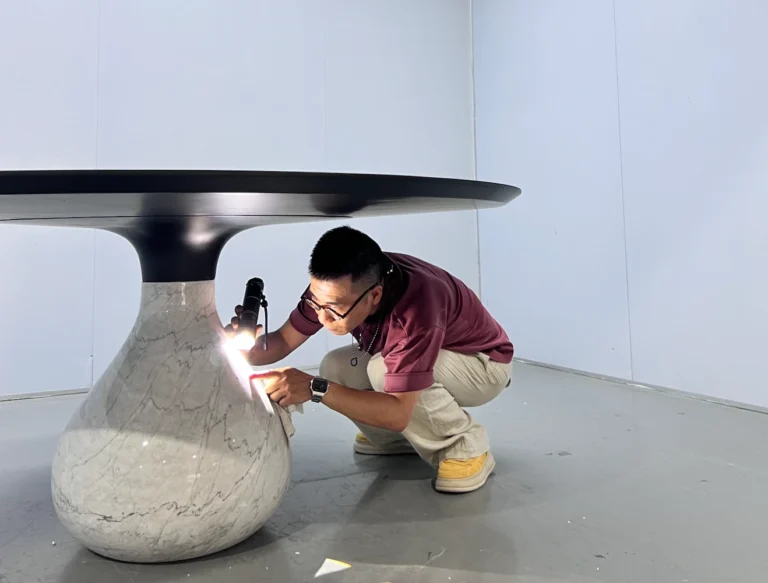 Six mistakes Chinese buyers say they made buying furniture in Foshan — and the paperwork that prevents each one
Avoid six common Foshan furniture buying mistakes with an itemised quote, signed specifications, inspection checklist and payment safeguards.
 Same name, different sofa: how to judge a curved or modular sofa made in Foshan
Foshan sofa nicknames describe a shape, not a product: prices under one name vary widely. Five checks decide the build: curve, back, fill, frame…
 Three Days in Foshan’s Furniture Malls: Why “Foshan” on the Label Is Not a Reason to Order
A furniture dealer spent three days in Foshan's landmark mall and livestream showrooms. His verdict: most Foshan furniture is good, a few operators trade…
FAQ
Frequently asked questions
Shipping terms, transit times and delivery questions are answered in the journey section above.
Can I hire a third-party inspection company as well?
Discuss an independent inspection before ordering so the supplier can confirm access and timing. Agree the appointed inspector, scope, report recipient, fee and responsibility for following up findings. Confirm whether visits, repeat visits or laboratory tests are separately charged; do not assume they are included in the sourcing fee.
What happens if defects are found at the final inspection?
Findings are recorded with item or sample IDs, photos, defect class and proposed action. Agree whether to rework, remake, accept a documented variation or reject, then record reinspection and the authorised release decision. Payment and any delay or extra-shipping costs follow the signed terms. The labelled furniture report example shows how a finding, correction and reinspection stay connected.
How are stone and sintered-stone table tops packed?
Tops are foam-sheeted on both faces, edge-protected, paired face to face with a separator and crated in plywood or ISPM 15 timber. Slabs over about 1.2 m travel upright on an A-frame strapped inside the crate; smaller tops go flat on a rigid base. Crates are marked with gross weight, centre of gravity and forklift side, and are floor-loaded at the container front with nothing heavy on top.
Do you insure the cargo?
Cargo insurance can be arranged through the forwarder on your instruction and should be separately confirmed. Ask for the issued policy, insured value, clauses, deductible, exclusions and claim deadlines. A policy described as all-risks still has exclusions; carrier liability and insurance cover are separate, and neither guarantees compensation for every loss.
Who pays import duties and taxes?
The contract and named Incoterms rule allocate charges; the destination rules determine who can act as importer and customs representative. Confirm the importer arrangement, national tariff code, origin and entry-date charges with the broker. Under DDP the seller handles import clearance and duties, while unloading and additional delivery services need a clear scope. Record the agreed roles in the responsibility matrix.
Can I see a sample inspection report before I commit?
Yes. Read the furniture inspection report example and download the free blank PDF or HTML form without submitting an enquiry. The example uses fictional values and contains no real inspection or approval. For your order, confirm the scope, measurements, evidence, exclusions and the person who authorises release.
Sources and further readingStandards referenced on this page
- US Department of Defense — MIL-STD-105E, Sampling Procedures and Tables for Inspection by Attributes (10 May 1989), Table I and Table II-ASample size code letters and single sampling normal inspection accept/reject numbers reproduced in the AQL table
- ISO — ISO 2859-1:2026 Sampling procedures for inspection by attributes, Part 1: Sampling schemes indexed by acceptance quality limit (AQL)Current edition (January 2026), replaces ISO 2859-1:1999
- ASQ — ANSI/ASQ Z1.4 and Z1.9 sampling plan standardsANSI/ASQ Z1.4-2003 (R2018), the US equivalent of ISO 2859-1
- IPPC/FAO — Explanatory document for ISPM 15 (Regulation of wood packaging material in international trade), February 201756 °C for 30 minutes heat treatment, dielectric 60 °C for 60 seconds, 6 mm exclusion, processed wood exclusion, mark contents and placement
- ISO — ISO 780:2015 Packaging, Distribution packaging, Graphical symbols for handling and storage of packagesHandling symbols used on shipping marks
- US eCFR — 19 CFR Part 134, Country of Origin MarkingUS requirement that origin marking be conspicuous, legible, indelible and permanent
- ICC — Incoterms 2020 EXW and DDP explainedDDP import formalities, destination constraints and unloading responsibilities