Quality & Craft
Inspecting a Custom Extending Oak Table in Foshan: What We Check Before It Ships
In short
- 01
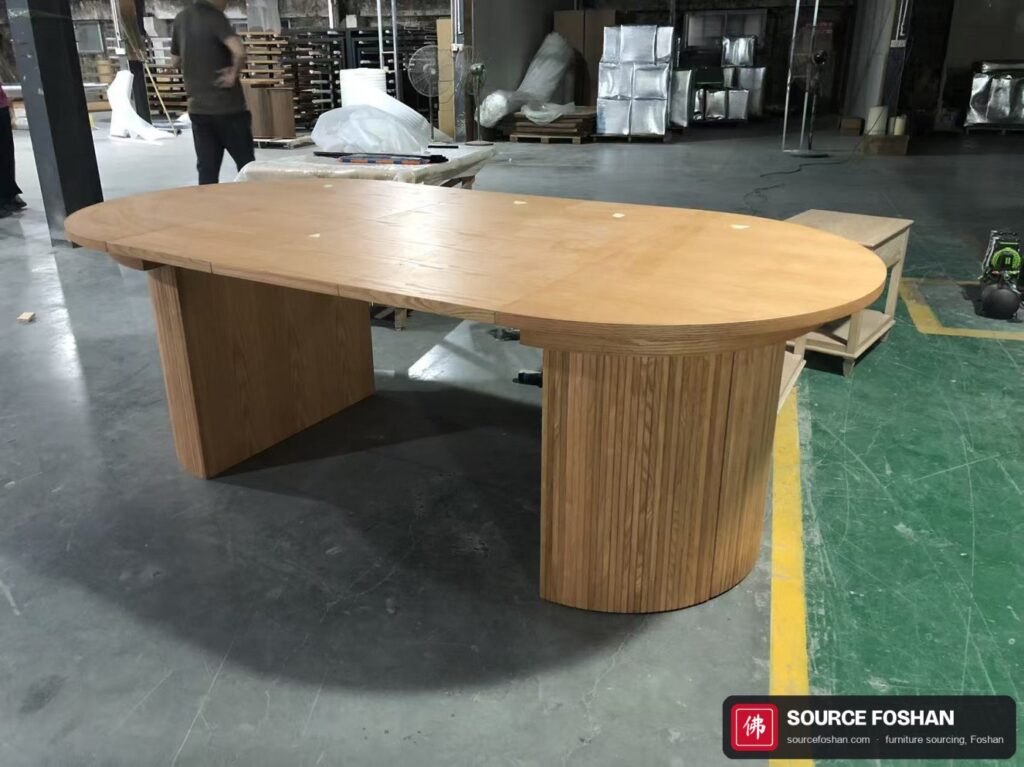
A custom round oak extending table — fluted pedestal base, two leaves on full-extension steel slides, storage inside the base — inspected at the factory before it was packed.
- 02
An extending table is not one product but three: closed, half open and fully extended. Each state has to be checked, because a top that sits flush closed can still step or sag when the leaves are in.
- 03
What we actually do on a piece like this: first-article check against the signed drawing, mid-production check on the base and veneer, then a pre-shipment inspection where the table is opened and closed on the floor, levelled, photographed and only then crated.
- 04
The photographs below are the inspection itself — not a catalogue shoot. The balance on an order like this is released after the client has seen them.
A bespoke extending table is the piece most likely to arrive “nearly right”. Veneer that matches in the workshop but not under a window, a leaf that drops two millimetres when it is loaded, a fluted base whose ribs do not line up where the two halves meet, a door that rubs after the container has crossed the equator. None of that shows in a photo of the finished table — which is exactly why we open it, close it and measure it before it ships. This is the inspection of one real order, photographed on the factory floor in Foshan. Source Foshan ordered this table for a client, inspected it in the workshop and released the balance only after the report below.
Photographs taken by the Source Foshan team during production and pre-shipment inspection of a custom extending dining table at the supplier factory in Foshan. The client, the factory and the order value are not named. Published as a project note.
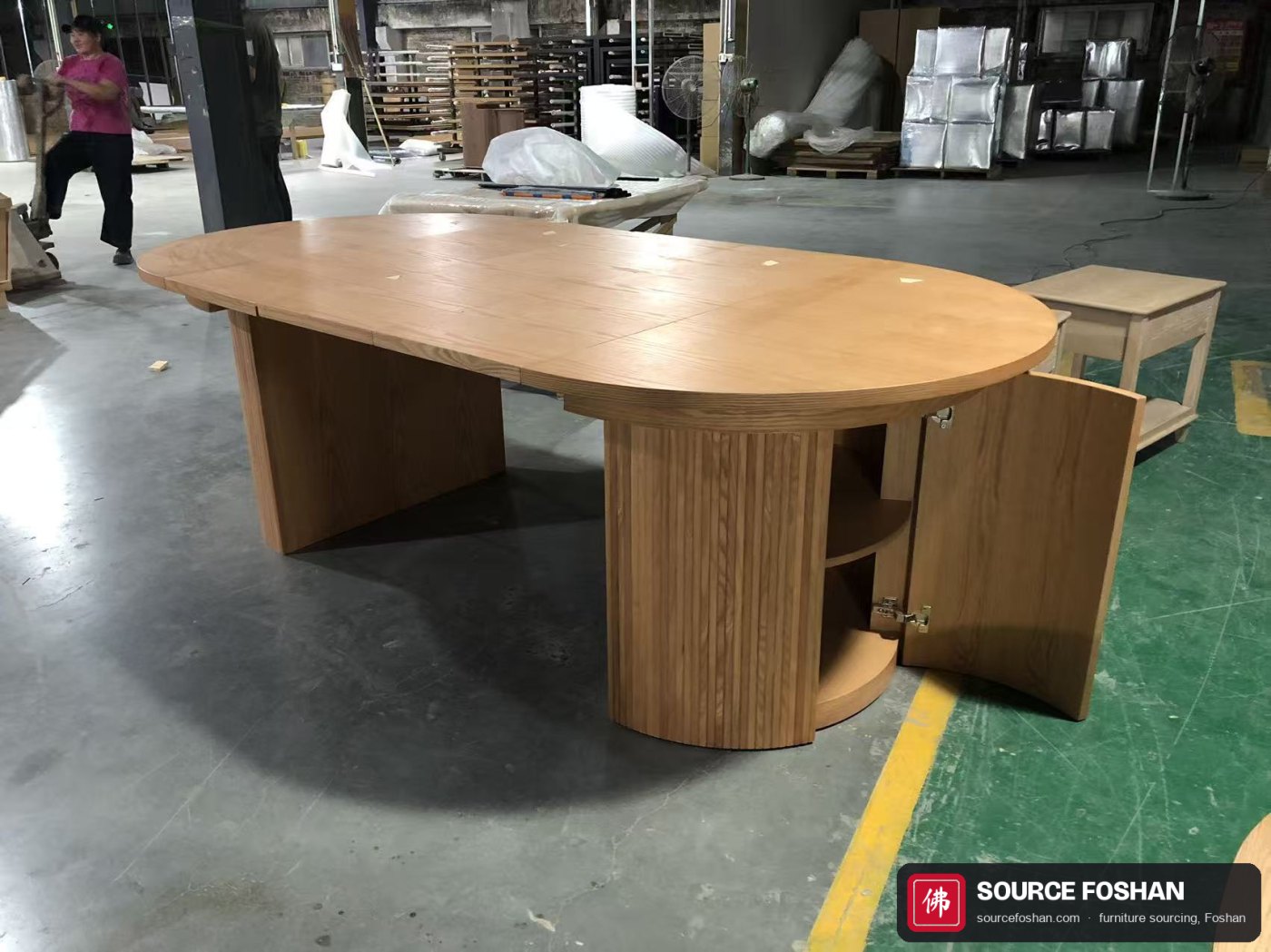
A round oak dining table that extends into an oval: a veneered top over a solid oak fluted cylindrical pedestal, two leaves that ride on steel full-extension slides, a second panel pedestal that carries the extended end, and — the detail most buyers miss — a hinged door in the base with a shelf inside, so the leaves have somewhere to live.
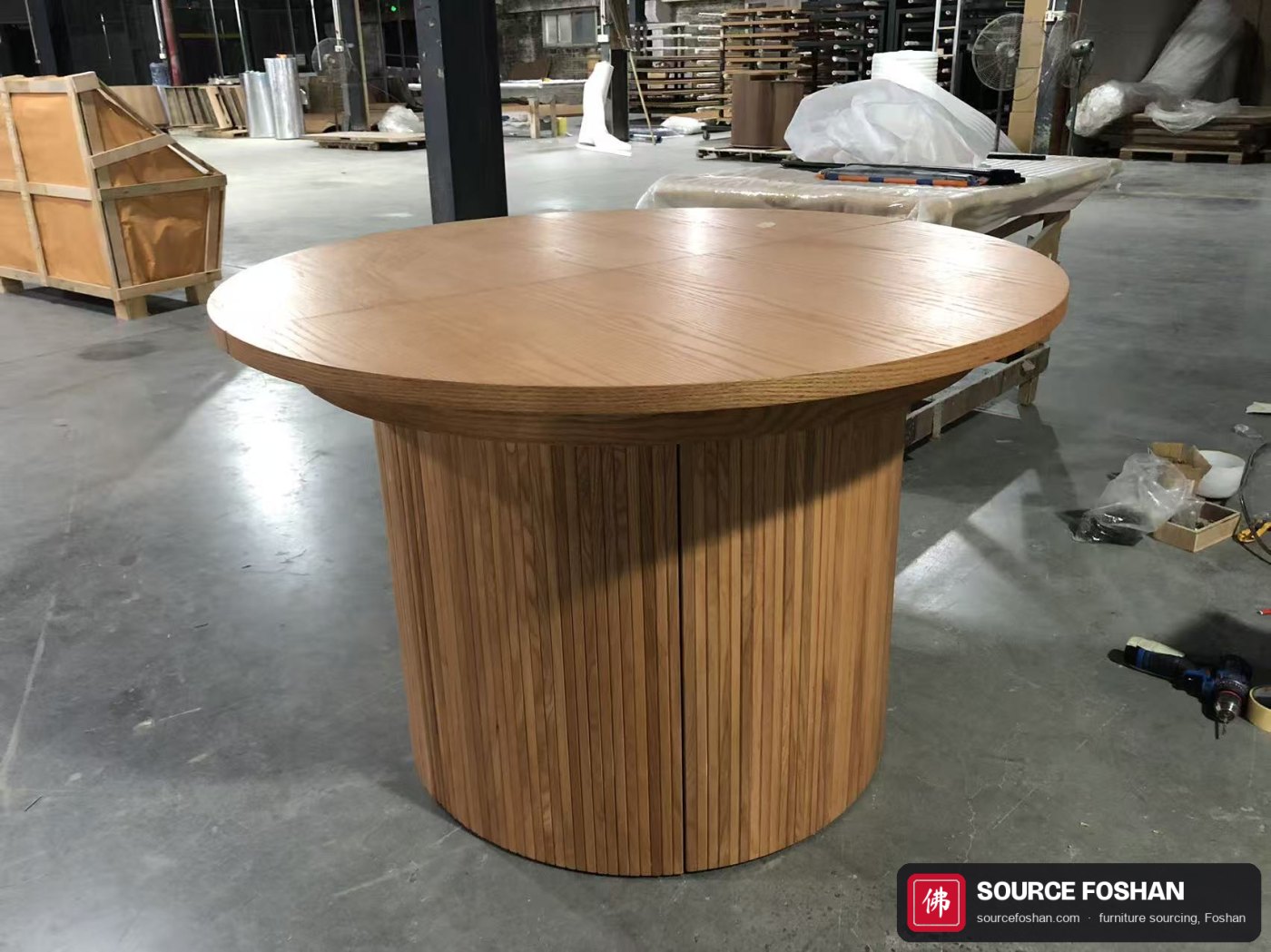
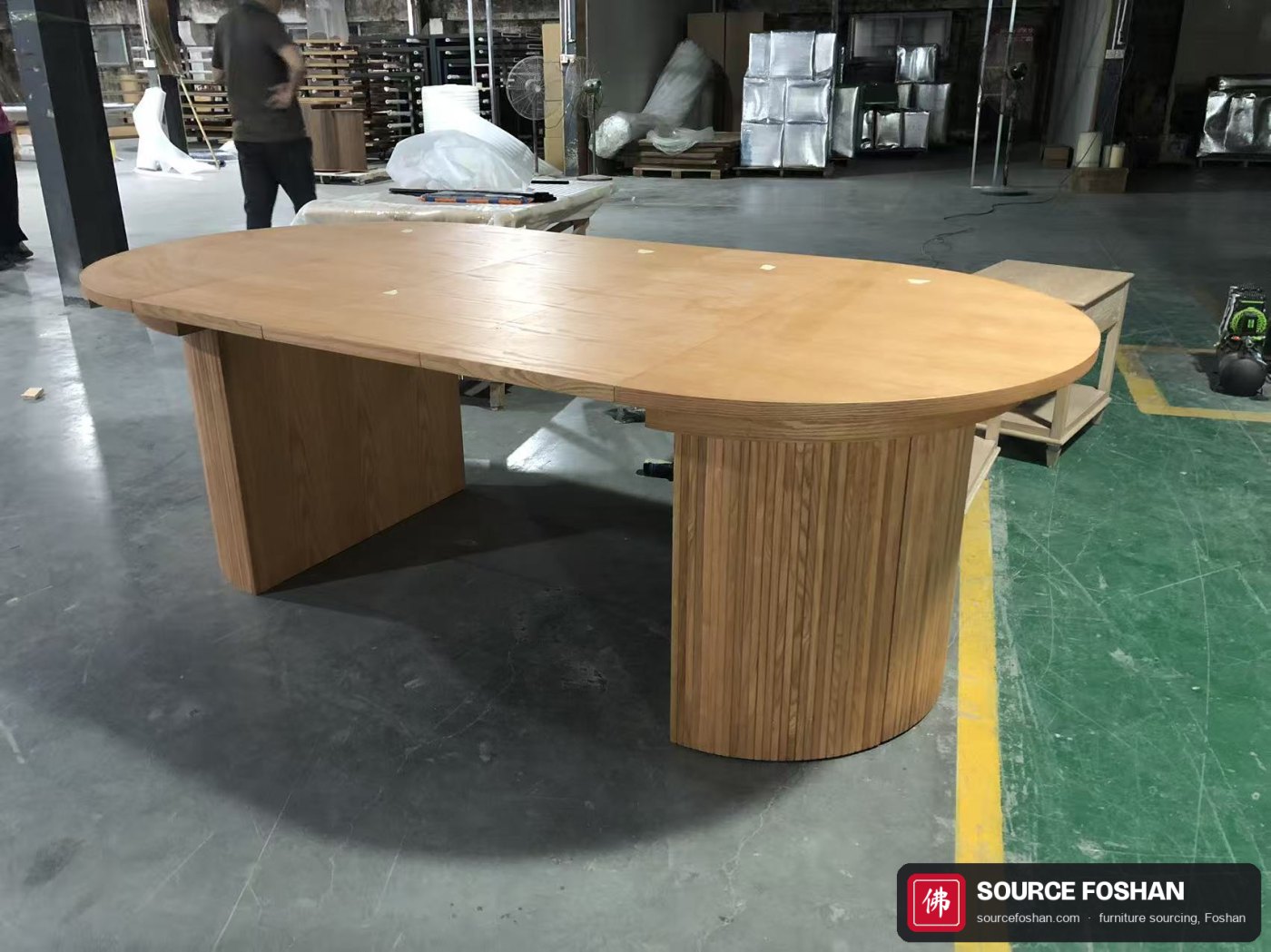
The order matters. Mechanism first, because a slide that binds will be blamed on the top; then the top; then the base; then the finish; and only then the packing.
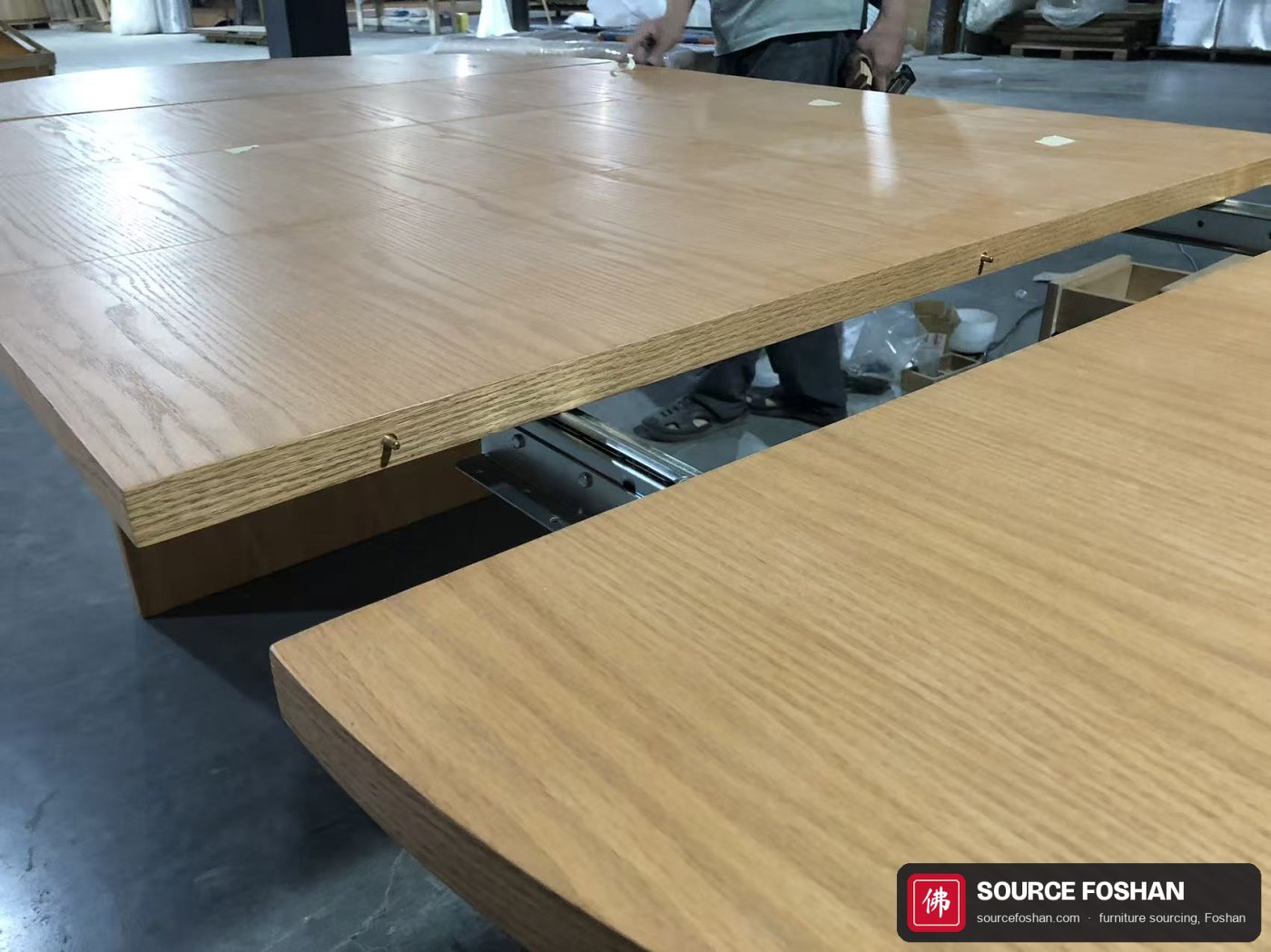
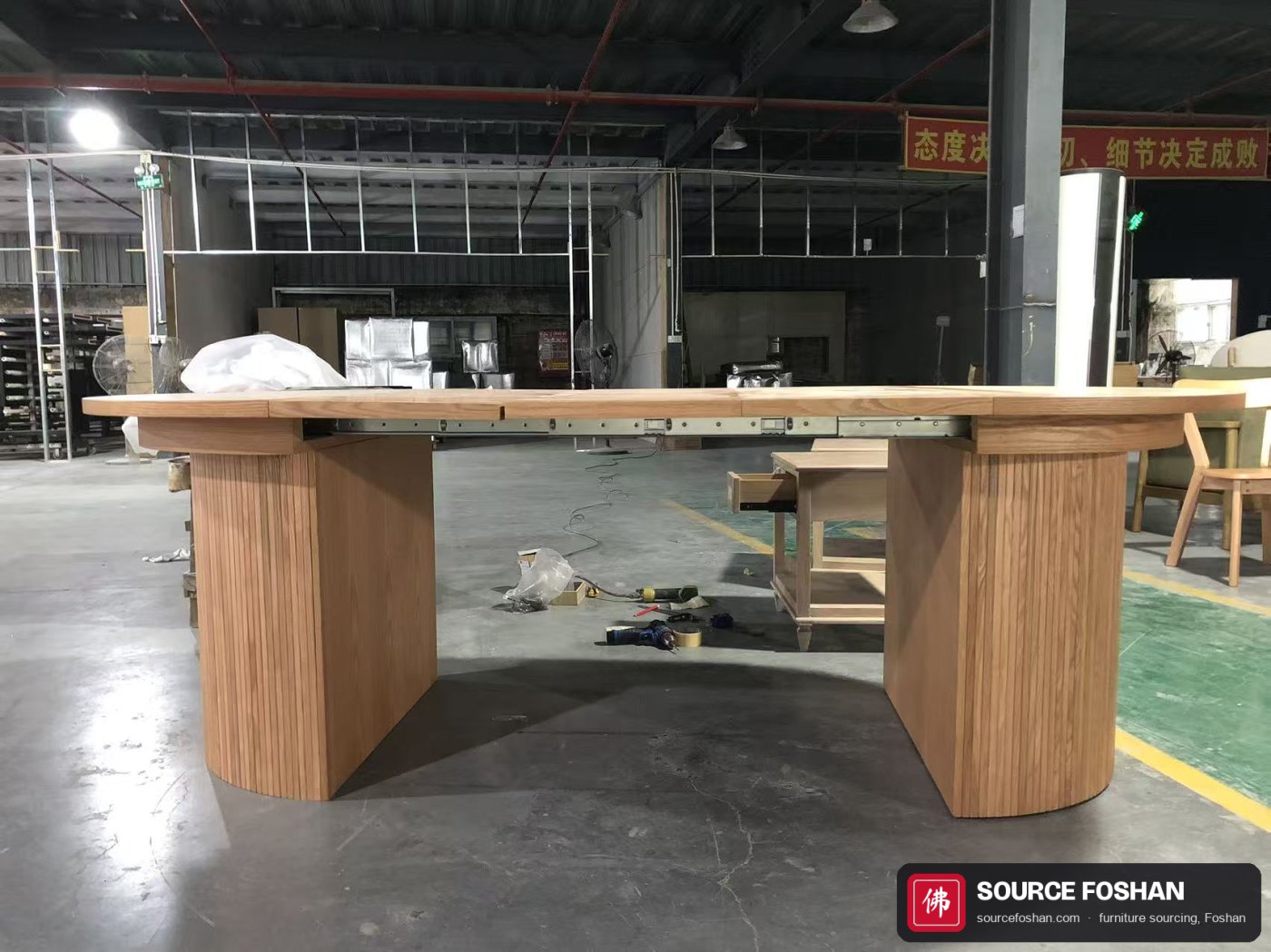
- Mechanism. The table is opened and closed on the factory floor, several times, by one person. The slides must run without binding, stop square, and hold the halves at the same height.Photo 2 and 3 below: the halves apart on the rails, checked for level and for play.
- Leaf fit and alignment. With the leaves in, the seams are run with a fingernail and a straight edge. Alignment pins and catches must engage without forcing, and there must be no step between panels.A step you can feel is a step the client will feel every meal.
- Top flatness under load. A straight edge across the closed top and across the extended top, plus hand pressure at the seam: the extended top must not sag between the pedestals.This is the check that fails most often on a first article.
- Veneer and grain. Grain direction and colour matched across the top, the leaves and the edges; the leaves have to look like they belong to the table, not like spares.Checked in daylight at the factory door, not under the shop lights.
- The fluted base. Rib spacing consistent around the curve, no chipped or proud ribs, the two halves of the cylinder meeting in a clean vertical line, door gaps even, hinges aligned, the internal shelf level and fixed.A curved fluted base is built on jigs; if the jig is out, every piece is out.
- Stability and level. On a flat floor: no rock closed, no rock extended, levellers working, second pedestal taking weight rather than hanging.Tested with a hand on the edge, at both ends.
- Finish and hardware. Sanding, edge profile and sheen consistent between top, leaves and base; hardware tight, screws seated, no glue squeeze-out.
- Packing. Foam on every edge, corner protection, the leaves packed so they cannot move against the top, a braced timber crate for the base, labelling that says which carton is which.Export packing is part of the inspection, not a step after it.
Two people are not allowed to open it. One person opens and closes the table, because that is how it will be used in a dining room.
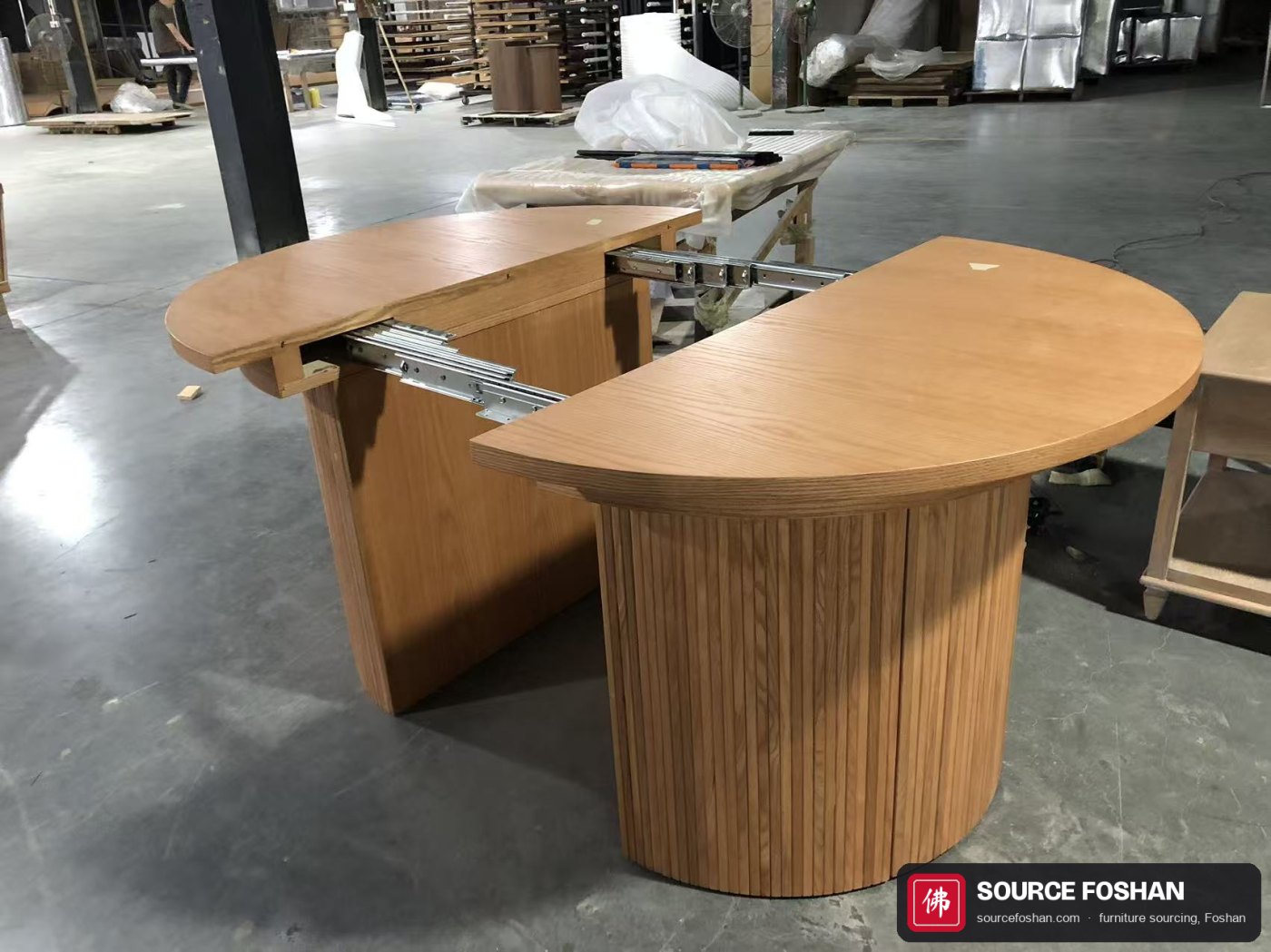
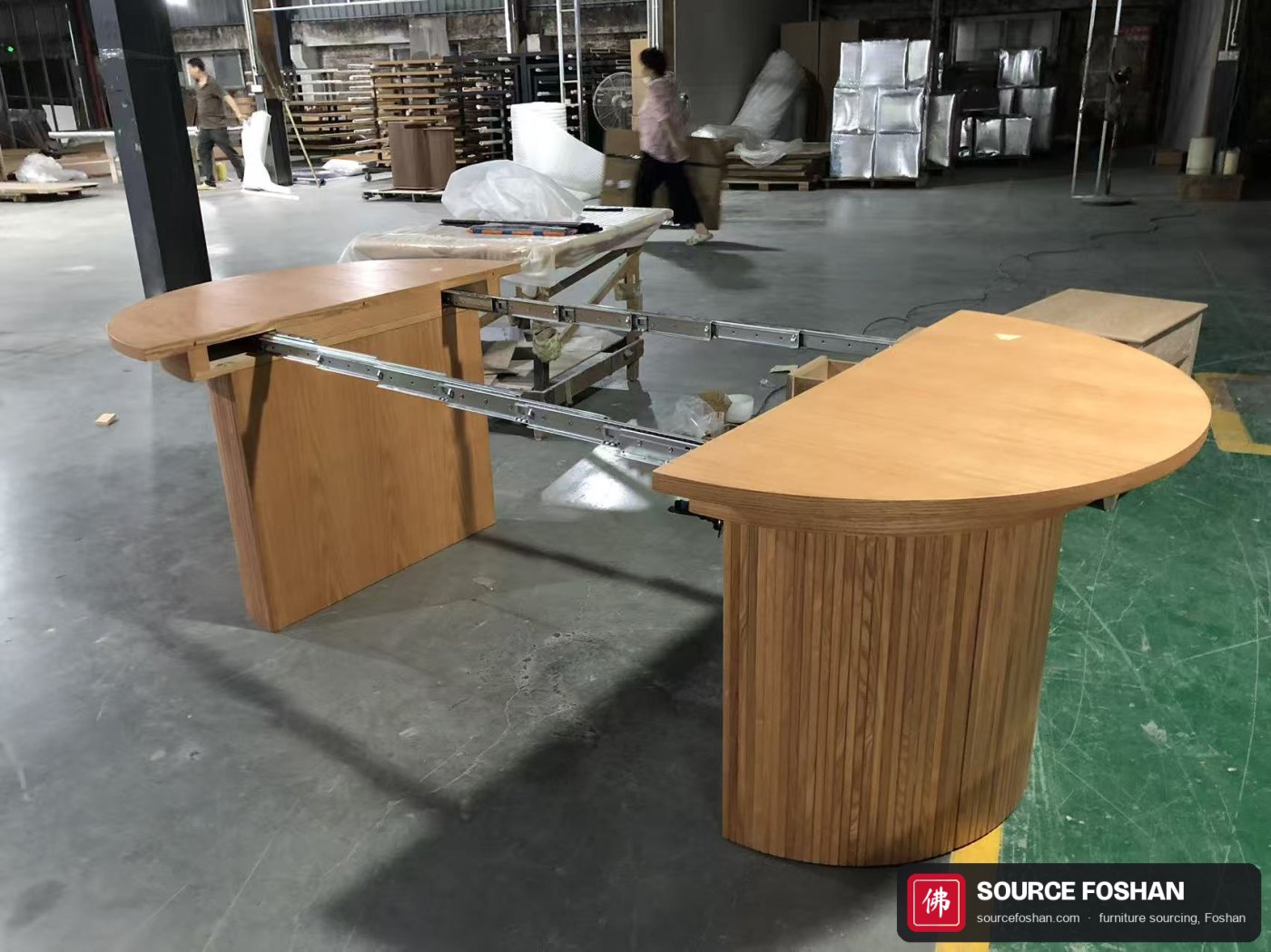
Send us the quotation you were given. We will tell you what is missing from it.
A free second look from a local team that reads Foshan quotations every week: unit specs, add-on risks, packing and freight lines, payment terms. No commitment.
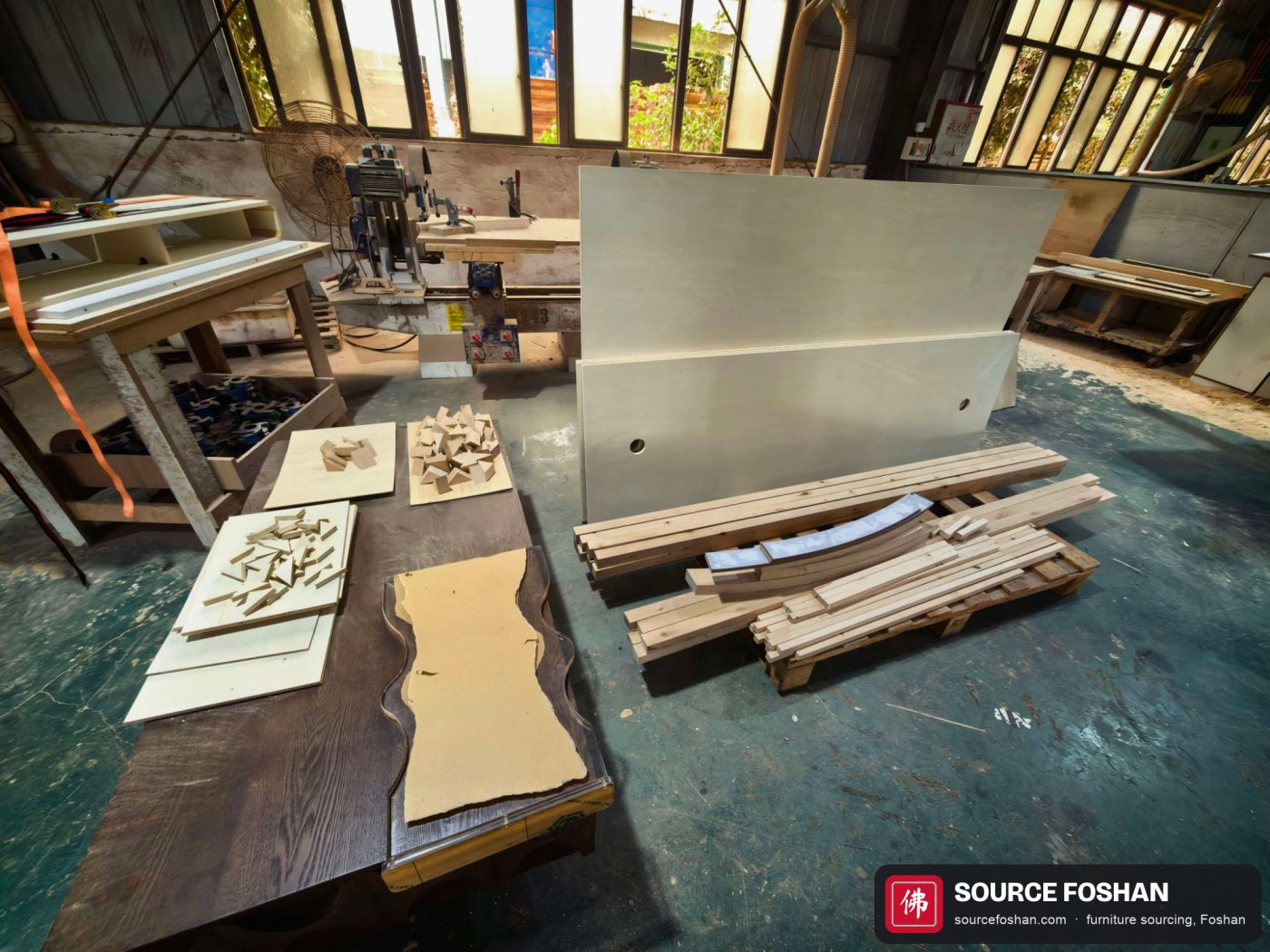
The fluted cylinder is the part a factory can get 90% right and still fail on. The ribs are machined strips laid around a curved former, so the tooling and the jig decide whether the flutes stay parallel and the seam lands where the drawing says it lands.
- Inspect the function, not the photograph
A custom table has moving parts. Ask for video of it being opened and closed by one person, at the factory, before the balance is paid.
- First article before batch
On custom work the first piece is approved against the signed drawing — materials, dimensions, finish, hardware — and the batch follows the approved piece, not the other way round.
- Checks at three moments, not one
Material and jig stage, mid-production, and pre-shipment. A fault found at the jig costs a day; the same fault found in a container costs a season.
- Packing is an inspection step
Leaves that can move against the top will mark it. Crating, foam and labelling are checked and photographed with the piece.
Questions buyers ask about custom quality control
How do you inspect a custom extending table before shipping?
It is checked in all three states. One person opens and closes it on the factory floor to test the slides; the leaf seams are checked for step and gap with a straight edge; the extended top is loaded at the centre to check for sag; the fluted base is checked for rib alignment, seam position, door gaps and a level internal shelf; then stability, finish, hardware and packing. Everything is photographed and the report goes to the client before the balance is paid — see quality control and shipping.
What is a first article and why does it matter on custom furniture?
It is the first finished piece, built against the signed drawing and approved before the batch runs. On a piece like this table, the first article is where jig and tooling problems appear — rib spacing on the curved base, seam position, leaf fit. Approving it costs days; discovering the same fault after a container has shipped costs a season. Our custom furniture service describes the development route.
Can I see this happening if I am not in China?
Yes. Production photos and videos are sent weekly, and the pre-shipment inspection is photographed and filmed item by item; on mechanisms we film the piece being operated. Buyers who do come to Foshan can stand at the bench for the first-article check — that is what the guided visit is for.
Who pays if the inspection finds a fault?
The supplier fixes it before shipping, at their cost — that is the point of inspecting while the goods are still in the factory. The balance is only released once the corrected piece has been re-checked and the report approved.
Ordering something custom from Foshan? Send the drawing or the reference image and tell us where it is going — we will tell you where the risk sits in that piece and what the inspection has to cover. Start your project, or read how inspection and export packing work.