Fabric, wood, stone and metal checked batch by batch against your approved sample.
Quality control & shipping · Foshan, China
Furniture Quality Control, Consolidation & Shipping from China
Every order runs through a structured QC process, from material inspection to the sealed container, and is documented in photos and video before anything ships. You approve the report; only then is the balance paid.
- %material and item inspection on made-to-order pieces
- QC checkpoints on every order
- 2–5 daysreport in your inbox before the container is booked

You approve before it shipsItem-by-item pre-shipment report, photos and video
Why it matters
Buying overseas means trusting what you can't see.
Our process exists to remove that risk: four failure points, each closed off before your balance is paid.
Size, colour, finish and structure verified against the confirmed drawings, before and during production.
In-production inspection catches structural and finishing problems while they are still cheap to fix.
Export packing, moisture barriers and crating specified for a long sea voyage, not a truck ride.
The system
Seven checkpoints, one accountable process.
From the first material sample to the sealed container. Every order, every time, run by the same project team.
- Material selectionFabric, timber, stone, metal and foam approved as physical samples.3–7 days per supplier
- Incoming inspectionMaterials checked on arrival at the factory against the retained sample.Before cutting
- Production monitoringFrame, foam and upholstery, finishing: photos with a tape measure in every weekly update.Weekly photos
- Assembly inspectionJoints, gaps, hardware fit and stability on the assembled piece.Doors 2–3 mm gap
- Final quality check100% of made-to-order pieces measured, sat on, opened and photographed.AQL only on 50+ identical
- Packaging verificationFoam, corner guards, moisture barrier, crate and label checked against the written spec.ISPM 15 crates
- Shipment approvalReport sent 2–5 days before loading; you sign off, then the balance is released.Your signature
Step one · before the deposit
What is checked before production starts?
Five things are frozen in writing before a factory cuts the first panel or frame: the dimensioned shop drawing checked against your specification, physical material samples, a colour standard, the hardware list and the packing specification. On a managed project this pre-production check typically takes 3–7 working days per supplier, and it is where most later disputes are prevented rather than argued about.
Every custom piece gets a dimensioned shop drawing (plan, elevation, section, exploded view where relevant). It is checked line by line against the brief: overall size, seat height, clearances, door swing, cable cut-outs, weight limits. Nothing goes into production on a reference photo alone.
Drawing rules: custom furniture developmentFabric, leather, veneer, solid timber, stone, metal finish and foam density are approved as physical samples, not screen images. A retained sample of each is labelled with the order number and kept for the final inspection.
Stains, lacquers and powder coats are matched to a signed sample panel viewed under neutral daylight (typically D65 or 5,000–6,500 K), because a warm showroom lamp hides a cool-grey cast that a client will see at home.
Hinges, slides, castors, glides, locks, mechanisms and bolts are listed by brand and model, or by an agreed equivalent. Hardware is a frequent silent substitution, so the list is part of the order, not a note.
Carton type, foam thickness, corner protection, crate or pallet, moisture barrier and label content are agreed before production so the packing cost is in the quote and not a surprise at the end.
Free checklistPrint or save our furniture inspection checklist: pre-production, in-production and pre-shipment items, the same structure our QC team works through.
Open →
Why packing is agreed first
Packing is the single largest cause of arrival damage on furniture from China, and a factory quoting ex-works has no incentive to over-pack. Agreeing the standard before the deposit means the factory prices it in and the inspector has something written to check against.
Step two · in the workshop
What is checked during production?
Production is checked at four points where a defect is still cheap to fix: frame or carcass, foam and upholstery, finishing, and first article. Each checkpoint produces evidence you receive, usually as part of the weekly photo update. A typical made-to-order sofa passes through all four in 30–45 days; full cabinetry takes 8–10 weeks and adds a hardware-fit check.
 01
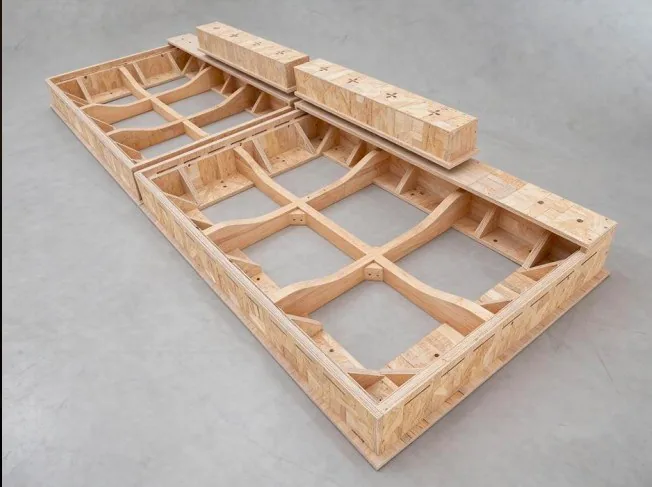
01Frame / carcass
Timber species and moisture (typically 8–12% for interior furniture), joint type, glue and screw pattern, squareness, panel thickness, edge banding.
Photos of bare frames with tape measure; moisture-meter reading where timber is solid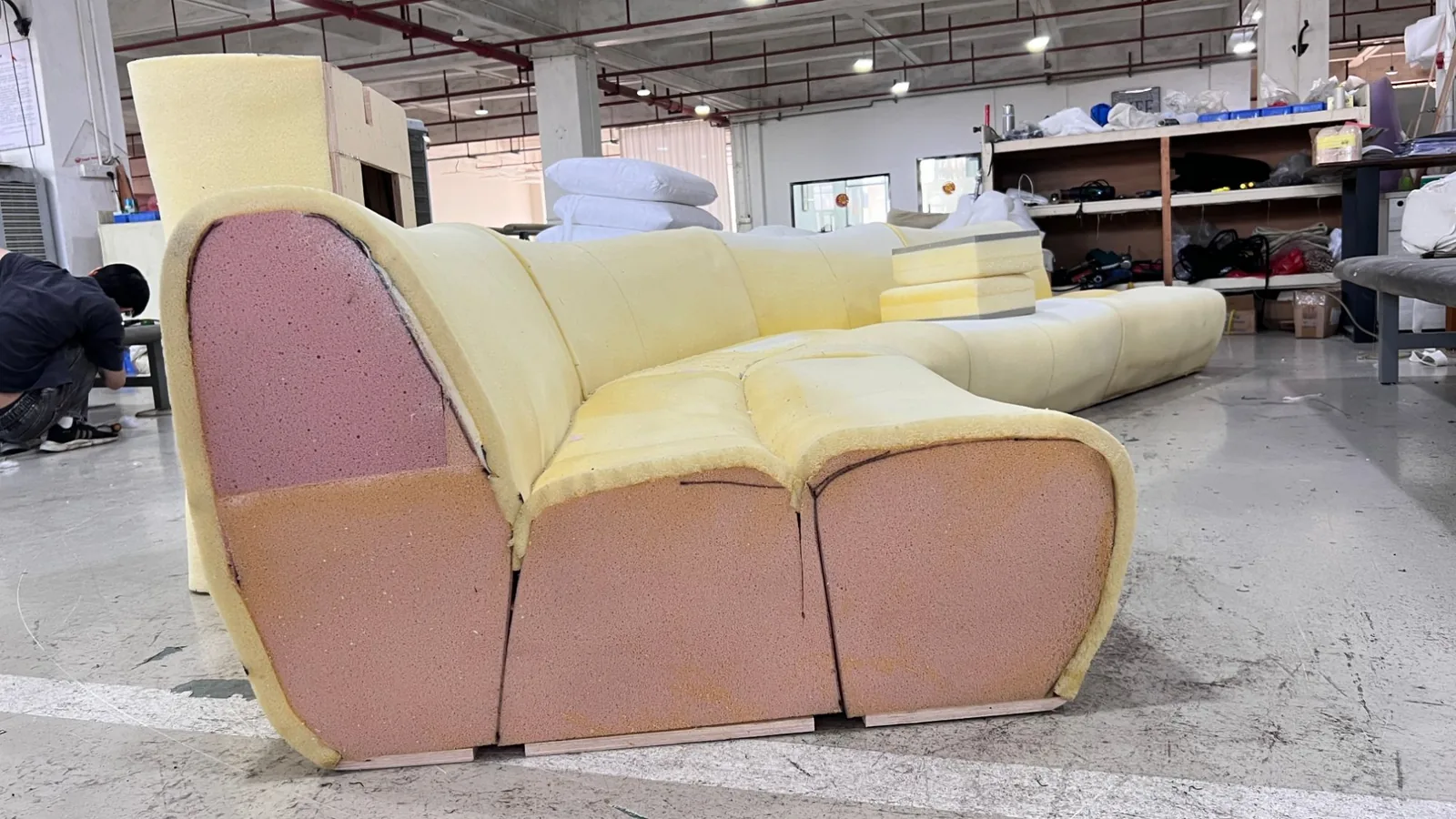 02
02Foam and upholstery
Foam density and thickness against sample, webbing or spring type, seam alignment, pattern matching, stitch density, pull-test on cover.
Photos of cut foam with labels, seat cushion cross-section, cover before final closing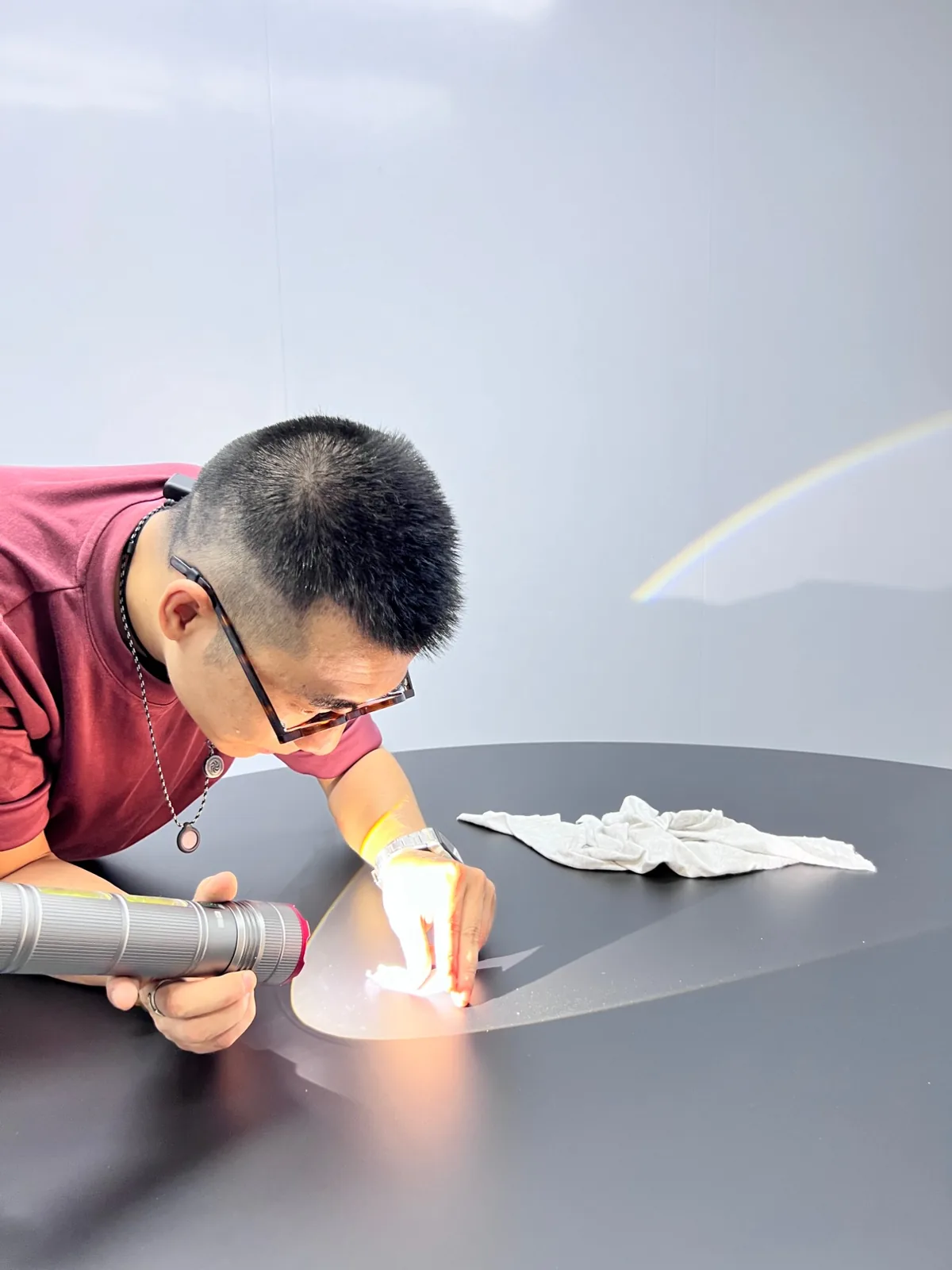 03
03Finishing
Sanding grade, stain colour against standard panel, lacquer build and sheen, cross-hatch adhesion test on a sample offcut, powder-coat thickness on metal.
Side-by-side photo with the signed colour panel under daylight; adhesion test photo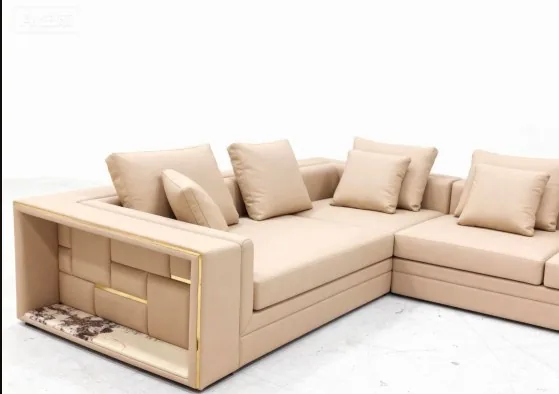 04
04First article
One complete piece measured, sat on, opened and closed, photographed front, back, side and underside before the batch is finished.
First-article report with measurements table; batch is released only after your approval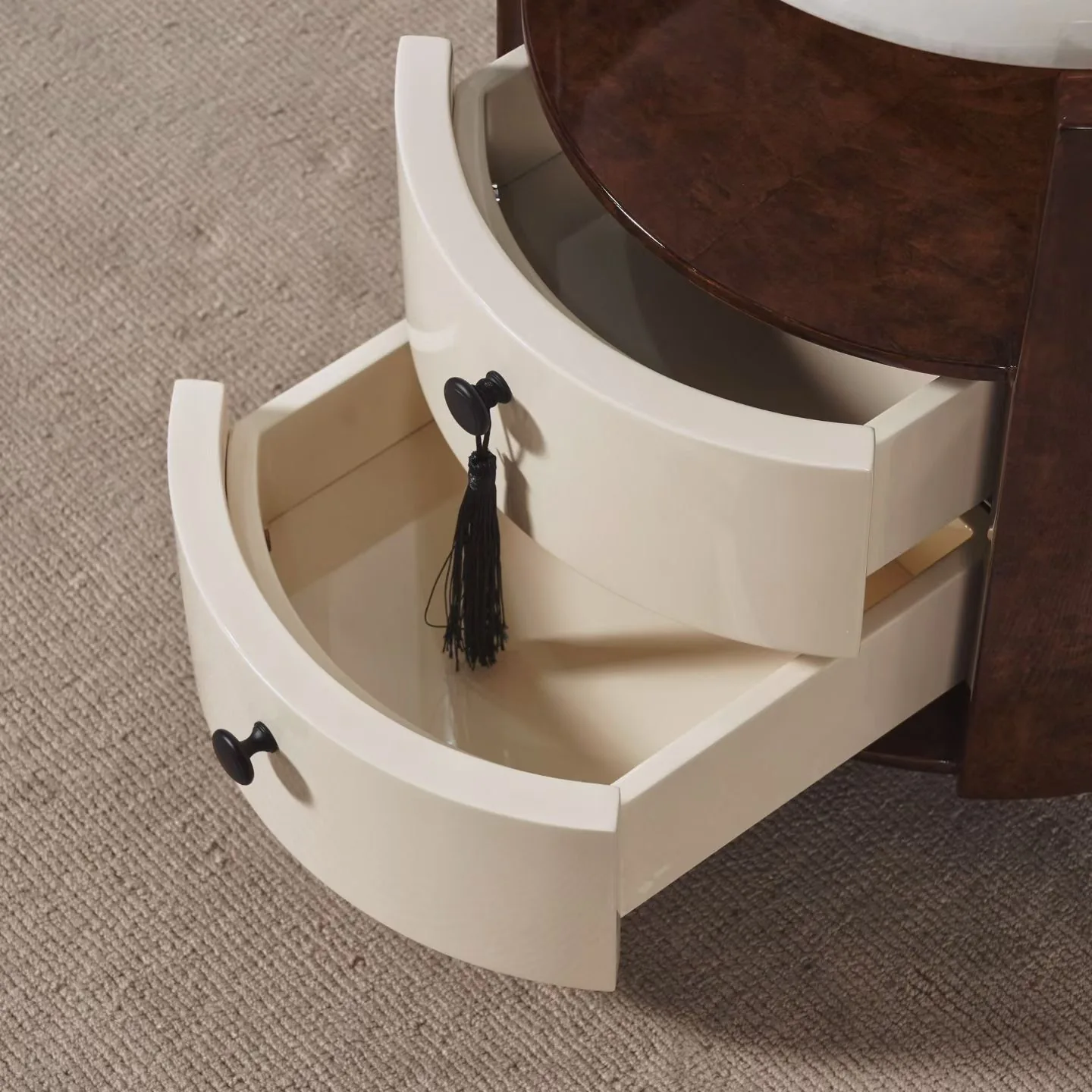 05
05Hardware fit (cabinetry)
Door and drawer gaps (typically 2–3 mm), soft-close action, drawer full-extension, shelf pin spacing, back-panel fixing.
Video of doors and drawers operating; gap measurement photosThe first article is the checkpoint that matters most on custom work.
It is one finished piece, inspected and approved before the factory completes the batch, so a wrong seat height or a stain that reads too red is corrected on one unit rather than on twenty. Factories generally accept this on batches of five pieces and above; on single custom pieces the first article and the final inspection are the same event.
Step three · final inspection
What does the final inspection cover, and how much is sampled?
100%On made-to-order and custom furniture the final inspection is 100%: every piece is looked at, measured against its drawing, sat on or opened, and photographed. Statistical sampling to an AQL plan is used only on larger production runs of identical items, typically 50 or more of one model, such as hotel guest-room chairs or restaurant seating, where inspecting every unit would cost more than the risk it removes.
AQL stands for acceptance quality limit. The sampling tables come from ISO 2859-1 (re-issued in January 2026) and the equivalent American standard ANSI/ASQ Z1.4, both descended from the US military standard MIL-STD-105E. The buyer chooses an inspection level and an AQL for each defect class; the tables then give the sample size and the number of defective units that trigger acceptance or rejection. The furniture trade's usual setting is general inspection level II with AQL 2.5 for major defects and 4.0 for minor defects, and no critical defects allowed.
Whether you use 100% or sampling, the inspection itself covers the same list: dimensions against the drawing, colour against the standard, surface and finish, structure and stability, function of every moving part, hardware against the list, labels and packing. The full item-by-item list is published as a printable furniture inspection checklist.
Worked example
300 dining chairs for a restaurant fall in the 281–500 band, code letter H, so 50 chairs are pulled at random. The lot is accepted if the sample shows no more than 3 major and no more than 5 minor defects; 4 majors or 6 minors and the whole lot is held for sorting or rework. Lot acceptance is not the same as zero defects, which is why the defect classes and the rework rule must be agreed with the supplier before the order, not at the inspection.
AQL sampling table used on furniture lotsSingle sampling, normal inspection, general level II · ISO 2859-1 / ANSI/ASQ Z1.4 / MIL-STD-105E
| Lot size (pieces) | Code letter | Sample size | AQL 2.5 major: accept / reject | AQL 4.0 minor: accept / reject |
|---|---|---|---|---|
| 26–50 | D | 8 | Table arrow: use plan C, sample 5, accept 0 / reject 1 | Table arrow: use plan E, sample 13, accept 1 / reject 2 |
| 51–90 | E | 13 | Table arrow: use plan F, sample 20, accept 1 / reject 2 | 1 / 2 |
| 91–150 | F | 20 | 1 / 2 | 2 / 3 |
| 151–280 | G | 32 | 2 / 3 | 3 / 4 |
| 281–500 | H | 50 | 3 / 4 | 5 / 6 |
| 501–1,200 | J | 80 | 5 / 6 | 7 / 8 |
| 1,201–3,200 | K | 125 | 7 / 8 | 10 / 11 |
| 3,201–10,000 | L | 200 | 10 / 11 | 14 / 15 |
Reading the arrows
Where the standard's master table shows an arrow instead of numbers, it tells you to use the first plan above or below. If that plan's sample size equals or exceeds the lot, inspect 100%. This is why AQL sampling adds little on furniture lots under about 50 pieces: the table itself pushes you towards checking everything.
Frame crack, loose leg, glass without tempering mark where specified, missing flammability label for a regulated market, sharp exposed staple.
Not allowed in any quantity; piece rejected and lot re-inspectedColour outside the signed standard, veneer mismatch on a visible face, seam puckering on a seat, drawer that binds, dimension outside tolerance, wobble.
Rework or remake before shipment; counted against AQL 2.5Slight sanding mark on an underside, thread end, small glue spot inside a cabinet, label crooked, carton dent.
Fix on the spot where possible; counted against AQL 4.0Craftsmanship
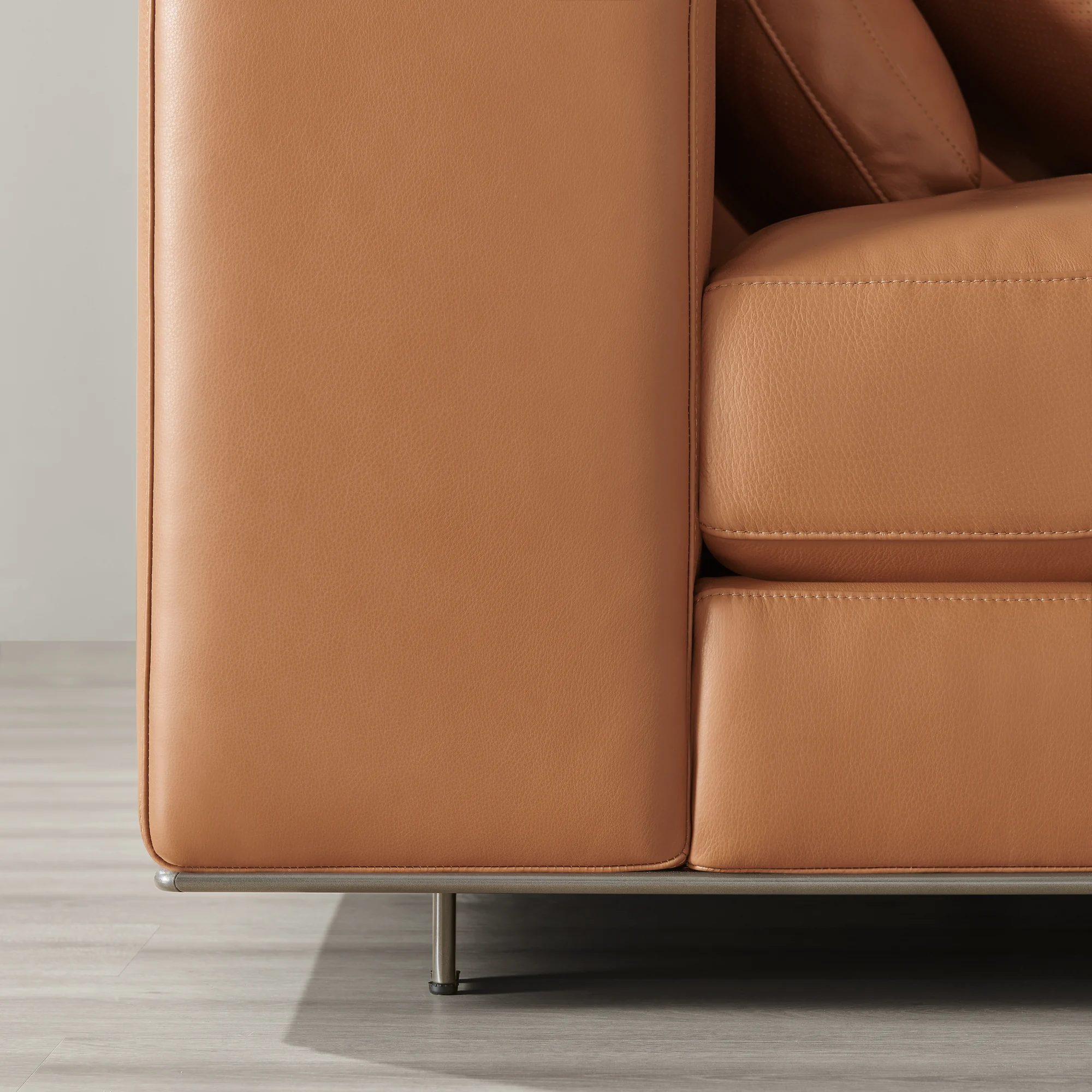
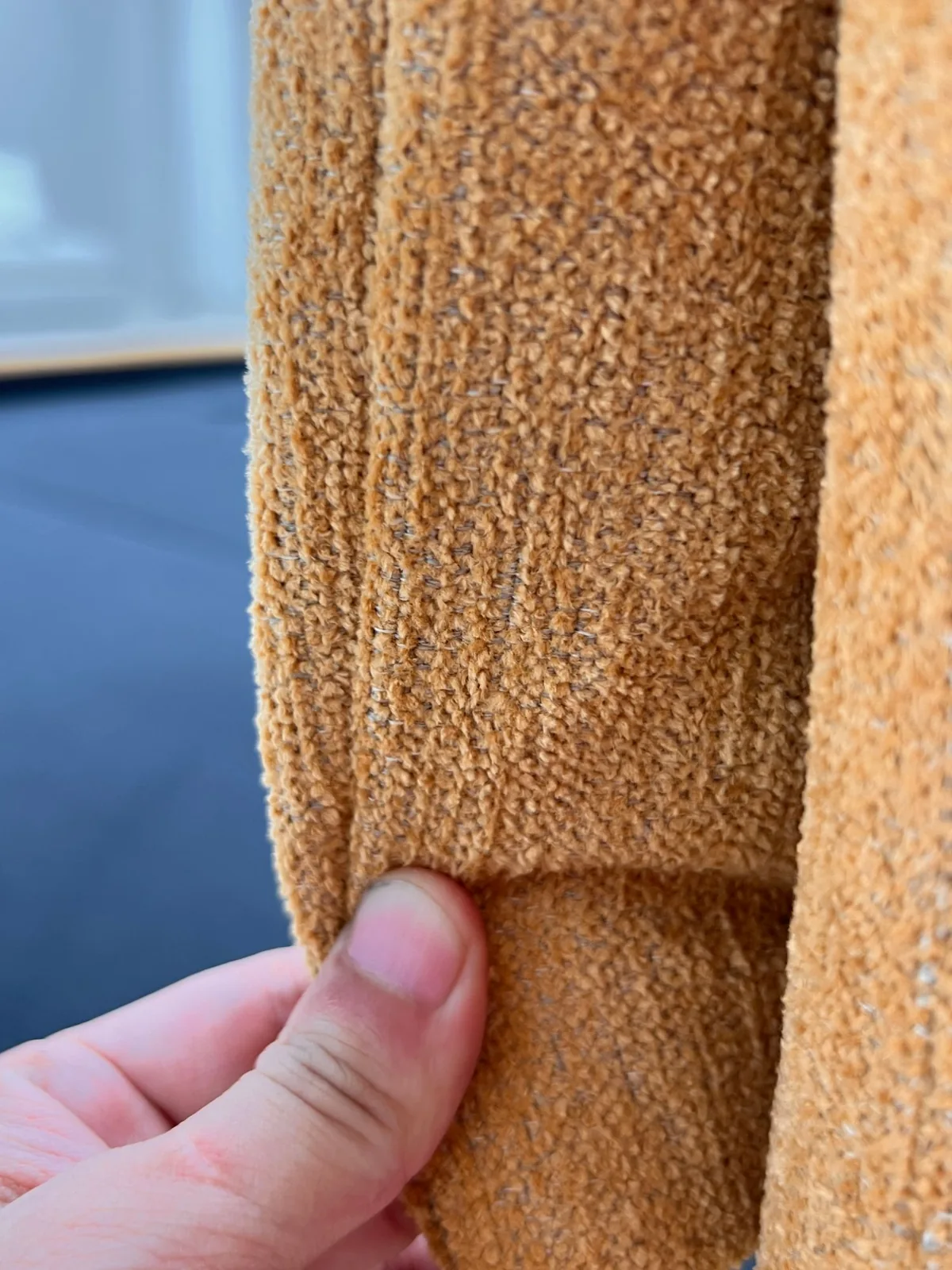
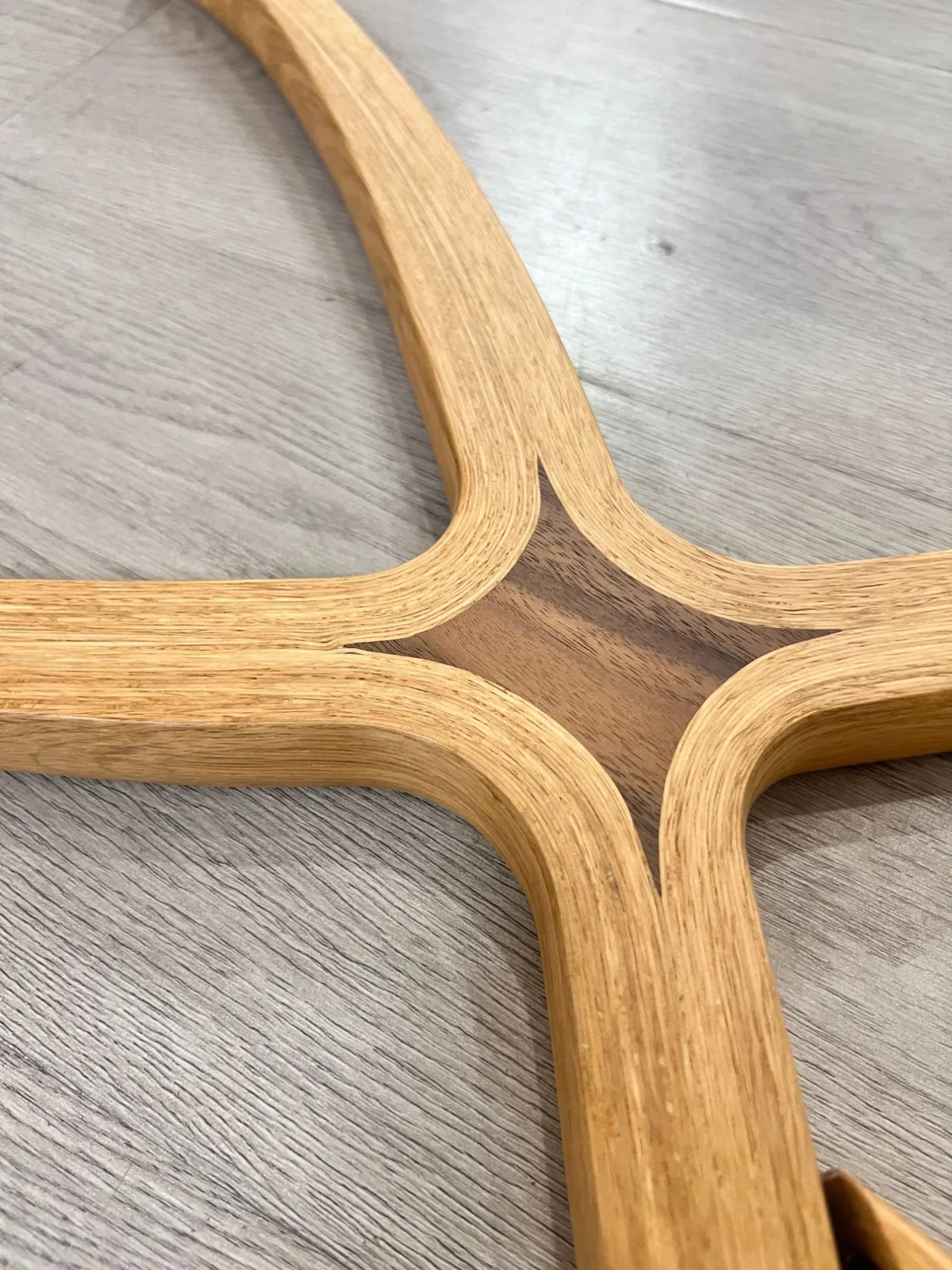
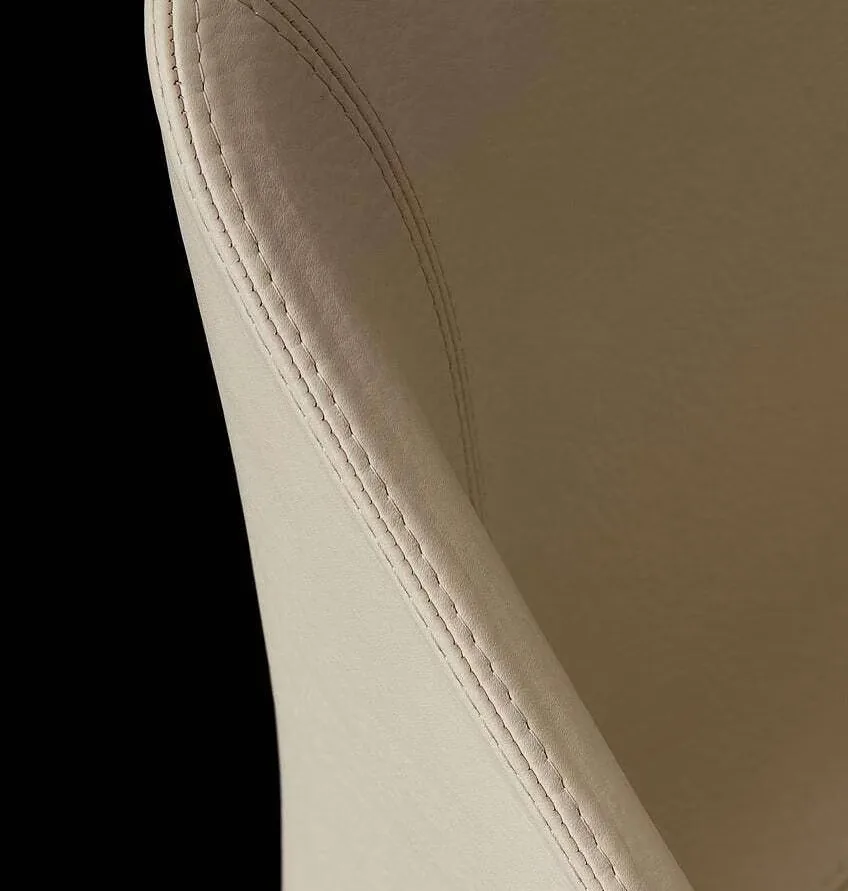
Details define quality.
What the inspector looks at up close, on every piece, before it is wrapped.
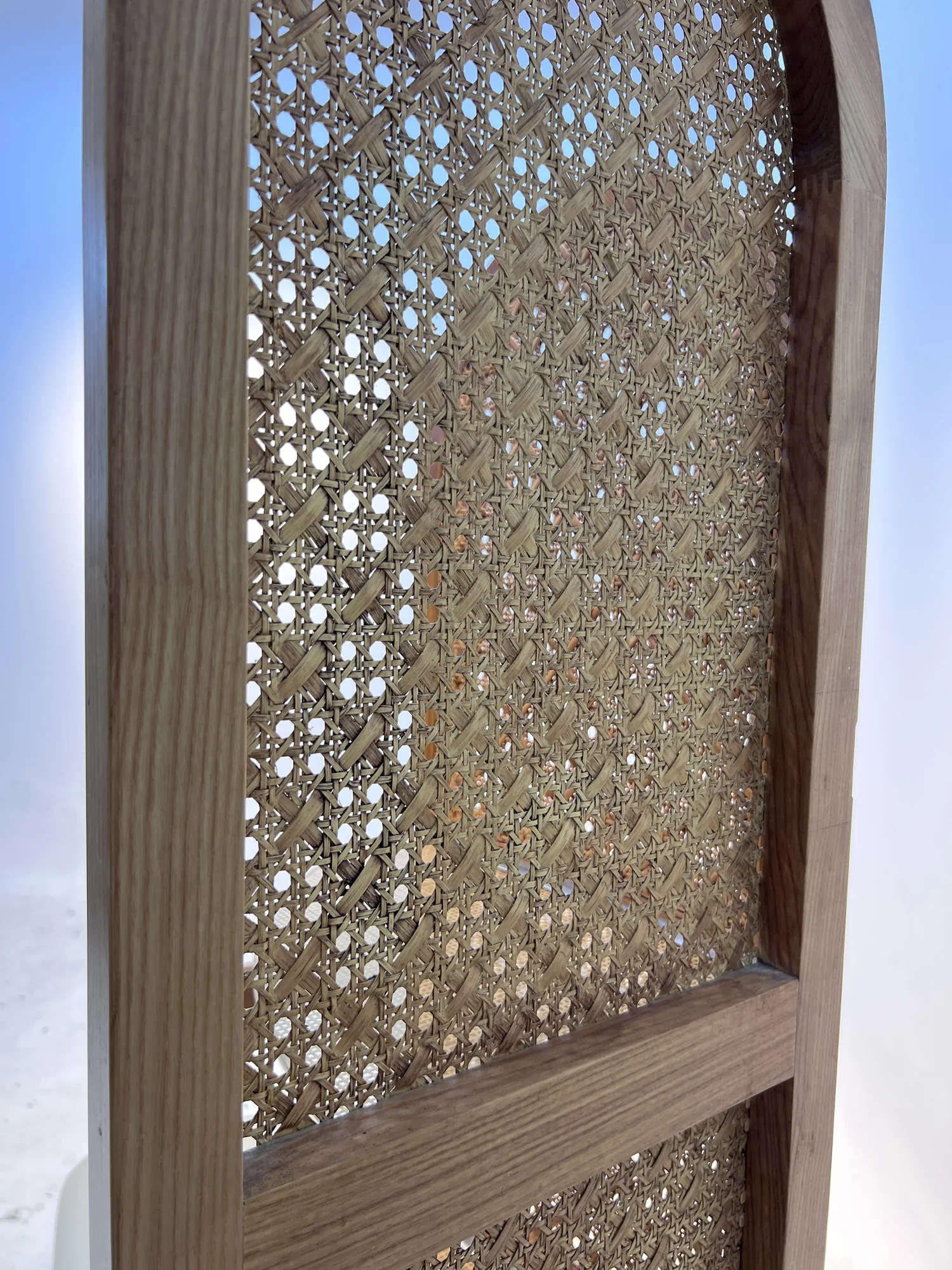
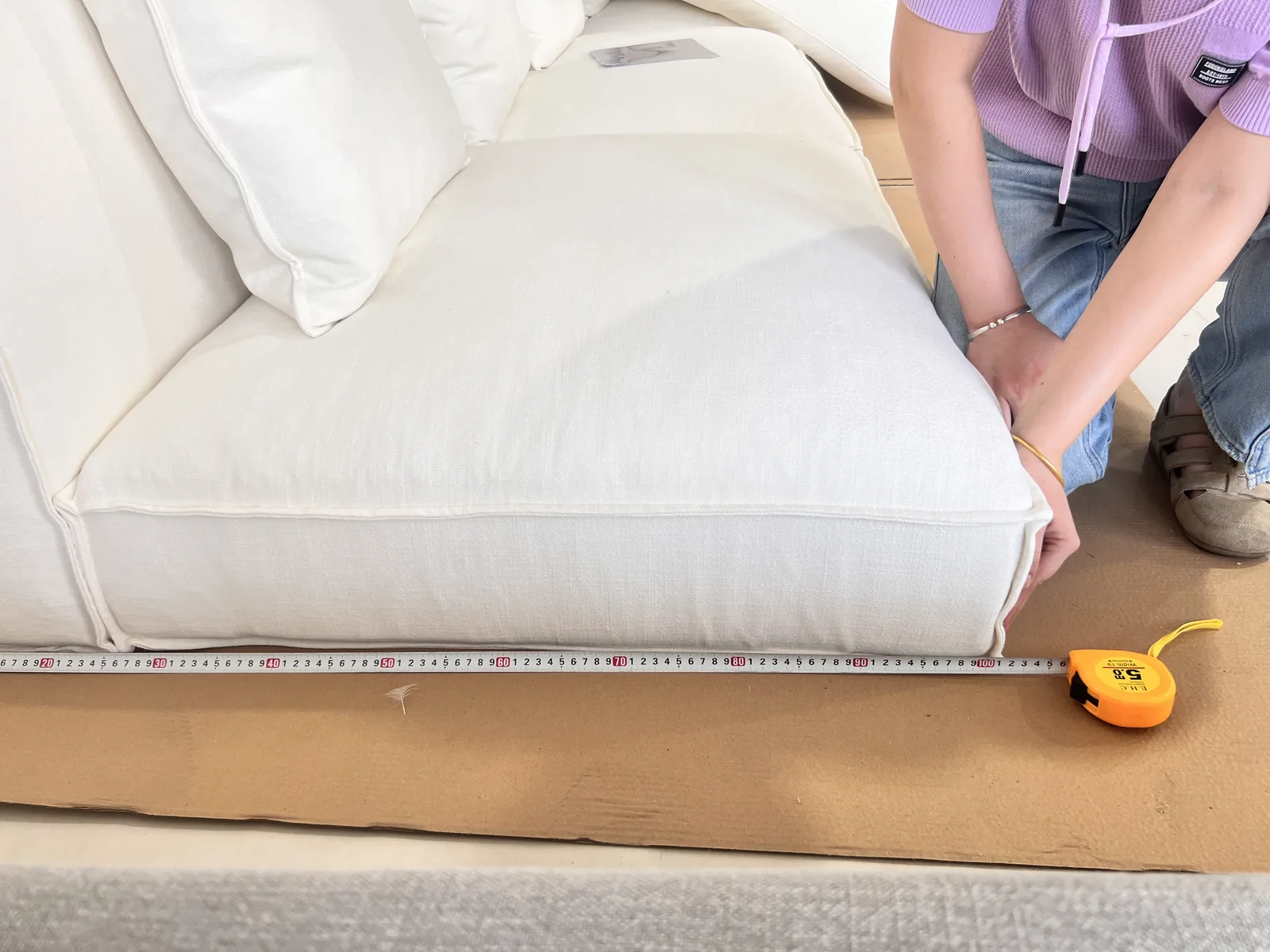
From the inspection floor
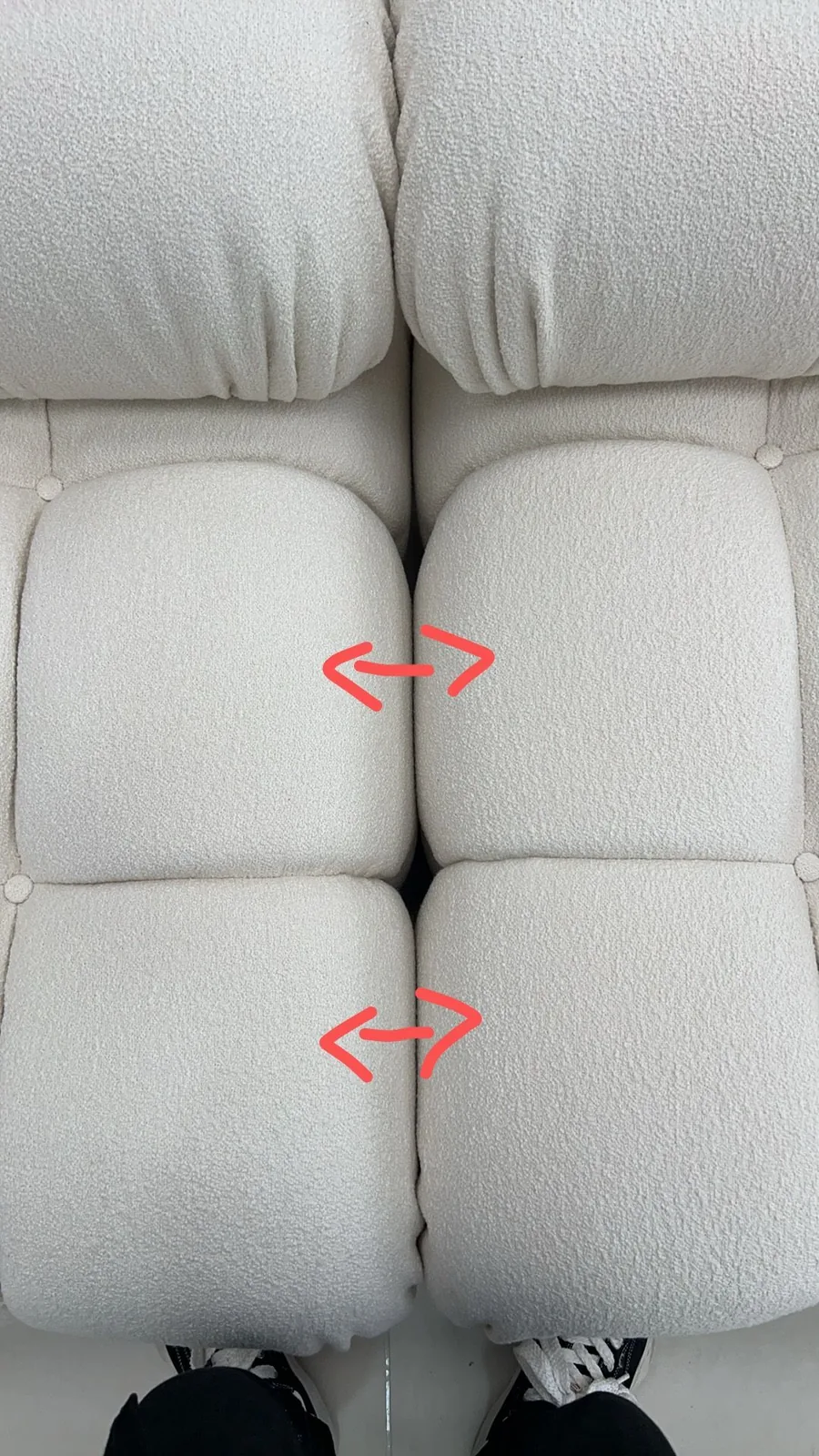
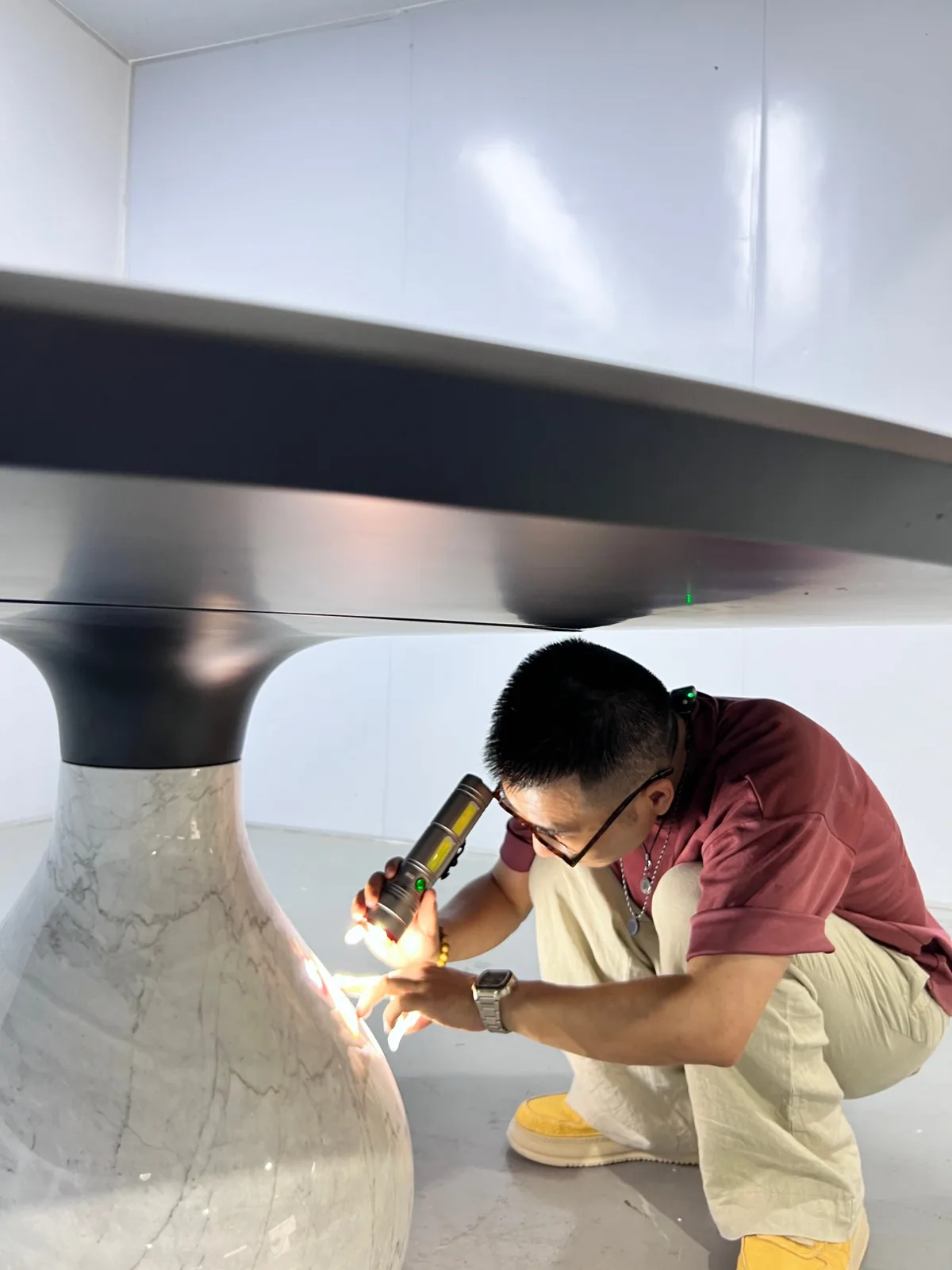
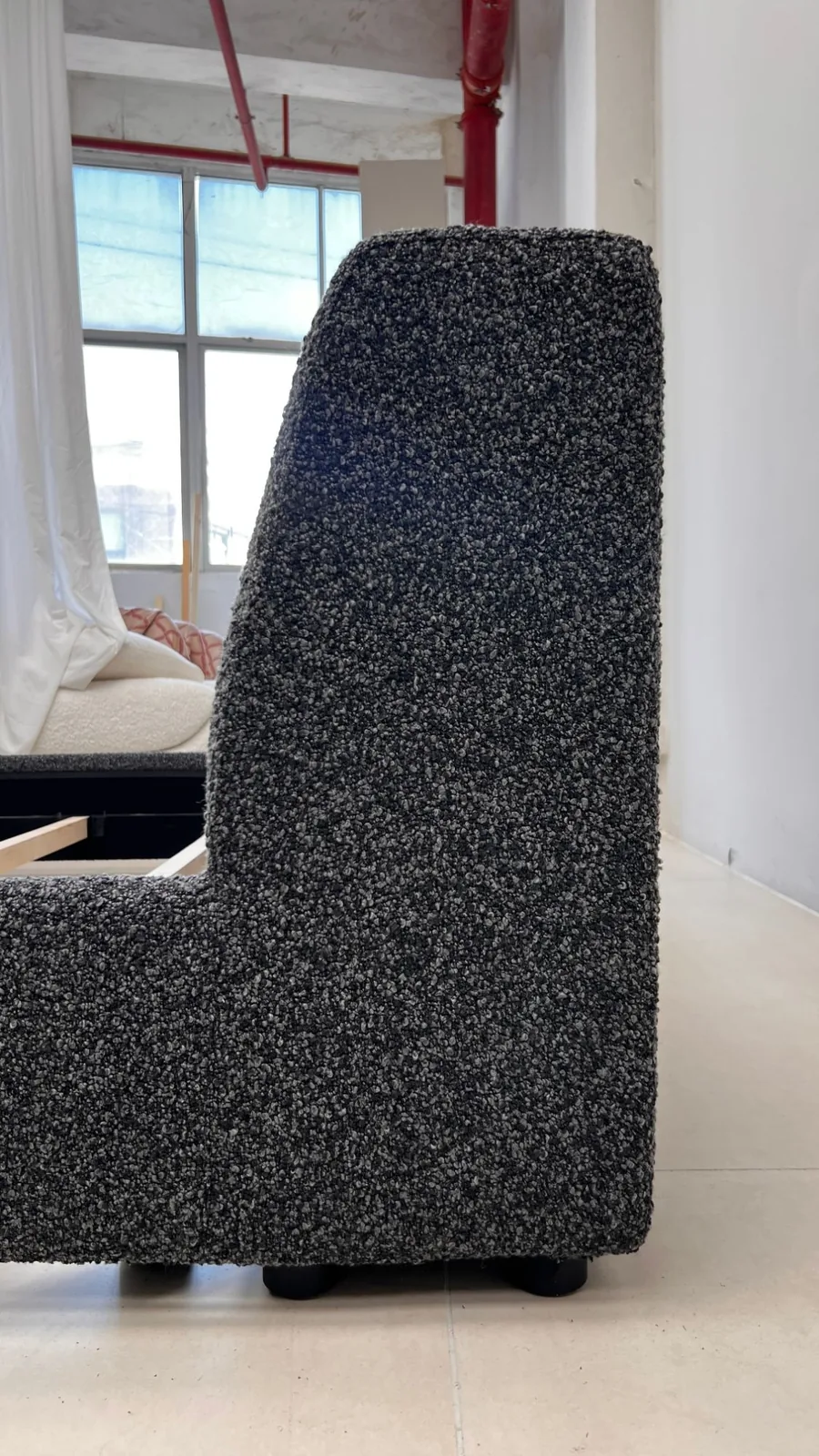
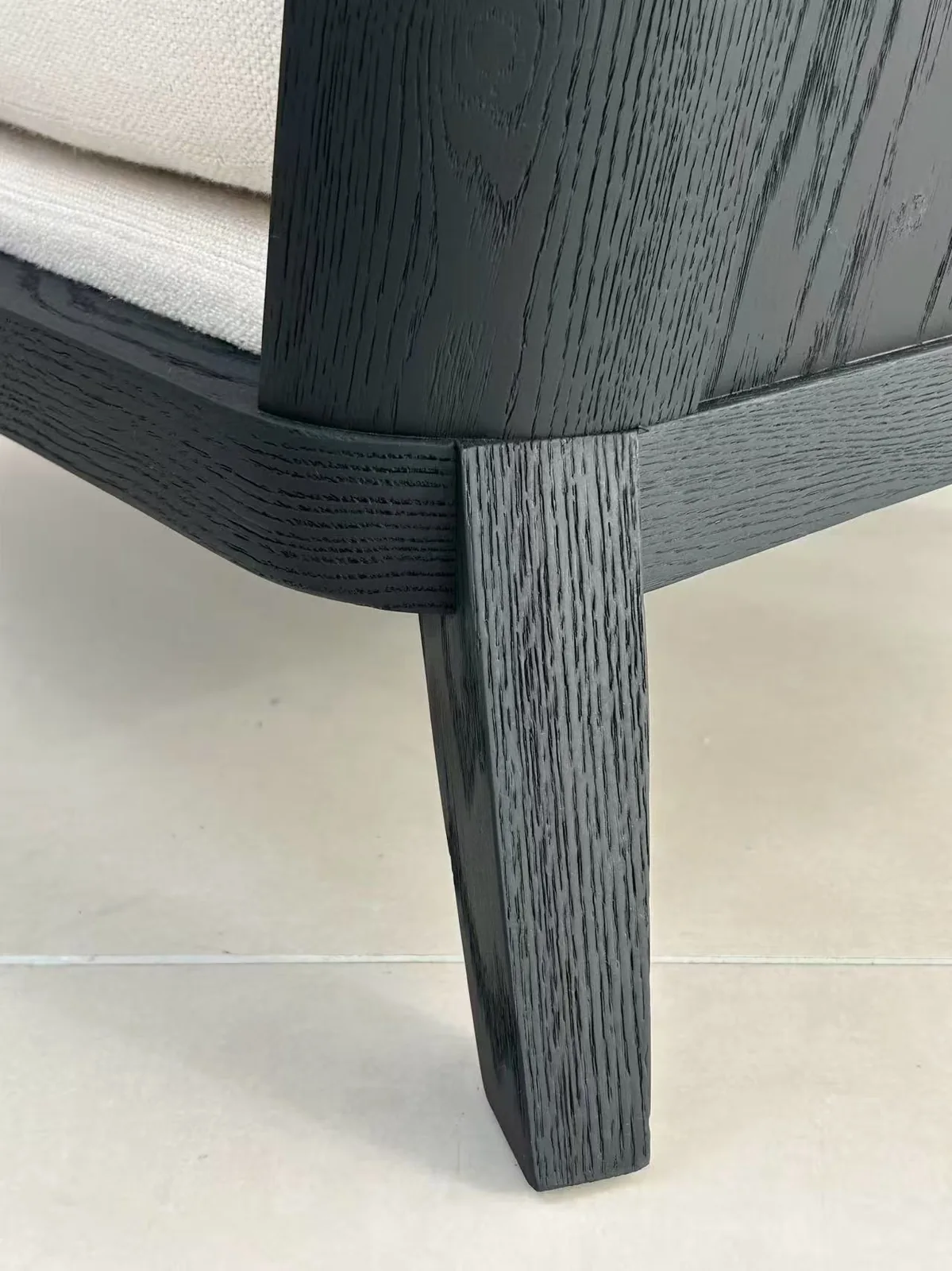
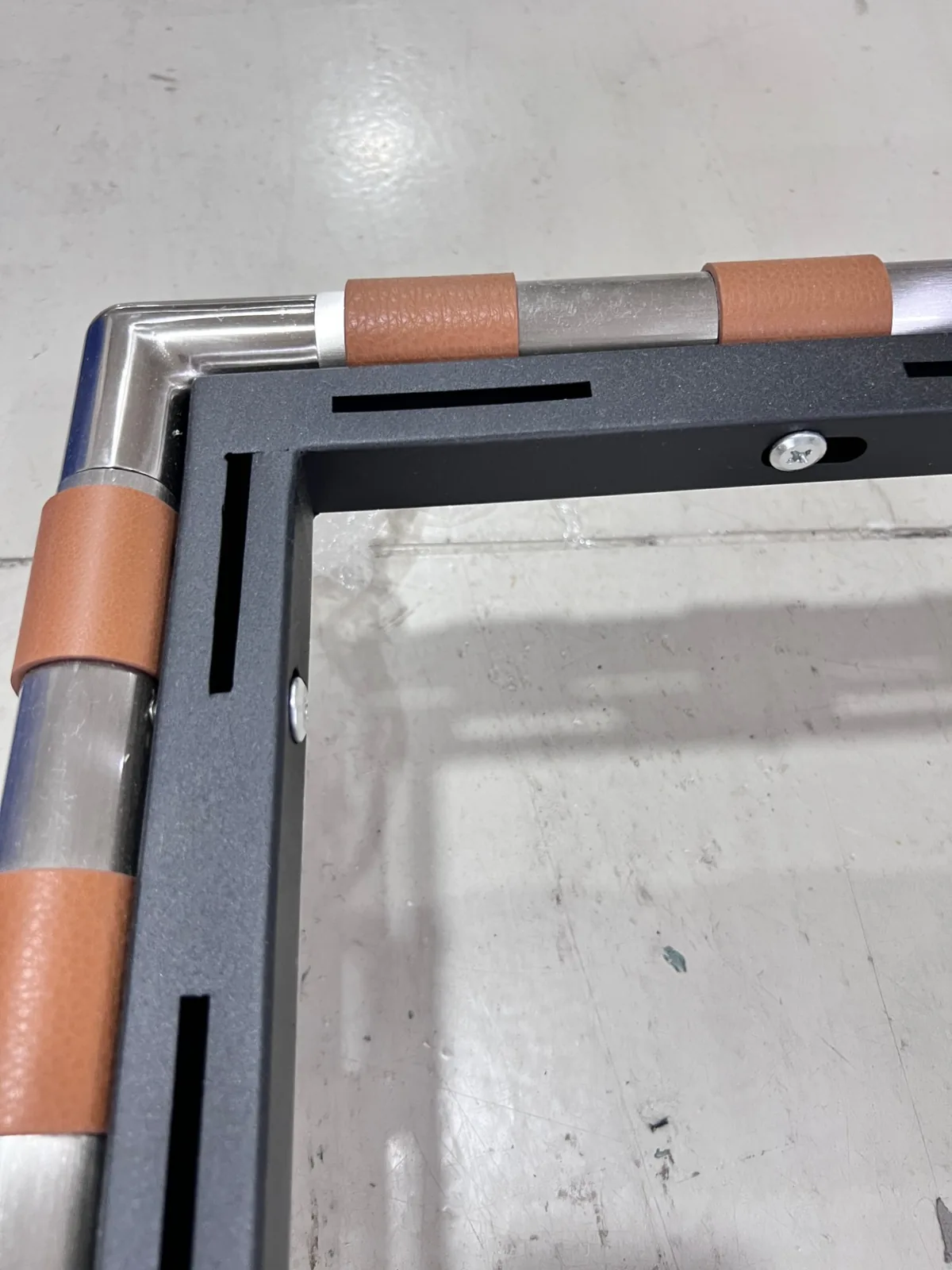
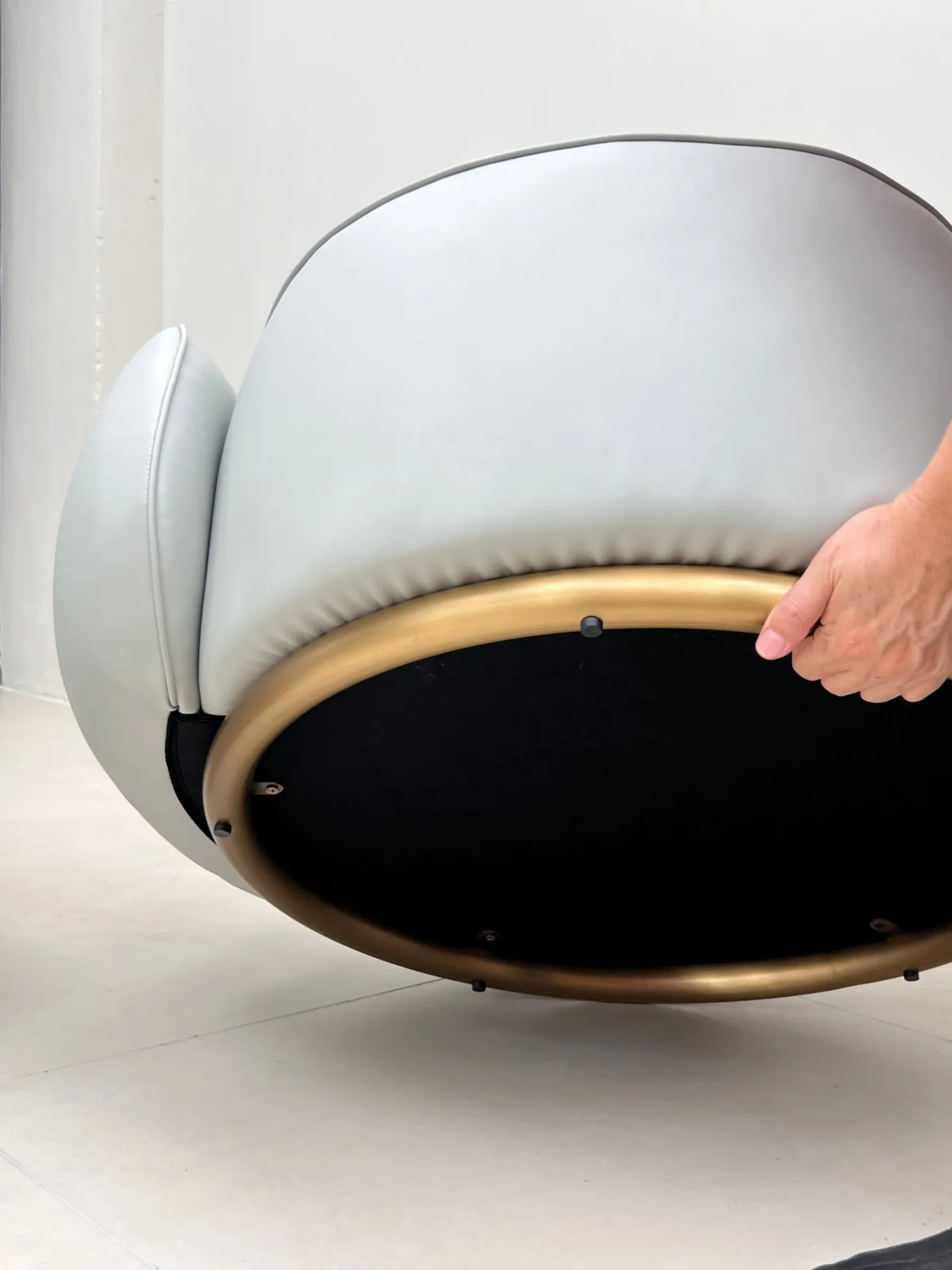
What our inspectors actually photograph.
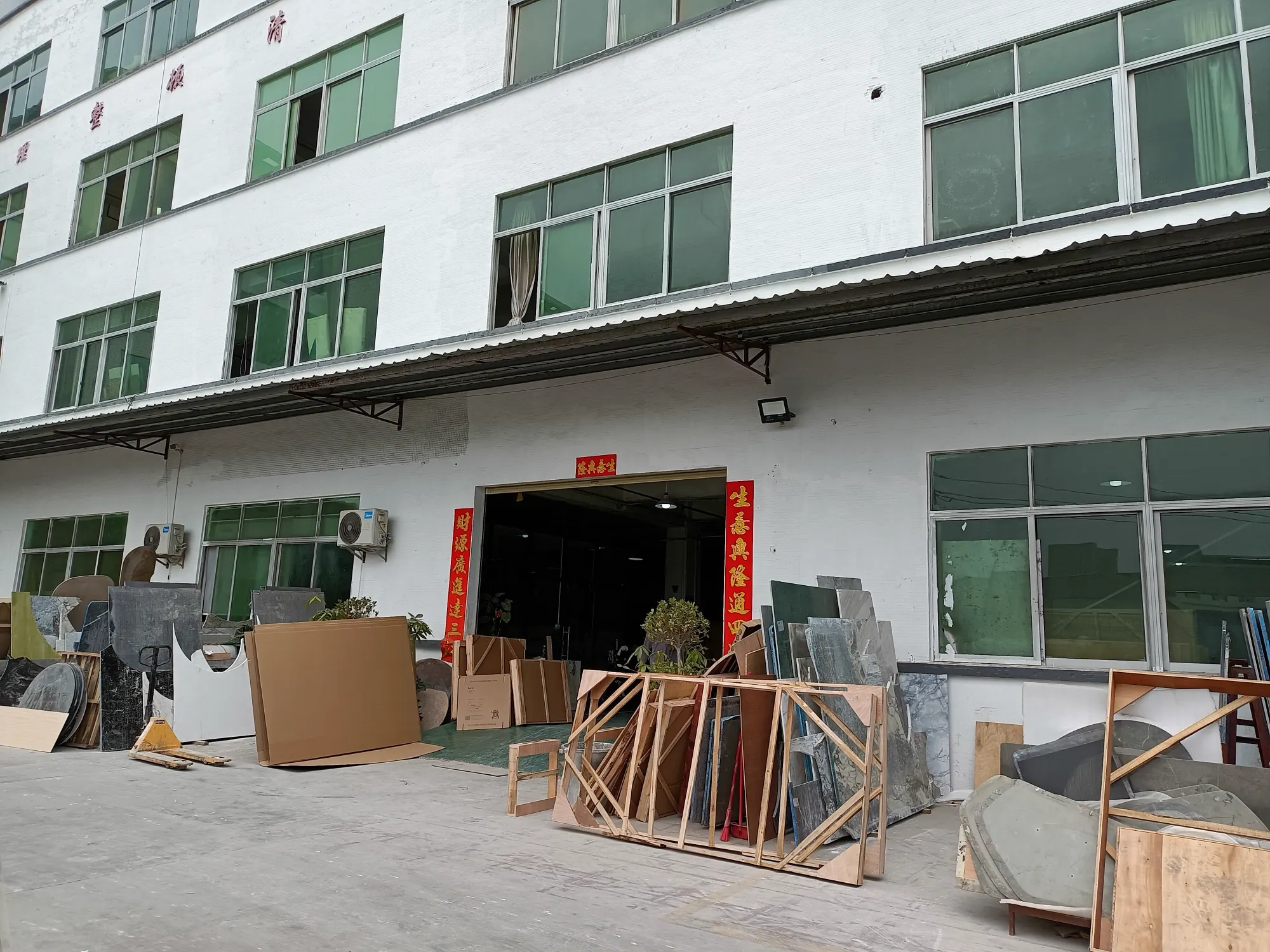
Unedited process photos from Source Foshan inspections in Foshan and Dongguan factories. This is what lands in your weekly update and in the final report.
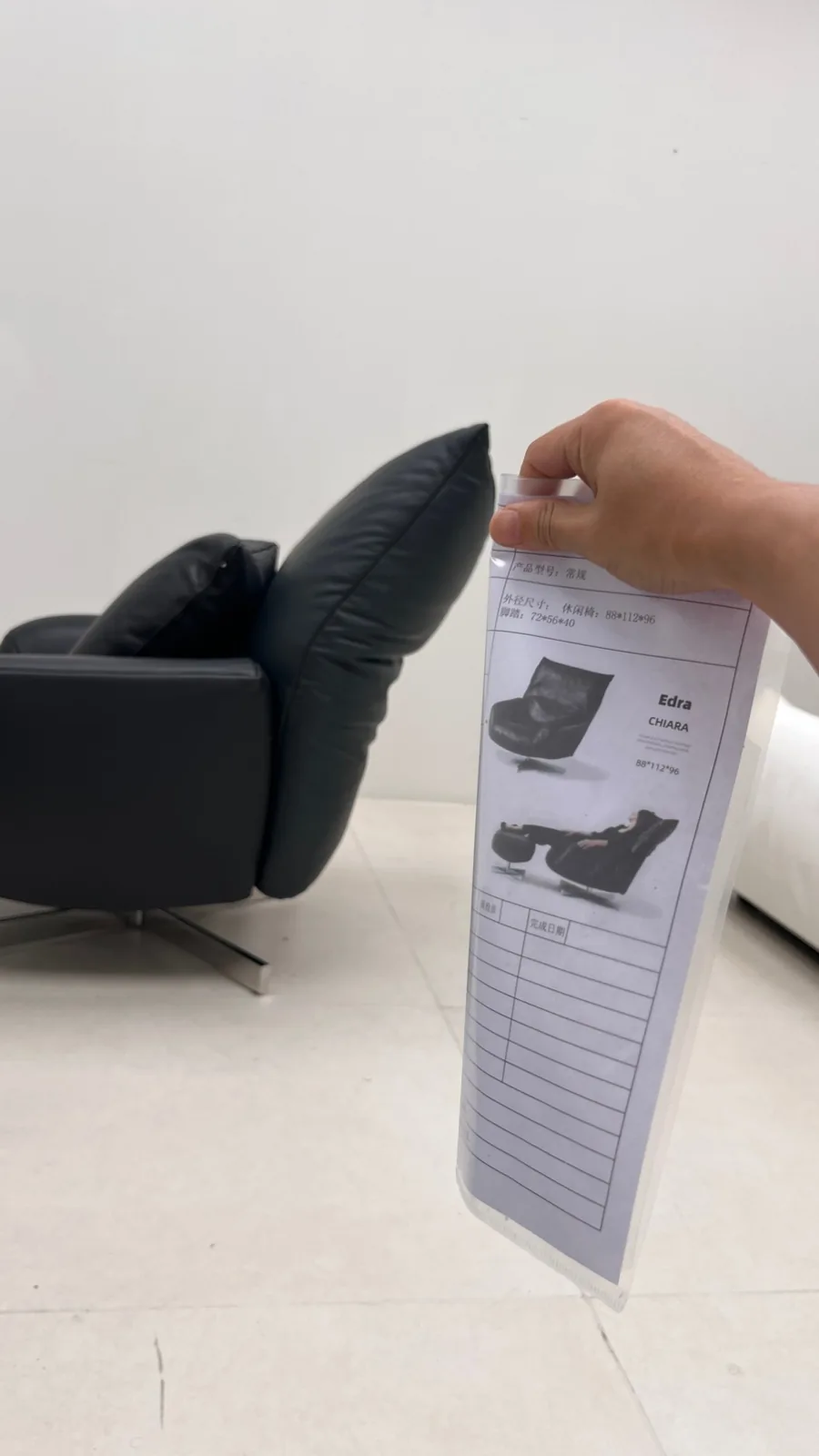
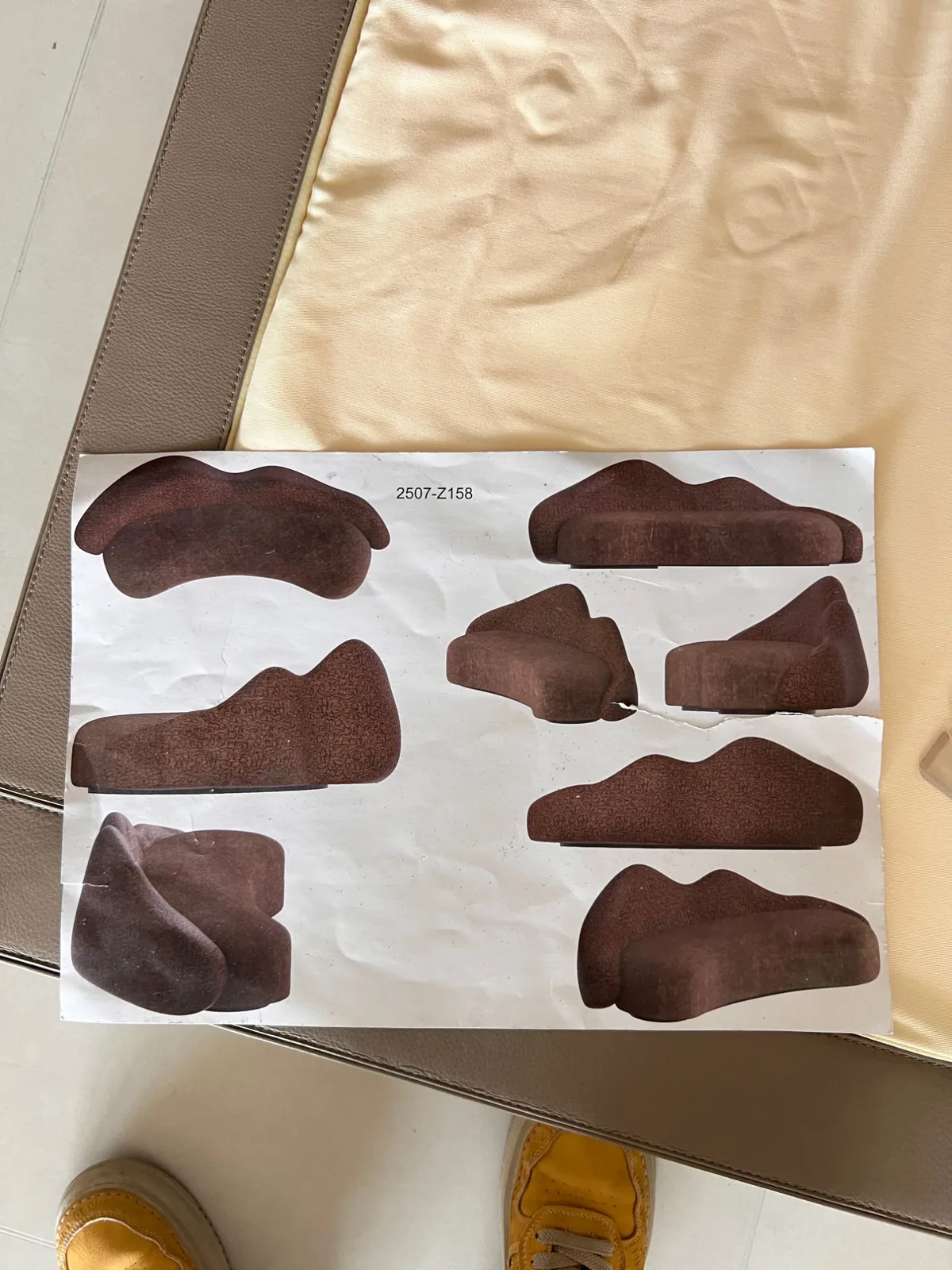
Step four · export packing
What are the packing and shipping-mark standards?
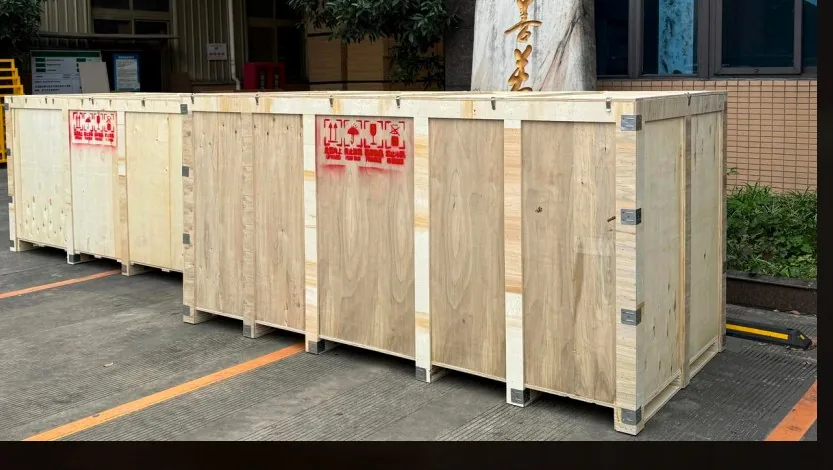
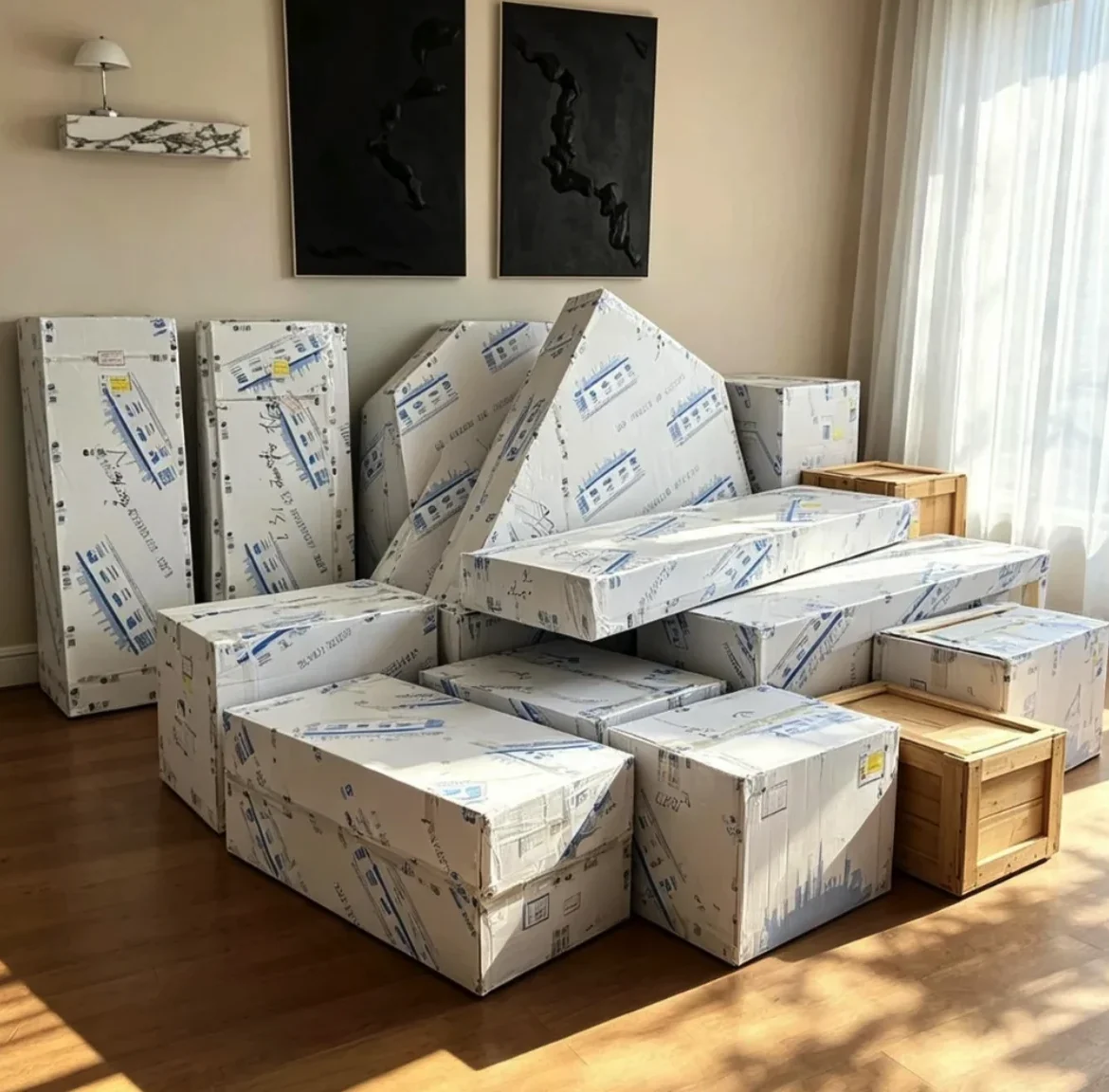
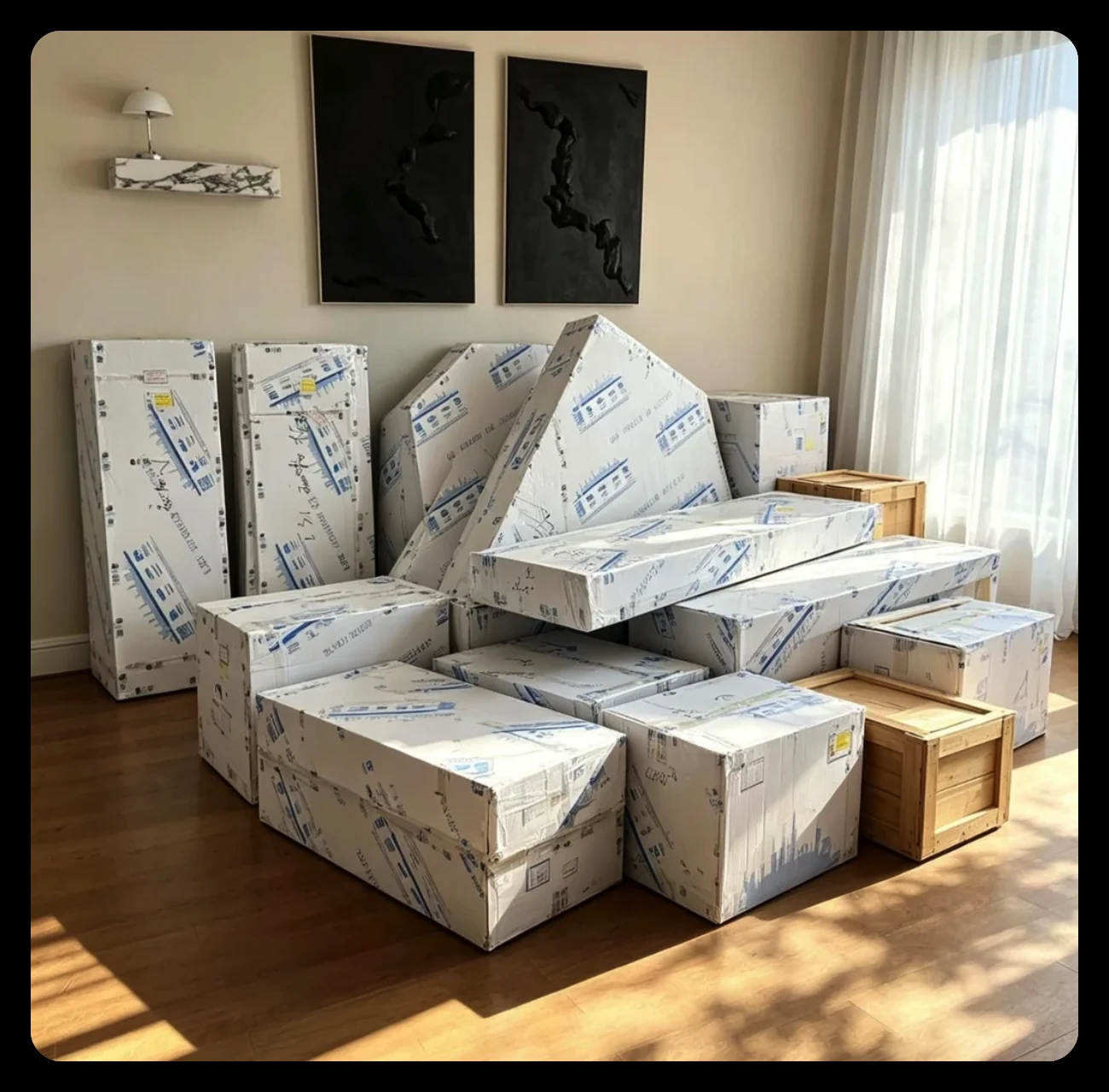
The biggest risk isn't production — it's transit. Every product type gets a written packing method, and the method is part of the order. Below is the typical standard applied to household and contract furniture leaving Foshan for a 3–6 week sea voyage; the exact spec is adjusted for the destination, the season and whether the container is full or shared.
- Inner
- Cover wrapped in non-woven fabric or PE film; foam sheet on arms and back; cardboard corner boards; legs removed and bagged inside.
- Outer
- 5-ply corrugated carton, or open timber frame for pieces over about 2.2 m.
- Note
- Do not stack heavy cartons on upholstery; mark stacking limit.
- Inner
- Top and base packed separately; foam board both faces of top; corners protected; hardware bagged and taped to base.
- Outer
- Carton plus timber frame for tops over 1.6 m.
- Note
- Top packed flat with a rigid board under it.
- Inner
- Foam or EPE sheet on both faces, edge protectors, tops paired face to face with a foam separator.
- Outer
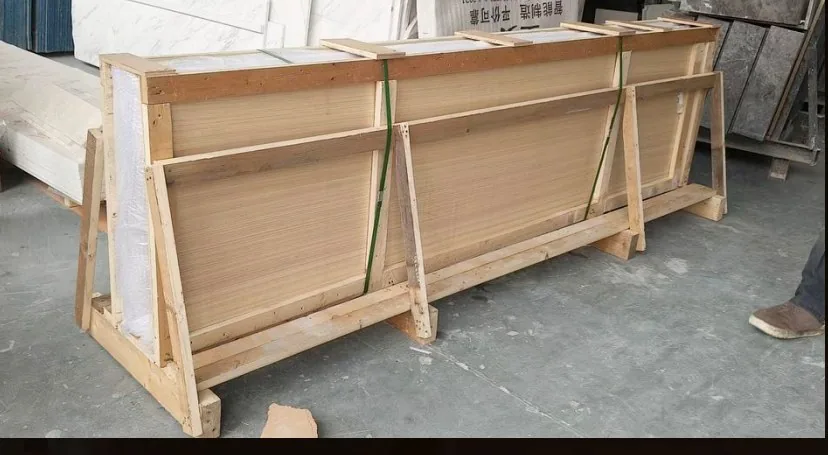
- Plywood or timber crate, packed upright on an A-frame for slabs over about 1.2 m, flat with a rigid base for smaller tops.
- Note
- Crate marked with weight and centre of gravity; forklift from the long side only.
- Inner
- Each part foam-wrapped; seats stacked with separators; bolts and keys in a labelled bag.
- Outer
- Carton, typically 2–4 chairs per carton.
- Note
- Assembly sheet inside the first carton of each item code.
- Inner
- Foam on all faces, corner protectors, drawers and doors taped closed, shelves wrapped and strapped inside, loose hardware bagged.
- Outer
- Carton with timber frame or full crate for mirrored or glass-fronted units.
- Note
- Never laid on its front; upright arrows on all four faces.
- Inner
- Glass taped in a grid, foam on both faces, corner blocks.
- Outer
- Timber crate, packed upright, one or two pieces per crate.
- Note
- Fragile symbol and upright arrows; never floor-loaded under other cargo.
Anatomy of a shipping mark
Shipping marks turn a stack of cartons into a shipment that can be unloaded room by room.
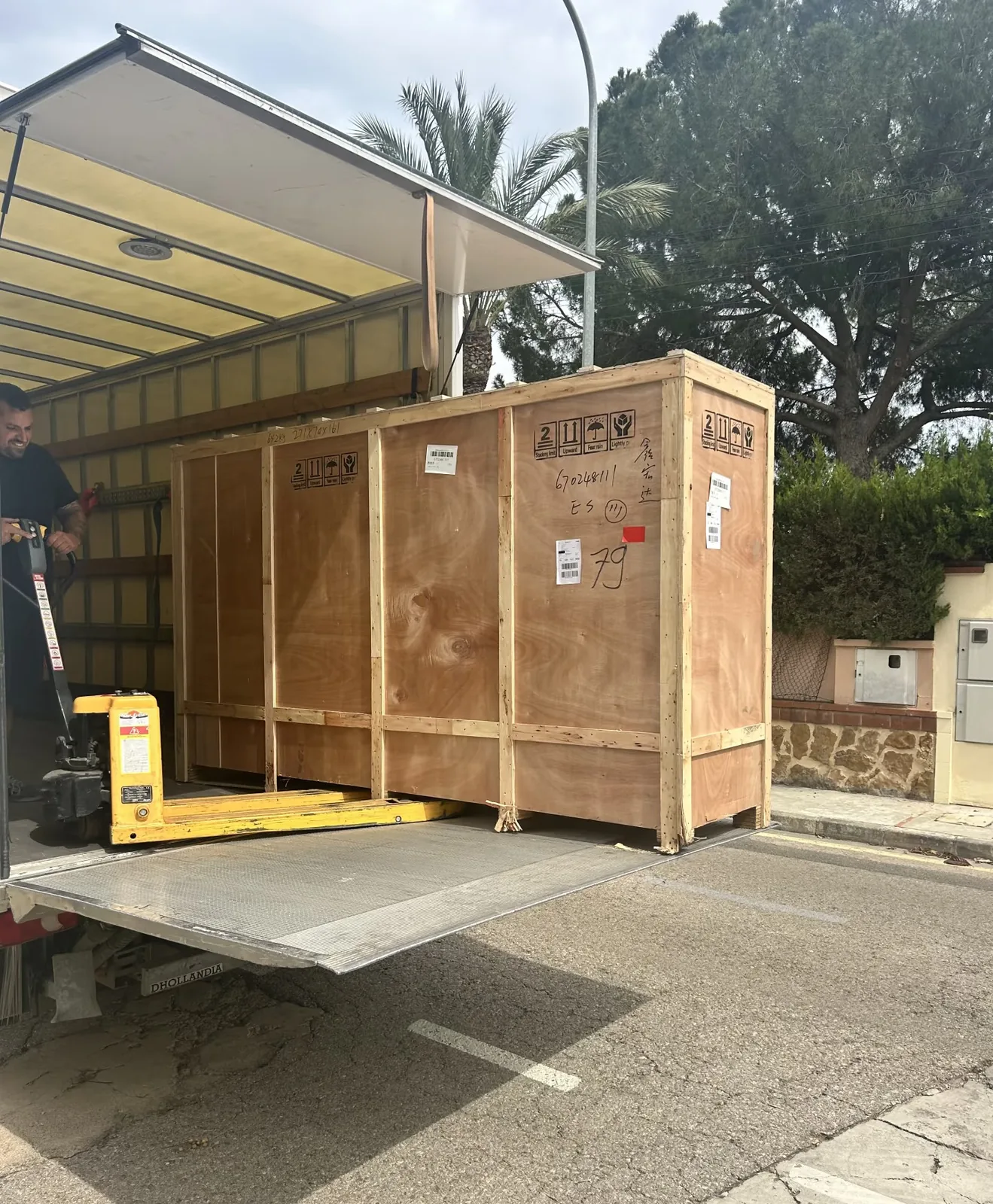
Each carton or crate carries a printed label on at least two adjacent faces with the same content, in English and Chinese, and the contents match the packing list line for line. There is no single international standard for the layout of a shipping mark; the content below is the trade convention, with the handling symbols taken from ISO 780:2015 and the country-of-origin mark required by the importing country (in the US, 19 CFR Part 134 requires it to be conspicuous, legible, indelible and permanent).
- Consignee or project name and the order number
- Item code and short description, matching the packing list and the options sheet
- Room or location code (for example B2 for bedroom 2, or a hotel room type), which is what makes room-by-room delivery possible
- Carton number as n of N for that item (for example 2 of 3), so a missing carton is noticed at receiving, not at installation
- External dimensions in cm and gross weight in kg
- Handling symbols to ISO 780: this way up, fragile, keep dry, stacking limit, and centre of gravity on crates
- Country of origin (Made in China) and, on solid-timber crates and pallets, the ISPM 15 mark described below
Moisture is the second cause of damage after impact.
Interior timber furniture is typically shipped at 8–12% moisture content, sealed in PE film with desiccant sachets inside the carton, and the container itself carries desiccant poles or bags when it is loaded in Foshan's humid months (roughly April to September). Metal parts get a VCI (vapour corrosion inhibitor) wrap or oiled paper. Cartons that will sit in a shared container get an extra pallet or bearer so they are never on the container floor.
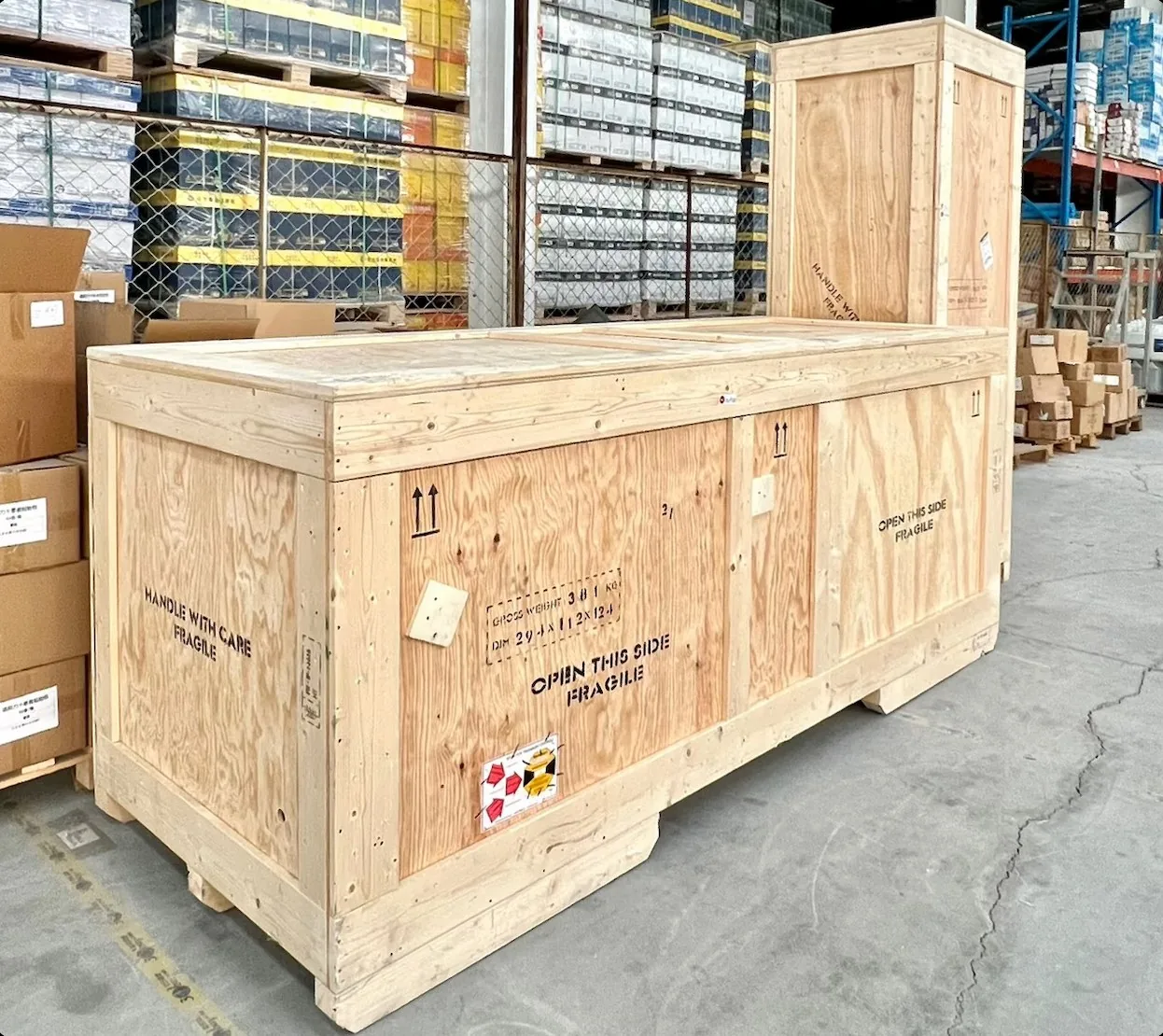
Any solid-wood crate, pallet, bearer or dunnage must comply with ISPM 15.
The wood is heat-treated to a core temperature of 56 °C for at least 30 continuous minutes (or 60 °C for 60 seconds by dielectric heating), then stamped with the IPPC mark showing the country code, the treatment provider's number and the treatment code HT. Wood thinner than 6 mm and processed materials such as plywood, OSB and fibreboard are outside the standard. The mark must be printed, not hand-drawn, and should appear on two opposite faces.
Non-compliant wood can have the whole shipment re-exported or destroyed at the port of arrival, so the crate maker's ISPM 15 certificate is checked before loading.
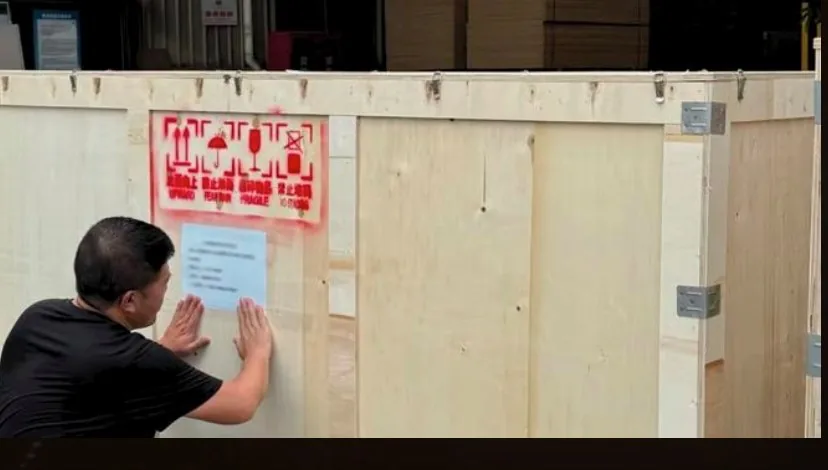
Step five · one warehouse, one container
What is checked at consolidation and container loading?
Consolidation is where an order from nine suppliers becomes one shipment, and every carton is checked twice: once when it arrives at the warehouse and once as it goes into the container. On a whole-home project the receiving window is typically 1–3 weeks as suppliers finish at different times; showroom stock arrives first, custom cabinetry last.
- Receiving check against the packing list
Carton count, item codes and n-of-N numbers are ticked off against the supplier's packing list. A carton that is missing, unlabelled or mislabelled is chased the same day.
- Damage on arrival
Every carton is checked for crush, wet marks and punctures. Any suspect carton is opened, the contents photographed, and the supplier informed before it is accepted into stock.
- Cubic planning
Actual carton dimensions are entered into a load plan. A 40 ft high-cube holds about 76 m³ (2,690 cu ft) nominal; irregular furniture typically loads 60–68 m³ in practice, which is the number the plan is built on.
- Loading sequence
Heavy crates and cabinetry go on the floor at the container's front; upholstery and cartons that cannot be stacked go on top and last. The sequence follows unloading order, so the last room to be installed is loaded first and the first room comes out first.
- Bracing and dunnage
Gaps are filled with air bags, timber bracing or foam so nothing shifts; ratchet straps are used on A-frame stone crates.
- Photos of loading
Photographs are taken empty, at one-quarter, half, three-quarters and full, plus the closed doors with the seal in place, and added to the report.
- Seal number
The seal number is recorded, photographed and cross-checked against the bill of lading so the consignee can confirm the container was not opened in transit.
- Load plan document
The final document lists the container number, seal number, every carton by position, item code, room and weight, and the total cubic metres and gross weight. It goes to you and to the forwarder with the packing list.
Step six · the document you approve
What does the inspection report contain?
The pre-shipment report is an item-by-item document, not a summary letter. For a whole-home order of 50–60 items it typically runs to 150–300 photographs plus short videos of every moving part, and it is sent 2–5 days before loading so there is time to act on it. You approve it before the container is booked, and the balance to each supplier is released only after that approval.
- Cover pageProject name, order numbers, supplier names, inspection dates, inspector, location and overall result (approved, approved with rework, held).
- Item listEvery line from the options sheet with quantity ordered, quantity inspected, result and a link to its photo set.
- Per-item photosFront, back, both sides, underside, and detail shots of joints, seams, hardware and finish; for upholstery, a cushion opened to show the foam label.
- Measurements tableDrawing dimension, measured dimension and tolerance for each critical size; pass or fail marked per line.
- Defect logOne row per finding: item code, location on the piece, defect class (critical, major, minor), photo reference, action agreed (rework, remake, accept as is, credit) and status at report date.
- Function checksVideos of drawers, doors, mechanisms, extension tables, recliners and swivels operating.
- Packing photosEach item before the carton closes, the closed carton with its label, and any crate with its ISPM 15 mark.
- Loading photos and load planThe container sequence photos, seal number and the load plan described above.
- Sign-offYour written approval, or your list of items to be held, which becomes the rework schedule.
Pre-shipment QC reportApproved

- LR-SOF-01 · Curved sofa · 2,200 mm2,198 mmPASS
- DR-TAB-01 · Marble table · 2,000 mm2,001 mmPASS
- LR-SID-02 · Sideboard door veneermajorREWORK
- BR-BED-01 · King bed · slat gap ≤ 60 mm55 mmPASS
Approved by client · balance released after sign-off
A report that says 'all good' without measurements or a defect log is a red flag, whoever produces it. The point of the format is that a second person, whether your designer, your installer or a third-party inspector, can check the same items against the same photos. Studios working under their own brand receive the same report, white-labelled, as described for designers and studios.
When something is wrong
How are defects handled? A typical scenario
The following is a typical, anonymised process example, not a specific client's project. It shows what happens between a defect being found and the balance being released.
Two of six sideboard doors read lighter with a different flame figure. Each is within the standard alone; side by side they are not. Logged as major, batch on hold, milestone stays open.
Re-veneer the two doors from the same flitch as the others and refinish (about six days), or accept the variation with a credit. The client chooses the rework.
New leaves pressed, sanded and finished. Other suppliers' goods keep arriving at the warehouse and are receiving-checked as normal; a six-day slip is logged on one supplier.
Colour re-checked against the standard panel and the four approved units, door gaps measured again after re-hanging. Photos issued, the defect log line closed as reworked, the balance released.
At the final inspection of a six-piece sideboard batch, the inspector puts the pieces side by side under daylight and finds that two of the six have door veneer noticeably lighter and with a different flame figure from the other four. Individually each door is within the colour standard; together they are not, and the pieces are for one open-plan living area. The finding is logged as a major defect with photos of all six doors in one frame, the batch is put on hold, and the deposit-and-balance milestone stays open.
The same day, the client receives the photos with two options and a cost and time note for each: re-veneer the two doors from the same flitch as the others and refinish (about six days), or accept the variation with a credit. The client chooses the rework. The factory pulls new leaves from the matching flitch, presses, sands and finishes the two doors, and the inspector returns to re-check colour against the standard panel and against the four approved units, then measures door gaps again after re-hanging. The re-inspection photos go to the client, the defect log line is closed as 'reworked and re-inspected', and the balance for that supplier is released.
- Day 0Defect found at final inspection; batch held; photos and options sent to the client the same day.
- Day 1Client decision; factory schedules re-veneering; consolidation warehouse informed of a six-day slip on one supplier.
- Days 2–6Rework; other suppliers' goods continue to arrive and are receiving-checked as normal.
- Day 6Re-inspection; measurements repeated; photos issued; defect log closed.
- Day 7Balance released to the supplier; batch packed to the agreed standard and moved to the consolidation warehouse; container loading date confirmed.
Rule one: the balance follows your approval.
The balance is paid only after your approval of the report, so the factory has a reason to fix rather than argue.
Rule two: a one-to-two-week buffer before sailing.
The packing and loading schedule is built with a buffer after the last planned inspection, so a single six-day rework rarely moves the sailing date. When a rework cannot be completed in time, the piece is either shipped separately by air or LCL at the supplier's cost where the contract allows, or held for the next consolidation, and you are told which before the container closes. These commitments are written down on the service commitments page.
Paperwork
Who is responsible for HS codes, customs and duties?
The importer of record is legally responsible for the HS classification, the customs entry and the duties in the destination country; a sourcing team, a freight forwarder and a customs broker each handle a defined part of the paperwork that feeds it. The split below is the usual arrangement on a managed shipment from Foshan; confirm the details with your customs broker before the goods ship.
| Task | Источник: Фошань | Freight forwarder | Customs broker (destination) | You (importer of record) |
|---|---|---|---|---|
| Commercial invoice and packing list per supplier, consolidated | Compiles and checks | Receives | Uses for entry | Approves |
| Product descriptions, materials and photos for classification | Provides | — | Advises code | Confirms code |
| Suggested HS code (Chapter 94: 9401 seats, 9403 other furniture, 9404 mattresses) | Indicative only | — | Determines with you | Legally responsible |
| China export declaration | Coordinates | Files via export agent | — | — |
| Ocean booking, bill of lading, container tracking | Instructs | Executes | — | Receives B/L |
| ISPM 15 crates and pallets, certificate on file | Checks before loading | — | — | — |
| Certificate of origin, product compliance files (formaldehyde, flammability, timber declarations) | Collects from suppliers | — | Checks against entry | Responsible for compliance |
| Marine cargo insurance | Recommends; arranges via forwarder at cost | Places policy | — | Decides and pays |
| Import entry, duties, taxes, port fees | — | Can arrange broker | Files entry, pays on your behalf | Pays |
| Destination delivery and installation booking | Coordinates | Arranges trucking | — | Receives |
HS codes and duty rates change, and the same sofa can fall under different subheadings depending on frame material and cover. The furniture HS code guide walks through Chapter 94 line by line, and the step-by-step guide to buying furniture from China covers Incoterms, landed cost and the documents an entry needs. Duty rates should always be confirmed with your customs broker or the destination tariff schedule on the date of entry.
How your order travels
Six steps from the factory floor to your door.
Every step is coordinated by the same project team that managed your order, so there is never a hand-off where nobody is responsible. You receive photos and documents at each stage.
- 01
Final QC & packing photos
Every piece is inspected, photographed front and back and matched to the packing list before it is wrapped.
- 02
Export crating
Foam lining, corner guards and moisture barriers on every piece; plywood crates for casegoods, glass and stone. Stone tops travel on A-frames.
- 03
Consolidation & loading
Suppliers deliver to one warehouse. The load plan is checked and the cargo lashed before the container is sealed; smaller orders travel as LCL.
- 04
Freight & insurance
Sea freight to your nearest port as standard, air freight when time matters. Marine cargo insurance covers the full invoice value in transit.
- 05
Customs clearance
Commercial invoice, packing list, fumigation and origin documents prepared for your market. Duties and taxes are estimated in the quotation, not discovered on arrival.
- 06
Delivery & placement
Delivered to your address and, where a local crew is arranged, carried in, unpacked and placed by room with the packaging taken away.
Buying from several factories? See how we receive, check and load them as one container: furniture consolidation in Foshan.

Shipping terms
Choose how much of the journey we manage.
Experienced importer with your own forwarder, or first overseas project: the quotation states the term, so there is no argument later about who does what.
You ship, we load
For importers with their own freight partners. We hand over export-ready cargo at the port of loading.
- Export-grade packing to a written standard
- Export documents and customs filing at origin
- Container loading and lashing plan
We ship to your port
We book ocean freight and insurance to your destination port. You handle local clearance and delivery.
- Everything in FOB
- Ocean freight booking and tracking
- Marine cargo insurance for the full invoice value
The full journey, one team
Customs at both ends, duties, last-mile delivery and, where available, a local crew for carry-in and placement.
- Everything in CIF
- Destination customs and duties
- Delivery scheduled to your move-in or opening date
Where we deliver
One origin, every market you build in.
Custom pieces take 4–10 weeks to produce and inspect in Foshan depending on category; showroom stock is ready in 1–3 weeks. Transit below runs from container departure to your address and depends on sailings and customs. Your quotation confirms both.
| Region | Typical cities | Transit · door to door | Примечания |
|---|---|---|---|
| Australia & New Zealand | Sydney, Melbourne, Brisbane, Perth, Auckland | 3–5 weeks | Fumigation and timber-packaging declarations included |
| United States & Canada | Los Angeles, New York, Miami, Vancouver, Toronto | 4–6 weeks | West Coast fastest; East Coast and inland via rail; ISF filing and customs bond coordinated |
| Middle East | Dubai, Abu Dhabi, Riyadh, Doha, Kuwait City | 3–4 weeks | Certificates of conformity where required |
| Europe & United Kingdom | London, Rotterdam, Valencia, Athens | 5–6 weeks | Delivered duty paid available on request |
| Southeast Asia | Singapore, Kuala Lumpur, Bangkok, Jakarta, Manila, Malé | 2–3 weeks | LCL practical for smaller orders |
| Other destinations | Tell us the address | On request | Port to port or door to door; we quote the route |
Transit times are indicative and exclude production. 18 destination countries delivered so far; new routes are quoted case by case.
Insurance & transit damage
Insured for the full value, from our door to yours.
Every shipment we manage carries marine cargo insurance for the full invoice value. If anything arrives damaged you do not argue with a freight company: you tell us, and we resolve it against the pre-shipment QC record.
- Report transit damage within 48 hours with photos of the item and its packaging
- We compare against the pre-shipment photos and confirm the remedy
- Repair, replacement part or replacement piece, arranged by the same project team
- Workmanship issues are followed up under our service commitments
One price, no surprises
Your quotation is a delivered price.
Product, packing, freight, insurance, customs coordination and delivery are itemised in one quotation. Destination duties and taxes are estimated up front for your market, so the number you approve is the number you plan for.
- Sea freight as standard; air freight quoted on request for urgent pieces
- Cabinetry, furniture, lighting and rugs consolidated into one shipment
- Delivery scheduled to your move-in, handover or opening date
- Service fee shown separately from factory prices — see how our fee works
После доставки
Support that crosses borders with you.
A project contact stays responsible after the container is unloaded, not just until it is loaded.
48-hour response
Send photos over WhatsApp or email; your project manager replies within 48 hours with a resolution plan.
Spare parts from the original factory
Replacement hardware, cushions, glides and components shipped from the workshop that made the piece.
Installation options
For full projects a factory installation team can travel with the order, quoted separately; for smaller deliveries we brief and supervise trusted local crews where available.
Мне нужно что-нибудь организовать со своей стороны?
В случае заказов с доставкой «от двери до двери» — нет. Мы оформляем грузоперевозку, готовим и подаем таможенные документы, а также планируем доставку. Вы подтверждаете дату доставки и следите за тем, чтобы на месте был кто-то, кто сможет открыть дверь. В случае заказов на условиях FOB ваш экспедитор забирает груз в порту, а мы передаем ему документы.
Включены ли пошлины и налоги?
Import duties and local taxes are estimated in your quotation for your country. Where delivered-duty-paid is available we can include them in one payment; otherwise the estimate shows exactly what is due at clearance. Classification is confirmed with your customs broker — see the furniture HS code guide.
Что делать, если товар повредился при транспортировке?
Сообщите нам об этом в течение 48 часов, приложив фотографии товара и его упаковки. Посылки, отправку которых мы организуем, застрахованы на полную сумму счета-фактуры, а фотографии, сделанные в ходе предотгрузочного контроля качества, отражают состояние каждого товара на момент отправки. Мы организуем ремонт или замену; вам не придется связываться с перевозчиком.
Можете ли вы доставить товар в квартиру или на объект с затрудненным доступом?
Да, при условии соответствующего планирования. Расскажите нам о лестницах, лифтах, погрузочных платформах и временных интервалах при представлении проекта; с учётом этой информации планируется состав бригады, размеры упаковок и время доставки, а негабаритные детали можно упаковать по модулям.
Before it leaves China
You approve exactly what arrives.
Every order closes with a full pre-shipment quality report, delivered before the container is sealed. Send your list or floor plan and we will walk you through a sample report before you commit.

Отзывы клиентов
Они пришли из-за цен. А остались — из-за самого процесса.
Владельцы домов, дизайнеры и заказчики проектов рассказывают, как на самом деле проходил процесс подбора мебели с помощью местной команды в Фошане.
★★★★★
Честно говоря, я ожидал увидеть гида, а получил менеджера проекта. Грейс за два дня провела нас по Леконгу, собрала все ценовые предложения в одну таблицу, и контейнер прибыл без единой поломки. Мы заложили в бюджет несколько непредвиденных ситуаций. Но их не произошло.
★★★★★
Мы — небольшая студия и не можем летать в Китай ради каждого заказа. В понедельник отправили список мебели, оборудования и инвентаря (FF&E), а уже к четвергу получили по три варианта с указанием цены на каждую позицию. Фотографии, подтверждающие качество товара перед окончательной оплатой, — это то, что особенно нравится моим клиентам.
★★★★★
Диван, который нам понравился, стоил примерно в три раза дешевле, чем в лондонском салоне, при том что он был обит той же тканью. Что окончательно убедило меня, так это то, что Люк измерил каркас на фабрике ещё до того, как его обтянули тканью. Такого на сайте не найдёшь.
★★★★★
Я нервничал из-за того, что пришлось платить фабрике, с которой я никогда не встречался. Все было включено в одну смету, авансы поступали на счета компании, а «Волина» каждую неделю присылала фотографии. Скучно, но в самом лучшем смысле этого слова.
★★★★★
Нашему отелю на 42 номера нужен был образцовый номер, прежде чем мы приняли окончательное решение. Они организовали посещение завода и подготовку образцового номера, а также обнаружили две ошибки в технических характеристиках, которые я упустил из виду в графике. Уже одного этого стоило.
★★★★★
Три поставщика, один контейнер, один комплект документов. Одно только это предложение сэкономило мне недели переписки по электронной почте.
Здесь приведены примеры отзывов, пока мы получаем разрешение от недавних клиентов на публикацию их отзывов.
Посмотрите проекты, стоящие за этими словамиCase notes · delivery & after-sales
Real shipments, documented: inspected and crated in Foshan, repaired on site when transit damage happens.
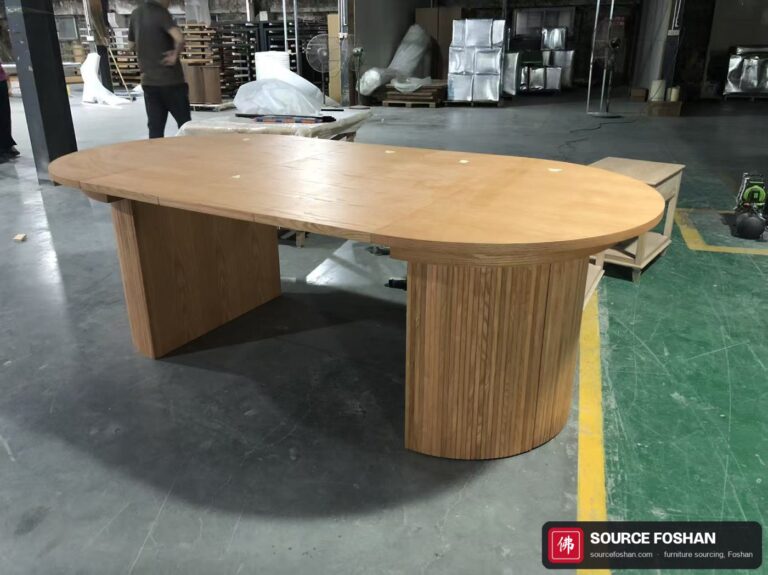 Инспекция изготовленного на заказ раздвижного дубового стола в Фошане: что мы проверяем перед отгрузкой
In short A custom round oak extending table — fluted pedestal base, two leaves on full-extension steel slides, storage inside the base — inspected…
Инспекция изготовленного на заказ раздвижного дубового стола в Фошане: что мы проверяем перед отгрузкой
In short A custom round oak extending table — fluted pedestal base, two leaves on full-extension steel slides, storage inside the base — inspected…
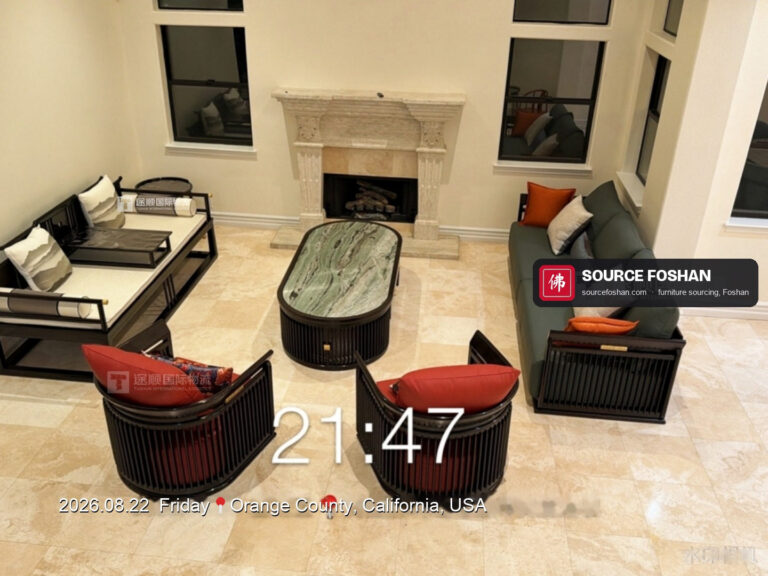 Foshan to Orange County: A Full Container Unloaded at 09:41, Every Room Furnished by 21:48 — Same Day
In short A full container of Foshan furniture for a house in Orange County, California: a marble-top desk and leather chair, a round marble…
Foshan to Orange County: A Full Container Unloaded at 09:41, Every Room Furnished by 21:48 — Same Day
In short A full container of Foshan furniture for a house in Orange County, California: a marble-top desk and leather chair, a round marble…
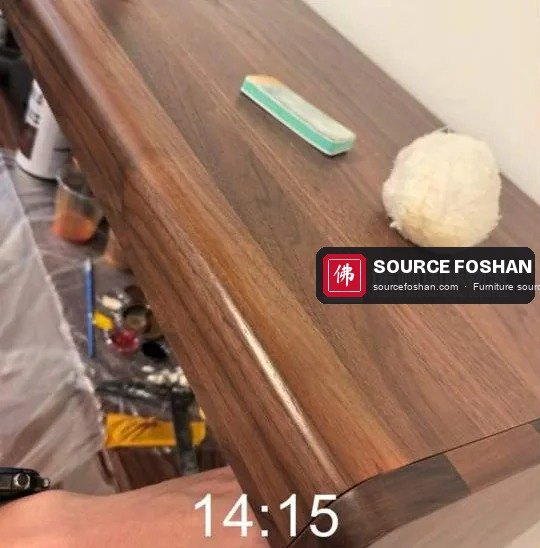 Постпродажный сервис в Сингапуре: три ремонта на месте — винный шкаф, книжный шкаф, обеденный стол — каждый устранён и подписан менее чем за два часа
In short Three pieces from Foshan showed damage after delivery in Singapore: a cracked top edge on a wine cabinet, a cracked door frame…
Постпродажный сервис в Сингапуре: три ремонта на месте — винный шкаф, книжный шкаф, обеденный стол — каждый устранён и подписан менее чем за два часа
In short Three pieces from Foshan showed damage after delivery in Singapore: a cracked top edge on a wine cabinet, a cracked door frame…
Field notes · from the blog
Why the inspection exists: the substitutions, swaps and skipped checks buyers have paid for.
 Шесть ошибок при покупке мебели в Foshan, о которых рассказывают сами китайские покупатели — и документы, которые каждую из них предотвращают
Как избежать шести типичных ошибок при покупке мебели в Foshan: детализированная смета, подписанные спецификации, чек-лист проверки и защита платежей.
Одно и то же название, разные диваны: как оценить изогнутый или модульный диван, сделанный в Фошане
Field notes · Product knowledge By the Source Foshan sourcing team · Published 3 October 2026 · Based on two Xiaohongshu posts (June 2025,…
Шесть ошибок при покупке мебели в Foshan, о которых рассказывают сами китайские покупатели — и документы, которые каждую из них предотвращают
Как избежать шести типичных ошибок при покупке мебели в Foshan: детализированная смета, подписанные спецификации, чек-лист проверки и защита платежей.
Одно и то же название, разные диваны: как оценить изогнутый или модульный диван, сделанный в Фошане
Field notes · Product knowledge By the Source Foshan sourcing team · Published 3 October 2026 · Based on two Xiaohongshu posts (June 2025,…
 Три дня в мебельных торговых центрах Фошани: почему слово «Фошань» на бирке — не повод для заказа
A furniture dealer spent three days in Foshan's landmark mall and livestream showrooms. His verdict: most Foshan furniture is good, a few operators trade…
Три дня в мебельных торговых центрах Фошани: почему слово «Фошань» на бирке — не повод для заказа
A furniture dealer spent three days in Foshan's landmark mall and livestream showrooms. His verdict: most Foshan furniture is good, a few operators trade…
Часто задаваемые вопросы
Frequently asked questions
Shipping terms, transit times and delivery questions are answered in the journey section above.
Могу ли я также нанять стороннюю инспекционную компанию?
Yes. Many project buyers and studios book an independent inspector (SGS, Bureau Veritas, QIMA or a local firm) for the final inspection alongside the sourcing team's own check, particularly on hotel and contract orders. The third-party fee is typically charged per man-day and is paid by you at cost. The sourcing team schedules the visit, provides the drawings, colour standards and packing spec, and attends so findings are actioned on the spot.
What happens if defects are found at the final inspection?
The piece is held, the defect is logged with photos and a class (critical, major or minor), and you receive the log with a recommended action: rework, remake, accept with a credit, or reject. Rework is re-inspected before packing. The supplier's balance is not released until you approve the re-inspection, and the loading plan carries a one-to-two-week buffer so most reworks do not move the sailing date.
How are stone and sintered-stone table tops packed?
Tops are foam-sheeted on both faces, edge-protected, paired face to face with a separator and crated in plywood or ISPM 15 timber. Slabs over about 1.2 m travel upright on an A-frame strapped inside the crate; smaller tops go flat on a rigid base. Crates are marked with gross weight, centre of gravity and forklift side, and are floor-loaded at the container front with nothing heavy on top.
Do you insure the cargo?
Marine cargo insurance is arranged through the freight forwarder at cost, on your instruction, and it is recommended on every shipment. Carrier liability under a standard bill of lading is limited per package and rarely covers the value of furniture. An all-risks policy for 110% of the invoice value plus freight is the usual cover; ask the forwarder for the premium when you confirm the booking.
Who pays import duties and taxes?
You do, as the importer of record, through your customs broker at the destination. Quotes from Foshan are ex-works or FOB and exclude destination duties, VAT or sales tax, port fees and delivery. The wholesale and landed-cost guide shows how these add up for a container; the applicable rate depends on the HS code and the country on the date of entry, so confirm it with your broker.
Can I see a sample inspection report before I commit?
Ask and we will walk you through the report format before you commit: the item list with codes, front, back and detail photos per item, the measurement table, the defect log with severity and the action taken, packing and loading photos, and the sign-off page. Your own report follows exactly that structure, and you approve it before the balance is paid.
Sources and further readingStandards referenced on this page
- US Department of Defense — MIL-STD-105E, Sampling Procedures and Tables for Inspection by Attributes (10 May 1989), Table I and Table II-ASample size code letters and single sampling normal inspection accept/reject numbers reproduced in the AQL table
- ISO — ISO 2859-1:2026 Sampling procedures for inspection by attributes, Part 1: Sampling schemes indexed by acceptance quality limit (AQL)Current edition (January 2026), replaces ISO 2859-1:1999
- ASQ — ANSI/ASQ Z1.4 and Z1.9 sampling plan standardsANSI/ASQ Z1.4-2003 (R2018), the US equivalent of ISO 2859-1
- IPPC/FAO — Explanatory document for ISPM 15 (Regulation of wood packaging material in international trade), February 201756 °C for 30 minutes heat treatment, dielectric 60 °C for 60 seconds, 6 mm exclusion, processed wood exclusion, mark contents and placement
- ISO — ISO 780:2015 Packaging, Distribution packaging, Graphical symbols for handling and storage of packagesHandling symbols used on shipping marks
- US eCFR — 19 CFR Part 134, Country of Origin MarkingUS requirement that origin marking be conspicuous, legible, indelible and permanent