- Your packed volume is genuinely small — under about 10 m³.
- The timetable can absorb 36–48 days, which is the realistic LCL transit on this lane.
- The goods are robust: LCL cargo here is handled more times than on a short lane.
- You have compared it against a 20 ft honestly. On this route the container often wins earlier than buyers expect.
Destination guide · South Africa
Shipping Furniture From China to South Africa
Furniture shipped from Foshan reaches Cape Town or Durban in 22–30 days port to port in a full container. There is no free trade agreement with China, so duty runs by tariff heading and reaches about 20% on seating, and VAT is 15% charged on the customs value plus a 10% upliftment plus duty. LCL into South Africa is the slowest and dearest of any route we run — around USD 188 per cubic metre and 36–48 days — so the container threshold falls to roughly 10 m³. Source Foshan, a sourcing agent based in Foshan, China, consolidates the order, inspects it, crates it and works the clearance documents with your agent.
Page reviewed by the Source Foshan sourcing team in Foshan · freight and duty figures are dated and sourced at the foot of the page.
At a glance
Five numbers to carry into the first conversation.
22–30 daysShenzhen to Durban or Cape Town, port to port, full container
USD 3,375–4,12540 ft ocean freight, September 2026 — the cheapest 40 ft of our five routes
Up to 20%Customs duty by tariff heading; no FTA with China
15% + 10%VAT on the customs value plus a 10% upliftment plus duty
10 m³A lower container threshold than elsewhere, because LCL here is slow and dear
Before it sails
What leaves Foshan, whatever the destination.
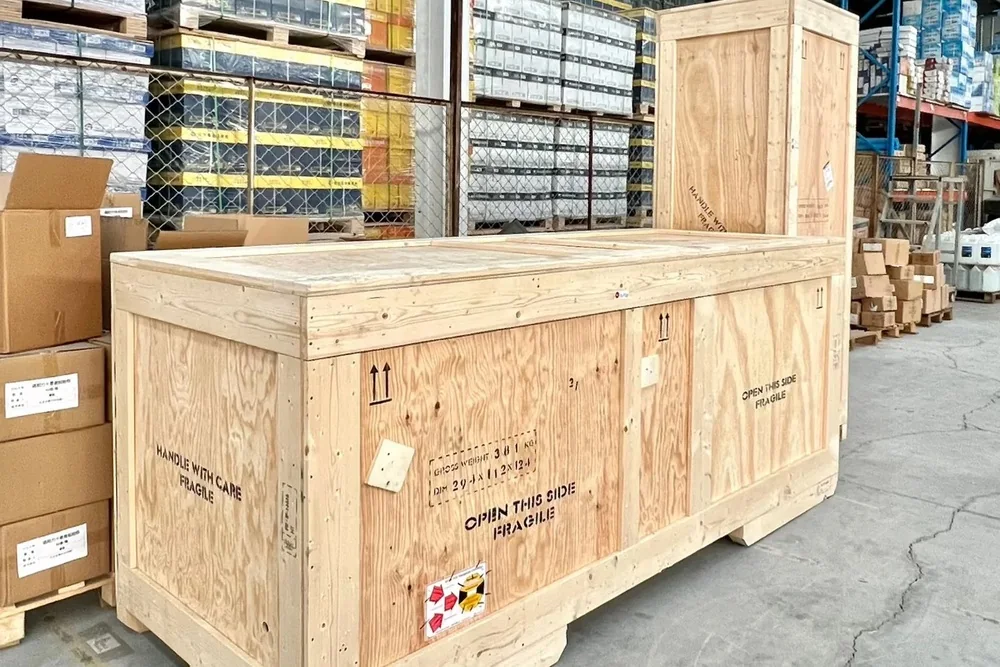
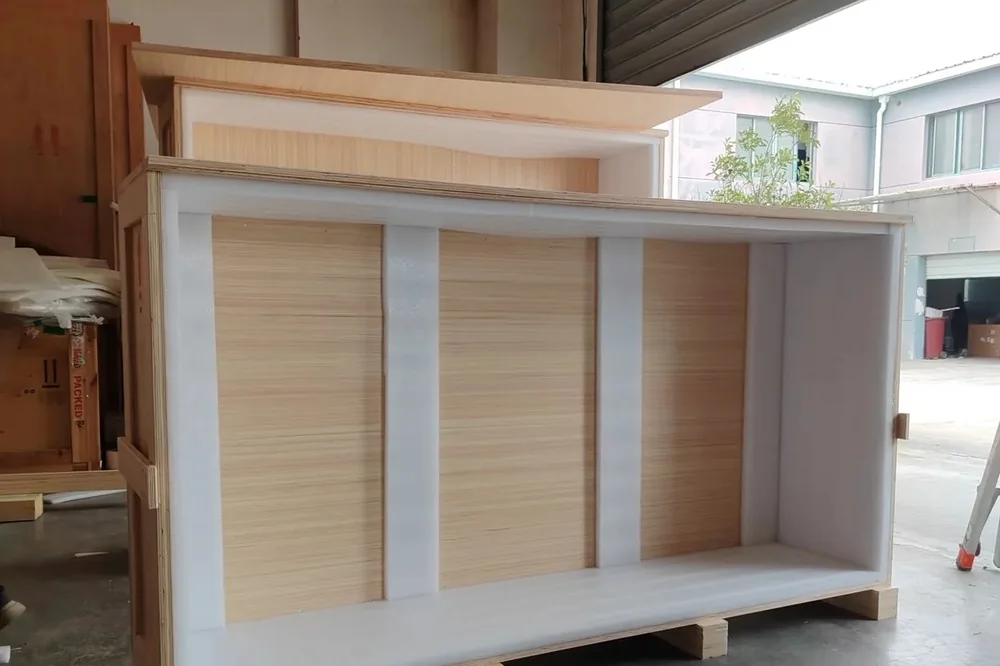
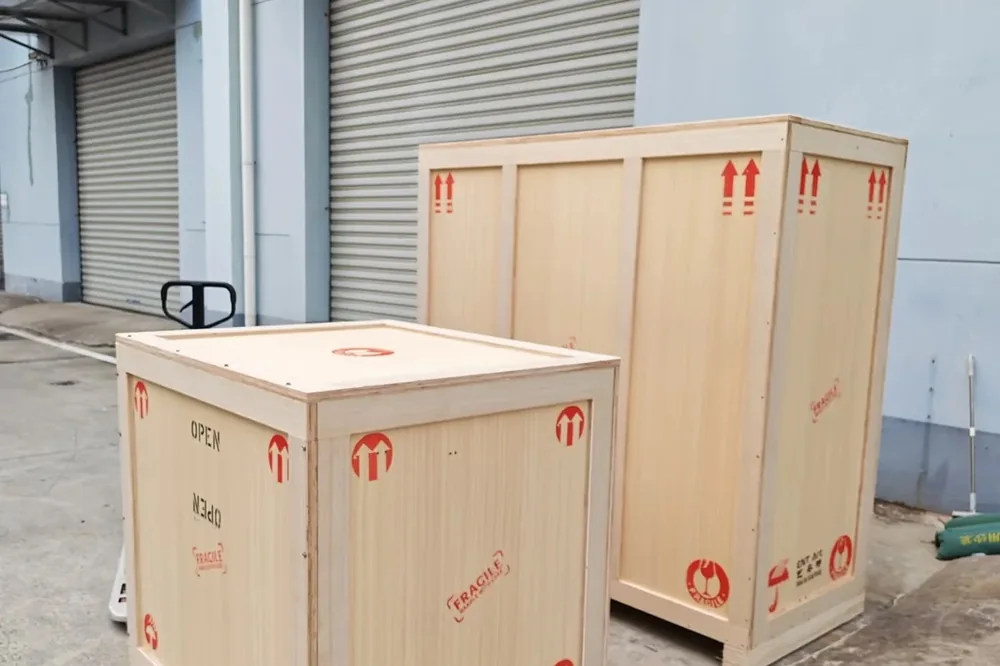
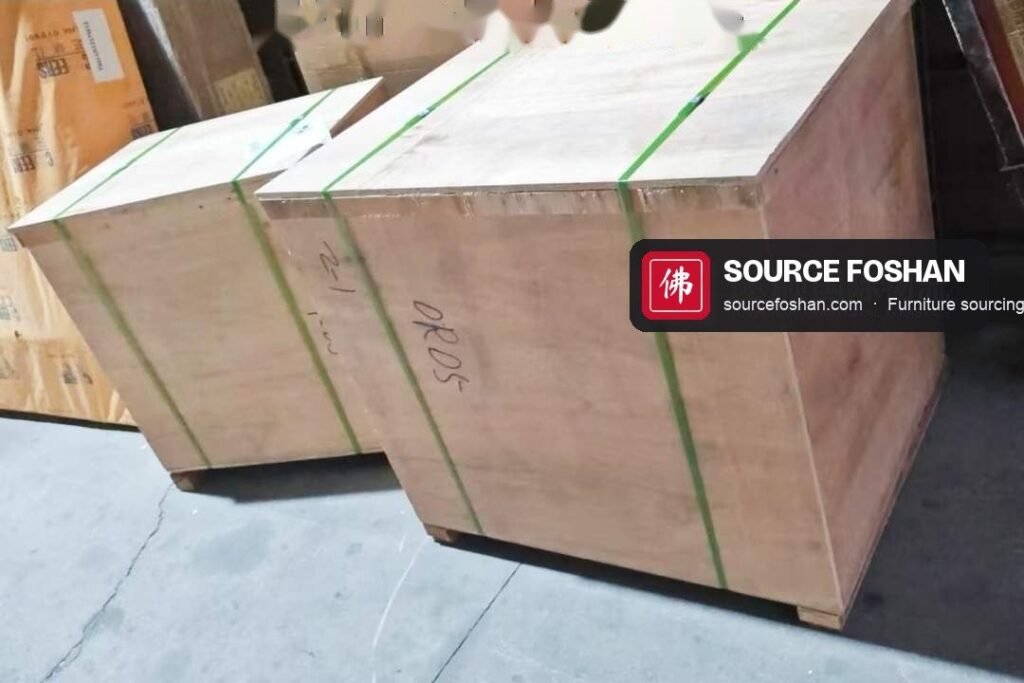
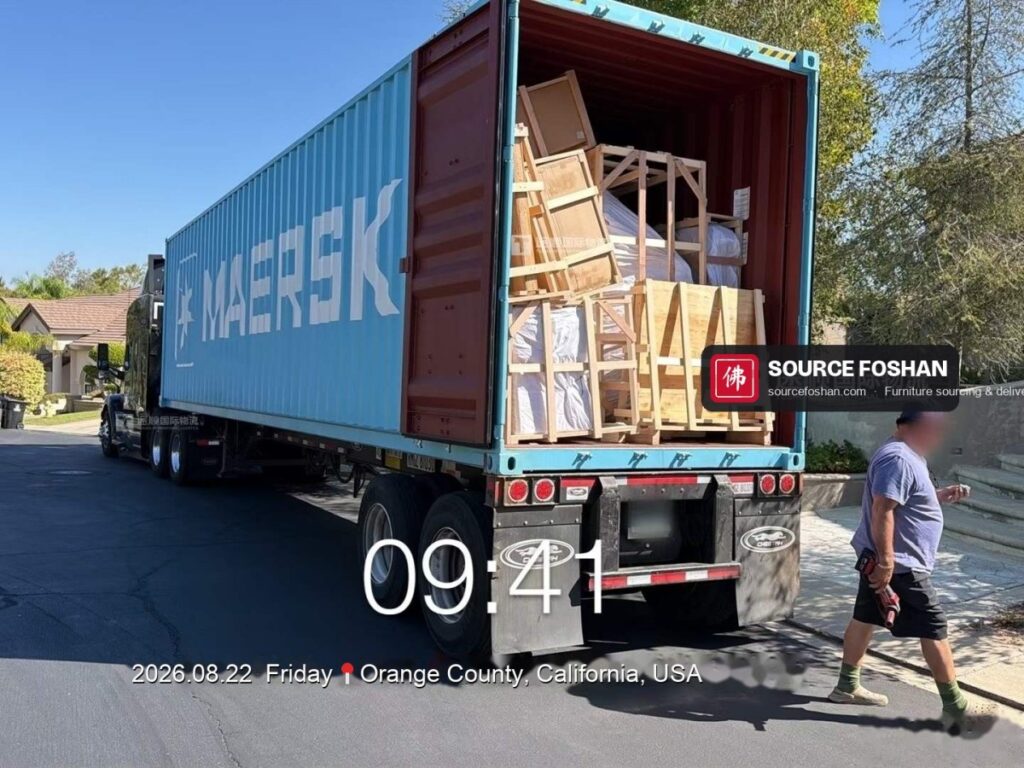
The same three steps stand behind every container we send to South Africa. These are our own warehouse photographs, not stock images.
01 · The one decision
A full container or an LCL consignment?
South Africa is the one route where we usually advise the container earlier. LCL runs around USD 188 per cubic metre and 36–48 days — five times the per-cubic-metre rate of the Australian route and up to three weeks slower.
- Your packed volume is above roughly 10 m³ — lower than the 15 m³ threshold that applies elsewhere.
- A 20 ft loads 28–33 m³ of crated furniture; at USD 2,903–3,548 it is often cheaper than 15 m³ of LCL.
- You are furnishing a whole house or a guesthouse: 45–70 m³, which is a 40 ft high-cube.
- The schedule matters: a container is 22–30 days against 36–48 for LCL.
LCL territory
under 10 m³
One 20 ft container
30 m³ loaded
One 40 ft high-cube
68 m³ loaded
A three-seat sofa carton is 1.6–2.2 m³; four stacked dining chairs 0.6–0.9 m³; a knock-down wardrobe 0.5–0.8 m³. Send the list and we return the packed volume per line.
Durban is the larger and generally more reliable container port; Cape Town suits Western Cape addresses but has a history of weather and congestion delays. Where the delivery address allows either, we usually route through Durban and truck it.
02
What does it cost to ship furniture to South Africa?
Every line that appears between the ex-works price and the furniture standing in the room. Ranges, not promises.
| Line | Indicative | Notes |
|---|---|---|
| Ocean freight, 20 ft | USD 2,903–3,548 | Shenzhen to Durban or Cape Town |
| Ocean freight, 40 ft HC | USD 3,375–4,125 | Unusually close to the 20 ft rate, which pushes buyers to the bigger box |
| LCL ocean freight | About USD 188 per m³ | Five times the Australian rate; the main reason the container threshold is lower here |
| Export packing and consolidation | About USD 30 per m³ | Re-crating, bracing, labelling, packing list |
| Marine insurance | About 0.5% of insured value | On goods plus freight |
| Customs duty | 0–20% by tariff heading | Around 20% on seating under 9401; other headings vary. No FTA with China — confirm the heading before you order |
| VAT | 15% on customs value + 10% + duty | The 10% upliftment applies because China is outside SACU |
| Clearing agent | From about ZAR 250 per entry | Plus disbursements; a local clearing agent is effectively compulsory |
| Delivery, unload and assembly | Quoted per address | Durban and Cape Town are short runs; Johannesburg is an inland haul |
Indicative landed cost, Foshan to a South African address, September 2026. Ocean freight moves monthly — confirm at booking, and confirm the tariff heading with your clearing agent.
03
How long does it take, week by week?
From the deposit to the last crate leaving your drive. The sea leg is the part nobody can compress.
- Week 0Orders placed and consolidated
Pieces from each factory are collected at one Foshan warehouse, checked against the specification and re-crated for sea.
- Week 6–10Inspection and loading
Every item photographed against the spec; the balance falls due after you approve the report. Timber treated to ISPM 15 before the container is sealed.
- Week 10–14At sea
22–30 days Shenzhen to Durban or Cape Town. Tracking shared weekly.
- Week 14–16Customs clearance
Your clearing agent lodges the entry; duty by heading and VAT on the uplifted value are settled. Cape Town can add days in congestion.
- Week 16–17Delivery and carry-in
Delivery booked to the address, crates opened, pieces carried in and assembled, packaging taken away the same day.
04
Duty, tax and clearance into South Africa
South Africa is the only destination in this set with no trade agreement with China, and the only one where the VAT base is uplifted. Both belong in the budget from the first quotation.
There is no free trade agreement between China and South Africa, so the ordinary rate applies. Seating under 9401 attracts roughly 20%; other furniture headings vary. The heading, not the description, decides it — get it confirmed by your clearing agent before a deposit is paid.
SARS calculates import VAT as the customs value plus 10% of that value, plus any non-rebated duty, times 15%. The 10% upliftment applies because China sits outside the Southern African Customs Union. A VAT-registered business claims the VAT back; the duty is a real cost either way.
You need an importer's code and a local clearing agent to lodge the entry. We are not a clearing agent: we supply the codes, the packed volume per line and the documents early enough to be checked before the container is booked.
Durban is the larger port and generally the more reliable for time-sensitive cargo. Cape Town suits Western Cape addresses but has a record of weather and congestion delays. Where either works, we usually route through Durban.
05
Clearance is not delivery. What happens at the door.
Clearance in South Africa can be the long pole. What happens after it is the part we control, and it is scoped before the ship sails.
Cape Town congestion can add days that no delivery crew can recover. Where the address allows either port, that choice is made at booking.
Estate access, security controls and narrow driveways decide the vehicle and the crew. We ask for photographs of the approach.
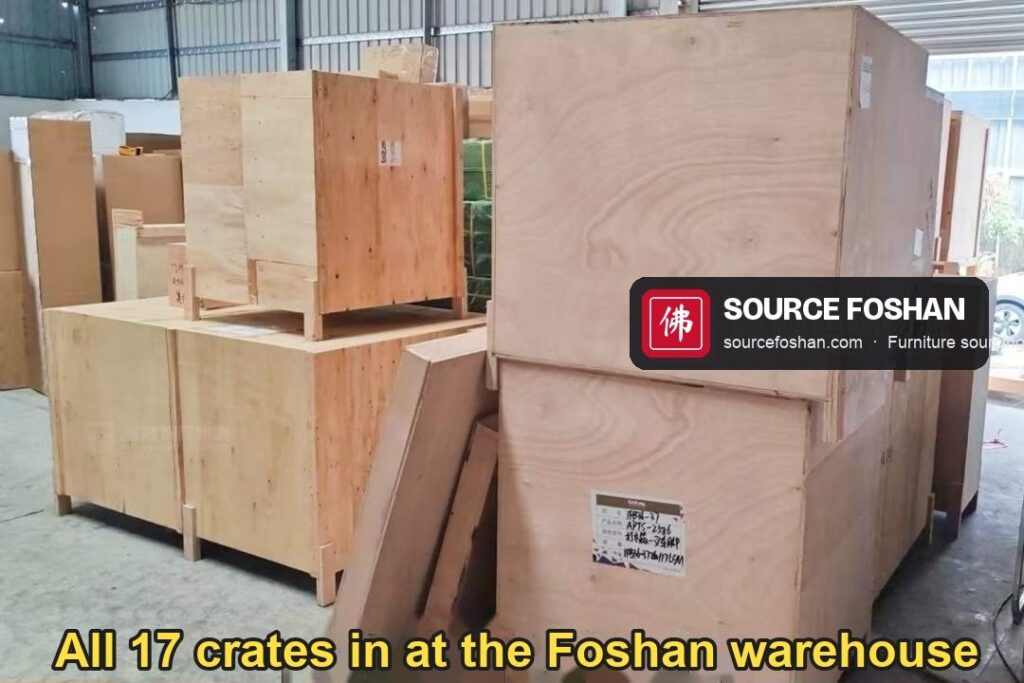
Crates are opened outside, pieces carried in, beds and tables assembled and positioned by room against the packing list.
Timber, cardboard and wrap leave with the crew the same day rather than filling the site.
FAQ
Shipping furniture to South Africa, answered.
How long does furniture take from China to South Africa?
Twenty-two to thirty days port to port in a full container from Shenzhen to Durban or Cape Town. LCL is much slower on this lane — thirty-six to forty-eight days once consolidation and deconsolidation are counted. Add two to four weeks of production and consolidation before the sailing and two to three weeks for clearance and delivery. Door to door, a container order runs about sixteen to seventeen weeks from deposit.
What import duty and VAT apply to furniture from China to South Africa?
There is no free trade agreement between China and South Africa, so ordinary customs duty applies: roughly 20% on seating under heading 9401, with other furniture headings varying. VAT is 15%, but the base is uplifted — SARS charges it on the customs value plus 10% of that value plus any non-rebated duty, because China sits outside the Southern African Customs Union. Confirm the exact heading with your clearing agent before you pay a deposit.
Should I ship LCL or a full container to South Africa?
The container wins earlier here than on any other route we run. LCL into South Africa costs around USD 188 per cubic metre and takes thirty-six to forty-eight days, against USD 2,903–3,548 and twenty-two to thirty days for a whole 20 ft container. That puts the crossover at roughly 10 m³ rather than the 15 m³ that applies elsewhere — and the container is three weeks faster.
Cape Town or Durban?
Durban is the larger container port and generally the more reliable for cargo with a date attached. Cape Town is the natural choice for Western Cape addresses but has a record of weather and congestion delays that no delivery crew can recover. Where the delivery address allows either, we usually route through Durban and truck it.
Do you handle customs clearance in South Africa?
No. You need an importer's code and a local clearing agent to lodge the entry, and we will not pretend to be one. What we do is supply the tariff headings, the packed volume per line and the documents early enough for your agent to check them before the container is booked — which on a route with real duty exposure is worth more than a clearance service.
Send your list and your South Africa address
Quantities, rooms or a rough list are enough. You get compared factory options, the packed volume, the container call and a landed estimate within one business day.
Fields marked are required.
No spam, no obligation. Replies come from the sourcing team in Foshan, usually within one business day.
Sources & further reading
Where these figures come from.
- Sino Shipping — Freight from China to South Africa — FCL and LCL rate ranges and port-to-port transit times to Durban and Cape Town, September 2026
- South African Revenue Service — Duties and taxes for importers — Customs duty, the 10% upliftment and the import VAT calculation
- SARS — Customs tariff — Ordinary customs duty rates by tariff heading
Ocean freight is a spot market and moves monthly; duty and tax rules change without notice. Treat every figure here as a starting point and confirm it at booking with your broker.