Skip to content
SOURCE FOSHANFURNITURE SOURCING · 中国 Send Your List

Quality & Craft

Inside a Foshan Furniture Factory: Seven Production Zones and the Question to Ask in Each

A 20,000 m² Foshan manufacturer walked its own seven production zones on camera — raw materials, cutting, leather, foam, hardware, finishing, QC. We kept the tour, dropped the advertising, and turned each zone into the question to ask before a deposit.

Quality & Craft By the Source Foshan sourcing team · updated 10 min read

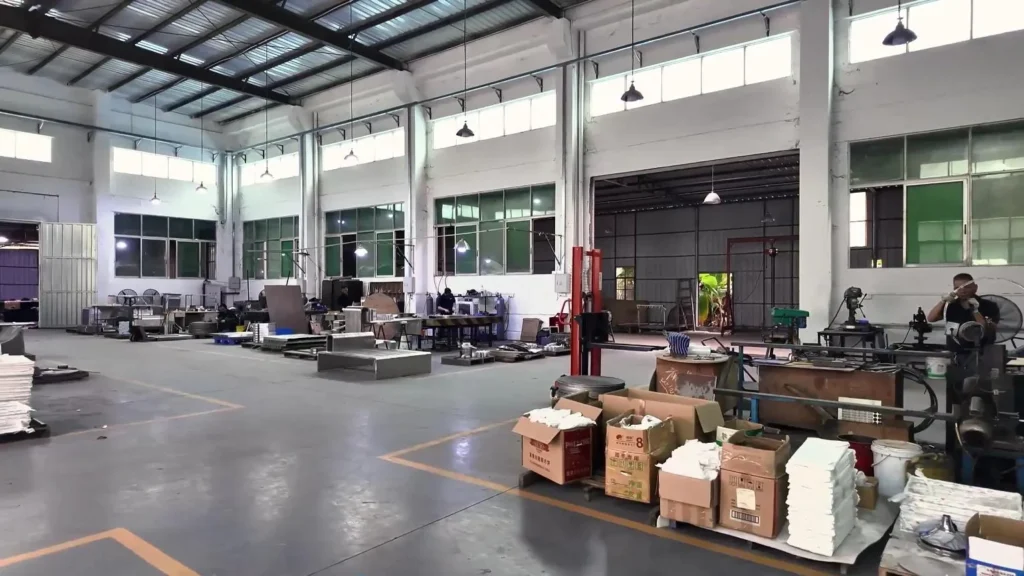
Production hall of a Foshan furniture factory with workbenches and stock
Seven zones in sequence. Each is a place where quality is built in — or quietly saved on.

In short

  • A full-line Foshan furniture factory runs seven zones in sequence: raw materials, cutting, leather, foam, hardware, finishing and quality control. Each one is a place where quality is either built in or quietly saved on.
  • Every “factory-direct” pitch makes the same four claims — no middlemen, decades in the trade, a huge showroom, lifetime service. A 20,000 m² plant that owns its building can genuinely undercut a mall by 30–50%; the claim is only worth what you can see on the floor.
  • The zones tell you what to ask for in writing: species and board grade, hide origin and layer, foam density by colour code, hardware alloy, primer-sand-topcoat sequence, and the inspection checklist.
  • A factory that lets you walk all seven zones, photograph them and put the answers on the pro-forma invoice is the kind worth buying from. One that only shows the showroom is telling you where its money went.
  • Source Foshan walks these floors for buyers who cannot: our shortlist notes record what we saw in each zone, and our inspection checks the finished piece against it.

A furniture factory is easier to read than a showroom, if you know which room you are standing in. A large Foshan manufacturer recently published a walk-through of its own 20,000 m² plant — the seven production zones, in order, with the standard “why buy from the source” pitch attached. We have kept the tour, dropped the advertising, and turned each zone into the question a buyer should ask before paying a deposit. This is the same walk our team does on every factory we shortlist.

Based on a factory walk-through published in September 2026 by a Foshan sofa and case-goods manufacturer (30 years in the trade, 20,000 m² plant and showroom on its own premises). The seven-zone sequence is theirs; the buyer’s questions, the pitfalls and the photographs are ours. The manufacturer is not named here and this is not an endorsement.

01

First, the pitch every factory makes — and what it is actually worth

Ask the team about this

The tour opens with four reasons to buy from the source. You will hear the same four, almost word for word, from every “factory-direct” account in Foshan — including the ones that are not factories. None is false in itself; each is only worth what you can verify.

  • “We are the factory, not a dealer or a buyer”

    Verifiable in five minutes: the business licence names a manufacturing company at this address, and the production floor has your model’s frames on it. A 30–50% saving against a mall is plausible when the maker owns its own 20,000 m² of property and pays no rent or platform fees — and impossible for a reseller who does.

  • “Thirty years, from a workshop to this plant”

    Longevity matters; it is also unverifiable from a video. Ask for the registration date on the licence and for photos of pieces delivered last month in the spec you want.

  • “A 20,000 m² showroom, every style, designer and consultant two-to-one”

    A big showroom proves budget for display, not for materials. Treat it as a catalogue you can sit on; do the buying decision on the factory floor and on paper.

  • “Lifetime maintenance”

    Meaningful only when written as a warranty with years per component (frame, foam, cover, hardware) and a statement of who pays return freight. From overseas, “lifetime” without a written clause is a sentence, not a promise.

02

The seven zones, in production order — and the question each one answers

Ask the team about this

Walk them in this order and you follow a sofa or a cabinet from plank to packing. In each zone there is one thing to look at and one thing to write down.

  1. Raw materials. Where the timber and boards wait. Look for stacked, labelled stock rather than a few planks; ask which species and which board grade (E1 or E0 for composite panels) go into your piece. The factory says “quality solid wood and eco-boards”; the PI should say beech / birch, kiln-dried or E0 MDF.Saved-on version: mixed offcuts and unlabelled board. Frames that warp or crack start here.
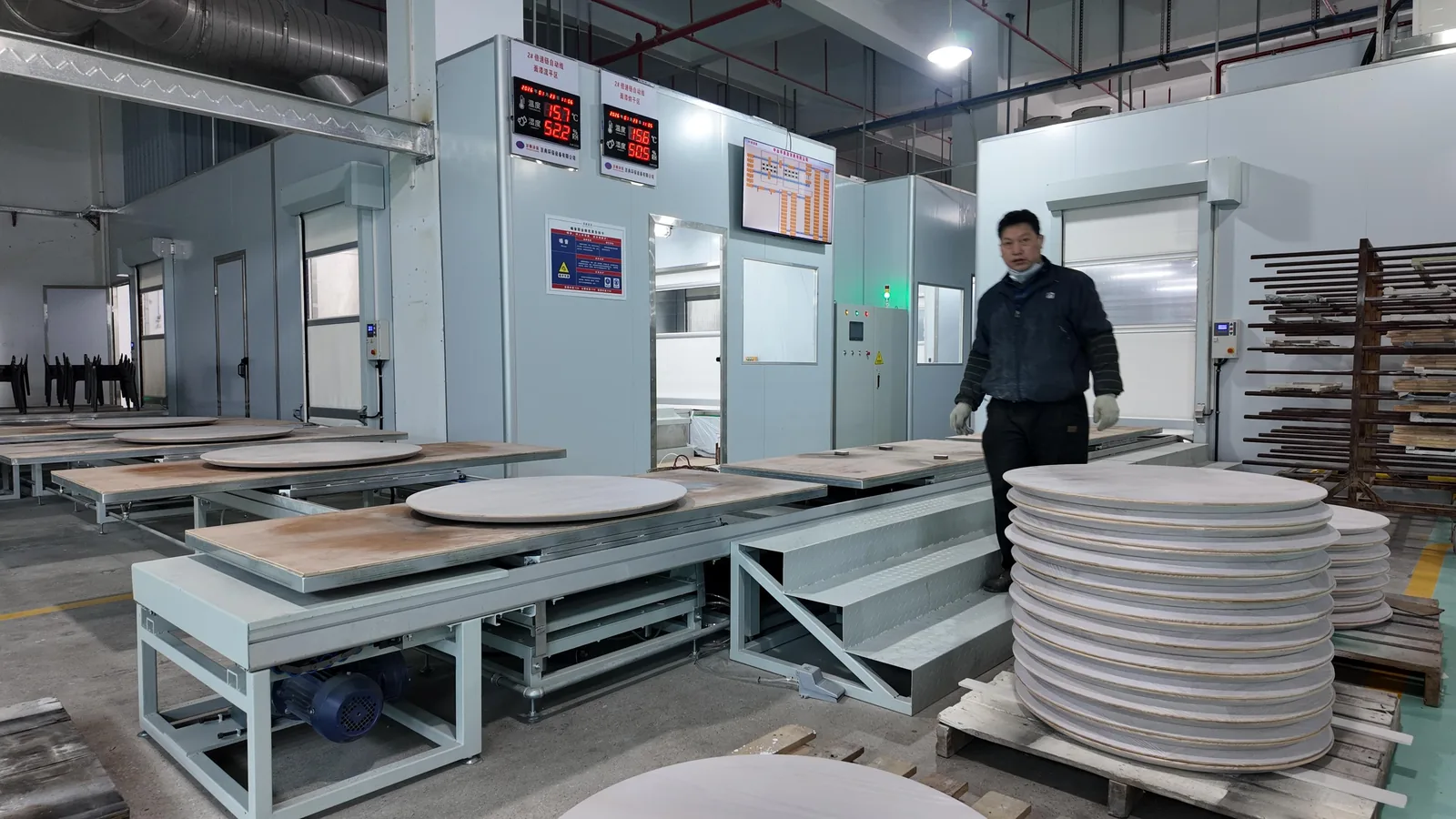
  2. Cutting. CNC panel saws cut to the drawing so assembly is tight. Look for the drawing on the machine and offcut discipline on the floor.Saved-on version: hand-cut parts and gap-filling at assembly.
  3. Leather centre. “The skin of the furniture.” A serious plant sorts hides by origin and grade — the tour cites imported American and European full-grain. Look at the back of a hide; ask for grade (full-grain / top-grain / split), thickness in mm and which surfaces it covers.Saved-on version: bonded or PU on non-contact faces under a “genuine leather” label — the exact substitution Lecong’s regulator fined this year.
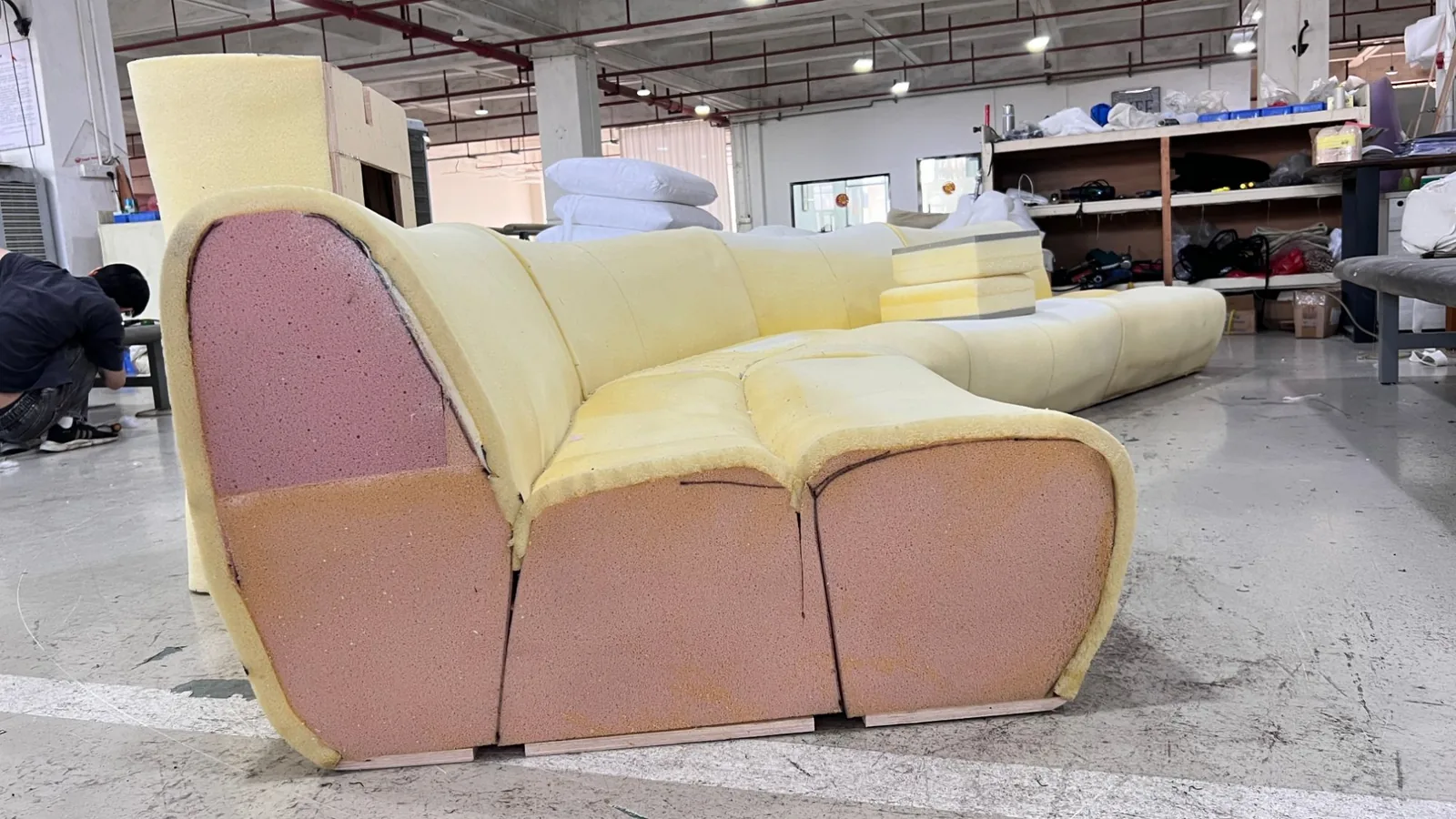
  4. Foam centre. Colour-coded blocks for different densities and seat feels, laminated in layers. Look for the colour code chart; ask for density in kg/m³ per layer and the foam brand.Saved-on version: one cheap density throughout, or recycled foam. Sags in year two.
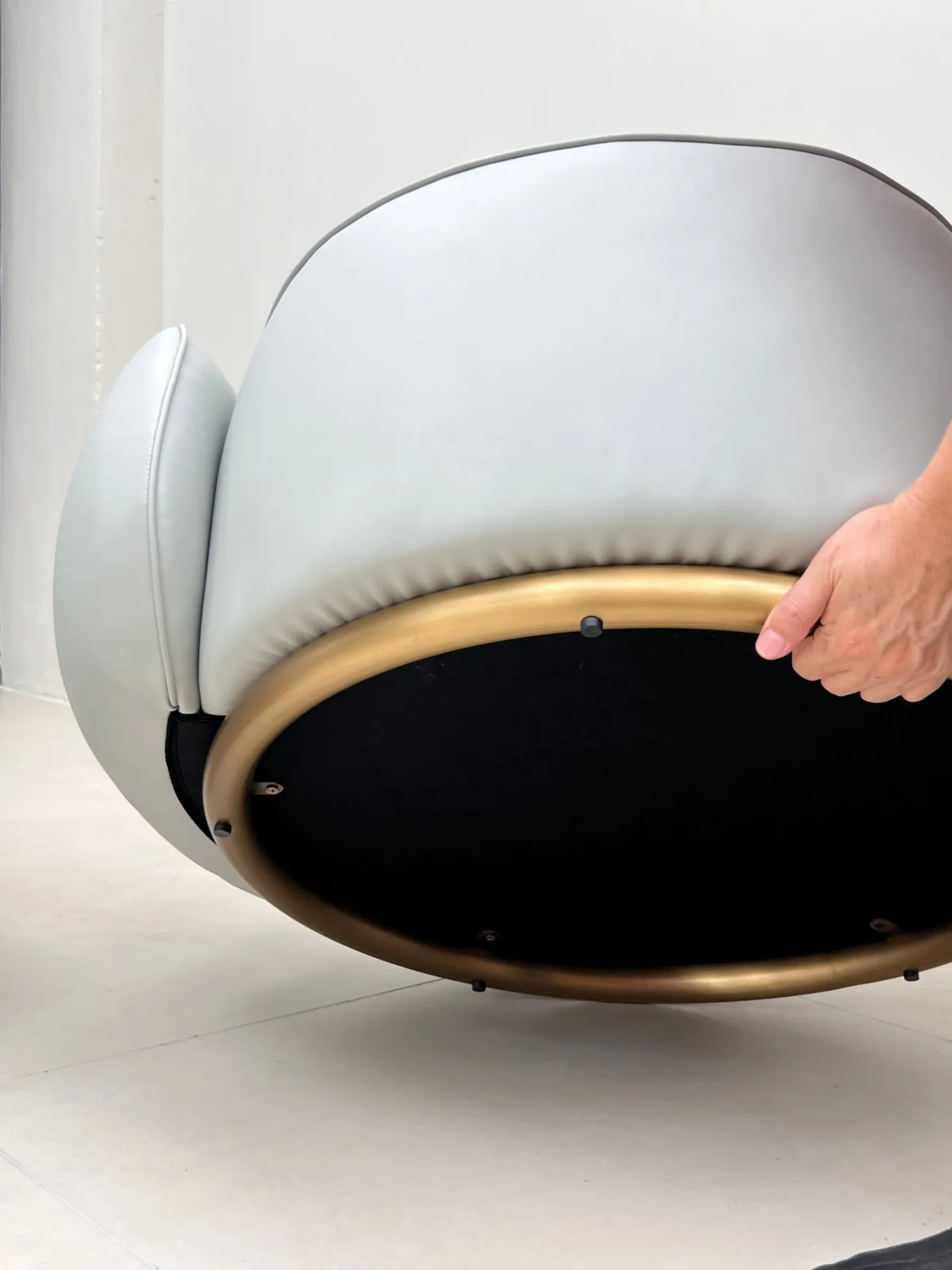
  5. Hardware shop. Digital machine tools and precision moulds so every fitting is interchangeable; zinc alloy, stainless and cold-rolled steel. Ask for the alloy and, for drawers and hinges, the brand.Saved-on version: soft alloys that loosen and rust within a year.
  6. Finishing. Primer, dry, sand flat, topcoat at controlled pressure and distance, dry again. Look for the sanding stage between coats; run a hand over a finished panel.Saved-on version: one coat over unsanded primer — orange peel and colour drift between pieces of the same set.
  7. Quality control. Dimensions, structural stability, surface flatness, function, before packing. Ask to see the checklist and a filled-in sheet from last week.Saved-on version: the packer is the inspector. This is also the zone where your own inspection, before the balance, is non-negotiable — steps 7 and 8 of ten.
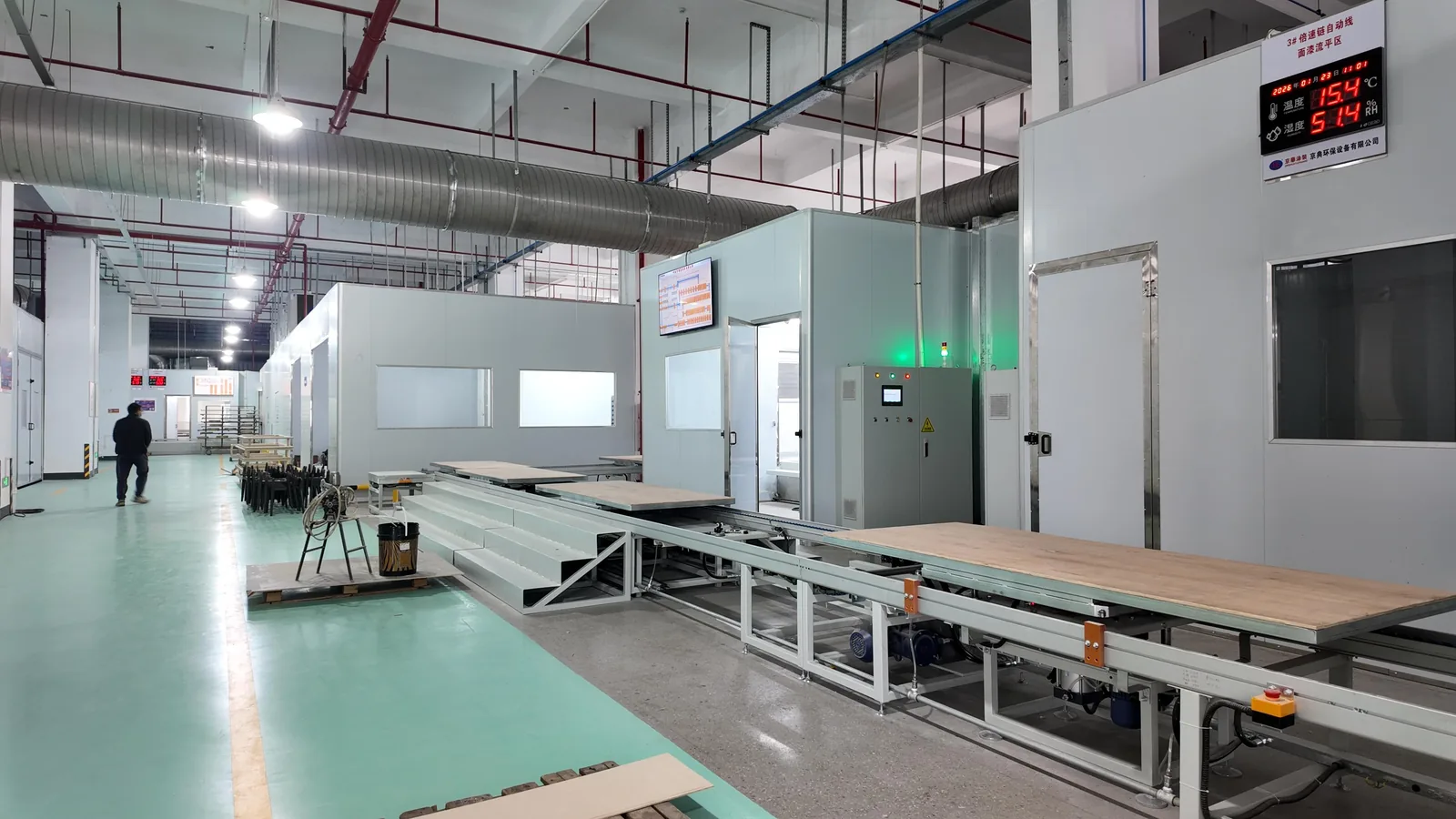
Automated panel line in a Foshan furniture factory
Zone 2 · cutting. A CNC line means the drawing, not the operator’s eye, sets the dimensions.
Bare sofa seat showing laminated foam layers of different densities
Zone 4 · foam. The layers are visible for one day of the sofa’s life. Write the densities down while you can see them.
Sanding and finishing line in a Foshan casegoods factory
Zone 6 · finishing. Sanding between coats is the step that separates a smooth lacquer from orange peel.
Underside of a chair showing brass base and fixings during inspection
Zones 5 and 7 · hardware and QC. Turned over: fixings, alloy and glides are checked before the piece is packed.
03

The small maker’s version: three tests you can run from your phone

Ask the team about this

Not every honest factory has seven zones and 20,000 m². A Lecong bed-and-sofa maker with a dozen years in the trade put the same idea more bluntly in his own workshop post: don’t listen to the boss, look at three things. They work as well on a WhatsApp thread as on a factory floor.

  1. Will they film the workshop? Daily, unedited footage of people working — not a showroom walk-through, not a drone shot of the roof. A maker who owns the process films it without being asked.Ask for a 30-second clip of your model’s frame stage this week, not last year.
  2. Will they write the configuration down? Frame material, foam density, hide or fabric model number. “If they can list it, it is not hot air.”Anyone who answers “top grade, don’t worry” has just told you which grade.
  3. Can you reach someone after delivery? A fixed address, a phone number that is answered, a company name that matches the licence.From overseas this is the whole after-sales system; make sure it exists before the deposit.
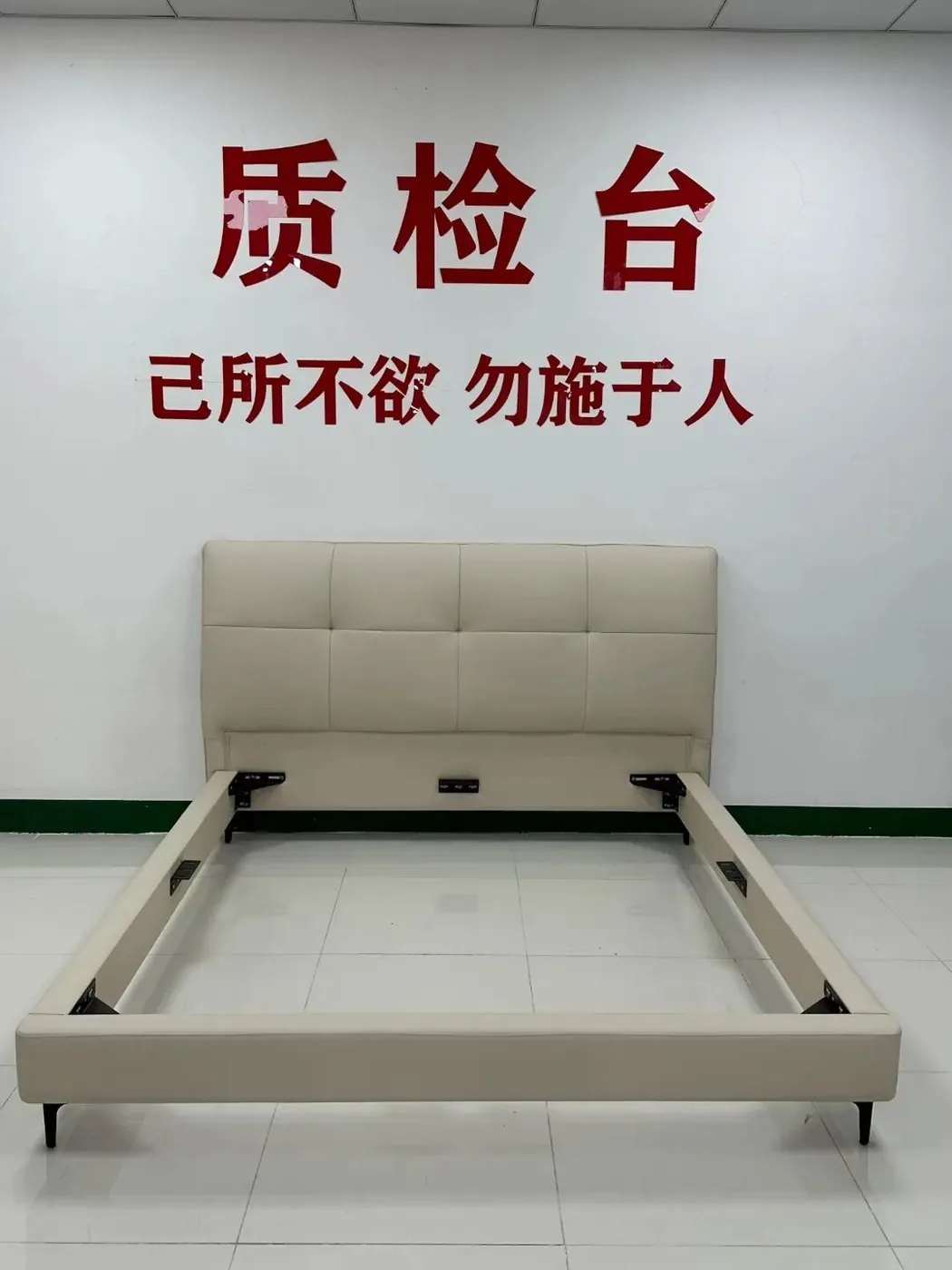
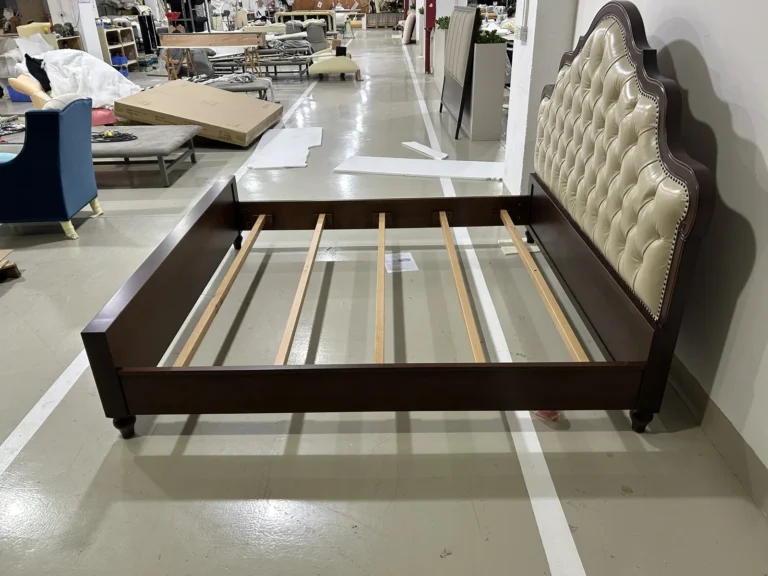
Inspection bench in a Lecong bed factory with a finished upholstered bed frame, under a sign reading QC station
A real QC bench. Zone seven in a small Lecong factory: the sign reads “Inspection station — do not do to others what you would not want done to you.” Photo: the maker’s own workshop post, Sept 2026.
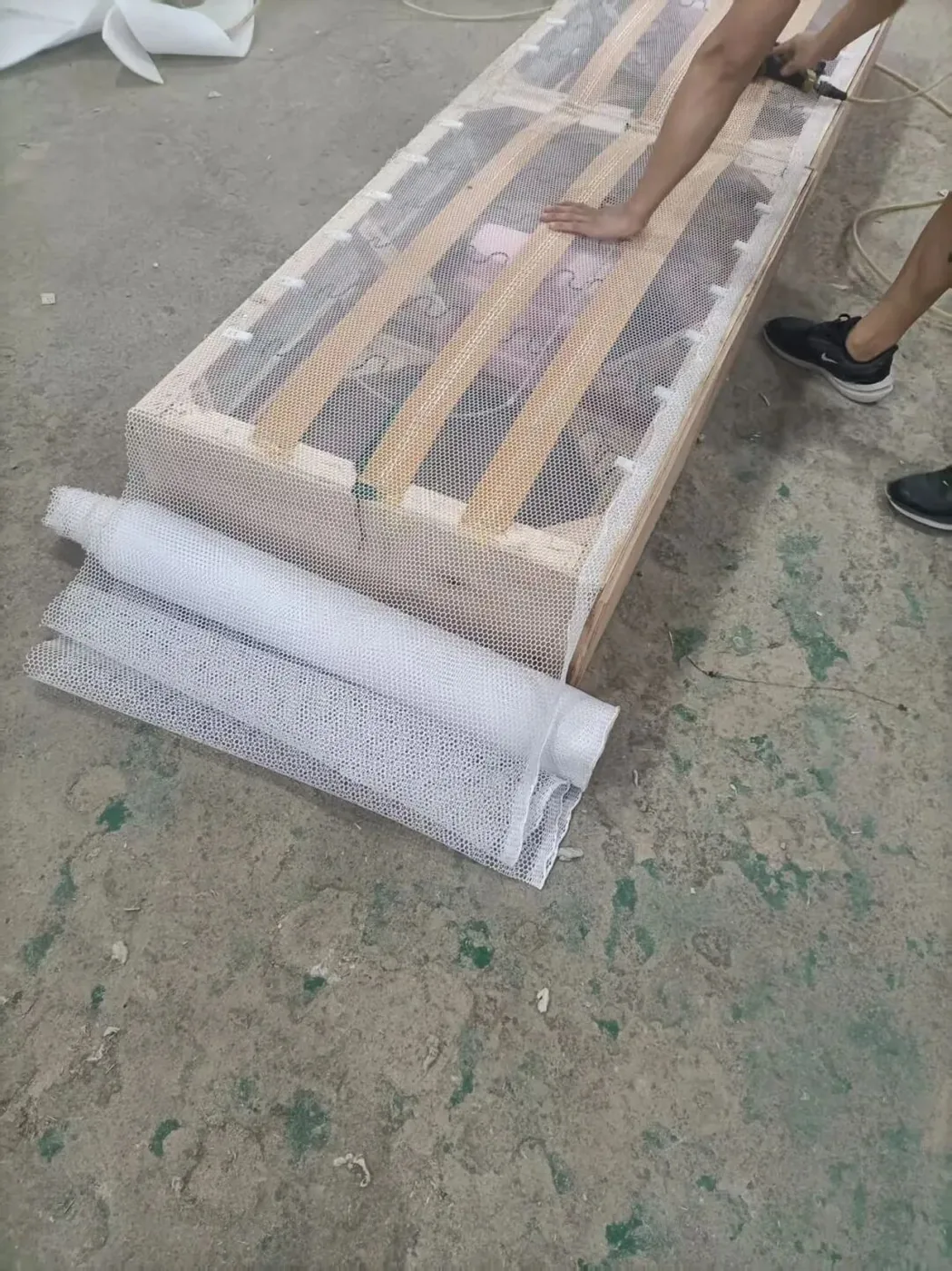
Bed slats being wrapped in protective film on a factory floor
What “we pack it ourselves” looks like. Slats wrapped for a domestic truck. For six weeks at sea this is the starting point, not the standard — export packing is a separate, written line. Photo: the maker’s own post.
Before you pay a deposit

Send us the quotation you were given. We will tell you what is missing from it.

A free second look from a local team that reads Foshan quotations every week: unit specs, add-on risks, packing and freight lines, payment terms. No commitment.

04

What a factory tour does not show you

Ask the team about this

A well-run plant filmed on a good day is still a film. Three things a tour — in person or on video — cannot settle by itself:

  • Whether your order goes through these zones. Large factories subcontract overflow, and some “factory” accounts are marketing teams renting a plant’s image. Ask where your frames will be built, and ask for a photo of them at the frame stage before upholstery.
  • Whether the spec on the floor is the spec in the box. Showroom-sample-versus-delivery substitution is the most common complaint in Foshan. The fix is a written specification per item and an inspection against it before the 70% balance — the eight traps article has the contract wording.
  • Whether it survives six weeks at sea. Domestic factories pack for a truck. Export packing — foam, corner protection, moisture barrier, crates for stone and glass — is a separate line, quoted per cubic metre, and someone has to own it. On our orders, we do.
05

How Source Foshan walks a factory for you

Send your brief

Most of our clients cannot stand in zone four with a foam block in their hands. So we do, and we write it down. Before a factory goes on a shortlist, we have checked its licence and address, walked the seven zones and photographed the ones that matter for your pieces. The shortlist note tells you which grade the plant sits in — the same “ten prices” logic we explained in one sofa, three prices. Once you order, the answers from each zone go on the pro-forma invoice as grades and numbers, and the final inspection compares the finished piece against them before the balance is released.

Zone questionWhich species, which board grade?On your PIFrame timber and panel grade named; frame-stage photo supplied.
Zone questionWhich hide, which layer, how thick?On your PIGrade, thickness in mm, surfaces covered; hide back photographed at inspection.
Zone questionWhich density, which brand?On your PIkg/m³ per layer and foam brand; bare-seat photo before the cover goes on.
Zone questionWhose hardware, what alloy?On your PIBrand and material for slides, hinges, glides; opened and closed at inspection.
Zone questionWho inspects, against what?On your PIOur checklist, our photos and video, before the 70%.

If you would like to walk a floor yourself, a guided sourcing visit covers three or four factories a day with someone who knows which door leads to the foam room. If you would rather we go, send your list and we will come back with the plants that passed the walk. How to verify a factory from a distance is set out in finding and vetting manufacturers.

FAQ

Questions buyers ask before a factory visit

What should I look at on a furniture factory tour in Foshan?

Follow the production order: raw-material stock and labels, CNC cutting with the drawing on the machine, hide sorting and the back of a hide, colour-coded foam densities, hardware alloys and brands, the sanding stage between primer and topcoat, and a filled-in QC checklist. Ask one specific question in each zone and write the answer into the pro-forma invoice.

How can I tell a real factory from a marketing team using a factory’s image?

Ask where your frames will be built and request a photo of them at the frame stage; check that the business licence names a manufacturing company at the address you visited; ask to see last month’s delivery photos of your model. Marketing teams and dealers can show a showroom and a borrowed video, not your frames.

Is furniture really 30–50% cheaper direct from a Foshan factory?

Against a mall showroom, often yes, when the maker owns its premises and pays no rent, commission or platform fees. The saving is real only if the specification is the same; a lower price with a lower foam density or a split-leather cover is a different product, not a discount. For an overseas order, add export packing, freight, duty and delivery — typically 40–90% on top of ex-works for a full container.

What does “lifetime maintenance” from a Chinese factory mean in practice?

Nothing enforceable unless it is written as a warranty: years per component (frame, foam, cover, hardware), what counts as a defect, and who pays return freight. For export orders we write frame 10 years, cover and foam 5, hardware 3, with return freight at the supplier’s cost for colour or dimension mismatch.

Can Source Foshan visit a factory on my behalf?

Yes. Every factory on a Source Foshan shortlist has been visited, its licence and address checked and its production zones photographed. For your order we photograph your pieces at the frame and bare-foam stages and inspect the finished goods against the written specification before the balance is paid.
Put this to work

Send your list. We will tell you honestly how it would run.

A floor plan, a furniture list, a quotation you already have or a rough brief is enough. Our local team in Foshan replies within one business day with real options, prices and lead times — no commitment.

Start Your Project

WhatsApp +86 151 9256 9580 · hello@sourcefoshan.com · WeChat 15192569580