Skip to content
SOURCE FOSHANFURNITURE SOURCING · 中国 Send Your List

Foshan on the Ground

Who Actually Sells Foshan Furniture Online? Six Business Models Behind “We Are the Source Factory”

A Foshan new-media insider mapped the players in Foshan furniture new retail — three kinds of buyer, three kinds of factory — how each earns, and why all of them are now targeting overseas customers they admit they do not understand. Translated for the buyer being targeted.

Foshan on the Ground By the Source Foshan sourcing team · updated 12 min read

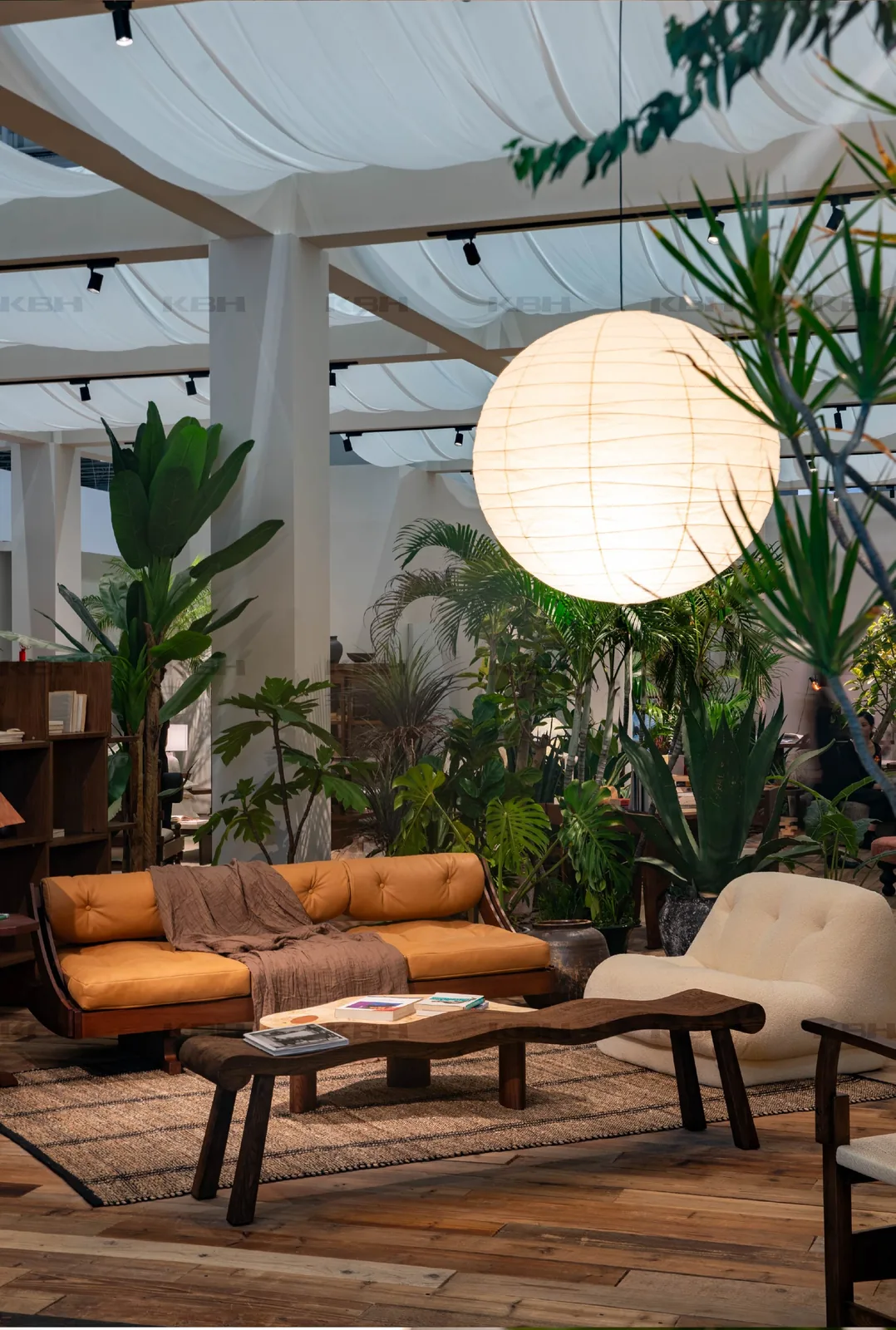
Seating group displayed in a Foshan furniture showroom
Six business models, one sentence: we are the source factory.

In short

  • “Foshan furniture new retail” — selling Foshan-made furniture direct to end customers across China and, increasingly, abroad — is a market of roughly ¥20 billion a year, growing fast, and now split into three tiers: Pearl River Delta locals (¥10–50k orders, saturated), nationwide whole-home buyers (¥50k+, crowded), and overseas buyers, where operators report cheaper leads and easier conversion.
  • Six kinds of seller stand between a Foshan factory and you: national influencer “buyers”, regional buyers, private-network resellers, factories selling their own output, supply-chain showrooms bundling many factories, and marketing teams renting a factory’s image. Most present themselves as “the source factory”.
  • The information gap that made buyers valuable in 2020 is gone — factories now market themselves. What high-end clients pay a buyer for is design, coordination and service, and the buyer’s margin is far more than the “5 points” factories complain about.
  • Everyone in the chain is now aiming at overseas customers, and by the operators’ own account they understand foreign demand poorly and lose most conversions. That is exactly the gap an overseas buyer falls into.
  • Source Foshan is none of the six. We charge the buyer a stated fee, take no supplier commission, and our job is to tell you which of the six is quoting you and what that means for the price.

When a Foshan account messages you “we are the source factory”, it is telling you which of six business models it runs — or would like you to think it runs. A new-media agency that works for furniture and building-material companies inside Foshan published an unusually frank map of who actually sells Foshan furniture to end customers, how each of them makes money, and why all of them are now pointing at overseas buyers. We have translated the analysis, removed the agency’s own promotion, and added what it means when you are the overseas buyer being pointed at.

Source: an industry analysis published in September 2026 by a Foshan-based new-media agency serving furniture and building-material companies. Market figures are the author’s estimates and are presented as such. The author’s own services are omitted; the overseas-buyer commentary is ours. RMB at ¥7.1 to the USD.

01

The market: three tiers of customer, one city of sellers

Ask the team about this

“New retail” here means one thing: using Foshan’s brand and its industrial base to sell furniture directly to end customers — homes, not distributors. The author puts the market at about ¥20 billion a year with a path to ¥40 billion in five years, and is honest that the number is an estimate; what is certain is that it is in the tens of billions and growing.

¥10–50kPearl River Delta buyers who drive to Foshan. Saturated: “more participants than you can count”, hard to win, harder to convert≈ US$1,400–7,000 per order
¥50k+Nationwide whole-home buyers. Still growing, competition rising fast — this is Foshan taking the mid-to-high end from regional dealers≈ US$7,000+ · buyer thresholds now ¥80–100k
Global“Explosive growth.” Operators report cheaper leads, more of them, and smoother conversion than domestic — “a clear dividend market”Every player in the chain is now entering
¥20 bnEstimated annual size of Foshan furniture new retail, author’s figure; ¥40 bn projected within five years≈ US$2.8 bn → 5.6 bn

The domestic split is already settled: low-ticket, need-based furniture goes to dealers, e-commerce platforms and livestreams; mid-to-high-ticket whole-home orders increasingly flow to Foshan itself. The overseas tier is where the money is now heading, from every direction at once.

02

The six kinds of seller, and how each one earns

Ask the team about this

From the customer’s side the author sees two camps — buyers (买手) and source factories — each in three flavours. Read them as a field guide to the accounts in your inbox.

Buyer type 1 · The national influencer

A handful of household names with large design teams, selling whole homes to high-end clients nationwide. Winner-takes-all: influence drives volume, volume drives influence. Entry thresholds have risen from ¥50k to ¥80–100k per order. The author’s earlier verdict on newcomers to this tier: “99% will die this year.”

What you are paying forDesign, measuring, renders, full-room coordination and an obsessive service culture. Not access to factories — everyone has that now.
Margin“Far more than 5 points.” High-end clients know it and pay it anyway, because the result in the room is what they are buying.
For an overseas buyerExcellent if you want a Chinese design studio to furnish your home and can pay for it. Ask whether their design and after-sales actually extend to your country, or stop at the Shenzhen port.
Buyer type 2 · The regional buyer

One or two people filming short videos and livestreams in Foshan factories to win customers from a single province or city — “a trust business among fellow townspeople”. Monthly sales in the low hundreds of thousands of yuan; a hard ceiling near ¥1 million because the same person films, sells and receives every client.

What you are paying forA trusted face from home and a personal escort round the factories.
MarginCommission from the factories visited; rarely disclosed.
For an overseas buyerThe model does not scale to you: the trust is local and the person is in Foshan. Expect a WeChat relationship that ends when the goods ship.

Buyer type 3 · The private-network reseller (“炒货”)

Selling furniture through personal WeChat contacts and accumulated relationships; tens of thousands of people in Foshan do it. A few thousand to a few hundred thousand yuan a month, no scale, some video as a side channel.

What you are paying forA referral and someone who knows where a piece can be had.
MarginA mark-up on each piece, invisible to you.
For an overseas buyerThis is the “friend of a friend in Foshan” route. It works until something goes wrong, at which point there is no company, no contract and no address.

Factory type 1 · The factory that sells its own output

Strictly speaking the only true “source factory”. Rare, because making things well and marketing them well are different skills; most plants prefer to produce and let others sell. The ones that do both have real cost advantages — no rent, no commission — and their own limitations: one range, one style, one set of opinions.

What you are paying forThe piece, at the maker’s price, in the maker’s grade.
MarginFactory profit only — see one sofa, three prices.
For an overseas buyerThe best price for what that plant makes; no help mixing it with the other eight suppliers a home needs, and export packing and paperwork are not its routine.

Factory type 2 · The supply-chain showroom

A showroom built around one style — Italian minimal, light-luxury, Song aesthetic, new Chinese, black walnut — stocked with products from many factories. Investment goes into the fit-out, rent and samples; the operator either markets it as “the source factory” or invites sales teams to move in and sell from it.

What you are paying forCuration: one visit, one style, many makers. Genuinely useful for a whole home.
MarginA dealer’s layer on each factory’s price, plus the showroom’s rent.
For an overseas buyerGood for shortlisting (the showroom directory lists 55 venues by area); not a factory, whatever the sign says. Ask which plant makes each piece and whether you can order from it directly.

Factory type 3 · The marketing team

The asset-light model, and “very common”. The team owns no factory and no showroom; it borrows both from a plant or a supply-chain operator and invests only in staff and paid traffic on Douyin, Xiaohongshu and Video Channels. Its public face is, in the author’s words, “also the source factory”.

What you are paying forThe ad spend that found you, and a sales team’s commission.
MarginWhatever the traffic cost plus target profit requires — the same arithmetic as the mall floor, in a different building.
For an overseas buyerThe hardest of the six to identify, because the video really was filmed in a factory. Ask whose name is on the business licence and whose account receives the deposit — how to verify a manufacturer.
Curated furniture showroom interior in Foshan
Factory type 2, in practice. One style, many makers, one rent: the supply-chain showroom is the most useful non-factory in Foshan — as long as you know that is what it is.
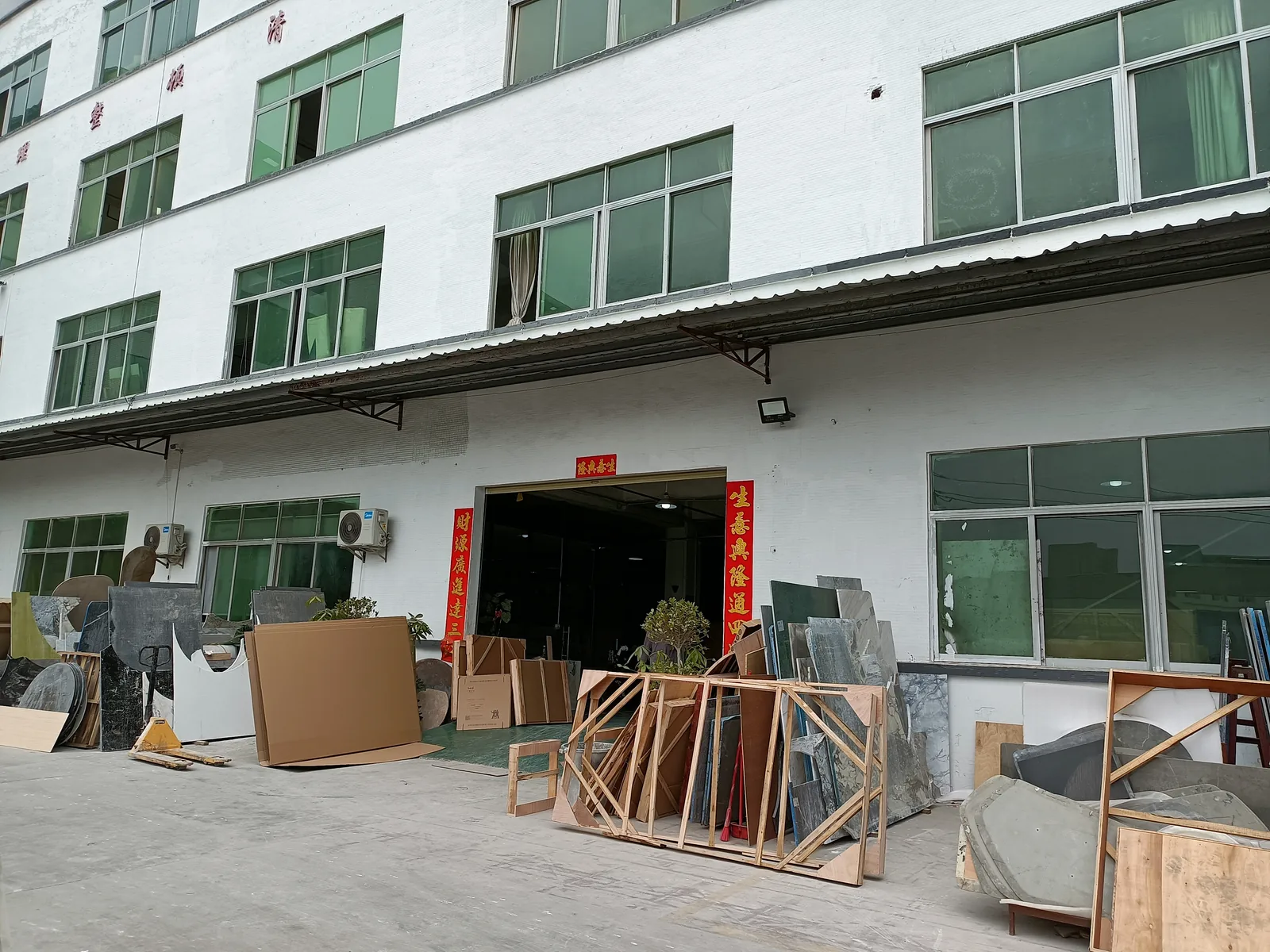
Street of furniture factories in Foshan's Longjiang district
Factory type 1, in practice. A Longjiang plant that sells what it makes. No rent in the price; no help with the other eight suppliers your home needs.
03

What a Foshan “buyer” actually sells, now that the information gap is gone

Ask the team about this

The buyer business took off in 2020. Its original product was information: Foshan had too many factories, customers could not find the real ones, buyers could. By the author’s account that gap no longer exists — factories market themselves on every platform, and anyone can find a maker in an afternoon.

So why do high-end clients still pay buyers? Because they are not buying information. They are buying aesthetic judgement, design capacity and service: a team that measures the flat, produces renders, coordinates every piece with every other, and treats any problem as its own. “The customer is ultimately buying the result in the home, not the furniture.” Factories who complain online that “buyers earn far more than five points” have, the author says, missed the point: the clients know, and pay, because the design and service are worth it. It also explains why national buyers can only serve the high end — low-budget clients want the cheapest furniture and go to the factory.

Factories selling nationwide answer in two ways: “source price, no middleman” for the budget-minded, and, for a few, a direct attack on the buyer’s clients — “we have the design team and the service too, and we are the real factory, so why go to a buyer?”

Before you pay a deposit

Send us the quotation you were given. We will tell you what is missing from it.

A free second look from a local team that reads Foshan quotations every week: unit specs, add-on risks, packing and freight lines, payment terms. No commitment.

04

The overseas rush — and the conversion problem that is your problem too

Ask the team about this

Buyers and factories alike are now entering overseas markets; the head buyers did so long ago. The author’s observation is candid: foreign leads are easy to get, cheap and plentiful — but conversion is poor, because “people do not understand overseas demand well enough and are not familiar with the sales process”. The agency’s own next product is sales training for factories that want to export.

Read that from the other side of the screen. The Foshan seller who has just messaged you is very likely on their first or second overseas order, learning Incoterms, export packing, foreign compliance and your country’s delivery expectations on your money. The six models above were built for a customer who can drive to Lecong on Saturday. None of them was built for one who cannot.

Built for a domestic customerDeposit and balance to whichever account the salesperson sendsWhat you need insteadPayment to the licensed company only, 30% then 70% after inspection — see how to buy furniture from China.
Built for a domestic customer“Genuine leather”, “solid wood”, “45D” — grades understood by nodsWhat you need insteadGrades and numbers in both languages on a pro-forma invoice you can enforce from abroad.
Built for a domestic customerTruck packing, city delivery, a phone call if something is wrongWhat you need insteadExport packing to a written standard, consolidation of every supplier into one container, insurance, a broker at your end — how consolidation works.
Built for a domestic customerSit on it in the showroom before you decideWhat you need insteadSomeone on the ground who does the sitting, the flipping and the foam-pressing for you, and photographs it — quality control.
05

Where Source Foshan sits in this map

Send your brief

Nowhere on it, deliberately. We are not a buyer in the Foshan sense — we do not take commission from the factories we take you to, and we do not sell design as a product. We are not a factory, a supply-chain showroom or a marketing team — we hold no stock and rent no floor. We are a sourcing team based in Foshan that works for the overseas buyer on a stated fee, and the work is the part every model above skips: telling you which of the six is quoting you and what that does to the price; putting grades and numbers on paper; walking the factory floor; inspecting before the balance; packing and consolidating for a sea voyage; and staying reachable after the container has left.

That is also why we can happily use all six. A national buyer’s design team, a supply-chain showroom’s curation and a true factory’s price are each the right tool for some part of some order (how we read a factory floor; how we read a mall). Our job is to know which, and to make sure the part that reaches your door is the part you paid for. How the engagement runs is on the furniture sourcing and consolidation page; the wider structure of the trade is in the China furniture guide; and if you have already been quoted by one of the six, send us the quotation and we will tell you which one it was.

FAQ

Questions overseas buyers ask about Foshan sellers

What is a Foshan furniture “buyer” (买手)?

An intermediary who finds furniture in Foshan’s factories and showrooms for end customers, originally trading on information, now mostly on design, coordination and service. They come in three sizes: national influencers with design teams serving ¥80k+ whole-home clients, regional buyers filming in factories for customers from one province, and private-network resellers working through personal WeChat contacts. Their income is commission or mark-up from the factories, usually undisclosed.

Is a “source factory” account on Douyin or Xiaohongshu really a factory?

Often not. Three business models use the label: the factory itself (rare), a supply-chain showroom bundling many factories’ products behind one style, and an asset-light marketing team renting a factory’s floor and showroom for its videos. Check the business licence for a manufacturing company at the address, ask whose account receives the deposit, and ask for photos of your model at the frame stage.

How big is Foshan’s direct-to-consumer furniture market?

An industry insider’s 2026 estimate puts “Foshan furniture new retail” — Foshan-made furniture sold direct to end customers — at roughly ¥20 billion a year, potentially ¥40 billion within five years. Three customer tiers: Pearl River Delta locals spending ¥10–50k, nationwide whole-home buyers above ¥50k, and a fast-growing overseas segment.

Why are so many Foshan sellers contacting overseas customers now?

Because domestic tiers are saturated and operators report that overseas leads are cheaper, more numerous and easier to convert. By their own account, however, most do not yet understand foreign demand or the export sales process — Incoterms, export packing, compliance, delivery expectations — and lose most conversions. For a buyer that inexperience is a risk, not a discount.

How is Source Foshan different from a Foshan buyer?

A Foshan buyer earns commission from the factories it takes clients to and sells design as its product. Source Foshan charges the buyer a stated fee, takes no supplier commission, and sells the parts a domestic buyer skips for an overseas client: identifying which kind of seller is quoting, written specifications, factory visits, pre-shipment inspection, export packing and consolidation, and after-sales reachability from abroad.

Put this to work

Send your list. We will tell you honestly how it would run.

A floor plan, a furniture list, a quotation you already have or a rough brief is enough. Our local team in Foshan replies within one business day with real options, prices and lead times — no commitment.

Start Your Project

WhatsApp +86 151 9256 9580 · hello@sourcefoshan.com · WeChat 15192569580