- Your packed volume is under about 15 m³.
- You can accept 26–36 days port to port plus deconsolidation at Rotterdam.
- Nothing in the order is a stone top, a glass panel or a single heavy slab.
- You accept that the destination charges are fixed per consignment — Dutch LCL all-in commonly lands at USD 180–350 per m³ once everything is counted.
Destination guide · Netherlands
Shipping Furniture From China to the Netherlands
Furniture shipped from Foshan reaches Rotterdam in 25–32 days port to port on Cape of Good Hope routing. Seats and furniture under 9401 and 9403 carry 0% EU duty; mattresses under 9404 carry 3.7%. Dutch import VAT is 21% — but an Article 23 deferment licence moves it onto the periodic VAT return as both input and output tax, so no cash changes hands at the border. That single mechanism is why Rotterdam is the entry point for a great deal of furniture destined for the rest of Europe. Source Foshan, a sourcing agent based in Foshan, China, consolidates the order, inspects it and arranges the delivery leg.
Page reviewed by the Source Foshan sourcing team in Foshan · freight and duty figures are dated and sourced at the foot of the page.
At a glance
Five numbers to carry into the first conversation.
25–32 daysShenzhen to Rotterdam, port to port, full container
USD 4,095–5,00540 ft ocean freight to Rotterdam, September 2026
0% dutyOn seats (9401) and furniture (9403); 3.7% on mattresses (9404)
Article 23Defers the 21% import VAT to your return — net zero at the border
15 m³Where a 20 ft container starts to beat an LCL consignment
Before it sails
What leaves Foshan, whatever the destination.
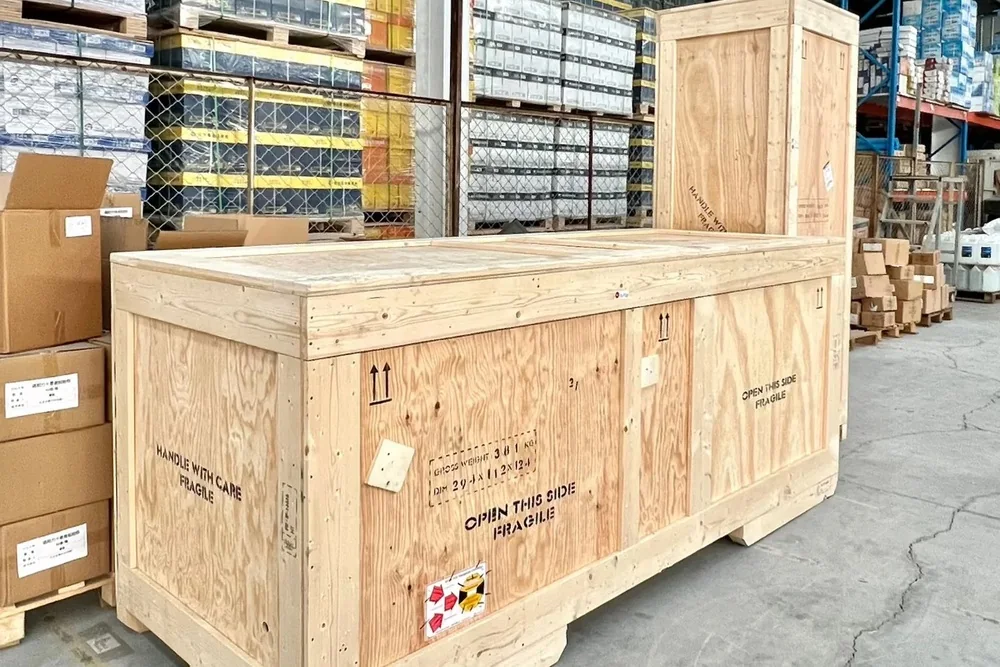
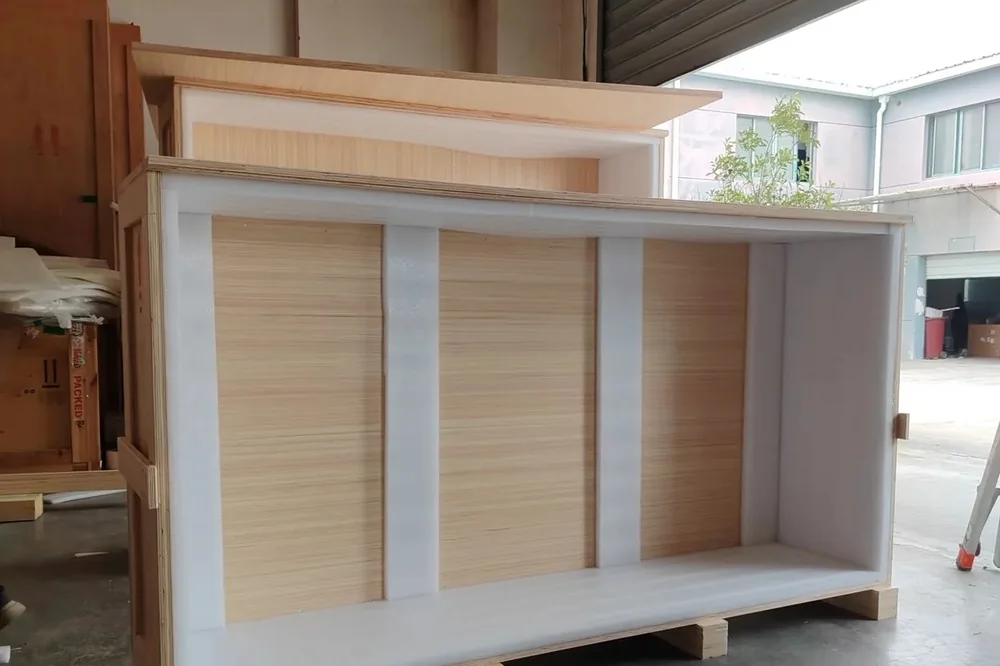
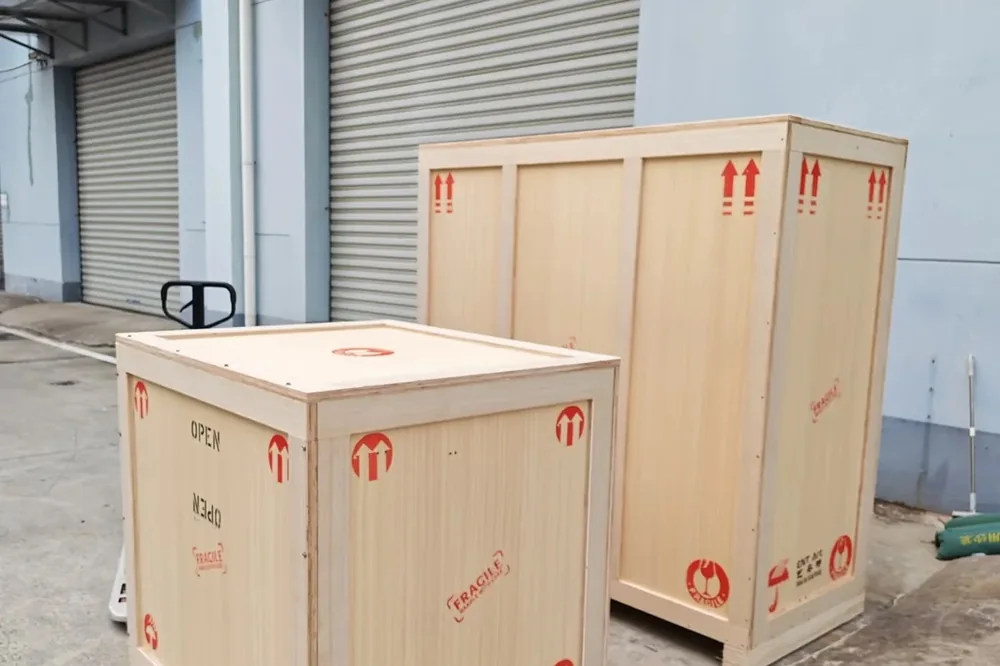
The same three steps stand behind every container we send to Netherlands. These are our own warehouse photographs, not stock images.
01 · The one decision
A full container or an LCL consignment?
Rotterdam is the highest-frequency European gateway for Chinese cargo, which makes the sailing easy to find and the LCL consolidations genuinely frequent. The decision is the ordinary volume one.
- Your packed volume passes about 15 m³; a 20 ft loads 28–33 m³ of crated furniture.
- You are furnishing a whole house or a set of units: 45–70 m³, which is a 40 ft high-cube.
- You are distributing onward into Germany, Belgium or France and want one customs entry at the gateway.
- The order includes marble, sintered stone or solid-timber slabs that should be handled once.
LCL territory
under 15 m³
One 20 ft container
30 m³ loaded
One 40 ft high-cube
68 m³ loaded
A three-seat sofa carton is 1.6–2.2 m³; four stacked dining chairs 0.6–0.9 m³; a knock-down wardrobe 0.5–0.8 m³. Send the list and we return the packed volume per line.
Rotterdam is often the cheapest and most frequent discharge for the whole of north-west Europe, including southern Germany and northern France. Where your address is inland, compare a Rotterdam entry plus trucking against a direct call at your national port — the gateway frequently wins.
02
What does it cost to ship furniture to Netherlands?
Every line that appears between the ex-works price and the furniture standing in the room. Ranges, not promises.
- Goods, ex-works Foshan USD 32,000
- Export packing and consolidationAbout USD 30 per m³ USD 1,950
- Ocean freight, 40 ft HCMid-point of the September 2026 band USD 4,550
- Marine insuranceAbout 0.5% of goods plus freight USD 183
- Customs duty0% on headings 9401 and 9403 nil
- Dutch import VAT (21%)Deferred to your return under an Article 23 licence — net zero at the border USD 7,676
- Delivery, unload and assemblyIndicative; access decides it USD 1,500
One basket, priced into all eleven destinations, so the bars are comparable. The duty and tax block is what actually changes — as a share of the goods value, Netherlands at 24.0%, against 9.2% into Singapore and 50.0% into the United States.
| Line | Indicative | Notes |
|---|---|---|
| Ocean freight, 20 ft | USD 2,615–3,196 | Shenzhen to Rotterdam |
| Ocean freight, 40 ft HC | USD 4,095–5,005 | The same sailing; about twice the volume for well under twice the price |
| LCL ocean freight | About USD 35 per m³ | Before destination charges; all-in commonly USD 180–350 per m³ on small consignments |
| LCL destination charges | EUR 300–700 per consignment | Terminal handling, deconsolidation and the customs entry — fixed, not per m³ |
| Export packing and consolidation | About USD 30 per m³ | Re-crating, bracing, labelling, packing list |
| Marine insurance | About 0.5% of insured value | On goods plus freight |
| Customs duty | 0% on 9401 and 9403 | 3.7% on mattresses under 9404; no anti-dumping duty on Chinese furniture |
| Dutch import VAT | 21%, or deferred | With an Article 23 licence it is declared on the return as input and output — net zero cash at the border |
| Delivery, unload and assembly | Quoted per address | Canal-house stairs and hoisting are a specialist job and priced as one |
Indicative landed cost, Foshan to a Dutch address, September 2026. Ocean freight moves monthly — confirm at booking.
03 · Use this on us too
The fourteen lines a door-to-door quotation has to show.
Nearly every bad shipping story on this route starts with a quotation that was shorter than this list. Paste it into your next enquiry and ask for a price against each line. A forwarder who will not break the price out is quoting you a number, not a service.
- Inland move, factory to warehousePer supplier, or stated as waived. Buyers are caught by this line more than any other.
- Warehouse receipt and check-inCounted against the packing list, photographed, with the free storage days and the daily rate afterwards.
- Re-packing and cratingWhich items get closed crates, which get open frames, which stay in cartons — and the price for each.
- Timber treatment and the IPPC markTreatment, marking and the certificate, priced separately from the crate.
- Measured packed volume, line by lineThe m³ you are billed for, with the measurements it came from.
- Export declaration and certificate of originIncluding who files it and what it costs if the certificate is issued late.
- Ocean freight, with the surcharges namedBase rate plus each surcharge spelled out, and how long the rate is held.
- Marine insuranceThe premium, the deductible, and what the fragile-goods exclusion actually excludes.
- Destination terminal and deconsolidationTerminal handling, deconsolidation, and the free days before storage starts.
- Customs entryWho is importer of record, what value is declared, and whether duty and tax are inside the price or outside it.
- DeliveryVehicle size, kerbside or room of choice, stairs and lifts, waiting time, and the radius the price covers.
- Assembly and packaging removalBoth, or neither, but in writing. A container leaves roughly a tonne of crate and carton behind.
- Article 23 defermentWhether import VAT is deferred on the entry, and whose licence carries it.
- Rotterdam terminal chargesTerminal handling and the free days before storage starts.
Send us the same list. We answer it line by line, in writing, before you pay anything.
04
How long does it take, week by week?
From the deposit to the last crate leaving your drive. The sea leg is the part nobody can compress.
- Foshan Consolidation warehouse, all suppliers
- Yantian / Nansha Load port, Shenzhen or Guangzhou day 0
- Singapore Usual transhipment call day 5
- Cape of Good Hope Suez is not in use on this lane day 16
- Rotterdam Arrival; Europe’s highest-frequency gateway day 28
Rotterdam is usually the first north-west European call on an Asia–Europe string, which is why a Dutch box often lands a few days before the same vessel reaches Hamburg or Felixstowe. For inland European addresses that head start is frequently worth more than the national port.
- Week 0Collected and crated
Pieces from each factory collected at one Foshan warehouse, checked against the specification and rebuilt into braced timber crates.
- Week 6–10Inspection and loading
Every item photographed against the spec; the balance falls due after you approve the report. If you are clearing under Article 23, the licence details go on the file now.
- Week 10–15At sea
25–32 days Shenzhen to Rotterdam on Cape of Good Hope routing. Tracking shared weekly.
- Week 15–16Customs clearance
Declaration lodged by your broker. With an Article 23 licence the 21% VAT is deferred to your return rather than paid at the border. EORI required.
- Week 16–17Delivery and carry-in
Delivery booked to the address, crates opened, pieces carried in and assembled, packaging taken away the same day.
05
Duty, tax and clearance into Netherlands
The Dutch duty position is the same as the rest of the EU. What is different is the cash position, and for an importer of any size that is the number that matters.
A VAT-registered business with an Article 23 deferment licence does not pay the 21% import VAT at the border. It is recorded on the periodic return as both input and output tax, netting to zero. On a USD 36,000 landed value that is about EUR 7,000 of working capital that never leaves your account.
Seats under 9401 and furniture under 9403 carry 0% third-country duty; mattresses under 9404 carry 3.7%. No EU anti-dumping measure applies to Chinese furniture. The classification decides it, so the codes belong on the quotation.
A great deal of furniture bound for Germany, Belgium and northern France clears at Rotterdam and trucks onward. If you are distributing rather than furnishing one address, the entry point is a commercial decision, not a geographic one.
A non-Dutch company can use a fiscal representative to hold the Article 23 licence. We are not a broker or a fiscal representative: we supply the codes, packed volume per line and documents early enough to be checked.
06
Clearance is not delivery. What happens at the door.
Dutch addresses are short runs from Rotterdam. The complication is the buildings, not the distance.
Narrow stairs and a hoist beam are normal in Amsterdam and Utrecht. Hoisting is a specialist job with its own permit and lead time, arranged before the container sails.
Dutch city centres are built against large vehicles. The last two hundred metres often decides the truck.
Crates opened outside, pieces carried in, beds and tables assembled and positioned by room against the packing list.
Timber, cardboard and wrap leave with the crew the same day rather than filling the street.
07 · What arrival looks like
Photographs from the research file.
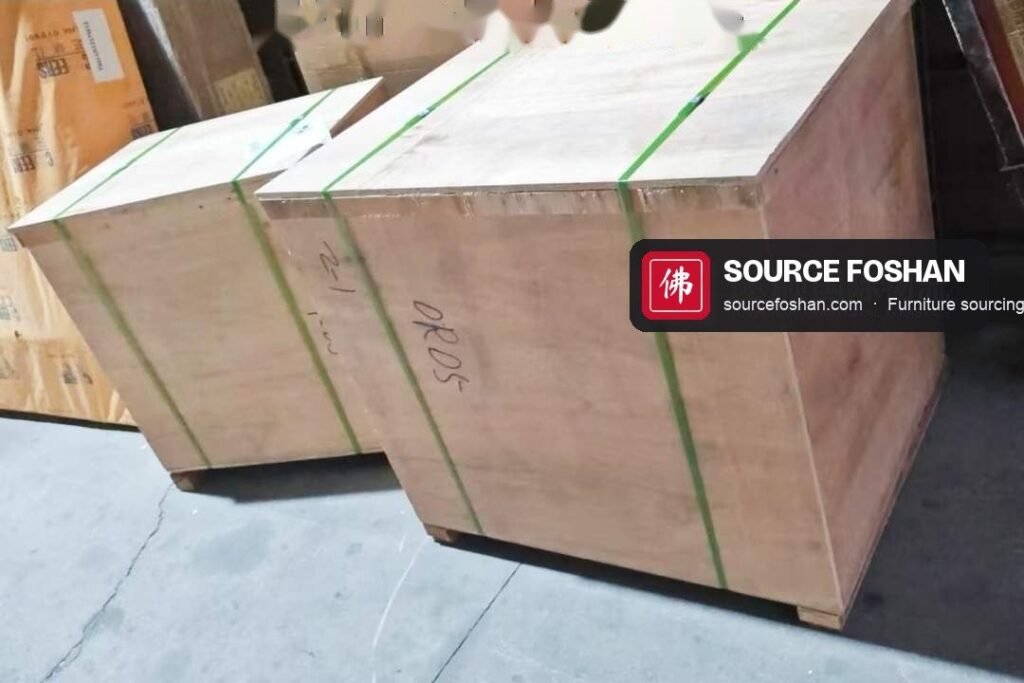
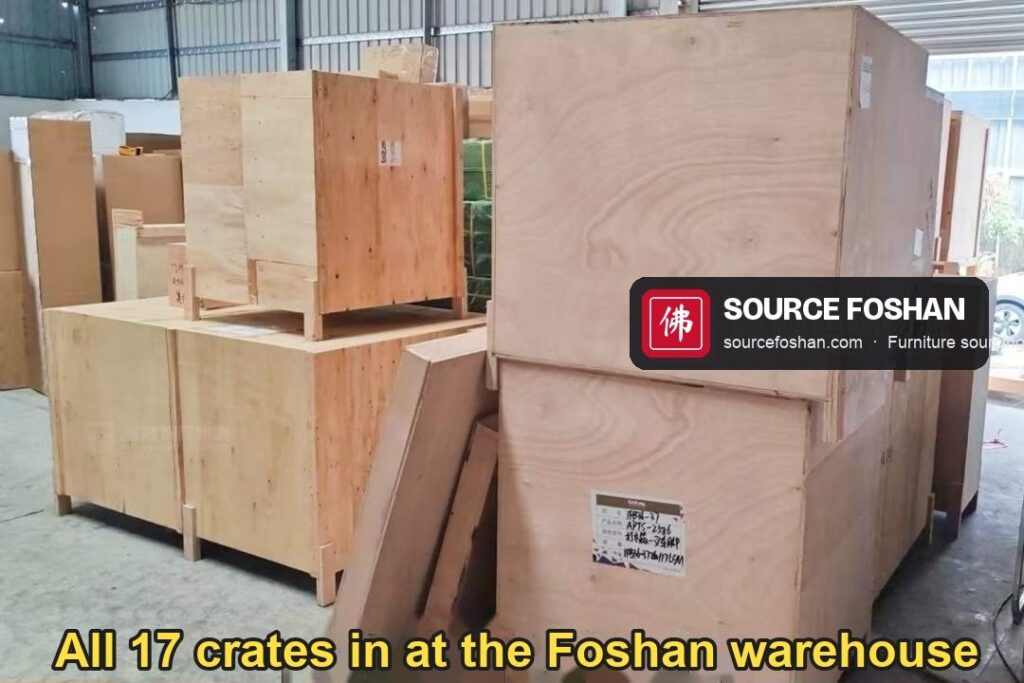
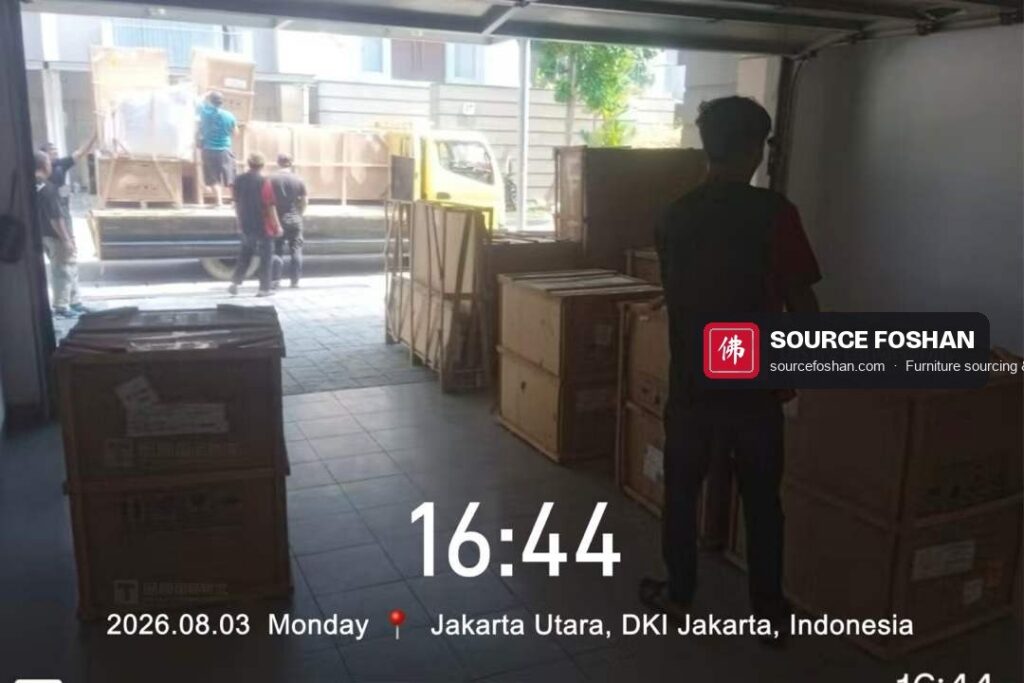
These are China-end photographs from the same September 2026 research file — other people’s consignments, cleared for publication. There is no separate photographic record for the Netherlands lane in that file, so rather than pad this page with stock images we show the packing stage that decides whether a shipment to Netherlands arrives intact. Our own delivery photographs are further down, under case notes.
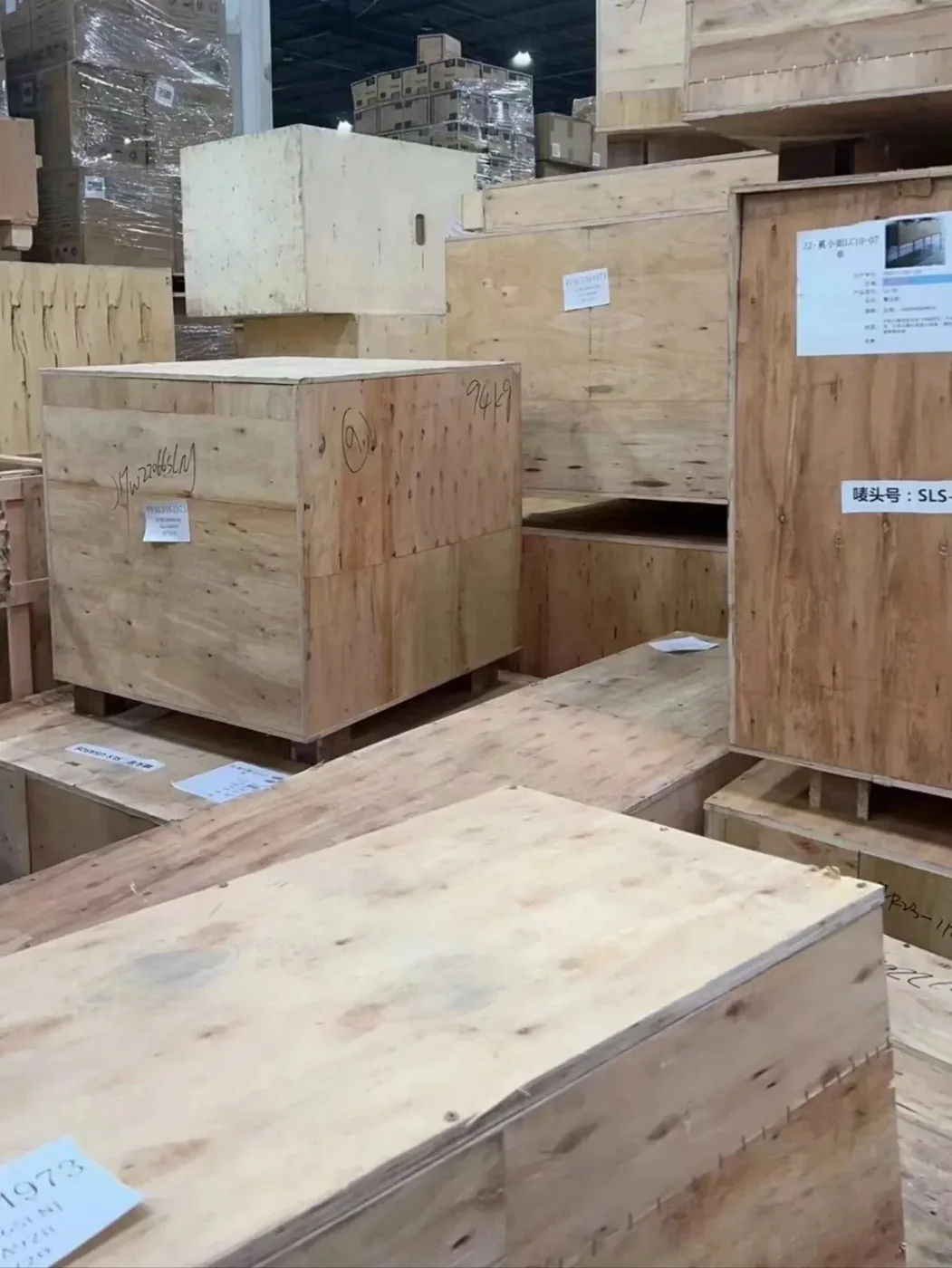
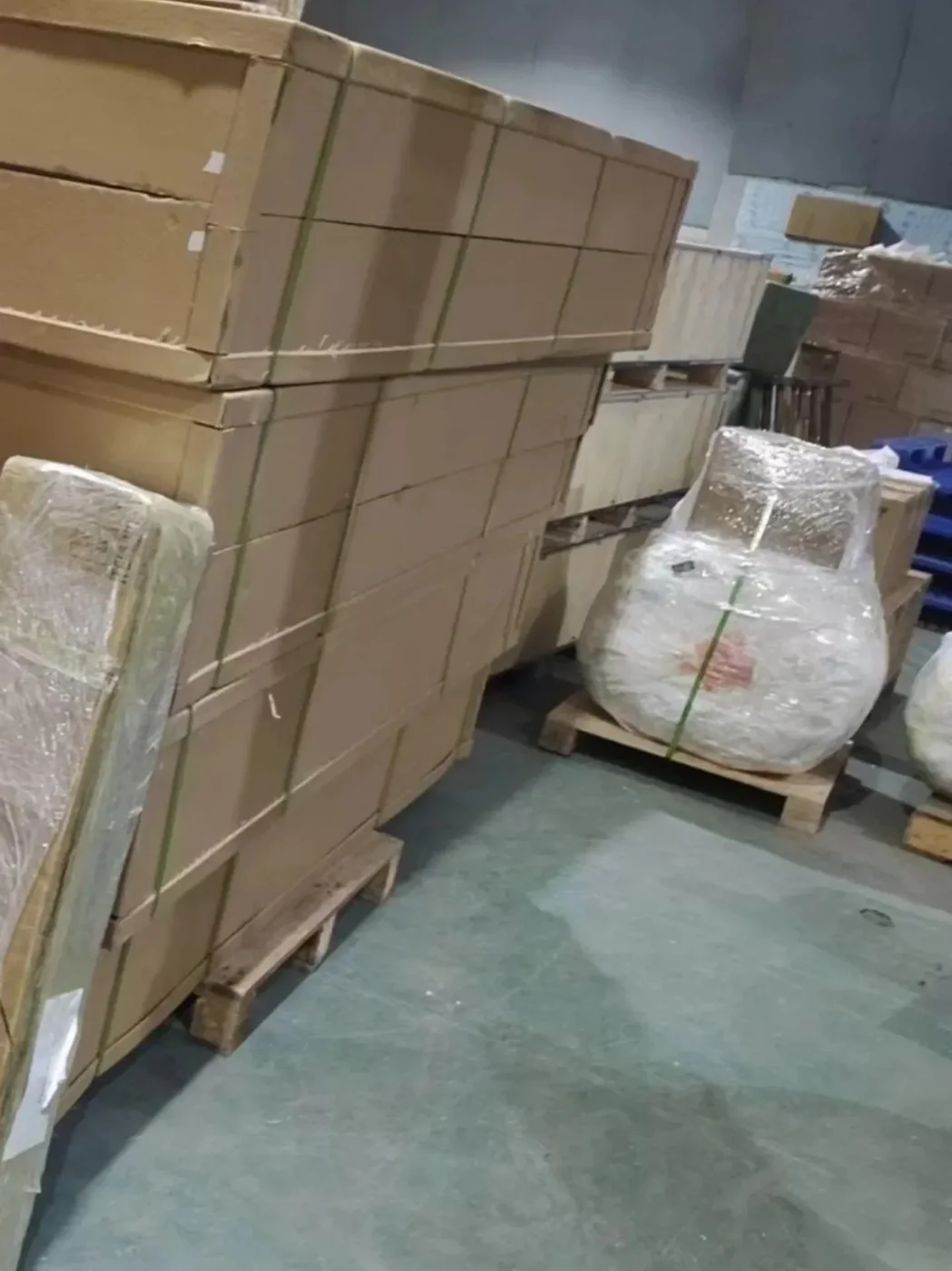
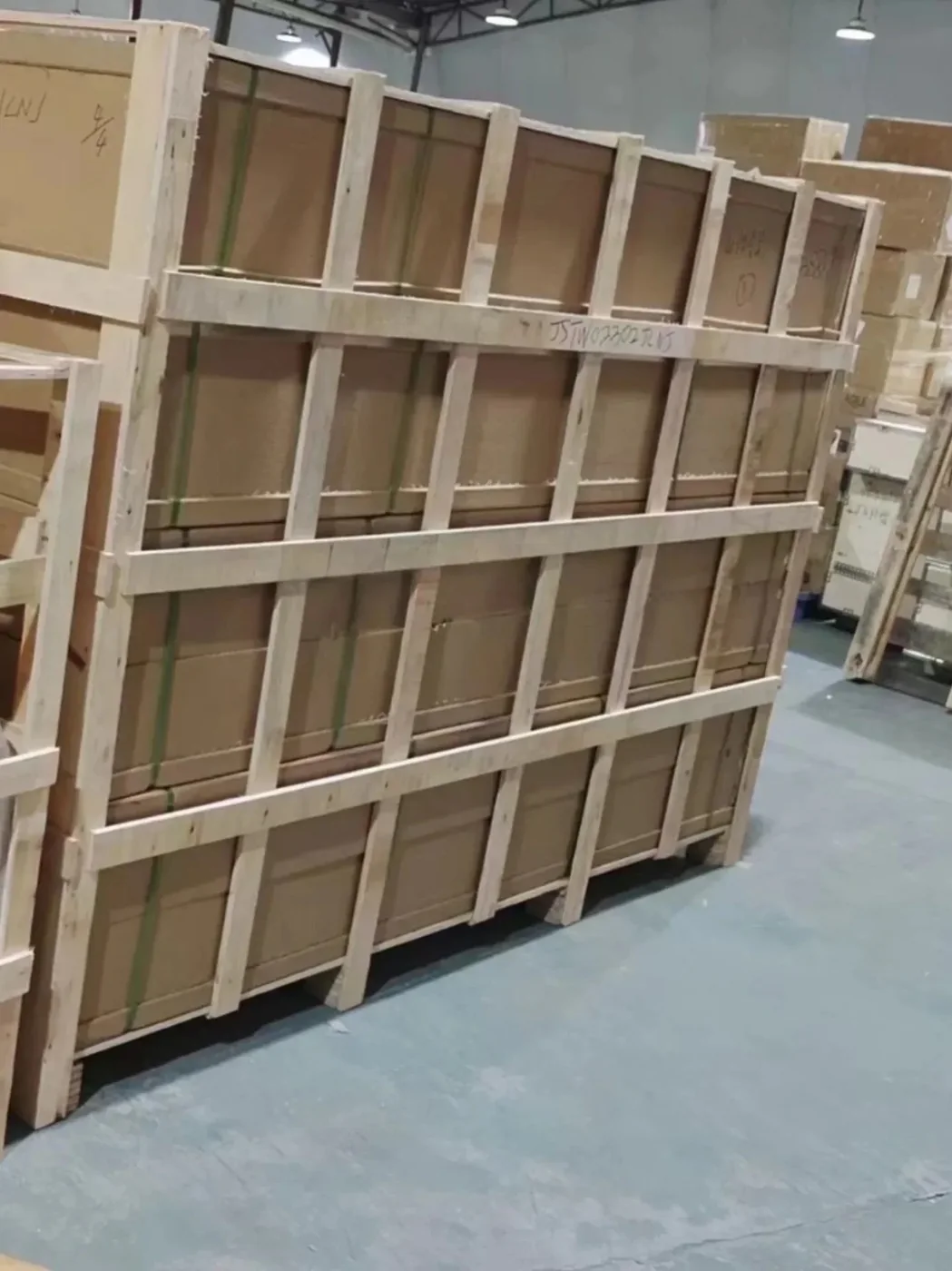
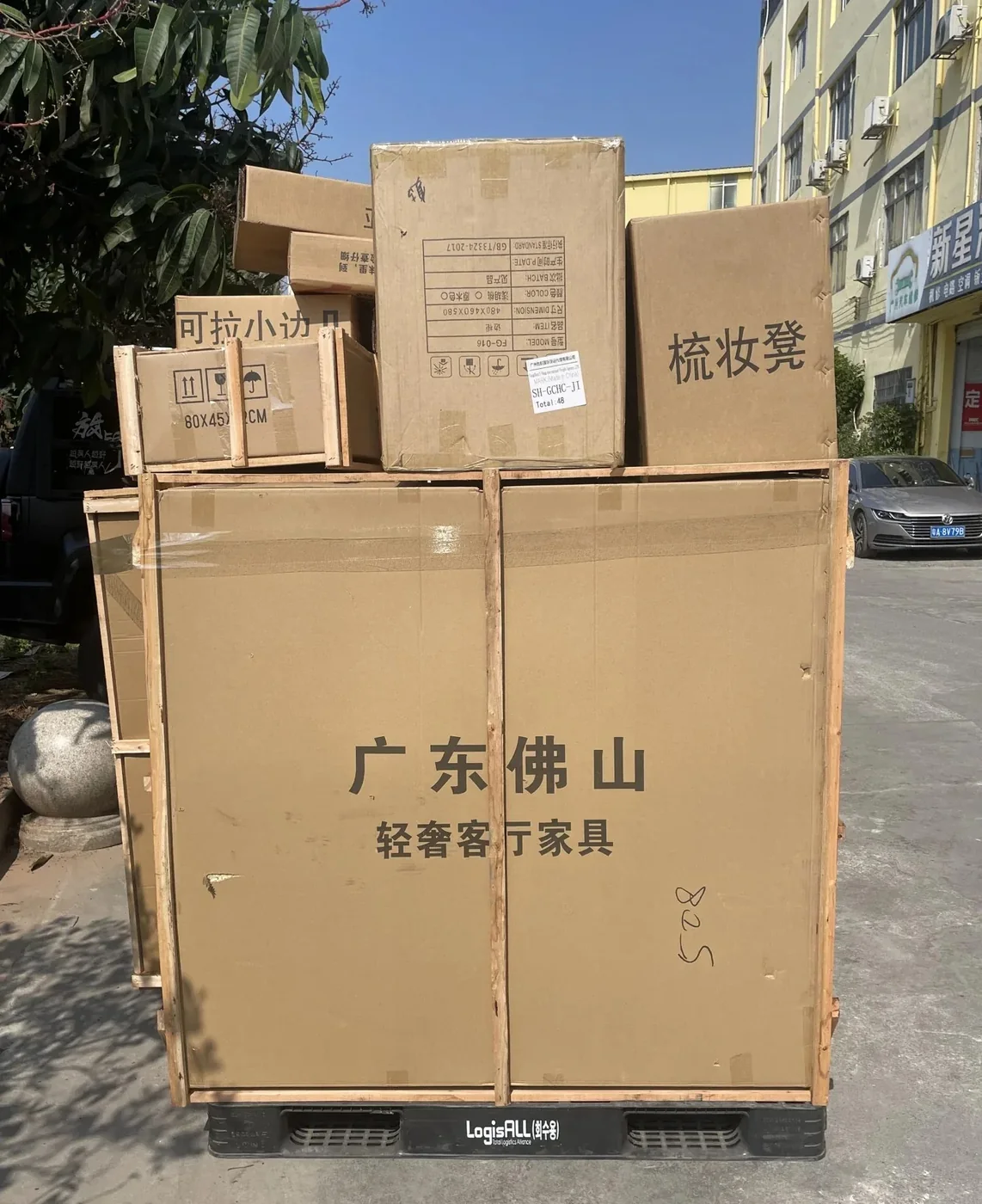
Published with the rights holder’s permission. Faces, house numbers, vehicle plates and third-party company marks have been cropped or redacted; nothing else in these frames has been altered.
08 · Field notes
What goes wrong, in the words of people who have already done it
Compiled in September 2026 from first-hand Chinese-language notes on export packing, consolidation and timber treatment, cross-read against our own warehouse files. The left column is what shippers reported going wrong; the right column is what we do about it.
-
The trap
A quote priced per m³ before anyone has measured anything.
What we doWe measure and photograph every line at the warehouse and send the packed dimensions before you pay. Knock-down pieces and voids filled with soft goods are where 15 m³ becomes 12.
-
The trap
Solid-timber crates shipped without treatment or an IPPC mark.
What we doCrates are treated and marked before loading, or built from plywood, which is outside the rule. Untreated timber is the one packing mistake that can send a container back.
-
The trap
A treatment certificate that has expired, or that does not match the cargo.
What we doThe certificate is issued from the final packing list after loading, and timed close to the sailing. Certificates have a short life and a mismatched pallet count is enough to hold the box.
-
The trap
Packaging changed after treatment.
What we doAll crating is finished before treatment. Swapping a crate afterwards voids it, and nobody notices until the container is at the far end.
-
The trap
Bark, knots or insect holes on otherwise treated timber.
What we doCrate timber is debarked and inspected. Treated wood still fails inspection if it carries bark.
-
The trap
Crates nailed shut, then prised open by customs.
What we doLids are screwed, not nailed, so an inspection can be closed again properly rather than re-taped by a stranger.
09 · The honest version
When a Dutch import is not worth it
Rotterdam is the easiest European entry we use, which makes the limits unusually specific.
- You cannot get an Article 23 licence. Without it you pay 21% import VAT in cash at the border and wait to reclaim it — about EUR 7,000 on a container of furniture. A private buyer or an unregistered entity should weigh that carefully.
- Under about 15 m³. Dutch LCL all-in commonly lands at USD 180–350 per cubic metre once destination charges are counted, against about USD 35 for the sea leg alone. The headline rate is not the number to plan on.
- An Amsterdam canal house with no hoisting permit. Hoisting is a specialist job with its own permit and lead time. If it cannot be arranged, some pieces simply will not enter the building.
- You only need one or two pieces. The frequency of Rotterdam consolidations makes small shipments easy to arrange, which is not the same as making them worth arranging.
For an importer with an Article 23 licence distributing into north-west Europe, this is the strongest route on the site. Germany is the comparison worth running if the goods stay in one country.
FAQ
Shipping furniture to Netherlands, answered.
What is an Article 23 licence and why does it matter?
It is a Dutch import VAT deferment licence. Without it you pay 21% import VAT at the border and reclaim it later. With it, the VAT is recorded on your periodic return as both input and output tax and nets to zero, so no cash leaves your account at all. On a container of furniture that is several thousand euros of working capital, which is the main reason so much European-bound cargo clears through Rotterdam. A non-Dutch company can hold one through a fiscal representative.
What duty applies to furniture from China to the Netherlands?
Seats under heading 9401 and furniture under 9403 carry 0% third-country duty into the EU; mattresses under 9404 carry 3.7%. There is no EU anti-dumping measure on Chinese furniture, seating or mattresses. The heading decides it, so the commodity codes should be on the quotation and checked by your broker before the container is booked.
How long does furniture take from China to the Netherlands?
Twenty-five to thirty-two days port to port from Shenzhen to Rotterdam on current Cape of Good Hope routing, and twenty-six to thirty-six days as an LCL consignment. Add two to four weeks of production and consolidation before the sailing and about two weeks for clearance and a delivery booking. Door to door, a typical order runs fifteen to seventeen weeks from deposit.
Can I clear at Rotterdam and deliver to Germany or Belgium?
Yes, and many importers do. Rotterdam has the highest service frequency for Chinese cargo in Europe, so a sailing is easier to find and the onward trucking network is dense. For an address in southern Germany or northern France it is worth comparing a Rotterdam entry plus road against waiting for a call at your own national port — the gateway often wins on landed time as well as cost.
Should I ship LCL or a full container to the Netherlands?
Below about 15 m³, LCL — and Rotterdam has frequent consolidations, so the wait is shorter than on thinner lanes. Above 15 m³ a 20 ft container is usually cheaper per cubic metre and safer for stone and solid timber. Ask for the all-in landed LCL figure rather than the ocean rate: Dutch LCL commonly lands at USD 180–350 per cubic metre once destination charges are counted, against about USD 35 for the sea leg alone.
Does my crate need to be fumigated, and how long is the certificate valid?
Only solid-timber packaging needs treatment, and the certificate has a short life — commonly about three weeks — so it is timed close to the sailing rather than issued early. Plywood and other engineered boards are outside the rule entirely, which is why we build most crates from plywood and reserve solid timber for loads that genuinely need it. Treatment is applied before the crate is closed; swapping packaging afterwards voids it, and nobody discovers that until the container is at the far end.
How is LCL volume measured, and how do I know I am not paying for air?
Every line is measured and photographed at the warehouse and the packed dimensions are sent to you before you pay. Volume is where LCL quotations go wrong: a timber frame adds roughly a third to what it protects, loose bulky items are billed on the space they occupy, and knock-down construction with the voids inside wardrobes and sofas filled can take 15 m³ down to 12. That is a whole price band on most lanes.
What does proper export crating actually look like?
Board thickness follows the weight inside: roughly 15–18 mm plywood for pieces under 100 kg, 20 mm and up with steel strapping from 100 to 500 kg, and a framed structure on forklift skids above that. Inside, 2–3 cm of clearance filled with cushioning, so the piece cannot move but is not compressed. Lids are screwed rather than nailed, so a customs inspection can be closed again properly. A crate takes three to seven days from an approved drawing.
Send your list and your Netherlands address
Quantities, rooms or a rough list are enough. You get compared factory options, the packed volume, the container call and a landed estimate within one business day.
Fields marked are required.
No spam, no obligation. Replies come from the sourcing team in Foshan, usually within one business day.
Sources & further reading
Where these figures come from.
- Sino Shipping — Shipping from China to the Netherlands — FCL and LCL rate ranges and port-to-port transit times to Rotterdam, September 2026
- Belastingdienst — Article 23 import VAT deferment — The deferment licence and how import VAT is declared
- European Commission — EU Customs Tariff (TARIC) — Third-country duty rates for Chapter 94 headings
Ocean freight is a spot market and moves monthly; duty and tax rules change without notice. Treat every figure here as a starting point and confirm it at booking with your broker.