Foshan buying guide / Remote orders
How to Buy Furniture from Foshan, China: The Full Process from Floor Plan to Delivery
A seven-stage route from your floor plan to destination handover: the records to receive, decisions to approve, costs to separate and timing to confirm before you order.
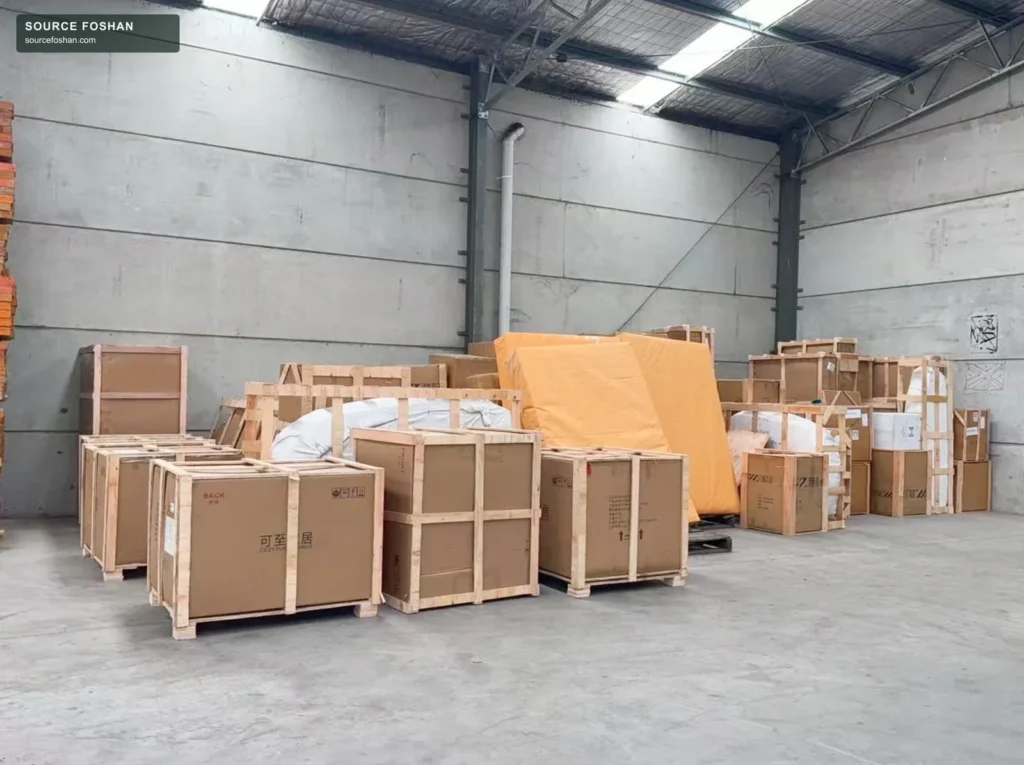
A practical buying sequence / reviewed October 2026
You buy furniture from Foshan, China in seven stages: define the room-by-room brief; compare itemised quotes; approve drawings and samples; sign the order and pay the agreed deposit; produce and inspect; consolidate and release; then ship, clear and receive. Each approval should identify the item, specification revision, responsible person and next payment or shipment decision.
For an initial custom-order programme, plan around 12–24 weeks from brief to destination handover, before contingency. A complete small brief may support a 3–5 working-day initial quote target if confirmed; custom packages can take longer. A 30% deposit and 25–45-day production period are possible planning examples. They do not create a worldwide 25–45-day door-to-door promise.
Timing and goods budgets below are planning allowances unless attributed to a named supplier. The signed quotation, purchase order and booked route control your actual order.
How to buy furniture from Foshan: the 7-step process
For a remote Foshan furniture order, use these seven stages in order and retain the named documents. The allowances describe a planning sequence; samples, supplier schedules, compliance work and destination handling need confirmation. Do not release a repeat batch from an unapproved sample or treat a packing photograph as an inspection sign-off.
- 01
Define the brief
1–3 working days for buyer preparation- Buyer sends
- Floor plan, room list, quantities, references, destination and budget currency.
- Record to receive
- A scoped room-by-room item schedule and list of missing information.
- Buyer confirms
- Confirm what is included, who measures the site and who approves each item.
- 02
Compare itemised quotations
3–10 working days as a planning allowance- Buyer sends
- The same dimensions, materials and quantity for each supplier.
- Record to receive
- Compared quote with model codes, unit prices, MOQ, exclusions, validity and production assumptions.
- Buyer confirms
- Select options; identify service, packing, freight and tax lines separately.
- 03
Approve drawings and samples
10–15 working days for a straightforward round; courier and revisions extra- Buyer sends
- Site-verified measurements, finish/fabric choices and approval comments.
- Record to receive
- Current drawings, coded samples and an approval register; a render only if commissioned.
- Buyer confirms
- Sign off the exact revision. A visual image alone does not approve construction.
- 04
Sign the order and fund the deposit
1–3 working days after the terms are agreed- Buyer sends
- Signed PO/contract, correct legal buyer and independently verified bank details.
- Record to receive
- Proforma invoice, supplier acknowledgements and an agreed payment/release schedule.
- Buyer confirms
- Pay the contracted deposit; 30% is an example to negotiate, not a universal rule.
- 05
Produce and check the furniture
25–45 calendar days as a custom-order planning allowance- Buyer sends
- Approved drawings/materials, cleared deposit and written changes only.
- Record to receive
- Agreed production updates, inspection findings, corrections and reinspection evidence.
- Buyer confirms
- Review open issues and authorise the payment or hold decision required by the contract.
- 06
Consolidate and release the cargo
3–7 working days; rework and booking gaps extra- Buyer sends
- Receiving schedule, carton marks, packing requirements and destination scope.
- Record to receive
- Reconciled packing list, packed CBM/weights, loading records and export-document drafts.
- Buyer confirms
- Approve the cargo and documents; confirm who may release shipment.
- 07
Ship, clear and receive
21–56 calendar days ocean allowance plus 5–10 working days destination handling on suitable routes- Buyer sends
- Importer/broker details, address, delivery access and receiving contact.
- Record to receive
- Carrier documents, customs handover and the agreed local-delivery records.
- Buyer confirms
- Check quantities and condition at receipt, record exceptions and open claims promptly.
The combined allowances support a broad 12–24-week planning envelope on suitable routes. Long-haul services, new tooling, repeated samples, fitted cabinetry and customs examinations can extend it. Add a four-week contingency before a move-in or opening date that cannot shift.
Our furniture sourcing service coordinates the agreed supplier and order work. The quotation should state which checks, documents and destination services are included, rather than assuming every stage is covered by one fee.
How do I order furniture from China remotely using photos and floor plans?
Yes, remote sourcing is possible. Start with PDF plans, JPG/PNG references, a spreadsheet or a shared inspiration link. DWG/CAD files and hotel room-type drawings are useful for technical coordination; confirm file compatibility and the drawing scope at kickoff. Photos communicate appearance, while dimensions and material descriptions define what the supplier must make.
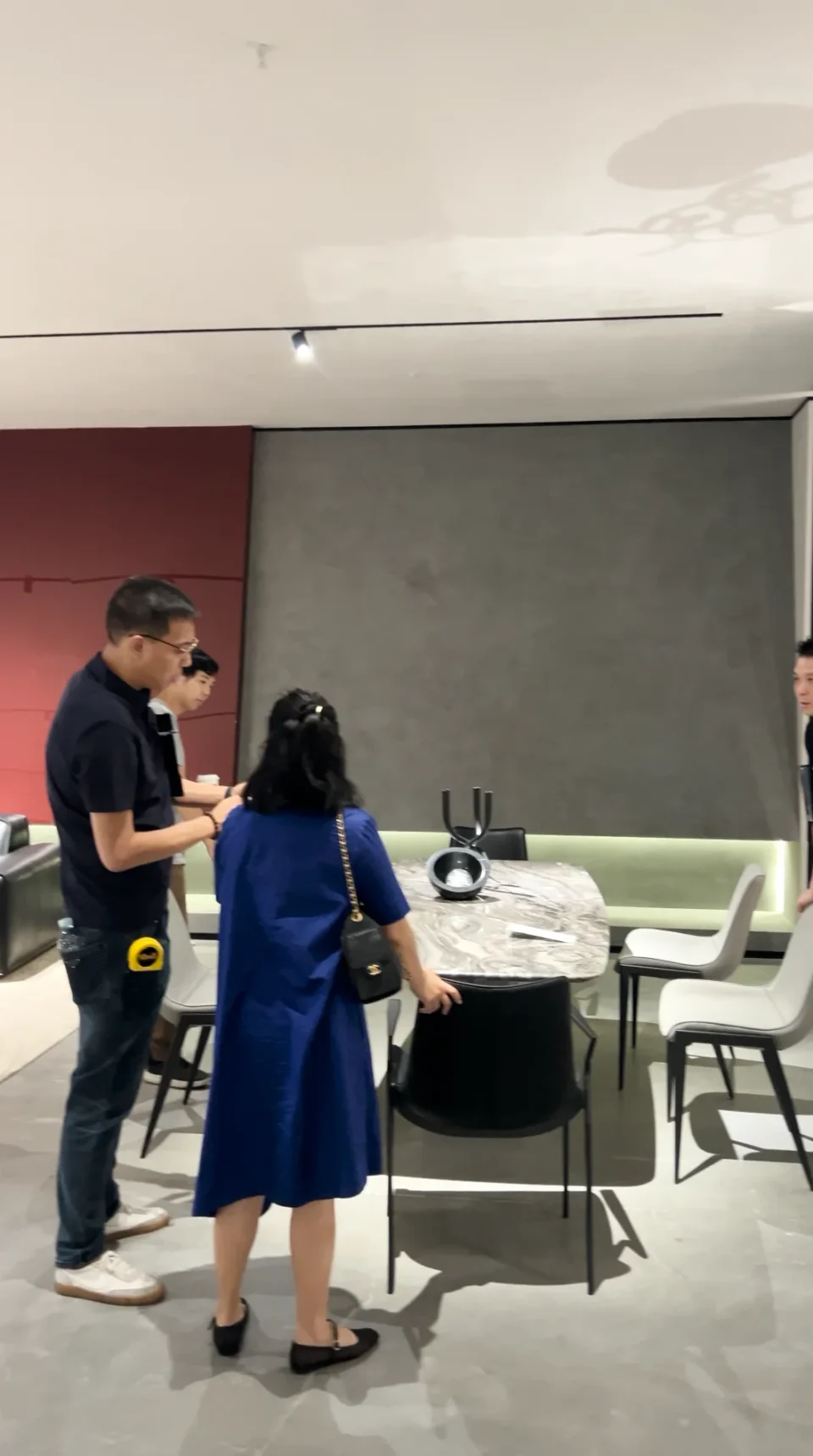
Mark the plan clearly.
- Net room dimensions, ceiling heights and fixed obstructions.
- Door, corridor, stair and lift access, including packed-piece clearances.
- Socket, switch and lighting positions relevant to furniture.
- Bed and mattress dimensions, sofa depth and left/right orientation.
- Unit type, item quantities and the person responsible for site measurements.
Keep one controlled list.
- Room code and unique item code.
- Drawing revision, W × D × H in millimetres.
- Material by component, finish and fabric references.
- Hardware, intended use and compliance requirements.
- Priority items, optional items, budget and destination date.
We use that brief to discuss a room-by-room schedule and supplier comparison. Ask for a dated proposal milestone. The 3–5 working-day target sometimes used for a complete initial brief is not a guarantee for a full custom-villa or hotel specification; allow 3–10 working days for a compared quote in the planning sequence above.
Drawings, renders and samples have different jobs.
A render helps you judge layout and style. A shop drawing controls dimensions, structure and interfaces. A physical sample helps you approve colour, texture and comfort. Agree any 3D design fee, output format, number of views, revision rounds, courier charges and fee-credit conditions before commissioning them. There is no automatic free-render or unlimited-revision entitlement.
For a custom repeat order, approve the first finished piece or sample unit before bulk release. Live calls should show your item code, drawing, actual measurements and requested operations; prerecorded footage does not verify your order. The remote sourcing approval guide explains how to record calls, samples, findings and decisions.
AN APPROVAL RECORD SHOULD ANSWER
Illustrative record structure, not a customer’s approved drawing or completed inspection.
What does it cost? USD goods budgets and value per container
The useful price is for a defined item. A sofa quotation needs the frame, foam, cover material, size, mechanism and packing scope; a wardrobe needs its panel, edging, hardware and assembly scope. Use the following illustrative goods allowances to prepare a brief, not as live factory, FOB or market-average prices.
| Item / example scope | Goods allowance | Confirm before comparing |
|---|---|---|
| Fabric sofa, about 2.1 m | $650–1,700 | Frame, foam, fabric, dimensions and packing. |
| Bed frame for 1500 × 2000 mm mattress | $280–850 | Outer size, supports, headboard and assembly. |
| Dining table, about 1400 × 800 mm | $260–900 | Top material, base, finish and protection. |
| Mattress, 1500 × 2000 × 250 mm | $160–450 | Construction, firmness, cover and required labels. |
| Freestanding wardrobe, about 1 m wide | $350–1,100 | Panel, hardware, fixings and anchoring requirements. |
| Outdoor two-chair-and-table set | $300–900 | Frame, corrosion protection, fabric and intended exposure. |
| Seven-piece bedroom basket* | $1,100–3,300 | Bed, mattress, two bedside tables, desk, chair and wardrobe. |
*An illustrative bedroom basket, not a complete hotel FF&E package or proof of hospitality performance. Hotel joinery, headboard interfaces, testing, fire requirements and installation may materially change the specification and cost.
For a full worked two-bedroom list, our whole-house and multi-unit package budget shows Good / Better / Premium quantities and totals. For a commercial brief, use the hotel furniture sourcing scope before assuming residential products will suit a hotel floor.
A container does not have a standard purchase value.
In the published Better two-bedroom model, one kit is USD 6,750 and an assumed 14 CBM, including optional allowances. One intact kit in a 20GP gives USD 6,750 of goods; four kits in a 40HQ give USD 27,000. That is arithmetic from a sample list, not a minimum order or a typical shipment value. A 40HQ filled with premium casegoods can have a very different invoice value from one carrying bulky sofas.
Compare the same delivery basis.
| Term | Cost and responsibility to clarify | Do not assume |
|---|---|---|
| EXW | Goods available at the named premises; arrange collection and a workable export-clearance structure. | Origin handling or export clearance included. |
| FCA / FOB | FCA handover at the named place; FOB onboard at the named origin port. Define the actual handover. | Ocean freight or destination clearance included. |
| CIF | Seller arranges the specified carriage and insurance to a named destination port; risk transfer and arrival costs are separate questions. | Import taxes, door delivery, comprehensive insurance or assembly included. |
| DDP | Seller undertakes import clearance and duties to the agreed destination under the rule, if legally feasible. | Unloading, room placement or installation included, or that any seller can act as importer everywhere. |
ICC explains why FCA can suit container handover better than FOB when a terminal receives the box before vessel loading. Have the broker and forwarder confirm the selected arrangement.
Source Foshan’s published quote-comparison guide describes a separately shown 3–5% sourcing fee for agreed services. Your offer controls the calculation basis, minimum/fixed charges and included work. Drawings, samples, inspection, storage, packing, freight, insurance, taxes and local delivery need explicit cost lines; an unquoted line is not zero.
For a repeat order across several homes, use our 20-apartment lead-time, MOQ and risk guide to connect supplier production slots with a pilot unit, carton allocation and phased shipment release.
What is the MOQ — can I order for one house or one hotel floor?
A single home or a small hotel floor can be discussed, provided suppliers accept the selected quantities and the delivered economics work. MOQ belongs to the specific model, colour, material and production setup. Consolidation combines accepted orders from several suppliers; it does not cancel a factory’s minimum or let one supplier’s sofa count satisfy another supplier’s chair minimum.
| Supplier / category | What its public page says | Limitation |
|---|---|---|
| Cozylife, Longjiang sofas and armchairs | One set can be accepted; customised logo, packing or design has a stated 20-set or 2 × 40HQ threshold. | Confirm the exact model and custom feature. |
| COOC, Foshan home furniture | One FAQ entry lists 3 pieces for regular designs and 20–50 for custom models. | The same page also gives container and 5/10-piece mixing rules. Obtain written clarification for your list. |
Sources: Cozylife FAQ and COOC FAQ. These are manufacturer statements, not independent verification, universal market rules or a Source Foshan promise to supply at those minimums.
For panel furniture, outdoor pieces and lighting, ask separately about stock availability, finish/fabric minimums, carton multiples and custom tooling. There is no verified “all categories, no MOQ” list. Similarly, the practical number of factories in a consolidation plan follows its receiving work, timing and charges; there is no useful universal maximum.
For less than a full container, request LCL terms with minimum billable volume and all destination fees. A forwarder may have a minimum charging unit even for a smaller item; do not confuse it with a furniture factory MOQ. Around 15–18 CBM is a sensible point to compare LCL and FCL quotes, not a guaranteed price crossover. Our whole-home service also explains how a separate first-room order differs from shipping a committed whole-home order in phases.
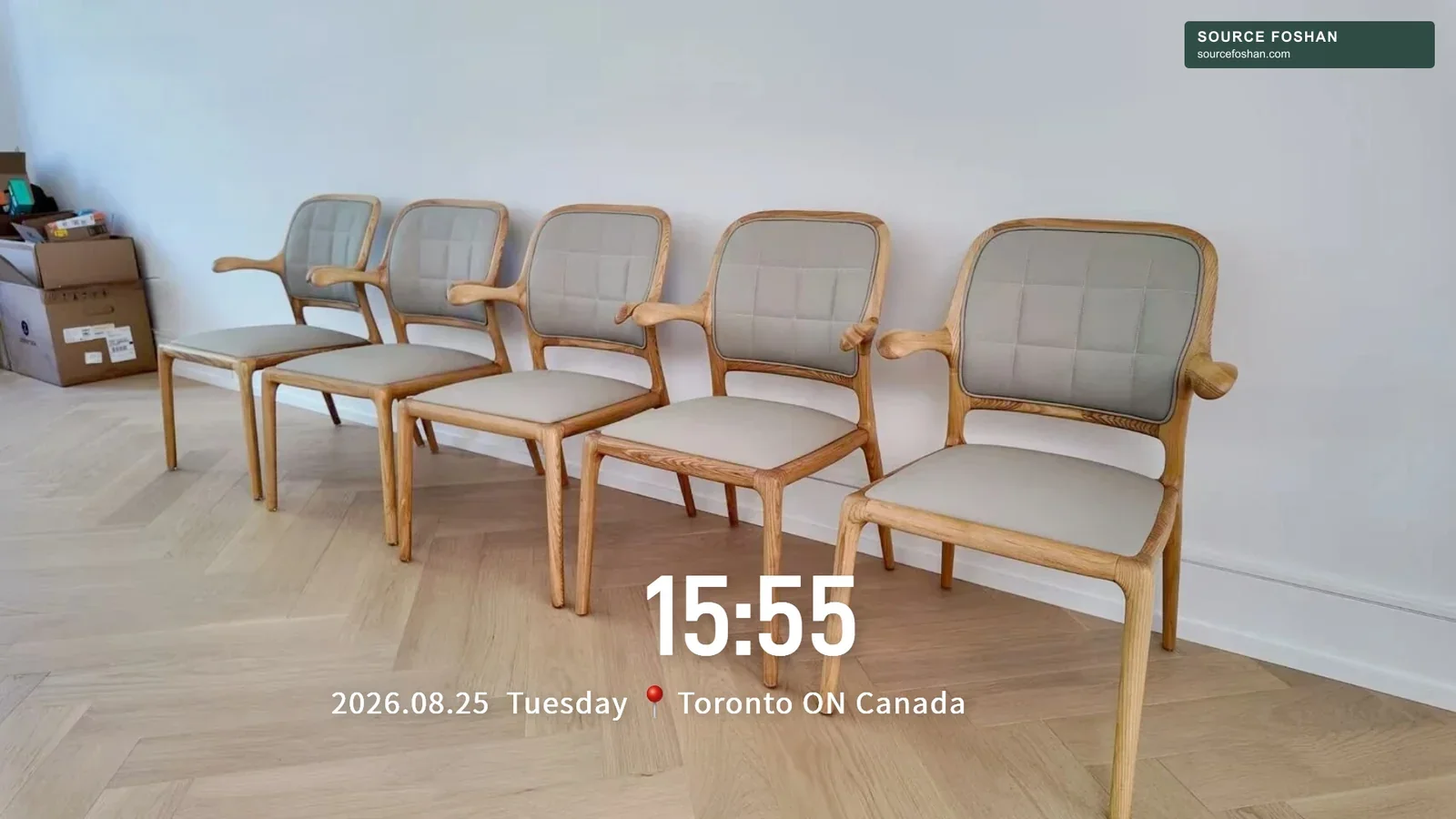
For a small quantity or a first retailer order, compare the service minimum, supplier MOQ and trial-order costs before committing.
How long does it take from order to delivery?
Separate brief preparation, approvals, production, cargo readiness, ocean transit and local delivery. “Production takes 35 days” does not mean a house will be furnished 35 days after the first enquiry. The seven-stage sequence above uses 25–45 calendar days for a straightforward custom production programme, with separate allowances for all other stages.
Supplier offers vary: Cozylife’s FAQ gives about 20–30 days for a 40HQ sofa order after deposit. That is a supplier-specific readiness statement, not international door-to-door transit. Custom cabinetry, a new prototype or a missing approved fabric can take longer; request a dated schedule by item and record what starts its clock.
| Destination | Ocean allowance | Additional leg / check |
|---|---|---|
| US West Coast, e.g. Los Angeles | 21–35 days | Customs, terminal release and inland delivery. |
| US East Coast, e.g. New York | 35–56 days | Service routing and inland destination. |
| Rotterdam | 35–56 days | Routing, import release and local transport. |
| Dubai / Jebel Ali | 21–35 days | Named port, consignee and final delivery. |
| Sydney | 21–35 days | Biosecurity/clearance and delivery booking. |
| Lagos | 42–63 days | Clearance and inland handling may extend the total. |
| Saudi port serving Riyadh | 28–42 days | Confirm Dammam or Jeddah and the inland leg; Riyadh is not an ocean port. |
Allow a further 5–10 working days for routine destination handling as an initial scenario, plus any specific inland leg, examinations, access bookings or installation programme. These inputs are not a carrier schedule or customs-service guarantee. Ask for a named port pair, vessel/service, cargo cut-off, transhipment plan and estimated arrival on the actual booking; Maersk’s China route finder is one carrier reference.
Ask each factory for its actual Lunar New Year closure, last material order, last collection and reopening dates. Public holidays do not define every workshop’s shutdown. Confirm exhibition-week appointment and production capacity rather than assuming every Canton Fair creates the same delay. Keep a four-week contingency before a firm move-in or opening date. Rush timing, cost and any compromise in scope need written agreement; a fee cannot guarantee an unavailable material or vessel slot.
When does each furniture lead-time clock actually start?
Put a start event and a shipment-ready event beside every supplier’s date. Stock, repeat upholstery and made-to-measure joinery have different dependencies. A paid deposit alone does not settle an unapproved drawing, unavailable fabric or missing site measurement.
| Order route | Confirm the start event | Confirm the factory/warehouse-ready event |
|---|---|---|
| Ready stock | Exact model, variant, quantity and condition reserved under written payment/collection terms. | Agreed checks, missing fittings, protection and packing completed; collection slot confirmed. A display sample is not an available stock lot. |
| Repeat upholstery | Cover/frame/size references, material availability, payment and production slot accepted. | Assembly, agreed appearance/function checks, corrections and packing completed. Sewing or frame completion alone is not shipment readiness. |
| New upholstery design | Drawings, sample/first-piece decision, materials, tooling arrangements and payment prerequisites cleared. | The approved revision produced, checked and packed. Sample development precedes repeat production and may require another approval round. |
| Custom cabinetry or other joinery | Site-verified dimensions, interfaces, hardware, finish and production drawings approved, with the agreed payment cleared. | Manufacture and agreed trial assembly/checks completed, corrections closed and labelled packs ready. Site installation remains a separate milestone. |
Request the baseline issue date, revision, responsible person and evidence behind each milestone. Record planned and actual dates for material receipt, first piece, inspection, rework/reinspection, warehouse receiving and release. The production-schedule guide shows how to distinguish accepted units from work in progress; its examples are illustrative, not your supplier’s committed programme.
Build the delivery forecast backwards from the usable date.
Identify the last supplier’s accepted, packed-ready date, then add the actual consolidation/check window, booking and cargo cut-off, carrier route, destination release and delivery/access arrangements. Overlap only stages that can actually run together. Ask for separate allowances for failed checks, buyer changes and holiday closures, and retain the original baseline when the forecast moves. A new sailing estimate does not erase an earlier missed factory milestone.
Keep ready stock’s reservation expiry and storage terms visible while custom pieces are produced. Obtain dated factory closure/restart and last-material-order information for Lunar New Year and busy periods; no universal workshop closure is established here. Use the carrier’s route and schedule tools against the actual ports and booking. The ocean allowances below remain planning inputs, not checked sailings or a door-to-door guarantee.
How does shipping work — 20ft vs 40ft container, and what fits inside?
Suppliers send completed, accepted goods to the agreed receiving point. The consolidation team reconciles item and carton codes, checks the agreed receiving scope, records packed dimensions and weights, and plans loading. One combined shipment still needs a traceable record for every supplier and item.
| Container | Internal capacity | Loading model | Example max payload | 14 CBM home kits / 6 CBM bedroom kits |
|---|---|---|---|---|
| 20GP | 33.2 CBM | 27 CBM | 28,130 kg | 1 / 4 |
| 40GP | 67.7 CBM | 57 CBM | 28,750 kg | 4 / 9 |
| 40HQ | 76.3 CBM | 65 CBM | 28,600 kg | 4 / 10 |
Internal capacity and payload are Hapag-Lloyd fleet examples: 20GP, 40GP, 40HQ. Loading allowances and kit sizes are this guide’s assumptions. Equipment, road/port limits, stacking and carton fit must be checked; volume division is not a stowage plan.
56 CBM of goods within a 65 CBM planning allowance.
Not to scale. Actual carton geometry, protection and weight determine whether the load works.Use packed length × width × height in metres, multiplied by carton quantity. Knock-down furniture can reduce cube but adds assembly work; assembled sofas and fragile tops restrict stacking. Compare actual carton lists rather than assuming a universal saving or that every house needs one 40HQ.
Wood packaging is a separate compliance question.
ISPM 15 covers regulated wood packaging, not the furniture’s product certification. Qualifying processed-wood exemptions and permitted treatment methods matter; “ISPM 15” is not another word for fumigation. Ask for the applicable marking, treatment/packing documentation and destination commodity requirements. Have the supplier quote crates, treatment and certificates where needed instead of inventing a fixed fee.
Compare origin receiving and export charges, ocean carriage, insurance, destination terminal/depot fees, brokerage, duty/tax, transport, unloading, room placement and assembly. Include storage, demurrage and detention terms. Our consolidation and shipping guide explains the handover; the delivery term must identify who handles import clearance and how the local receiving team is engaged.
What documents and payment terms should I expect?
The documents should connect the ordered item to the accepted specification, its carton and its shipping record. Ask which party prepares each file, when you receive it and who checks discrepancies before the deadline.
| Document | What it does | Who supplies / checks it |
|---|---|---|
| Proforma invoice + PO/contract | Defines the order, named parties, scope, price and payment conditions. | Contracting seller and buyer. |
| Approved schedule, drawings and samples | Records dimensions, materials, revisions and acceptance criteria. | Supplier/design team; named buyer approver. |
| Inspection and reinspection report | Records checks, coverage, findings, evidence and the release decision. | Agreed inspector; authorised release person. |
| Commercial invoice | States transaction values, quantities, parties, currency and sale terms. | Seller/exporter; broker reviews. |
| Packing list | Maps items and cartons to dimensions, weights and shipment totals. | Exporter/consolidation team; receiver reconciles. |
| Bill of lading / sea waybill | Records carriage and release arrangements for the shipment. | Carrier/forwarder; parties check consignee and release method. |
| Origin and wood-packaging records | Supports the applicable origin or packaging requirements. | Exporter and relevant authorised issuer/provider, where required. |
| Product compliance file and warranty | Shows applicable tests, labels, traceability and agreed remedies. | Manufacturer/lab and responsible importer; buyer reviews scope. |
A certificate of origin is not always the same form, and a fumigation certificate is not a mandatory universal attachment to every furniture shipment. CE, CARB/TSCA and BIFMA describe different regulatory or testing contexts. Request the file that applies to the exact product and destination, not a folder of unrelated logos.
30/70 is a negotiable schedule, not a safety mechanism by itself.
COOC publishes 30% in advance and 70% before loading, with an L/C-at-sight option. Cozylife publishes 30% deposit and balance before delivery, but 50% for a single-set order. Confirm your offer and payment method. “70% against a bill-of-lading copy” is a different arrangement; do not substitute it for pre-loading inspection and release terms.
For the contract, attach the specification and agree deposits, sample/development charges, inspection coverage, correction deadlines, release authority, cancellation/refund conditions, warranty scope and dispute process. Any retention or phased payment must be accepted in writing. A refundable deposit or free replacement freight cannot be assumed.
Pay the legal seller’s agreed business account and match the invoice, contract and beneficiary. If a bank account changes, verify it through an independent, previously confirmed channel before remitting. Ask the bank or payment provider about currencies, recipient/intermediary fees and the actual protection offered; do not assume a platform guarantees quality or recovery. See our supplier payment safety guide.
These are explicitly labelled working templates and a fictional filling example. They illustrate fields, calculations, defects and a hold decision; they are not a redacted customer invoice, a completed QC certificate or approval to ship.
How do I avoid common mistakes when sourcing from Foshan?
- Mistaking a showroom or trading office for a factory.Check the business licence and legal name in the official enterprise registry. Request a live workshop walk-through showing relevant machinery, current production and the item being discussed. Agree who actually makes each category; a reseller can still be useful if its role is disclosed.
- Comparing the same photo with different specifications.Write materials by component, fabric/leather coverage, foam, mechanisms, hardware and packing into each quote. Record upgrades and exclusions as separate lines.
- Assuming a size name is a measurement.“Queen”, “king” and “three-seater” do not approve dimensions. Record bed opening, mattress W × L × H, sofa depth, orientation and packed access dimensions in millimetres. Name the site-measurement owner.
- Collecting unrelated compliance badges.For US composite wood, review EPA TSCA Title VI requirements; covered upholstery also has CPSC flammability obligations. For UK domestic upholstery, check the applicable FFRs and 2025 amendments. For EU supply, confirm product obligations and the required fire-test scope; EN 1021 is not a universal import certificate. CE marking applies to specified product legislation, not automatically to every furniture item. Lighting and mattresses need their own review.
- Paying the balance against photos with no inspection scope.Agree dimensions, stability, operation, joinery/welds, finish, upholstery, hardware, quantities and packing checks. Define which pieces are inspected and any sampling plan. “AQL 2.5” alone does not state the sample size, critical-defect policy or full coverage.
- Losing control between QC and container sealing.Reconcile carton labels with the packing list, photograph protection and loading, record damage/open issues and confirm who authorises release. A sealed container does not prove the correct pieces were loaded.
- Arriving without a receiving or claim plan.Arrange access, people and assembly scope before delivery. Photograph cartons before opening, record unpacking and match item/PO/carton IDs. Notify the responsible supplier, carrier or insurer promptly under their actual deadlines; no single claim period covers all damage and defect cases.
The furniture inspection checklist helps you write the scope. If a finding fails, retain the original evidence, record correction and reinspection, and obtain the authorised release decision. Do not erase a failed result merely because a repair was proposed.

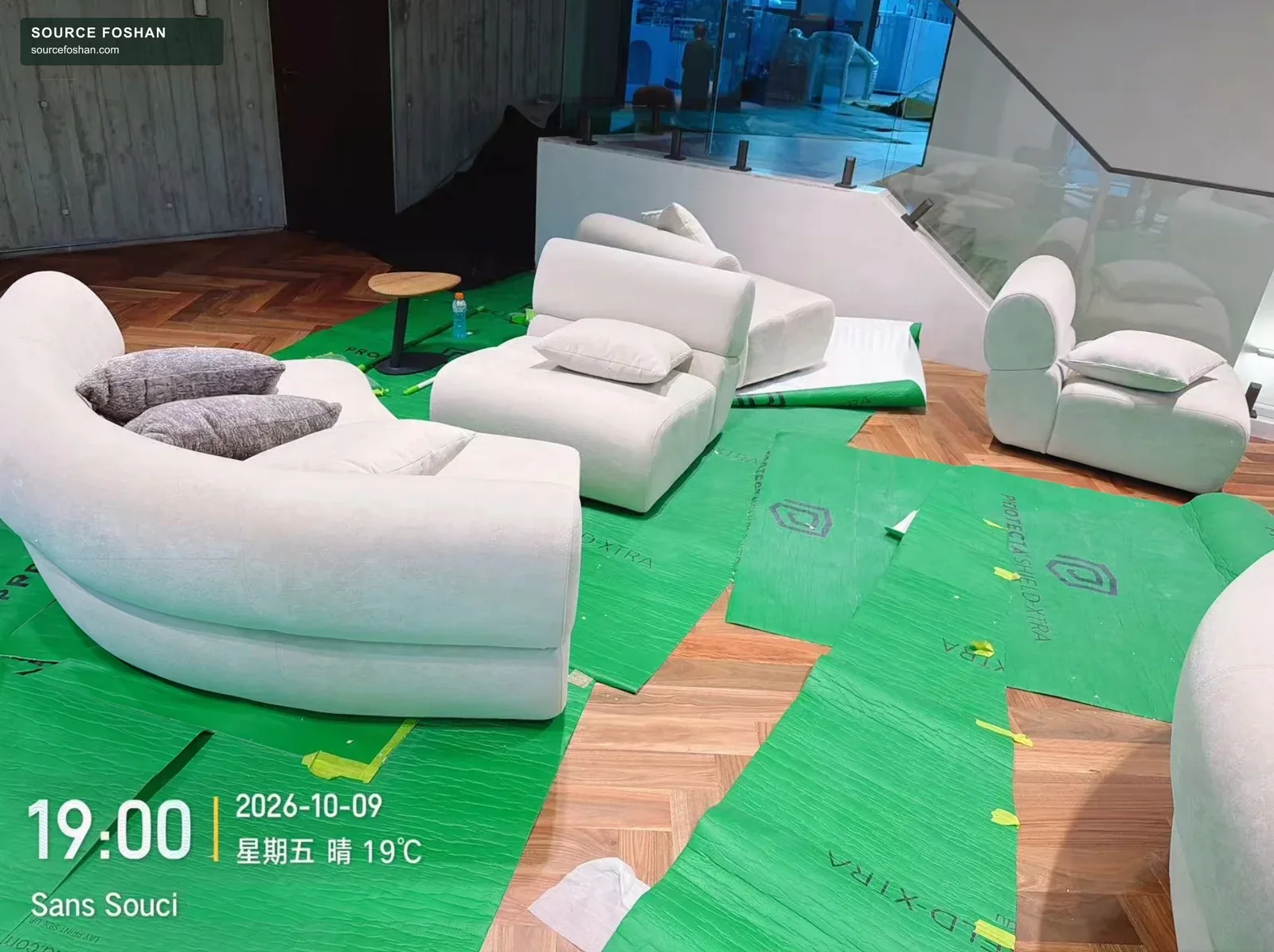
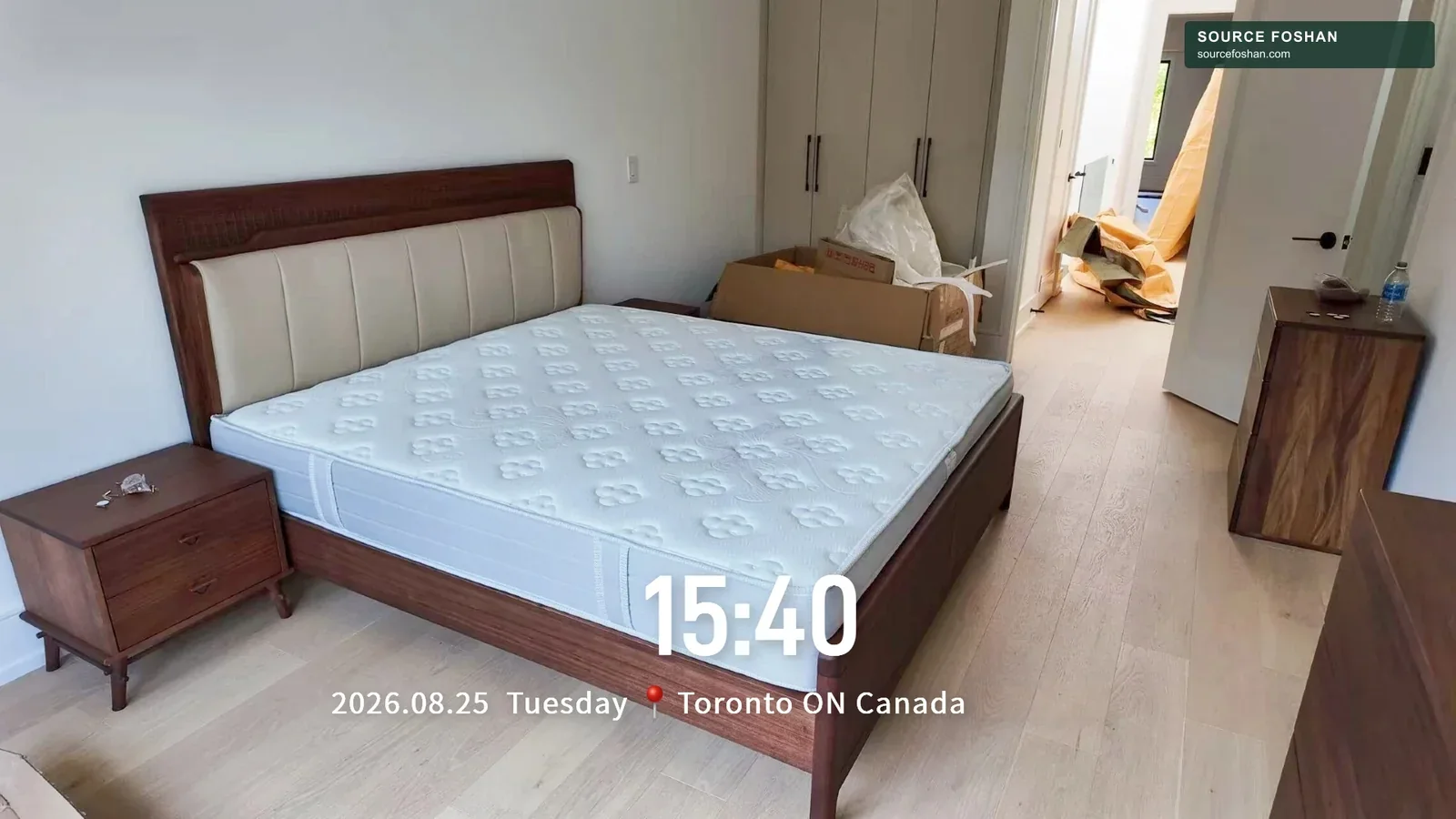
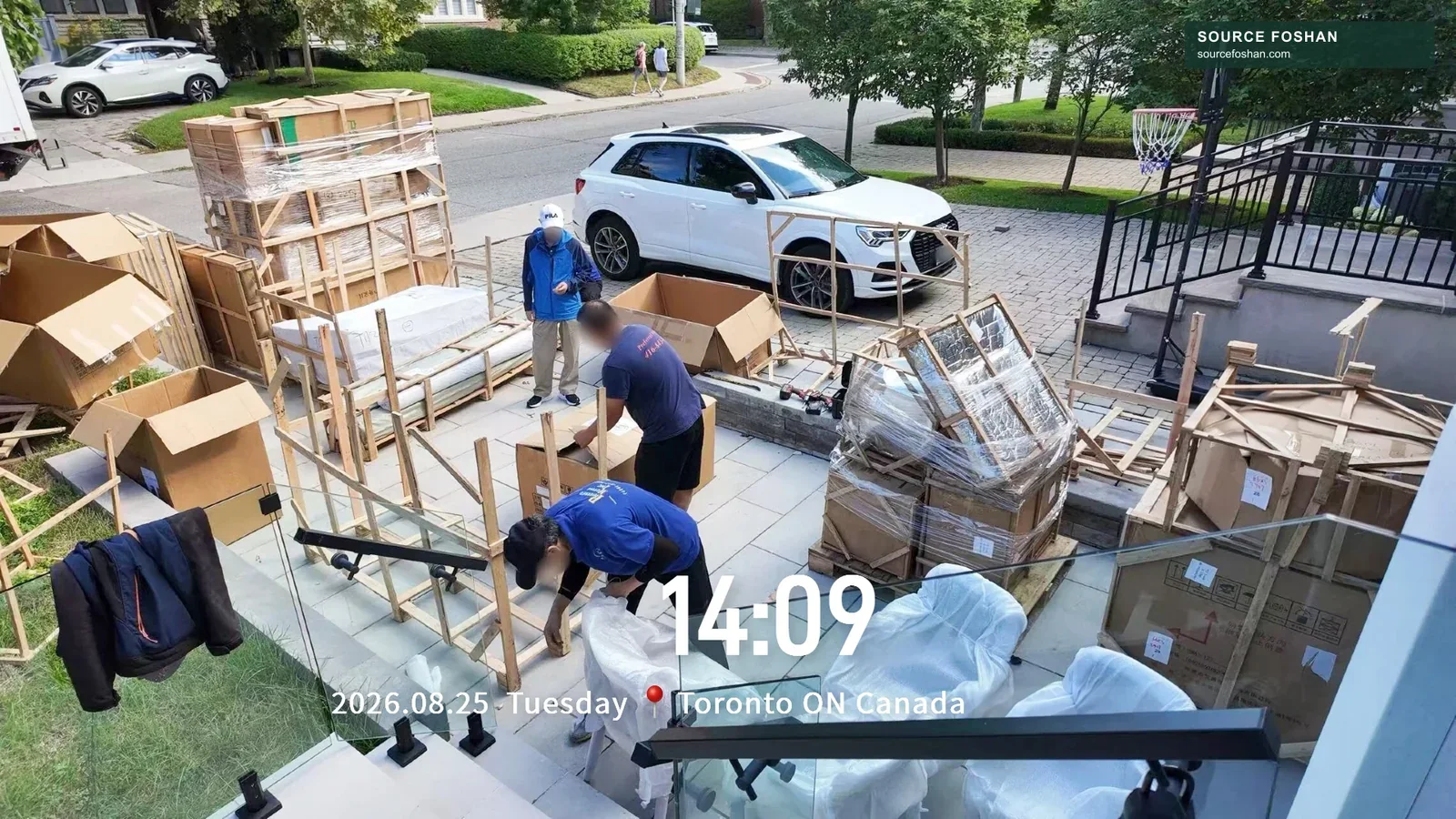
The Sydney project record and Toronto sourcing and delivery record document Source Foshan’s role and residential handling photographs. They do not establish a universal procurement duration, a current freight rate or a 30/70 payment policy.
Who must approve the handoff between each sourcing stage?
The seven-step process works best when each handoff names an output and an approver. A supplier saying an item is ready, an inspector reporting it, and a buyer authorising shipment are different events. Agree who can approve each event at the start, especially when an overseas owner, designer, sourcing coordinator and local receiving team share the work.
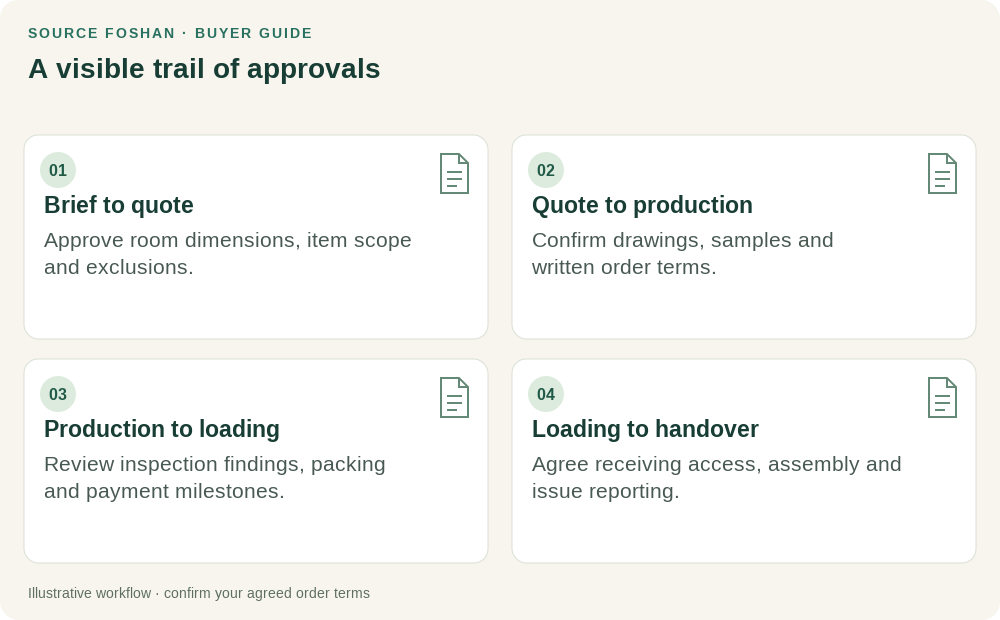
| Handoff | Output to review | Approval to name |
|---|---|---|
| Brief to quotation | Room list, dimensions, quantities, intended use and exclusions | Buyer or designer confirms the comparison basis |
| Quotation to order | Selected offer, legal seller, fee scope, delivery basis and payment milestones | Buyer accepts the commercial order |
| Sample to production | Drawing revision, material references and unresolved sample comments | Authorised specification approver releases the defined quantities |
| Production to inspection | Supplier ready notice, lot identity and agreed checks | Coordinator arranges access; inspector reports actual findings |
| Inspection to payment/shipment | Corrections, accepted exceptions, invoice and packing reconciliation | Named buyer authority makes the decisions required by the contracts |
| Arrival to handover | Received carton counts, condition, assembly and missing-item log | Receiver records delivery; relevant buyer accepts the completed scope |
Record the item or batch, revision, decision, date and next permitted action in each approval. An approval of a sofa’s colour does not also approve its dimensions or every unit in the production lot. A shipment release does not amend a warranty or automatically waive a defect claim; use the actual contract and acceptance wording for those questions.
When a handoff is incomplete
Keep an exception list with the missing record, person responsible and next review date. Ask for a specific decision: request a corrected drawing, arrange reinspection, approve a documented substitution, or agree a revised shipment. Avoid an ambiguous message such as “all good” when only one part of the order has been checked.
For a remote order, keep the approved files in one versioned folder and identify that version in supplier messages. Retain earlier versions as history but mark which one controls production. If a room or quantity changes, use the package change-control record. If several apartments ship in phases, use the complete-kit release worksheet. Both make the next stage easier to verify without relying on a long chat history.
Questions about buying furniture from Foshan
How do I source furniture from China if I have never imported before?
Start with a coded furniture list, destination and budget, then confirm the seller/exporter, forwarder, importer and broker roles before paying. Prepare three information packs: the legal importer details and any required tax/import identifier; the full delivery address, access and receiver; and a product schedule with materials and intended use so the broker can confirm HS classification and requirements. Export documents and destination clearance must be included in the written scope; DDP is an option only when feasible and expressly agreed.
Should I visit Foshan in person or can everything be done online?
You can arrange sourcing remotely with coded lists, live workshop calls, physical samples and independent or agreed inspection. Visiting helps you compare comfort and finishes directly. For an initial trip, plan two or three focused appointment days rather than assuming every market can be covered at once. Confirm language, vehicle, guide fees and appointments. There is no verified public percentage here for clients who complete everything online.
Where in Foshan is the furniture market and which one should I go to?
Start with the Lecong furniture area in Shunde. Louvre suits a planned comparison of showroom ranges; Sunlink is another Lecong furniture destination with multiple businesses to compare. The operators’ sites confirm Louvre’s Lecong location and Sunlink’s Lecong address. Use the town and full address for appointments, then visit relevant Longjiang factories or sample rooms. A showroom tag is not a factory quotation, and a fair booth does not identify where every item is manufactured.
Is Foshan furniture cheaper than buying from a local retailer?
Compare the same dimensions, materials and service scope: goods + sourcing/design/sample work + export packing/origin charges + freight/insurance + duty/tax + destination delivery/assembly. Then compare local supply including its warranty and installation. A saving percentage cannot be established without both comparable offers. Small, low-value orders can be poor value after fixed logistics charges; a full house is not automatically cheaper either.
Can you make custom furniture from my drawings or a competitor’s photo?
Use original or lawfully usable references to develop dimensions, construction drawings and samples. A competitor’s image is not permission to reproduce a protected design. Obtain current development costs and timings: one named supplier, Cozylife, publishes an approximate USD 1,100 new-model tooling charge plus the sofa, and 25–30 days for its sample production. That is a supplier-specific example to reconfirm, not our standard sample fee. Approve the revised physical/technical reference before repeat production.
How do you inspect quality before the container is sealed?
Agree production-stage checks, finished-item inspection and loading oversight as separate tasks. Check the approved specification, dimensions, structure/stability, operation, finish, upholstery, hardware, quantities, accessories and packing. Define inspection coverage and sampling by item/lot rather than claiming an arbitrary percentage. The report should show dated photographs, measured results, findings, corrections, reinspection and the named release decision. Failed items need agreed rework and verification before release.
What happens if the furniture arrives damaged or wrong?
Record condition at receipt, carton labels, unpacking, the affected item and its PO/model code. Preserve packaging and send evidence promptly to the contracted contact; note visible transport damage with the receiver/carrier as required. Manufacturing defects, wrong goods, transit damage and assembly errors can have different responsible parties. Use the purchase order, insurance policy and carrier terms to agree repair, replacement parts, remake or credit, evidence deadlines and who pays transport. Do not assume a universal seven-day claim period or free international returns.
How much furniture makes a full container worthwhile?
Start comparing LCL and FCL around 15–18 packed CBM, then price the same destination scope. This is a comparison trigger, not a fixed break-even point. In this article’s illustrative volume model, a two-bedroom kit is 14 CBM and a basic bedroom kit is 6 CBM: a 20GP planned at 27 CBM holds one or four intact kits; a 40HQ planned at 65 CBM holds four or ten. Confirm actual carton fit, weight and handling before booking.
Planning a church or community-space purchase?
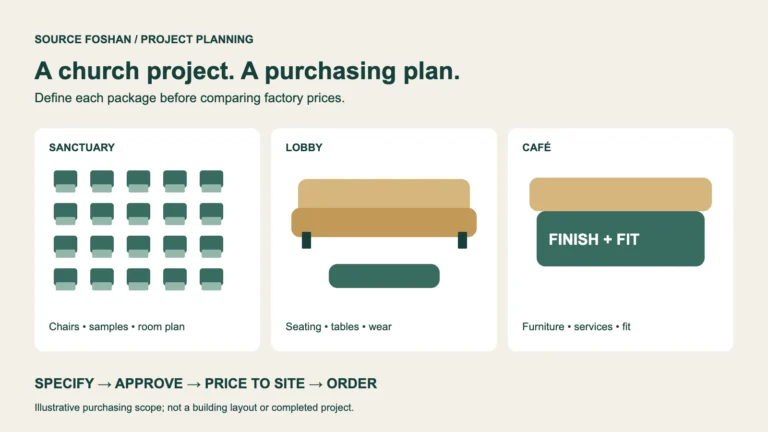
For a US church renovation, use the church sourcing feasibility guide to decide which packages to import and compare installed costs. The 200-chair specification and sample checklist covers repeatable seating, packing and the records needed before a bulk order.
YOUR ORDER RECORDS
Which records are already prepared?
Tick the documents you already have. Use the result to tell us what to review or help organise; this is a planning checklist, not an approval to order or ship.
0 of 7 records marked prepared.
START WITH YOUR FLOOR PLAN
Send the list. Tell us what needs to happen next.
Share your rooms, quantities, destination and target date. We can discuss the supplier comparison, approval records and service scope appropriate to your project.
By submitting, you agree to our privacy policy. This form sends your brief to the Source Foshan team; use the linked project form for attachments.
How this guide uses prices and evidence
Reviewed 16 October 2026. The item budgets, kit volumes, loading allowances and broad programme are illustrative planning inputs. Supplier statements are attributed and need a current written offer. Linked BOQ and inspection documents are labelled examples/templates; the residential photographs show the documented Source Foshan delivery stages. No universal savings, current shipping quote, customer invoice, completed QC result or fleet-wide supplier statistic is inferred from them.
Download the seven-stage order checklist (CSV) · Plan a Foshan visit
More in Buying Guides.
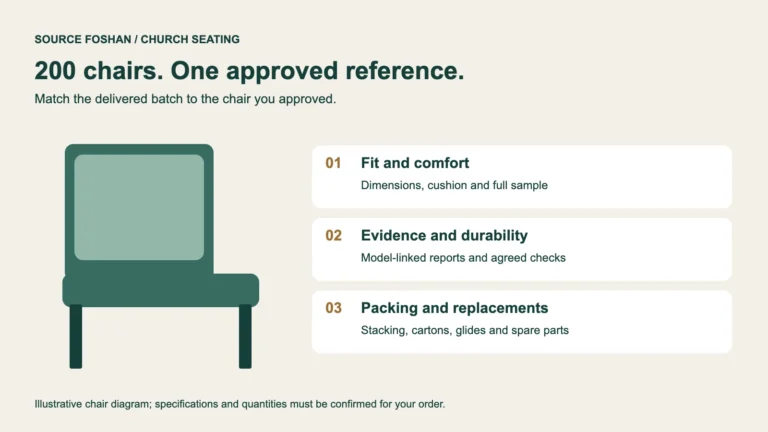
Buying 200 Church Chairs from China: Specifications, Samples and Landed Cost
Use a 200-chair planning example to organise specifications, sample approval, inspection, packing and the cost of delivery to your US site.
Church Renovation Sourcing from China: Is It Worth It for a US Project?
A practical guide to choosing import candidates, comparing complete installed costs and planning delivery for a US church renovation.

Accent chair specification beyond the showroom photo
Approve an accent chair by its measured seat, construction, finish and delivery configuration, not by a styled showroom photograph.