South Africa / Remote sourcing and office project planning
Foshan Furniture Sourcing for South Africa: Remote Checks and a 50-Desk Office Budget
Approve the seller, specification and inspection trail before paying. Includes a 50-workstation goods schedule and an editable South African VAT model.
South Africa / Remote buying with a reviewable trail
Yes, you can source furniture from Foshan for South Africa without visiting China. Approve the legal seller, item specifications, corporate payment details and inspection access before paying; then review the agreed QC evidence before shipment. An agent’s video call does not guarantee performance. For a 50-workstation office, the illustrative schedule below totals USD 18,130 in goods and 28.35 m³ before sourcing, freight, duties, VAT and local work. South African import VAT is 15%, with a different tax-base calculation from an EU import.
Reviewed 27 October 2026. Budgets, carton volumes and programmes are planning assumptions, not South African customer invoices, surveyed factory prices or carrier offers. This guide concerns new furniture imported from China; the appointed broker must confirm each product’s treatment.
01 / Approve the parties before the payment
Is buying furniture from Foshan remotely safe for a South African buyer?
Remote buying is workable when each approval leaves a record. Start with the commercial model: an agent coordinates a service; a factory or reseller sells the goods. The agent need not be the seller on every furniture contract. Identify who owes you the product remedy, who earns the service fee and who exports the shipment.
- Verify the entity. Request the Chinese business licence, Chinese legal name, Unified Social Credit Code, registered address and actual production address. Search the official National Enterprise Credit Information Publicity System. A registration match establishes identity information; it does not certify quality, solvency or ownership of a showroom.
- See the relevant production. Arrange a live walk-through showing the site entrance, workshop, machinery, work in progress and packing area. Ask the guide to connect your proposed chair, desk or cabinet to its actual maker. A prerecorded factory tour is background material.
- Approve a specification and sample. Record dimensions in mm, substrate/finish, hardware, fabric, foam, chair mechanism, load/use requirements and carton method. Keep a signed reference; a render alone cannot establish construction or comfort.
- Check the beneficiary independently. Reconcile the contract, invoice and corporate bank recipient. If an exporter or authorised collection entity differs from the seller, obtain and verify the documented relationship. Treat a sudden account change or a personal-account request as a stop point.
- Define the release conditions. Put inspection access, findings, corrections, payment triggers, packing and defect remedies into the purchase order. A 30% deposit/70% balance proposal protects neither party by itself; it must fit the seller’s accepted milestones.
For a practical verification sequence, use the Chinese furniture business-licence guide and the supplier payment checklist. Verify bank changes through a contact channel established before the change, rather than replying to the same message.
A useful live-QC window is 08:00–11:00 South African Standard Time, corresponding to 14:00–17:00 in China. Confirm availability with the inspector and factory. Let a video session answer a prepared checklist; do not make the call itself the acceptance criterion.
02 / Qualify by product and intended use
Where should I look for a 50-desk office package in Foshan?
Use Lecong’s showroom network to compare options and Longjiang/Shunde production areas to investigate suitable makers. A showroom’s range may include bought-in products. Request the actual maker for desks, task chairs, pedestals and fitted storage separately; the supplier of a residential sofa need not be qualified for repeat-use office seating.
For desks, settle top dimensions, thickness and substrate, edging, frame joints, levelling feet, cable routing and whether electrical accessories are included. For chairs, compare adjustment range, mechanism, base, castors, upholstery and replacement parts against a tested model and the project’s intended use. A BIFMA logo without an identifiable model and report is insufficient evidence. Specify the applicable standard and test scope with a competent laboratory or project adviser.
There is no verified universal factory MOQ or showroom mark-up percentage in this guide. Ask for the minimum per model/colour, a sample price, mixed-finish conditions and the price at the actual quantity. Consolidating several accepted factory orders into one shipment does not waive their individual minima. The sourcing and consolidation service can organise the item-level comparison; our Lecong and Longjiang buying guide explains how to plan the route.
03 / Count the workstations and the excluded scope
What could a 50-workstation office package cost?
The following is an illustrative goods allowance built from stated quantities, not an FOB quotation or a price survey. The 50 task chairs provide the staff seats. Meeting-room chairs, visitor/reception seating, electrics, installation and building works are excluded. Price them separately if required.
| Line | Qty | Unit USD | Goods USD | Total m³ |
|---|---|---|---|---|
| Workstation desk | 50 | 130 | 6,500 | 6.00 |
| Mesh task chair | 50 | 90 | 4,500 | 11.00 |
| Mobile pedestal | 50 | 55 | 2,750 | 6.00 |
| Desk screen | 50 | 30 | 1,500 | 1.25 |
| Meeting table | 2 | 500 | 1,000 | 0.80 |
| Reception unit | 1 | 800 | 800 | 1.50 |
| Storage unit | 6 | 180 | 1,080 | 1.80 |
| Entered schedule | 18,130 | 28.35 |
Request each supplier’s actual carton count, dimensions and gross weight. Knock-down desks can pack differently from assembled pedestals; nested chair components differ from fully assembled chairs. Check who assembles and removes packing at the South African site. Download the 50-workstation and import-budget worksheet.
Source Foshan’s published service policy starts at USD 10,000 in goods and states a 3–5% fee on an agreed order-value basis, with no supplier commissions and factory payments made directly. Confirm the scope, basis, minimum and separately chargeable work in the project proposal. If the entire assumed USD 18,130 were the accepted fee base, 3–5% would be USD 543.90–906.50; this arithmetic does not price freight, testing or delivery.
04 / Use the South African tax base
What duty and VAT apply to furniture imported into South Africa?
Have the broker classify each item from its materials, construction and use against the current SARS tariff schedules. Office desks, seats and accessories are not one interchangeable tariff line. Do not assume a zero-duty preference or apply the tool’s assumed 20% rate to the whole order without classification.
SARS states import VAT is 15%. For the ordinary China-origin illustration here, its added-tax-value formula is (customs value × 1.10 + non-rebated duties) × 15%. The 10% uplift increases the VAT base; it is not a separate 10% cash charge. Customs valuation and any additional measures need broker confirmation.
Editable planning illustration
How does the South African VAT base change the budget?
China-origin ordinary scenario only. VAT = (customs value × 1.10 + assumed non-rebated ordinary duty) × 15%. The 10% uplift is a VAT-base factor, not an extra cash fee. Other duties, valuation adjustments, services and unentered costs are excluded, not zero. Broker review required.
Keep a supplier’s USD goods offer separate from the ZAR customs valuation and actual currency conversion. The tool is independent of the USD office schedule: it demonstrates the tax arithmetic using an assumed ZAR customs value. Additional entered costs must not duplicate amounts already inside another line. Unknown brokerage, port, storage, testing, services and site costs remain unquoted.
05 / Fit is a carton-plan decision
Does a 50-desk office need a 40HQ, and how long will delivery take?
Maersk’s nominal dry-container capacities are 33.2 m³ for 20 ft, 67.7 m³ for 40 ft and 76.4 m³ for 40 HQ. With an assumed 80% usable-space factor, the corresponding planning volumes are 26.56, 54.16 and 61.12 m³. These are calculation references, not furniture-loading guarantees.
The assumed 28.35 m³ office schedule exceeds that 20 ft planning allowance but falls within the 40 HQ allowance. It may also warrant an LCL comparison. Actual carton shapes, weight, door access, stacking and restraint decide fit. Compare current LCL and FCL offers with the same origin, destination, handling and final-delivery scope using the transport comparison guide.
| Stage | Allowance | Confirm before release |
|---|---|---|
| Brief and comparable offers | 1–2 | Item list and exclusions |
| Sample / technical approvals | 2–4 | Accepted construction and finish |
| Manufacturing | 5–8 | Factory slot after approvals/deposit |
| QC, correction and consolidation | 1–2 | Findings closed and carton list |
| Ocean planning allowance | 4–7 | Actual booking and transfers |
| Entry and final handover | 1–2 | Broker and delivery appointments |
| Separate contingency | 2 | Opening-date buffer |
| Sequential total | 16–27 | Replace with accepted dates |
Ask for Durban, Cape Town or the appropriate Gqeberha/Ngqura routing and a postcode-based onward offer. Johannesburg is an inland delivery destination, not the ocean discharge port. Do not compare a port-to-port transit advertisement with first-enquiry-to-installed-office time. Confirm the factory’s actual holiday closure/restart and the forwarder’s sailing, free time, clearance, unloading and assembly responsibilities.
06 / Establish the importer before booking
Which documents does a South African buyer need?
- Importer identity: use the SARS importer registration/RLA process. Confirm the registration route with your broker before a commercial office shipment. A foreign importer needs the nominated South African registered-agent arrangement described by SARS; buying DDP does not remove the need to identify the lawful importer.
- Commercial and transport records: accepted purchase orders, itemised commercial invoice, packing list and bill of lading/transport record. Ensure seller, importer, description, quantities, currency and carton references reconcile.
- Product and origin information: materials, construction, applicable product reports and origin documents requested by the broker. A certificate of origin does not automatically produce preferential duty.
- Wood packaging: regulated solid-wood pallets, crates and dunnage need compliant treatment/marking under South Africa’s ISPM 15 packaging requirements. Distinguish this from the furniture’s own material/plant-health requirements; “everything must have a fumigation certificate” is too broad.
- Controlled goods: the government import-permit guidance says most new goods are exempt from import control, while controlled and used/second-hand goods require the relevant checks/permit route. Screen the actual items, especially used furniture or added electrical equipment.
- Insurance and delivery: agreed insured value/coverage, exclusions, deductible, claim notice rules, delivery order and the final receiving/access instructions.
Request document drafts before dispatch. A description such as “furniture, one container” is inadequate for checking a mixed office order. Use the shipping and delivery service to scope the handover, including what your South African broker or installer must do.
07 / Check what will be accepted
How should remote inspection and after-sales support work?
Agree the inspection plan before production. List the lot sizes and sampling rules, and identify any 100% quantity, identity or critical-function checks. AQL is a sampling acceptance method; “AQL 2.5” does not mean every item has been examined or that 2.5% defects are acceptable in every category. Ask the inspector to record the chosen standard, sample size, defect classes and acceptance/rejection criteria.
For the office package, review desk dimensions and wobble, frame/joint finish, drawer and lock operation, castors, chair adjustments, sharp edges, fabric/colour matches, missing hardware and packing labels. Match model-specific test evidence to the accepted construction. The quality-control service defines the agreed scope; independent testing and destination installation need their own arrangements.
Before sealing, reconcile cartons to item and room codes; record loading, restraint, container condition and seal. At receipt, photograph the seal and container, retain delivery exceptions and record unpacking continuously for the affected cartons. Notify the carrier/insurer and seller within their respective agreed deadlines, preserving packaging and damaged parts. Transit damage and a manufacturing defect can involve different parties.
Put warranty coverage, exclusions, response process, evidence, parts availability and freight responsibility into the order. Replacement parts, repair contributions or a credit may be workable remedies; returning a complete desk to China may not be economical. Confirm the remedy rather than promising universal free air freight. Our warranty and after-sales guide explains the questions to settle before purchase.
South African furniture sourcing questions
Can I pay a Chinese factory directly from South Africa?
Agree corporate payment details and milestones with the contracted seller. Ask your bank or authorised dealer which invoice, purpose-of-payment and exchange-control documents apply. No universal transfer fee, approval time or payment-platform availability is assumed here.
Can I buy without a sourcing agent?
Yes, if you arrange supplier qualification, specifications, payment checks, inspection, export/consolidation and South African import/delivery responsibilities yourself or through appointed providers. Compare the service scope rather than the job title.
What is Source Foshan’s minimum order?
The published service starting point is USD 10,000 in goods. Individual suppliers still set their own model/finish minima. A mixed project may meet the service minimum while a particular factory line needs adjustment.
Which port should I choose for Johannesburg delivery?
Request a current routed offer including the ocean port and inland leg to the actual postcode. Compare Durban and other offered routes on the same delivered scope, free time and delivery date; the cheapest ocean line need not be the cheapest final handover.
Do I need a SARS importer code?
Establish the correct importer registration with SARS and your broker before committing to a commercial office shipment. The sourcing agent’s Chinese registration is not a replacement for the South African importing arrangement.
Are all Foshan office chairs commercial grade?
No. Specify intended use and require evidence for the actual model, construction and materials. A showroom label or an unrelated test certificate is insufficient. Approve a sample and replacement-parts plan.
Does the 3–5% fee include freight and taxes?
Obtain the written project scope and fee basis. The published sourcing fee is not a complete landed-cost quote; freight, tax, testing, warehouse work and destination services must be identifiable.
Can I join the inspection by video?
Request a live session alongside the appointed inspector’s written/photo report. Agree which item codes, measurements, functions and packing steps will be shown and how unresolved findings block release.
Your next step
Send the office list and South African postcode.
Include dimensions, quantities, references, intended use, budget currency, packed data if available and the responsibilities you need priced. Mark unknown costs and unresolved approvals.
Sources and calculation boundaries
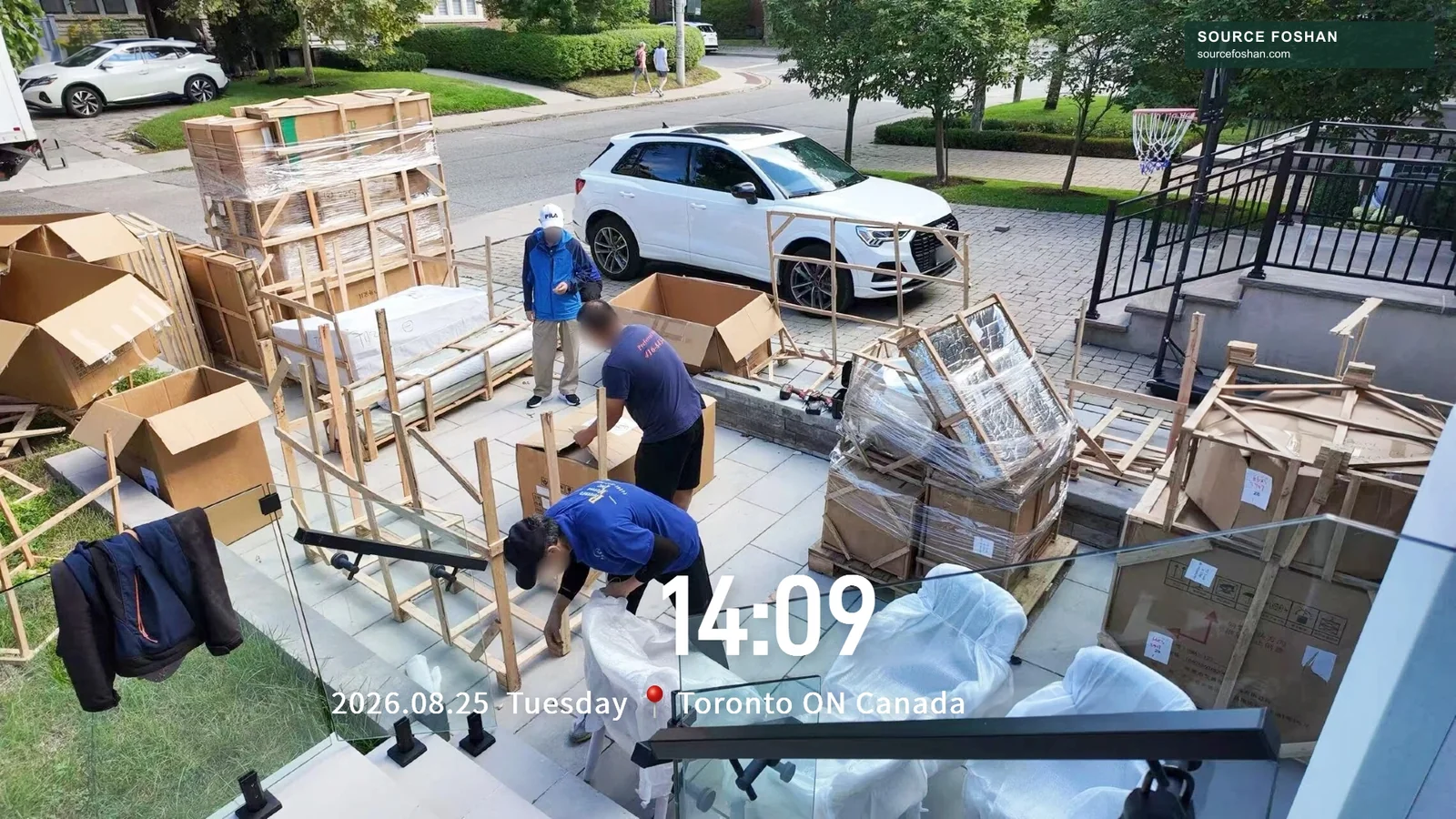
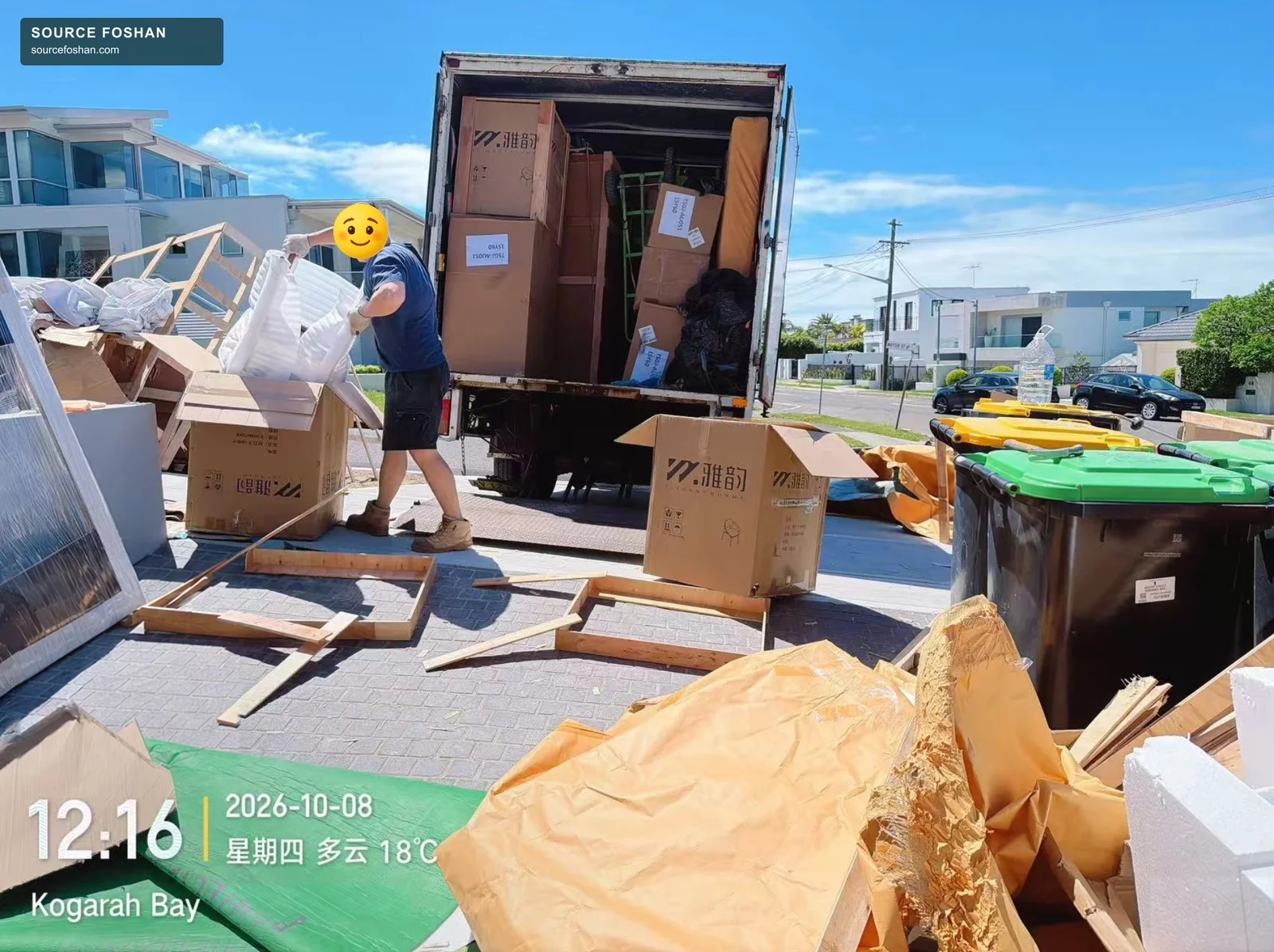
Official SARS, South African government and carrier sources are linked next to the relevant facts. Office prices, packed volumes, duty input and programme are explicit assumptions. The Sydney and Toronto photos document residential handling elsewhere; they do not establish a South African delivery, office-chair test result or claim outcome.