Shipping decisions / LCL, FCL & air
LCL vs Full Container vs Air Freight for China Furniture Orders: How to Choose
Choose from the packed order and complete service scope. Includes an editable LCL/FCL comparison, air dimensional-weight example and a responsibility checklist.
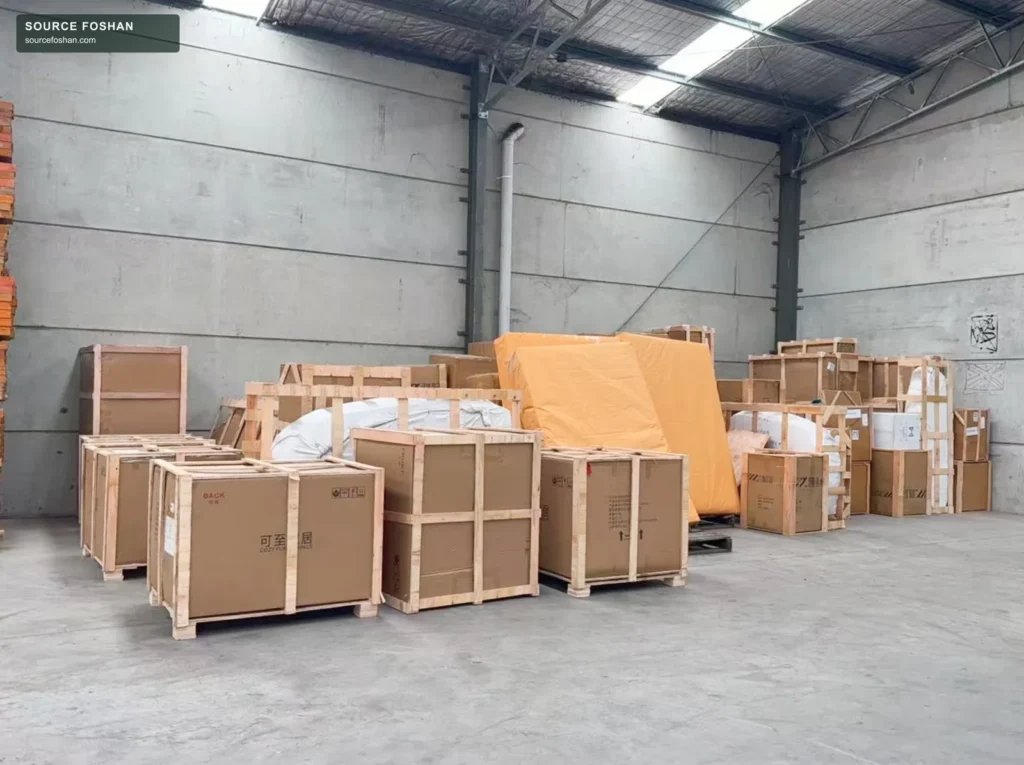
Choose from the packed order
Choose LCL, a full container or air freight by comparing the same packed cargo, destination and service scope. LCL combines other shippers’ cargo and can suit a small order; FCL can suit a larger or handling-sensitive load. There is no universal 15 CBM crossover. Air freight is often charged by dimensional weight: an illustrative 2.4 m³ item weighing 160 kg becomes 400 kg at a 6,000 cm³/kg divisor. Ask for actual quotes and release dates before choosing.
Carrier/forwarder sources checked 19 October 2026. All money examples are illustrative inputs, not live lane rates, Source Foshan charges or measured customer savings.
01 / Volume is only one constraint
LCL or a full container for a whole-home furniture order?
| قرار | LCL | FCL | Air freight |
|---|---|---|---|
| Pricing basis | Chargeable measure, minimum and fixed/accessorial charges | Equipment price plus stated origin/destination services | Greater applicable actual/dimensional weight plus charges |
| Useful scenario | Small or partial order with workable shared-cargo handling | Larger load, repeat programme or greater control of the loading plan | Time-critical parts, samples or selected items whose total cost is justified |
| Packing question | CFS handling, stacking and mixed-cargo protection | Layout, bracing, restraints, moisture and unload sequence | Package dimensions, aircraft acceptance and any dangerous goods |
| Time question | Receiving cut-off, consolidation sailing and destination availability | Equipment/space, cargo-ready date, sailing and release | Flight/handling, security, entry and delivery availability |
| Still required | Item QC, correct documents and receiving plan | Item QC, correct documents and receiving plan | Item QC, correct documents and receiving plan |
Factory consolidation and transport mode are different decisions. Several factories’ goods can form your single FCL shipment; one supplier’s small order can travel LCL. FCL is not a promise that customs or a service provider will never open or transload the container. Agree the actual control points, not just a label.
Maersk’s equipment data lists nominal dry volumes around 33.2 m³ for 20 ft,67.7 m³ for 40 ft and 76.4 m³ for 40 HQ. At an assumed 80% space use, the arithmetic is 26.56, 54.16 and 61.12 m³. That is not a furniture loading guarantee: doors, irregular shapes, crating, safe stacking, weight and road restrictions can control the result. Use the container planning guide with actual carton data.
02 / Compare totals, then test the assumptions
At how many CBM does FCL become cheaper than LCL?
If an LCL offer is a fixed amount plus one variable rate, the volume-driven crossover is (comparable FCL total−LCL fixed charges)÷LCL variable rate. This shortcut needs the same endpoints, currency and services; it fails where minimums, density, non-stackable charges or tiered destination fees change the price. Check the full offer at the chosen quantity.
Editable quote-comparison model
What does your actual quotation basis imply?
The defaults are a fictional comparison. Do not put unknown costs into the tool as zero. Keep tax, insurance and excluded delivery on a separate, matched basis.
Assumes 1 WM=max(1 m³,1,000 kg), a 1 WM minimum and the simple rates entered. Defaults:450+180×16=3,330; (3,200−450)÷180=15.28 m³. Actual minimums, rounding, fees, non-stackable ratings, equipment fit and booking availability must be checked. This is not a freight quote or a booking recommendation.
Maersk’s LCL terms describe the higher of volume and gross-weight measure using 1 m³=1,000 kg in those terms. For furniture, volume may dominate, but stone-heavy or dense consignments can differ. Minimums and the quoted rounding rule still apply.
| Assumed FCL total | LCL fixed | LCL per measure | Volume crossover |
|---|---|---|---|
| 3,500 | 500 | 250 | 12 م³ |
| 3,200 | 450 | 180 | 15.28 m³ |
| 3,900 | 600 | 150 | 22 m³ |
These calculations do not establish a market-wide 12–22 m³ band. They show why a fixed 15 m³ rule can fail. Request current LCL,20 ft and any appropriate 40 ft/40 HQ options; do not assume the lowest mathematical price means the cargo fits. Download the shipment comparison worksheet.
03 / Buy the work you need
Do I need a sourcing agent, a freight forwarder, or both?
A forwarder can offer more than booking freight, and an agent does not automatically perform every inspection or import task. Specify each accepted service. The legal seller remains important even when one coordinator organises the shipment.
| Work to assign | Confirmation needed |
|---|---|
| Supplier identity and production capability | Who verifies the seller/site and reports limitations? |
| Specifications and comparable buying prices | Who defines materials, dimensions and inclusions? |
| Drawings, samples and changes | Who approves references and records deviations? |
| Payment route and release | Who is authorised to receive funds; who accepts milestones? |
| متابعة الإنتاج | Who tracks item-level readiness and exceptions? |
| Inspection / correction / reinspection | Who checks what, with what access and report? |
| Warehouse receiving and carton reconciliation | Who controls missing/wrong/damaged goods? |
| Packing, labels and loading | Who approves the item-specific protection and records the load? |
| Freight and export | Who books, declares and provides transport records? |
| Destination import | Who is importer, broker and tax/document owner? |
| Final delivery and assembly | Who provides access, unload/carry-in labour and installation? |
| Claims and goods remedy | Who owes the remedy, supports evidence and funds each cost? |
With a verified repeat supplier and a capable buying team, appointed freight plus separate QC may be sufficient. A multi-category project may need additional buying/coordination support. Compare the accepted scope and price in the sourcing-route guide; neither role label guarantees quality or removes the buyer’s decisions.
04 / Weigh the package twice
When does air freight make sense for urgent hotel items?
Consider a sample, missing hardware or selected high-priority items after comparing dimensional weight, acceptance and a realistic delivery date. There is no universal 500 kg limit that makes air sensible or unsuitable. A bulky light piece can be expensive; a denser critical part may justify the cost.
DHL Global Forwarding’s explanation uses centimetre length×width×height÷6,000 for air dimensional weight. An illustrative 2.4 m³ package is 400 kg by that rule. If its actual gross weight is 160 kg, the higher figure controls under that basis. At an assumedUSD 6/kg the line isUSD 2,400, before other charges. A different 5,000 divisor would produce 480 kg; check the actual service rather than assuming the air-cargo and express formulas are identical.
Ask about per-piece dimensions/weight, security, batteries, mechanisms, liquids or other restricted components. Split air/sea shipping creates separate bookings, customs and delivery records; identify which accessories must accompany each furniture item. Compare expedited ocean options, local temporary stock or a staged opening using actual dates and prices. No 10–20× cost ratio or fixed air-delivery promise is asserted.
05 / Compare ready-to-use dates
How long does each mode take door to door?
Ask each provider to break its offer into origin receipt/cut-off, departure, route/transhipment, arrival, cargo availability, customs/biosecurity and the final appointment. For LCL, check deconsolidation and collection availability. For FCL, check terminal release, free time, truck and empty-return arrangements. Air still needs export/arrival processing and destination delivery.
An illustrative sequential project could allocate 2 weeks to approvals,6 to production,1 to inspection/consolidation,5 to ocean planning and 2 to entry/delivery:16 weeks before a separate contingency. Those are assumed project blocks, not a route schedule or supplier offer. Actual overlaps, corrections and delays change the result.
Request live dates for the chosen ports, including Los Angeles/New York, Rotterdam/Hamburg, Dubai/Jeddah or your Australian port; do not transfer an estimate from another lane. See the UK project and import guide أو Melbourne shipment planning guide for destination-specific questions. No fixed LCL“extra 7–14 days” is promised.
06 / Match the Incoterms place and services
What belongs in a landed furniture comparison?
Keep goods, buying services, origin handling, freight/surcharges, insurance, import duty/tax, destination services and final delivery/assembly on separate lines, with included charges marked once. A per-CBM number is useful only after the comparable scope is defined. Show total charges and tax treatment too.
EXW, FOB, CIF and DDP allocate different obligations; record the named place/port and version in the contract. Do not treat CIF as delivered-and-tax-paid, or assume a DDP supplier can fulfil every destination importer/tax obligation. Identify the actual seller, exporter, importer and claim contact, and ask for the customs records.
For US supply, have the broker check the item’s current classification and applicable trade remedies, including China Section 301 measures and any relevant AD/CVD scope. A furniture chapter or generic“duty-free” advert is not an entry determination. For other markets, use the corresponding importer’s product/origin rules. A buyer’s tax recovery is different from a cash charge being included in a freight offer.
Destination rules can change the comparison even when packed CBM is identical. For the Irish import-VAT base and agent audit, use the Ireland furniture sourcing and budget guide. For room quantities and biosecurity, see the New Zealand home and Airbnb package planner. For upholstered-seating trade remedies and Canadian cost scope, use the Canada furniture sourcing and import-cost comparison.
For South African imports, use the remote sourcing and 50-workstation guide to separate goods, VAT and final handling. For a single home ordered in stages, compare one consolidated load with two phased releases, including early-goods storage.
07 / Make the evidence item-specific
Which documents and packing checks should I require?
Start with the accepted item/specification schedule, commercial invoice, carton packing list, transport/release document and relevant origin/import records. The packing list should connect the order to carton IDs, quantities, outer dimensions and gross/net weights. The required test, timber/plant-material, packing and product documents depend on destination and actual goods.
There is no universal CE/CARB/MSDS/fumigation pack for every chair, lamp and cabinet. Identify what actually applies and who issues it. Wood-pack treatment is distinct from furniture-product requirements; a generic factory certificate is not proof of model-specific compliance.
Agree corner/finish protection, fragile-item restraint, stacking limitations, moisture measures, hardware separation and loading sequence. LCL normally involves consolidation-station handling, but no verified LCL-versus-FCL breakage percentage is given. FCL packing can also fail. Specify inspection checks, defect handling and release records; the illustrative QC report format helps organise them. Insurance coverage, insured value, exclusions, deductible and claim deadlines need the actual policy.
08 / A reviewable shipment plan
How should multi-factory consolidation be organised in Foshan?
- Receive one project list. Identify items, suppliers, destination, access and required dates.
- Check specifications and carton data. Separate confirmed measurements from estimates and unresolved products.
- Compare matched modes/scopes. Include fees, handling, exclusions, free time and actual readiness.
- Confirm orders and milestones. Record each seller’s MOQ, approvals, payment and remedy.
- Track production and inspect. Keep findings, corrections and release decisions tied to the item.
- Receive into the agreed warehouse. Reconcile condition/quantities, apply identifiers and manage missing suppliers.
- Confirm packing/loading and documents. Freeze the final carton schedule and booking instructions.
- Hand over and receive. Supply transport records and named destination contacts; preserve arrival evidence and follow the agreed claim route.
Ask Source Foshan’s shipping/consolidation service for an item-specific scope and accepted fee offer. Storage, inspection, freight, customs and installation are not automatically bundled. No universal free-storage period, factory-count saving, minimum goods value or response-time guarantee is introduced here.
LCL, FCL and air-freight questions
How much furniture fits in 20 ft or 40 HQ?
Nominal equipment volume is about 33.2 m³ and 76.4 m³ in the cited carrier data. Packed layout, doors, safe stacking and limits determine the real furniture load; use carton measurements.
Is LCL always cheaper below 15 CBM?
No. Fixed fees, chargeable measure, destination handling and delivery can move the crossover. Compare complete accepted offers on the same basis.
Is FCL guaranteed to avoid damage?
No. It can give more control over the loading plan, but packing, restraints, inspections and receiving still matter. No measured damage-rate comparison is claimed.
Can several factories form one FCL load?
Yes, if receiving, cut-offs, inspection, labels, final carton records and exporter/document roles are agreed. That is separate from each factory’s MOQ.
What is the minimum LCL shipment?
Ask for the actual booking minimum and chargeable-measure rule. The model uses 1 WM as an assumption; a few pieces may still incur substantial fixed and delivery charges.
Can I air-freight part and ship the rest by sea?
Compare the critical-item benefit with two transport/customs/delivery scopes. Identify which parts and accessories must travel together, and confirm actual aircraft acceptance and dates.
Does a freight forwarder inspect furniture quality?
Only if that work is explicitly included and performed to an agreed scope. Booking freight or checking cartons does not establish every product dimension, material, function or compliance requirement.
What do you need for a useful shipping comparison?
Send item/carton quantities, packed dimensions, gross weight, materials, cargo-ready date, origin, destination postcode and delivery/access needs. Identify unknowns and proposed trade terms.
خطوتك التالية
Compare transport for the cargo you actually need.
Include packed volume/weight, origin, destination postcode, cargo-ready date, required delivery and handling scope. Identify urgent pieces and unquoted charges.
Sources and model boundaries
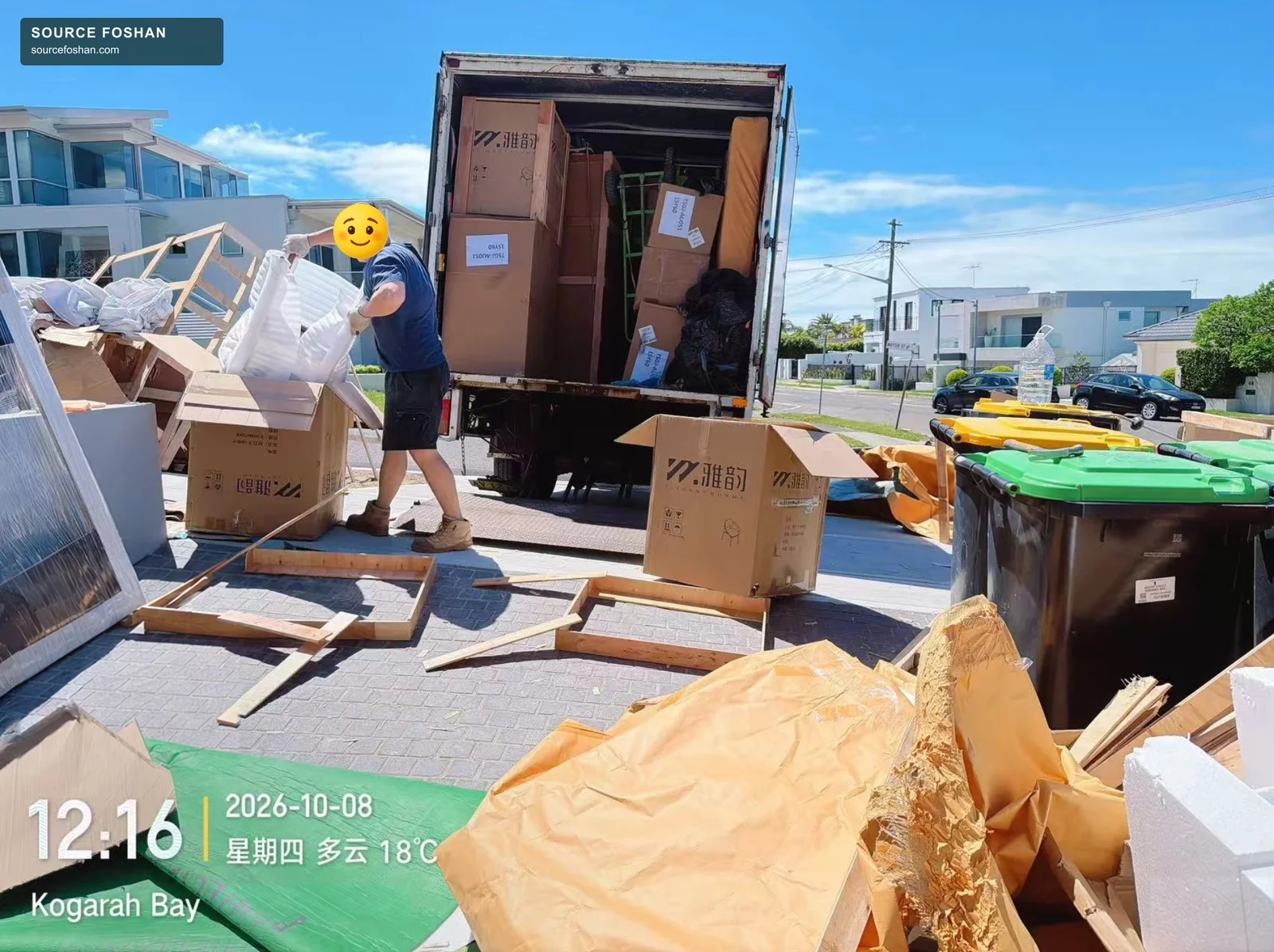
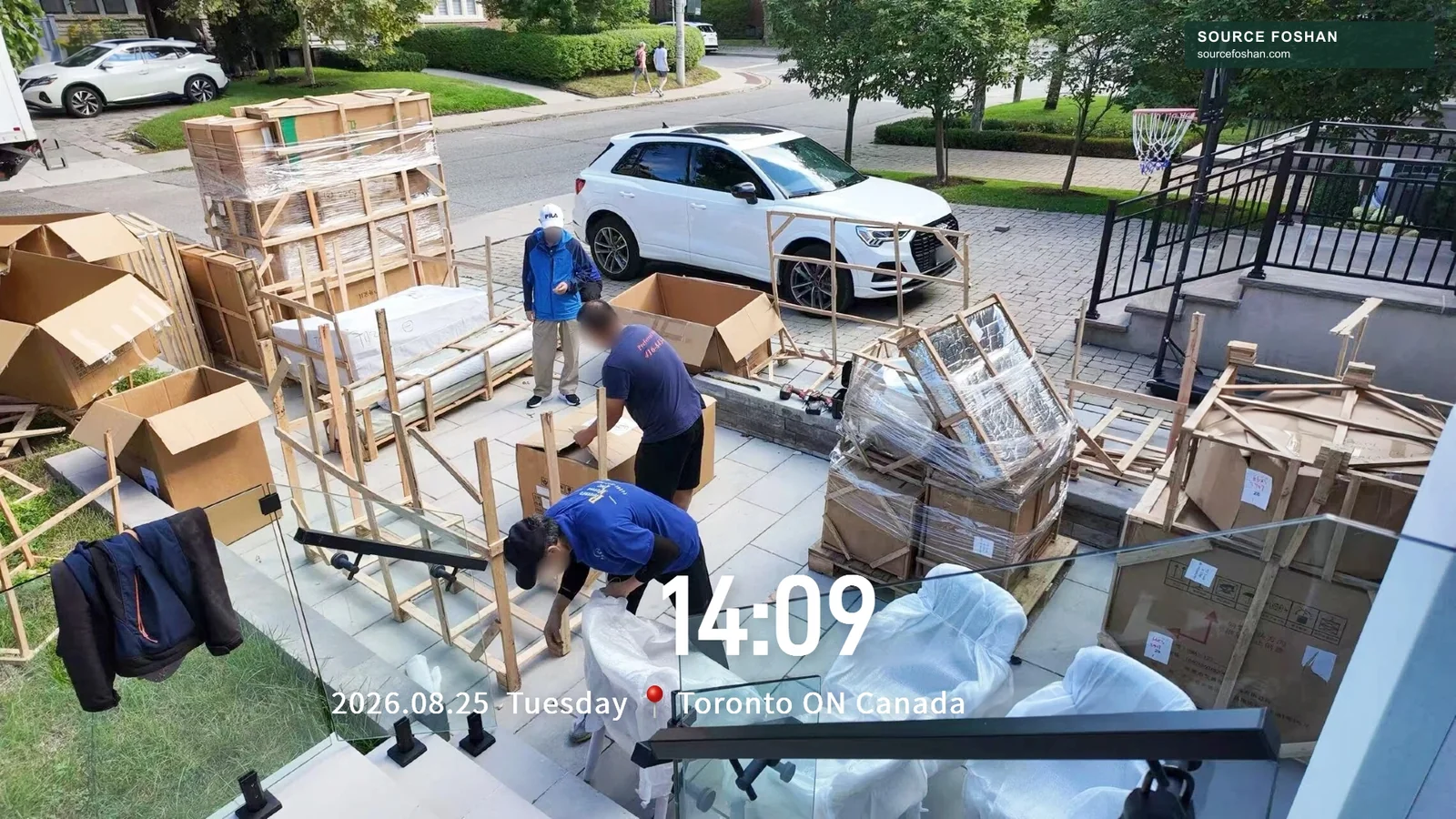
Carrier equipment/LCL terms and the forwarder’s chargeable-weight explanation are cited beside the relevant facts. Cost crossovers, loading utilisation and programme examples are explicit assumptions. The Sydney/Toronto images show residential handling, not comparative breakage, carrier transit performance or a quantified freight saving.