- Your packed volume is under about 15 m³ — a living room, a bedroom and a dining set together.
- You can accept 21–27 days port to port plus consolidation and deconsolidation at each end.
- Nothing in the order is a stone top, a glass panel or a single heavy slab.
- You accept that every shipper in the container is subject to MPI, so one non-compliant consignment can delay yours.
Destination guide · New Zealand
شحن الأثاث من الصين إلى نيوزيلندا
Furniture shipped from Foshan reaches Auckland in 20–23 days port to port in a full container — the shortest sea leg of any destination we ship to — or 21–27 days as an LCL consignment. Most furniture enters at 0% duty under the NZ–China Free Trade Agreement with a valid Certificate of Origin, plus 15% GST on the landed value. MPI biosecurity is the real gate: every piece of wood packaging must be heat-treated or fumigated and IPPC-marked. Source Foshan, a sourcing agent based in Foshan, China, consolidates the order, inspects it, treats and marks the timber, and arranges carry-in at the other end.
Page reviewed by the Source Foshan sourcing team in Foshan · freight and duty figures are dated and sourced at the foot of the page.
At a glance
Five numbers to carry into the first conversation.
20–23 daysShenzhen to Auckland, port to port — our shortest sea leg
USD 5,522–6,74940 ft ocean freight to Auckland, September 2026
0% + 15%NZ–China FTA duty with a Certificate of Origin, then GST on the landed value
MPIBiosecurity clearance on every piece of timber packaging
15 m³Where a 20 ft container starts to beat an LCL consignment
Before it sails
What leaves Foshan, whatever the destination.
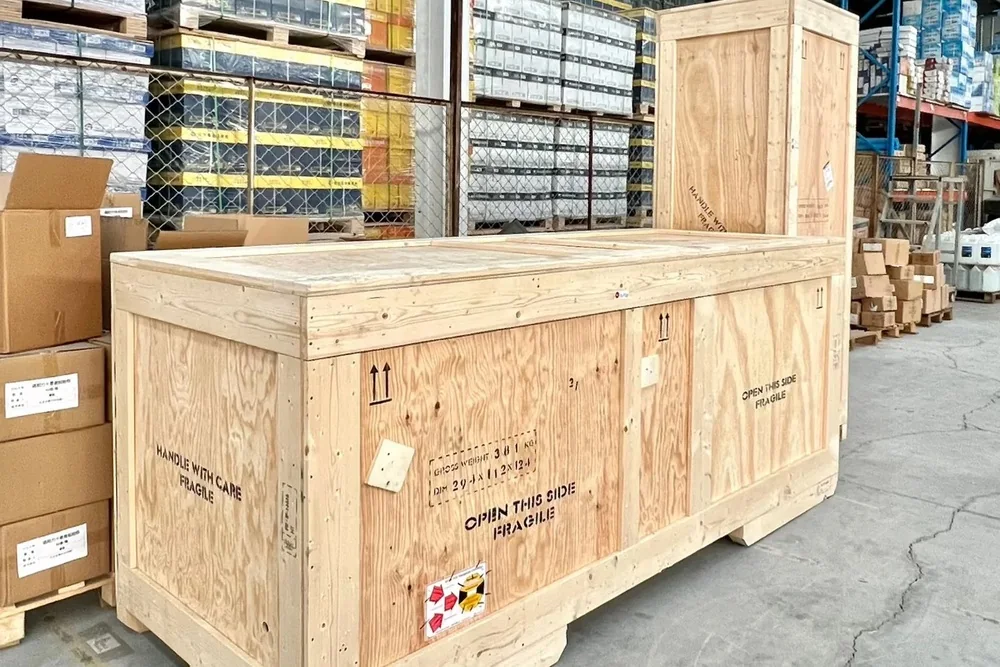
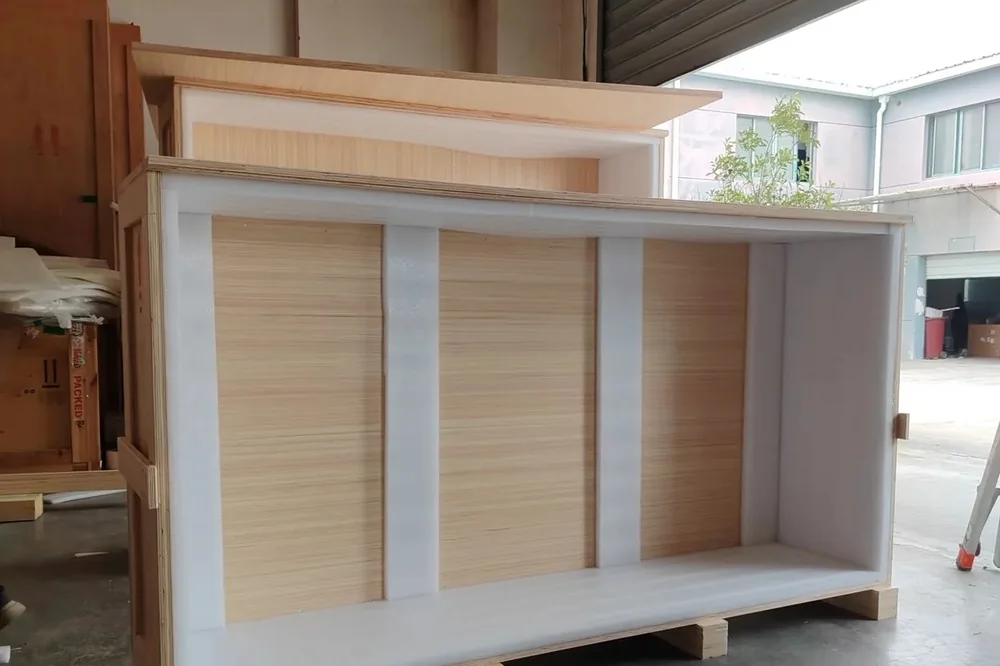
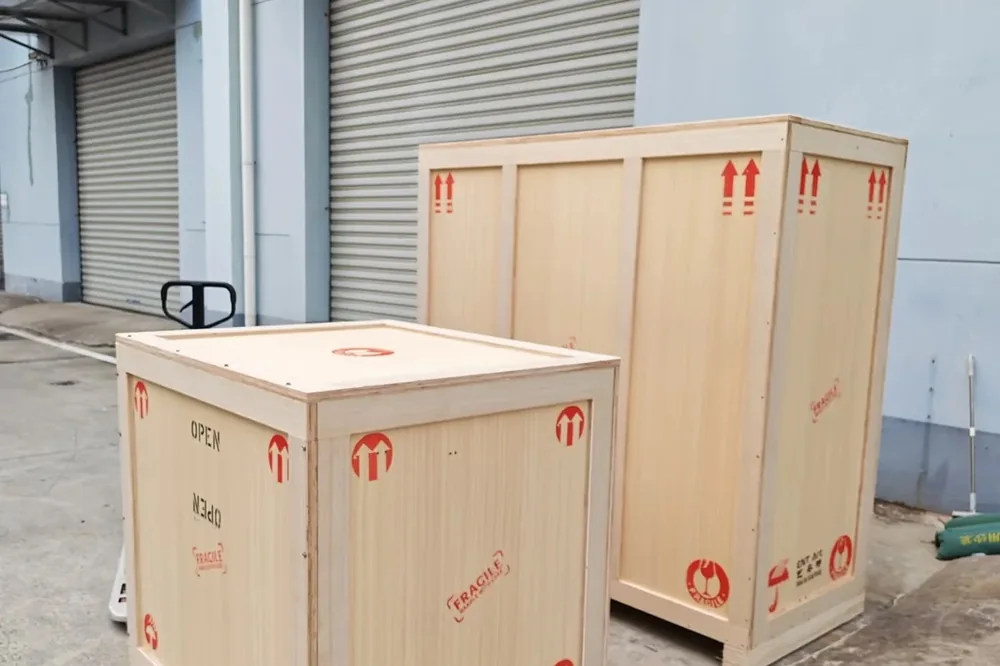
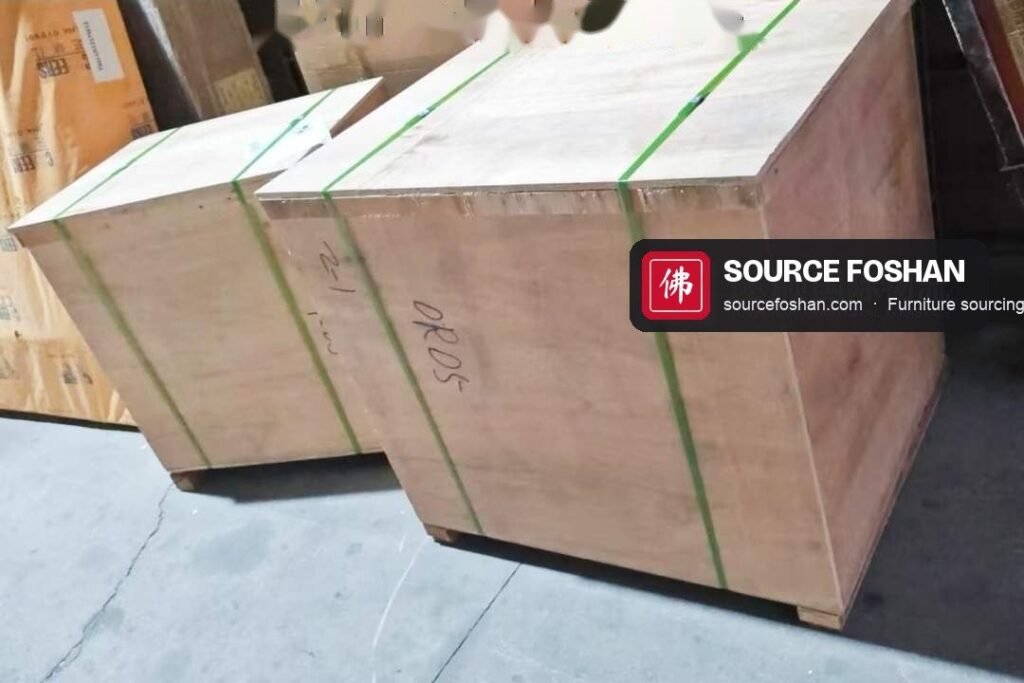
The same three steps stand behind every container we send to New Zealand. These are our own warehouse photographs, not stock images.
01 · The one decision
A full container or an LCL consignment?
New Zealand has the shortest sea leg and the strictest biosecurity of any route we run. The container decision is ordinary; the timber preparation is not.
- Your packed volume passes about 15 m³; a 20 ft loads 28–33 m³ of crated furniture in practice.
- You are furnishing a whole house: 45–70 m³, which is a 40 ft high-cube.
- The order includes solid timber, stone or glass — and in New Zealand, solid timber furniture is also inspectable, not just the packaging.
- You would rather your biosecurity outcome depended only on your own goods.
LCL territory
under 15 m³
One 20 ft container
30 m³ loaded
One 40 ft high-cube
68 m³ loaded
A three-seat sofa carton is 1.6–2.2 m³; four stacked dining chairs 0.6–0.9 m³; a knock-down wardrobe 0.5–0.8 m³. Send the list and we return the packed volume per line.
The LCL biosecurity point is worth weighing. In a shared container your clearance timetable is partly in other shippers' hands; in your own box it is not. On a marginal volume that is a real argument for the container.
02
What does it cost to ship furniture to New Zealand?
Every line that appears between the ex-works price and the furniture standing in the room. Ranges, not promises.
- Goods, ex-works Foshan USD 32,000
- Export packing and consolidationAbout USD 30 per m³ USD 1,950
- Ocean freight, 40 ft HCMid-point of the September 2026 band USD 6,135
- Marine insuranceAbout 0.5% of goods plus freight USD 191
- Customs duty0% under the NZ–China FTA with a Certificate of Origin nil
- GST (15%)Claimable by a GST-registered business USD 5,720
- Delivery, unload and assemblyIndicative; access decides it USD 1,500
One basket, priced into all eleven destinations, so the bars are comparable. The duty and tax block is what actually changes — as a share of the goods value, New Zealand at 17.9%, against 9.2% into Singapore and 50.0% into the United States.
| Line | Indicative | Notes |
|---|---|---|
| Ocean freight, 20 ft | USD 2,790–3,410 | Shenzhen to Auckland |
| Ocean freight, 40 ft HC | USD 5,522–6,749 | Up sharply month on month; the spread between 20 ft and 40 ft is narrower here than on other routes |
| LCL ocean freight | About USD 38 per m³ | Before destination charges, which is where LCL quotes mislead |
| LCL destination charges | NZD 500–1,000 per consignment | Terminal handling, deconsolidation, customs entry and MPI — fixed, not per m³ |
| Export packing and consolidation | About USD 30 per m³ | Re-crating, bracing, labelling, packing list |
| Marine insurance | About 0.5% of insured value | On goods plus freight |
| Customs duty | 0% with an FTA Certificate of Origin | Chapter 94 is a common zero-duty category, but the certificate is not automatic |
| GST | 15% | On customs value plus freight, insurance and duty |
| MPI biosecurity | Inspection fees per consignment | Nil extra if timber is correctly treated and marked; fumigation and delay if it is not |
| Delivery, unload and assembly | Quoted per address | Auckland is short; Wellington, Christchurch and the South Island add a domestic leg |
Indicative landed cost, Foshan to a New Zealand address, September 2026. Ocean freight moves monthly — 40 ft rates rose almost 24% in a month — confirm at booking.
03 · Use this on us too
The fourteen lines a door-to-door quotation has to show.
Nearly every bad shipping story on this route starts with a quotation that was shorter than this list. Paste it into your next enquiry and ask for a price against each line. A forwarder who will not break the price out is quoting you a number, not a service.
- Inland move, factory to warehousePer supplier, or stated as waived. Buyers are caught by this line more than any other.
- Warehouse receipt and check-inCounted against the packing list, photographed, with the free storage days and the daily rate afterwards.
- Re-packing and cratingWhich items get closed crates, which get open frames, which stay in cartons — and the price for each.
- Timber treatment and the IPPC markTreatment, marking and the certificate, priced separately from the crate.
- Measured packed volume, line by lineThe m³ you are billed for, with the measurements it came from.
- Export declaration and certificate of originIncluding who files it and what it costs if the certificate is issued late.
- Ocean freight, with the surcharges namedBase rate plus each surcharge spelled out, and how long the rate is held.
- Marine insuranceThe premium, the deductible, and what the fragile-goods exclusion actually excludes.
- Destination terminal and deconsolidationTerminal handling, deconsolidation, and the free days before storage starts.
- Customs entryWho is importer of record, what value is declared, and whether duty and tax are inside the price or outside it.
- التسليمVehicle size, kerbside or room of choice, stairs and lifts, waiting time, and the radius the price covers.
- Assembly and packaging removalBoth, or neither, but in writing. A container leaves roughly a tonne of crate and carton behind.
- Importer client codeApplied for, with the lead time, before the vessel arrives.
- Biosecurity inspectionOne treatment fee for the consignment, and what a hold costs per day.
Send us the same list. We answer it line by line, in writing, before you pay anything.
04
How long does it take, week by week?
From the deposit to the last crate leaving your drive. The sea leg is the part nobody can compress.
- فوشان Consolidation warehouse, all suppliers
- Yantian / Nansha Load port, Shenzhen or Guangzhou day 0
- South China Sea Direct or one Australian call day 4
- Auckland Arrival; MPI clearance here day 21
- Tauranga / Lyttelton Second calls on some services day 24
The shortest route of the five, which is why a New Zealand order can often be quoted on a tighter timetable than a European one. What the schedule cannot absorb is an MPI hold, so the timber treatment is done and certified before the box is sealed.
- Week 0Collected and crated
Pieces from each factory collected at one Foshan warehouse, checked against the specification and rebuilt into braced timber crates.
- Week 6–10Treatment, certificate, loading
Every item photographed against the spec. All wood packaging heat-treated or fumigated and IPPC-marked, with the certificate and the FTA Certificate of Origin raised before the box is sealed.
- Week 10–13At sea
20–23 days Shenzhen to Auckland — the shortest sea leg we run. Tracking shared weekly.
- Week 13–14Customs and MPI
Entry lodged, FTA Certificate of Origin presented, 15% GST paid. MPI may hold the container for a biosecurity inspection.
- Week 14–15Delivery and carry-in
Delivery booked to the address, crates opened, pieces carried in and assembled, packaging taken away the same day.
05
Duty, tax and clearance into New Zealand
Duty is usually nil and GST is simple. New Zealand's biosecurity regime is the part that actually decides whether your container moves on schedule.
Chinese-origin goods, furniture included, are a common zero-duty category under the free trade agreement — but only against a valid Certificate of Origin issued in China. The exemption is never applied automatically. We obtain the certificate with the shipment, not after it.
Charged on the customs value plus freight, insurance and any duty. A GST-registered business claims it back; a private importer does not. It applies to imported goods regardless of value.
All wooden packaging must be heat-treated or methyl-bromide fumigated to IPPC standards and marked. Solid timber furniture is also inspectable. New Zealand's regime is among the strictest anywhere: an unmarked pallet can put the container into inspection, treatment at your cost and a delay measured in weeks.
Commercial invoice, packing list with packed volume per line, bill of lading, FTA Certificate of Origin, treatment certificate for the timber, and the inspection report. One packing list covering every supplier.
06
Clearance is not delivery. What happens at the door.
Auckland is a short run from the port. The rest of the country is a domestic freight leg in its own right, and it belongs in the quotation from the start.
A Christchurch or Queenstown address means a domestic leg after clearance, including the Cook Strait if it is the South Island. It is quoted before the order, not discovered after.
Steep drives, narrow streets and hillside sections decide the vehicle. We ask for photographs of the approach.
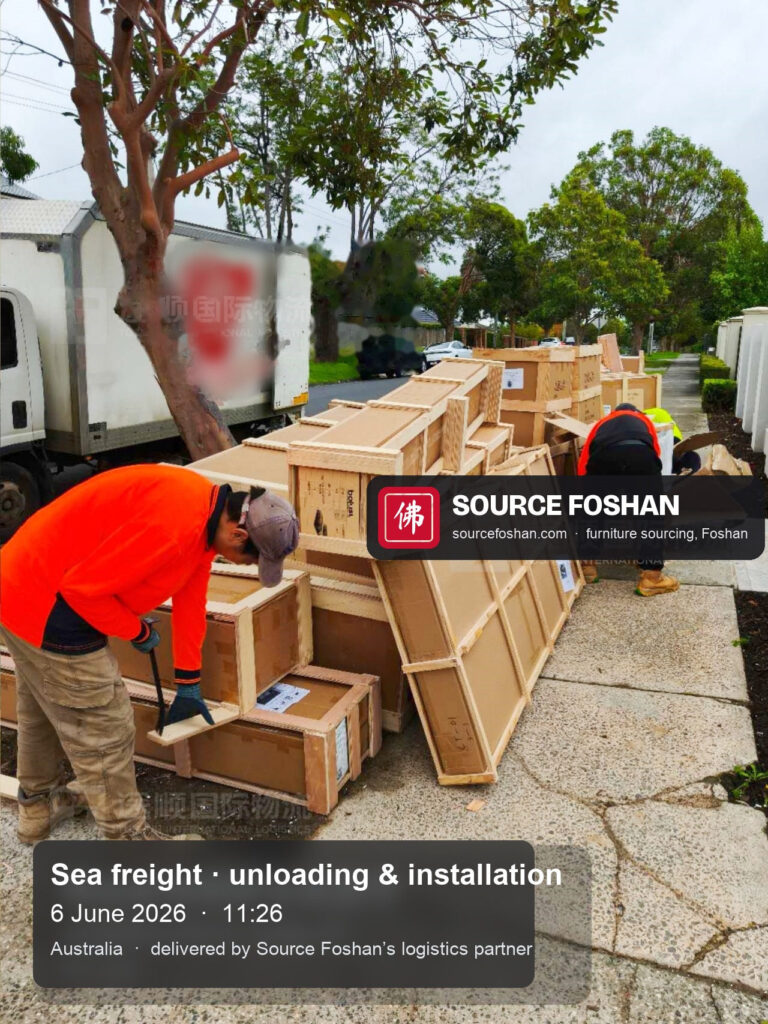
Crates are opened outside, pieces carried in, beds and tables assembled and positioned by room against the packing list.
Timber, cardboard and wrap leave with the crew the same day — and treated timber cannot simply go into a domestic bin.
07 · What arrival looks like
Photographs from the research file.
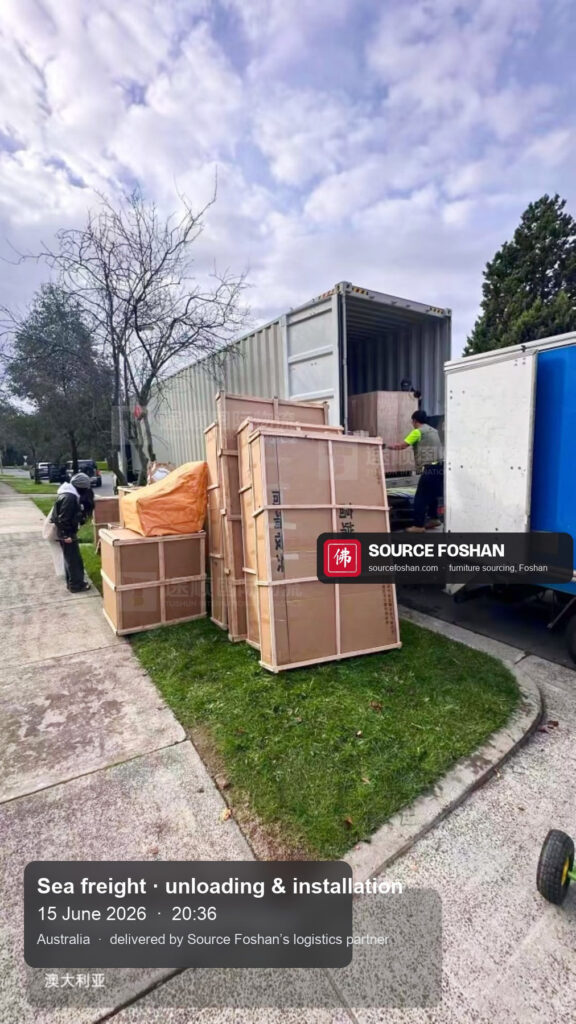
Other people’s shipments, not ours. In September 2026 we read 20 first-hand Chinese-language shipping notes and their comment threads from buyers who moved furniture from China to New Zealand, and cleared their photographs for publication. They show what the process actually looks like at the kerb and in the room. Our own delivery photographs are further down, under case notes.
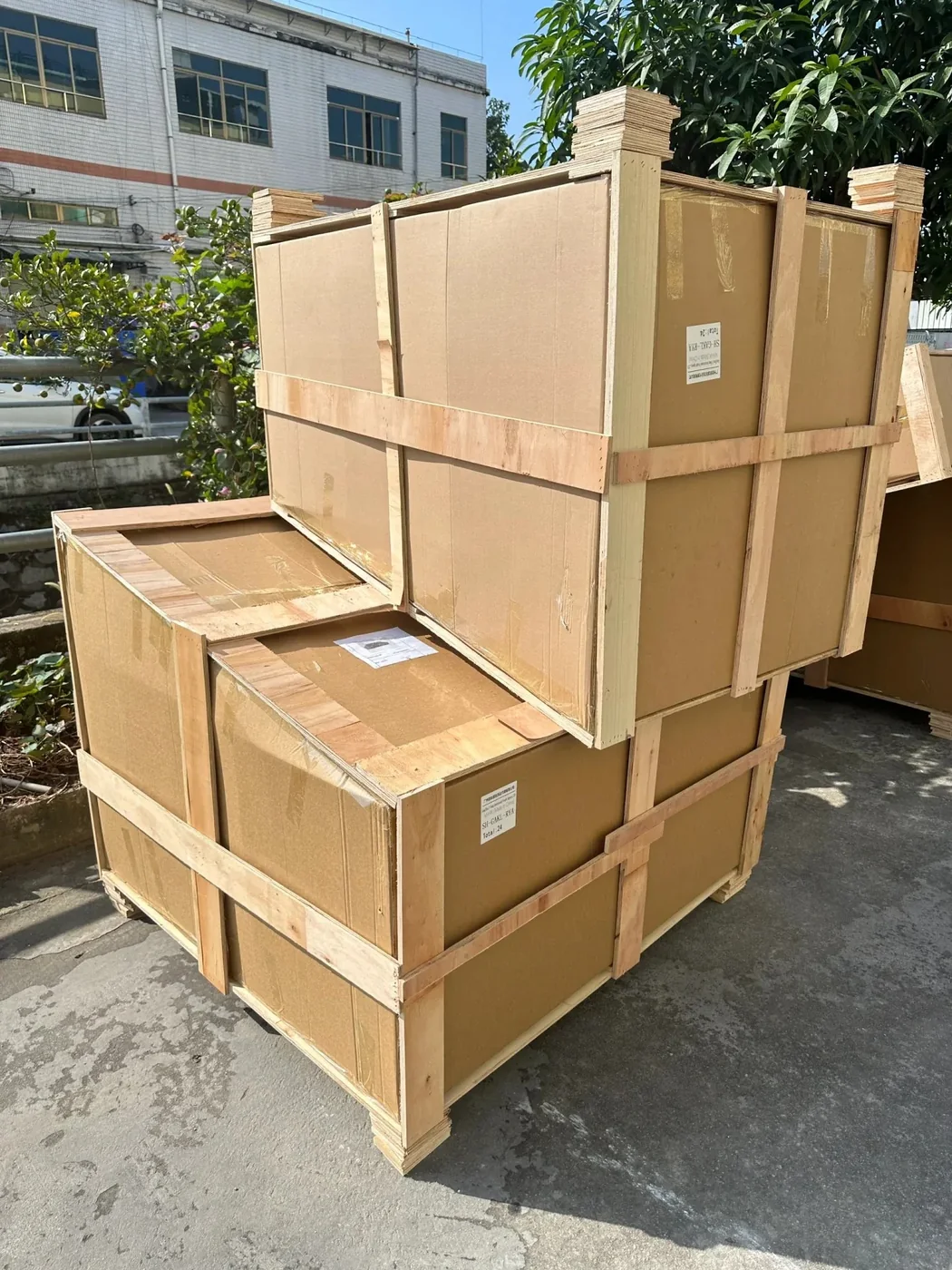
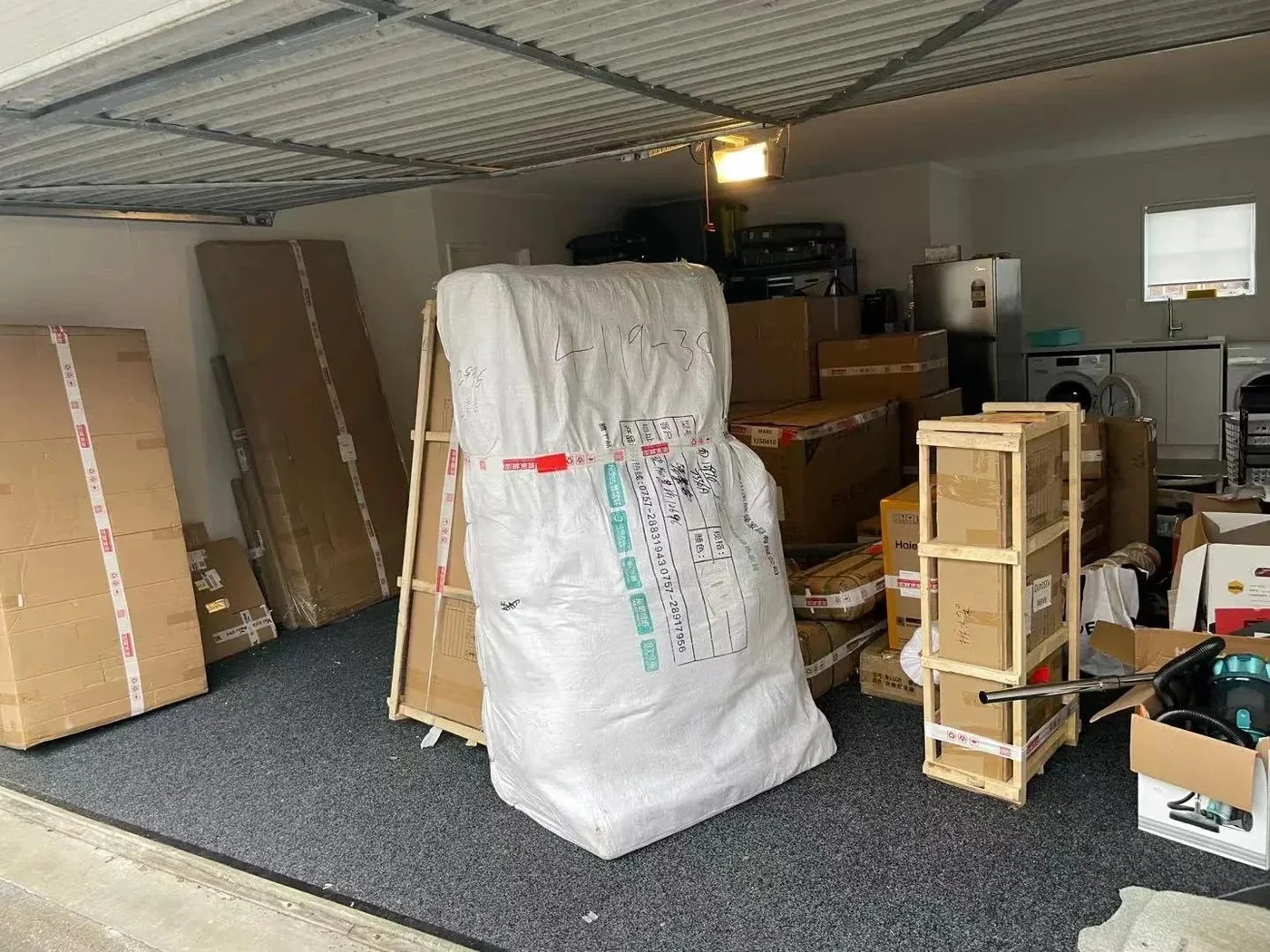
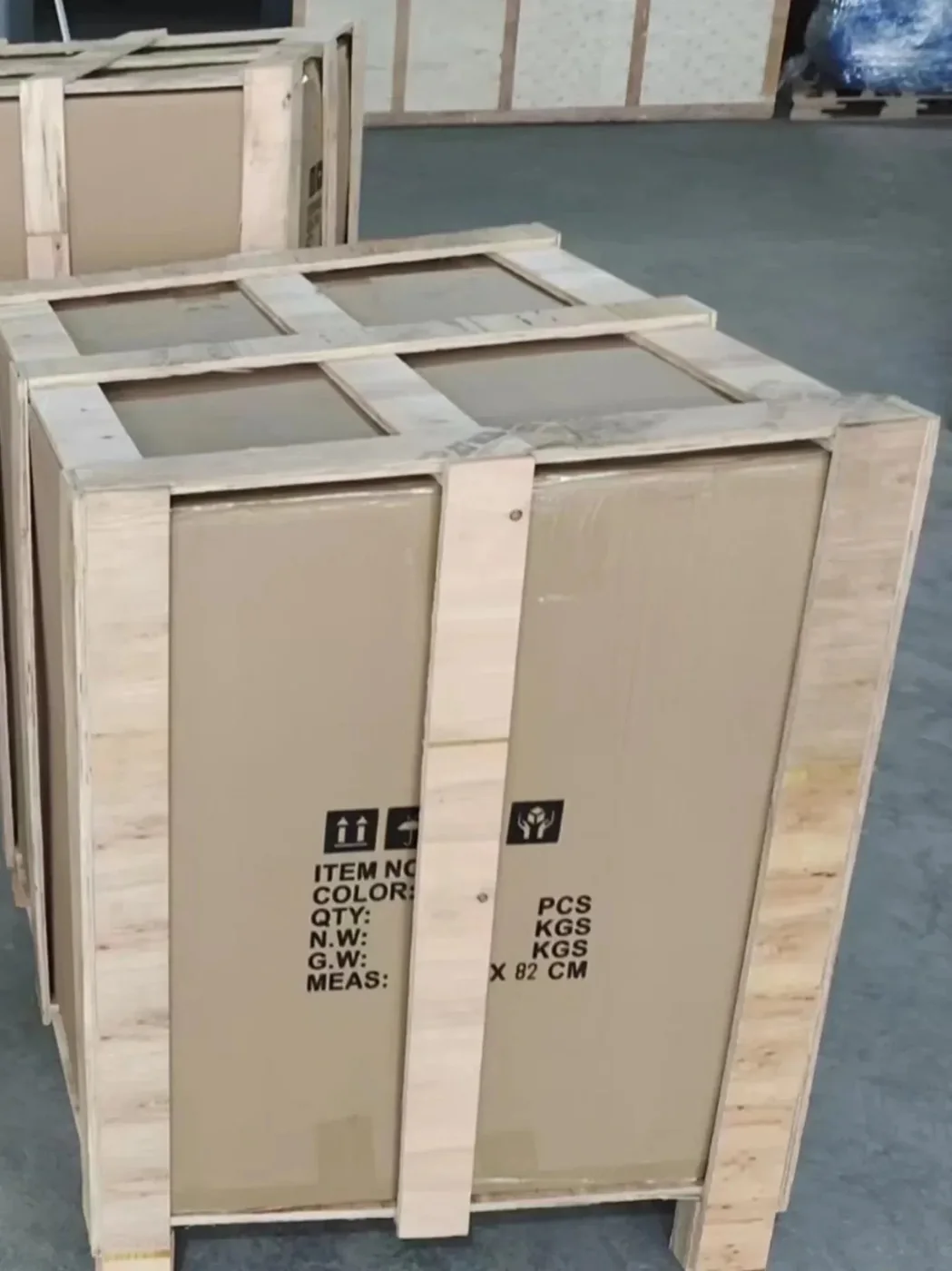
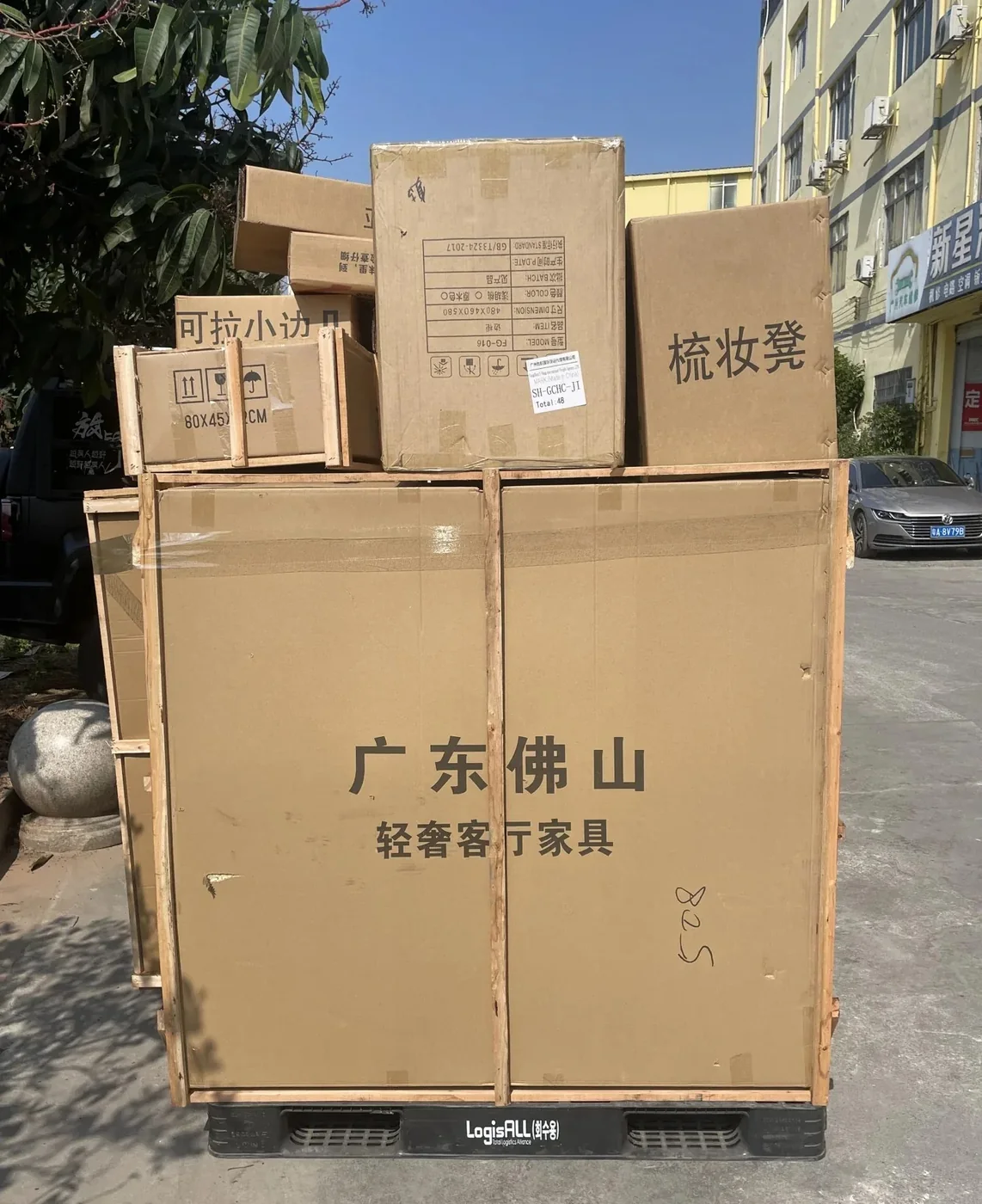
Published with the rights holder’s permission. Faces, house numbers, vehicle plates and third-party company marks have been cropped or redacted; nothing else in these frames has been altered.
08 · Field notes
What goes wrong, in the words of people who have already done it
Compiled in September 2026 from 20 first-hand Chinese-language shipping notes on the China–New Zealand route and their comment threads, cross-read against our own files. Poster experience, forwarder marketing and our practice are kept apart: the left column is what buyers reported happening, the right column is what we do about it. Every rate, duty and border rule stays with the authorities listed at the foot of this page.
-
The trap
No importer client code when the vessel arrives.
ما نقوم بهApply well before arrival — buyers describe needing to start ten days or more ahead. Clearance cannot begin without it.
-
The trap
MPI holding the consignment on the packaging rather than the goods.
ما نقوم بهTreated, marked packaging and complete documents. New Zealand's biosecurity checks are the strictest on this list, and pallets without a compliant mark have held whole containers.
-
The trap
One solid-wood item pulling the whole consignment into treatment.
ما نقوم بهBudget one treatment fee for the consignment, or keep the load to engineered board and non-timber goods where the design allows.
-
The trap
Delivery quoted to an address the carrier does not actually serve.
ما نقوم بهConfirm the delivery radius and what happens beyond it. Buyers report services that stop at 30 km from the depot, and carry-in charged by the hour.
-
The trap
Delivery announced the same morning.
ما نقوم بهAsk for a booking window in the contract, not a phone call on the day.
-
The trap
A kitchen designed in China and installed in New Zealand by people who never spoke.
ما نقوم بهPut the Chinese designer and the local installer in the same thread before the cabinets are cut.
09 · The honest version
When a New Zealand import is not worth it
The shortest sea leg we run and the strictest biosecurity. The second fact is what stops orders, not the first.
- Timber that is not treated and marked. MPI can hold a container over a single unmarked piece of bracing. Treatment and certification happen before the box is sealed, or the schedule is meaningless.
- Sharing a container when the date matters. In an LCL consignment your clearance depends partly on other shippers’ compliance. On a dated project that risk is worth the price of your own box.
- No Certificate of Origin. The NZ–China FTA preference is never applied automatically. Without the certificate you pay duty you did not budget for.
- A South Island address with a tight deadline. Clearance at Auckland plus a domestic leg and the Cook Strait adds a week that the short sea leg can mislead you into ignoring.
With treated timber, a certificate of origin and a container of your own, New Zealand is the fastest route we run — quicker than أستراليا by several days.
الأسئلة الشائعة
Shipping furniture to New Zealand, answered.
كم من الوقت يستغرق وصول الأثاث من الصين إلى نيوزيلندا؟
تستغرق الشحنة في حاوية كاملة من شينزين إلى أوكلاند من 20 إلى 23 يومًا من ميناء إلى ميناء، وهي أقصر مرحلة بحرية بين جميع المسارات التي نديرها، بينما تستغرق الشحنة المجمعة (LCL) من 21 إلى 27 يومًا. يُضاف إلى ذلك من أسبوعين إلى أربعة أسابيع للإنتاج وتجميع الشحنات قبل الإبحار، ومن أسبوع إلى أسبوعين لإجراءات الجمارك، وفحص الأمن الحيوي من قبل وزارة الصناعة الأولية (MPI)، وحجز التسليم. من الباب إلى الباب، تستغرق الطلبية العادية من ثلاثة عشر إلى خمسة عشر أسبوعًا بدءًا من تاريخ دفع العربون.
هل يتعين عليّ دفع رسوم استيراد على الأثاث المستورد من الصين إلى نيوزيلندا؟
عادةً لا. يُعد الأثاث فئة شائعة معفاة من الرسوم الجمركية بموجب اتفاقية التجارة الحرة بين نيوزيلندا والصين، لكن هذه الميزة لا تُمنح إلا بموجب شهادة منشأ صالحة صادرة في الصين — ولا تُطبق أبدًا تلقائيًّا. يُفرض ضريبة السلع والخدمات (GST) بواقع 15% بشكل منفصل على القيمة الجمركية مضافًا إليها تكاليف الشحن والتأمين وأي رسوم جمركية، ويمكن للشركات المسجلة في ضريبة السلع والخدمات المطالبة باستردادها.
ما هي قواعد الأمن الحيوي التي تطبقها MPI على الأثاث القادم من الصين؟
يجب أن تخضع جميع مواد التعبئة والتغليف الخشبية الواردة إلى نيوزيلندا للمعالجة الحرارية أو التبخير ببروميد الميثيل وفقًا لمعايير الاتفاقية الدولية لحماية النباتات (IPPC) وأن تحمل العلامة الخاصة بذلك. كما يمكن فحص الأثاث المصنوع من الخشب الصلب عند وصوله. يُعد نظام الأمن الحيوي في نيوزيلندا من بين أكثر الأنظمة صرامة في العالم، ويكفي وجود منصة نقالة غير موسومة أو قطعة من الدعامات غير المعالجة لإخضاع الحاوية بأكملها للتفتيش والمعالجة على نفقتك الخاصة، مما يؤدي إلى تأخير لمدة أسبوع أو أكثر. يتم معالجة ووضع العلامات على جميع الأخشاب الموجودة في شحناتنا قبل التحميل، وتُرفق الشهادة مع المستندات.
أيهما أرخص في الشحن إلى نيوزيلندا: الشحن بالشحن المجمع (LCL) أم الحاوية الكاملة؟
إذا كان الحجم أقل من حوالي 15 مترًا مكعبًا، فيُفضل الشحن العام (LCL). أما إذا تجاوز هذا الحجم، فعادةً ما تكون تكلفة الحاوية مقاس 20 قدمًا أرخص لكل متر مكعب. وهناك سبب ثانٍ يرجح استخدام الحاوية على هذا المسار ولا ينطبق في أي مكان آخر: ففي الحاوية المشتركة، يعتمد الحصول على تصريح الأمن الحيوي جزئيًا على التزام الشاحنين الآخرين، بينما لا يعتمد ذلك في الحاوية الخاصة بك.
Can you deliver outside Auckland?
Yes. Auckland is a short run from the port; Wellington, Christchurch, Queenstown and the rest of the country are a domestic freight leg after clearance, including the Cook Strait for South Island addresses. We quote that leg with the rest of the job rather than leaving it to be discovered after the container lands.
Do I need an NZ Customs importer client code, and when should I apply?
Yes, if you are importing in your own name, and you should apply well before the vessel arrives — buyers describe needing ten days or more. Clearance cannot start without it, and a container waiting on a code accrues storage. Apply as soon as the booking is confirmed rather than when the arrival notice lands. NZ Customs is the authority on eligibility and the current application route.
If one item is solid wood, does the whole consignment get fumigated?
In practice, yes: the treatment is applied to the consignment, and it is charged once rather than per item. That is why the question is worth asking at order stage, not at the warehouse. Where the design allows, engineered board and non-timber packaging keep the consignment out of the treatment path entirely. MPI sets the actual requirement for your goods and your packaging.
How far will the delivery go, and is carry-in included?
We agree the radius and the carry-in in writing before booking, because the default in New Zealand is neither generous nor consistent. Buyers report services that stop 30 km from the depot, deliveries that end at the garage door, and carry-in and assembly charged by the hour on top. Give us the address and the access and both go on the quotation as named lines.
Send your list and your New Zealand address
Quantities, rooms or a rough list are enough. You get compared factory options, the packed volume, the container call and a landed estimate within one business day.
الحقول المُحددة مطلوبة.
No spam, no obligation. Replies come from the sourcing team in Foshan, usually within one business day.
Sources & further reading
Where these figures come from.
- Sino Shipping — Shipping from China to New Zealand — FCL and LCL rate ranges and port-to-port transit times to Auckland, September 2026
- New Zealand MFAT — NZ–China Free Trade Agreement — Preferential duty and Certificate of Origin requirements
- New Zealand Customs Service — Duty and GST — 15% GST on the value for duty plus freight, insurance and duty
- Ministry for Primary Industries — Wood packaging — Treatment and marking requirements for imported wood packaging
Ocean freight is a spot market and moves monthly; duty and tax rules change without notice. Treat every figure here as a starting point and confirm it at booking with your broker.