Foshan / Custom furniture order process
How to Order Custom Furniture from Foshan: Drawings, Samples, Costs and QC
Turn drawings into a revision-controlled order: qualify the maker, approve a physical sample, separate one-off costs and deposits, then inspect before consolidation.
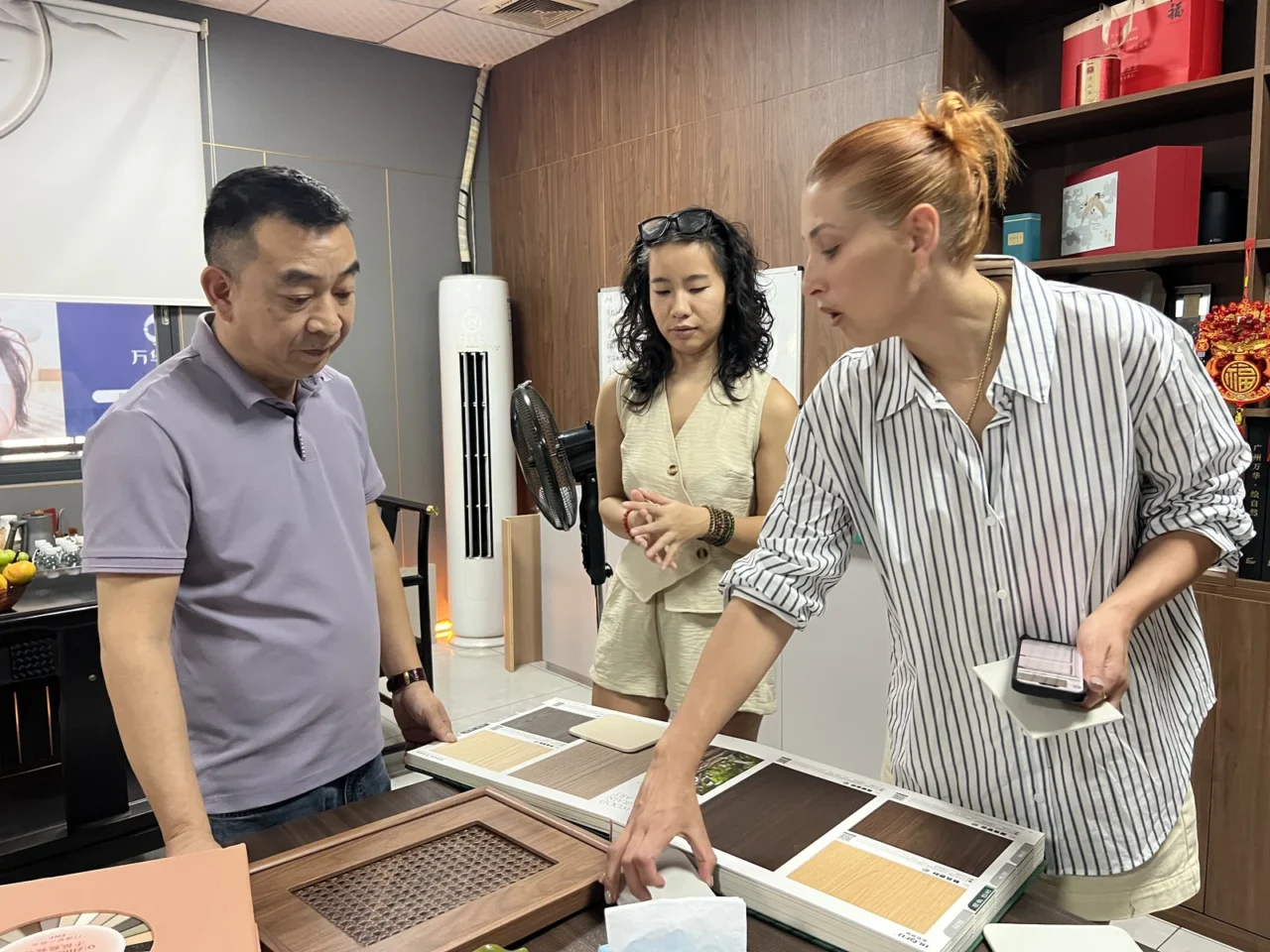
Custom ordering / Drawings, samples and release decisions
Order custom furniture and cabinetry in nine controlled stages: brief, supplier qualification, comparable quote, drawings, samples/prototype, contract and payment authorisation, production checks, finished-goods/correction approval, then consolidation and shipment. Name the buyer action and required record at each stage. A factory visit, approved swatch or inspection report answers a different question; none replaces the complete order specification.
Reviewed 30 October 2026. Programme and cash amounts are illustrative allowances. No universal MOQ, sample charge, 30/70 payment rule or guaranteed delivery window is asserted.
01 / An approval is a specific release
How do you order custom furniture for a full renovation remotely?
| Этап | Buyer action | Record/output | Planning allowance |
|---|---|---|---|
| 1 · Brief | Send room list, quantities, intended use, dimensions, budget and destination | Item schedule and open-question list | 1 week |
| 2 · Qualify suppliers | Review maker/seller identity and relevant capability | Shortlist, visit/audit scope and unresolved evidence | 1–2 недели |
| 3 · Compare offers | Reconcile the same specification and handover | Itemised quote, exclusions, MOQ and validity | 1 week |
| 4 · Draw and detail | Local survey/installer and buyer approve the revision | Shop drawings, interfaces and component/room codes | 2–4 недели |
| 5 · Sample / prototype | Accept materials, first piece and permitted differences | Signed references, tests where needed and sample decision | 2–4 недели |
| 6 · Contract / payment | Approve payees, amounts and release conditions | PI/contract, milestones and change procedure | 1 week |
| 7 · Produce / check | Resolve in-production questions and substitutions | Progress and agreed inspection findings | 6–10 weeks |
| 8 · Finished goods / correction | Review findings and authorise the agreed release | Inspection, corrective action and reinspection record | 1–2 недели |
| 9 · Consolidate / dispatch | Accept reconciled cargo and shipping scope | Numbered cartons, packing list, documents and loading record | 1–2 недели |
The sequential arithmetic is 16–27 weeks to shipment readiness, before the actual ocean route, clearance, final delivery and installation. Some work can overlap; changes, tests, missing site dimensions, closures or failed inspections can add time. This is not a measured factory average or the promised duration of every order.
Cabinetry, upholstery, metal seating and stone often need different capabilities and contracts. Qualify which operation makes each component and which work is outsourced. A sourcing coordinator can organise the agreed handovers; combining suppliers in one shipment does not turn them into one manufacturer. The whole-property package guide separates the rooms and destination costs; the fitted-joinery guide covers kitchen, wardrobe and wall-panel interfaces.
02 / Identity, capability and order acceptance
How do you verify a custom manufacturer before a large order?
Obtain the Chinese legal name, Unified Social Credit Code, registered/production address and legal seller. Use the official company registry for current registration checks; compare the quotation, contract and corporate beneficiary. A registered business scope or attractive showroom is not evidence that the proposed product is made in-house.
A relevant visit or live production view should establish: the operation making the item; appropriate cutting, welding, edge-banding, upholstery or finishing stages; material storage/traceability; drawing and change control; and how non-conforming work is identified and corrected. Ask about outsourced work, capacity for your dated programme and access for agreed inspection. A generic audit report is not a substitute for order-specific approval.
Check every credential’s holder, scope, validity, model and relevance. Management-system or social-audit records do not certify a chair’s strength, cabinet emissions or electrical safety. A material supplier’s report does not necessarily cover the assembled product. Ask the appointed lab or destination professional which evidence applies, and keep unresolved points open before committing.
Factory-direct and showroom offers can both be suitable, depending on model, quantity, specification and included work. Get the current MOQ by model/colour/size and any material purchase minimum. There is no verified universal 20-chair minimum, standard small-order surcharge or fixed factory-price advantage in this guide. Use the channel comparison to plan the next visit.
03 / Ask for measurable facts, not category words
Which technical details must be fixed before a quote?
| Product/feature | Record with units or identifiers | Evidence to request |
|---|---|---|
| All pieces | Item/revision, quantity, overall dimensions in mm, product and carton weights in kg | Dimensioned drawing, measured first piece and agreed tolerances |
| Metal dining chair | Alloy/grade, tube section and wall thickness in mm, joints and covering construction | Material identification, relevant measurements and model-specific performance evidence |
| Gold finish | PVD, electroplating or other actual process; substrate, preparation, reference colour and finish | Process declaration, physical sample and applicable corrosion/adhesion tests with acceptance criteria |
| Load / stability / cycles | Intended residential/contract use, required test method, edition and result | Report for the actual design/material assembly; a sales “kg” number is insufficient |
| Stacking | Approved number of units, stack height in mm, support points and protection | Demonstrated stability/handling and confirmed nested packing data |
| Мягкая мебель | Fabric code/composition, foam construction/density in kg/m³ where relevant, cleaning and seam details | Physical reference, relevant abrasion/colour/fire tests and material traceability |
| Мебель | Board per component, thickness, edging/adhesive, hardware brand and exact model/quantity | Shop drawings, board/batch documents, applicable emissions records and trial assembly |
There is no reliable one-to-one conversion from a tube-wall thickness to a chair’s safe load. Design, joints, material, geometry and the test application all matter. Likewise, PVD is a process description, not an automatic salt-air or scratch-life guarantee. Avoid assigning a generic price, kg rating, stack height or transport saving to every gold chair.
A colour reference alone is incomplete: identify substrate, sheen and lighting/comparison conditions, then retain a dated physical reference. For fabrics, agree the exact test method and end-use requirement; a Martindale number without the tested material and method is not a complete commercial specification. Do not treat an E0/ENF label, FSC statement or hardware brand as interchangeable compliance proof.
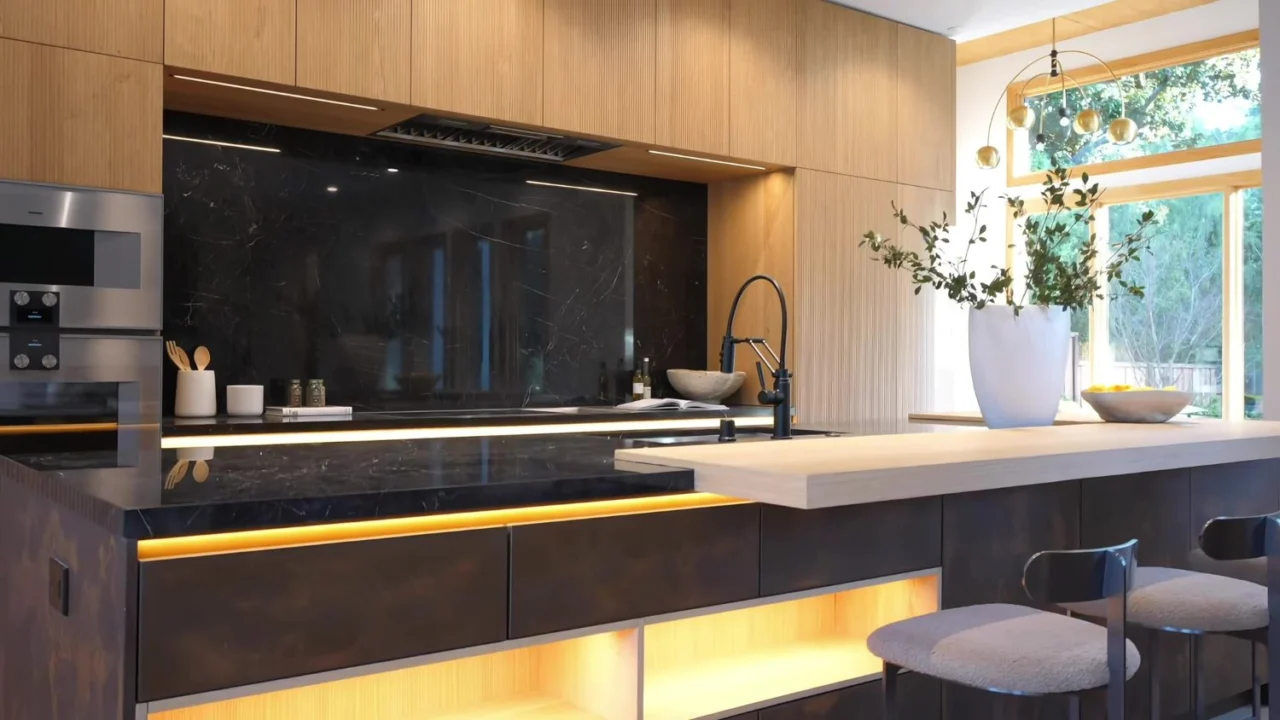
Fitted work adds finished-site measurements, appliance models, power/services, ventilation, fixings, fillers and the local installer’s sign-off. A photo helps communicate appearance but cannot determine hidden construction or a room survey. Accept PDF/DWG and other agreed native formats; confirm file versions and ownership rather than promising that every STEP/SKP model is production-ready.
04 / Four references with different jobs
What should drawings, samples and a prototype approve?
Hold the same numbered revision and sample references on both sides. Note approved deviations explicitly; a message saying “looks good” is not an agreed change to dimensions or material. A 3D render shows appearance, not a load test, board emission result or packing plan.
A finish board may answer a colour/texture question at lower scope than a full prototype, but it cannot establish the strength or operation of a chair. Agree the sample price, tooling/fixture charge, courier, test scope, ownership, refund/credit conditions and any rework rounds before the supplier starts. There is no universal free drawing, refundable prototype or courier delivery time in this article.
If you pay for tooling or submit a protected design, specify ownership, permitted use, storage, maintenance, return/disposal, exclusivity if agreed, and what happens when the relationship ends. Paying a sample fee does not automatically assign all intellectual-property rights. Confirm permissions and obtain local advice for protected designs rather than ordering a replica solely from another brand’s photograph.
05 / Cash needed before production is not the full landed cost
How much should you allow for a sample and deposit?
For arithmetic only, assume 80 units at USD 180 = USD 14,400 in goods; sample USD 400, tooling USD 600, sample courier USD 200 and testing USD 500 = USD 1,700 of one-off allowances. A 30% goods deposit is USD 4,320, giving USD 6,020 of modelled pre-production cash; the goods balance is USD 10,080. An assumed 4% goods-basis sourcing line is USD 576, with its due date still to agree. The sum of entered lines is USD 16,676, before unpriced packing, freight, destination costs and taxes.
Editable planning illustration
Separate sample costs, the goods deposit and the unpaid balance
The sample is separate from production quantity; none of the one-offs is credited in this model. The fee is included once in the scope sum, with its payment date still to agree. Freight, import taxes, local installation and all other unpriced scope remain excluded. These inputs are assumptions, not offered terms.
These numbers are assumptions, not verified factory sample fees, a quotation or payment instructions. The published service policy is 3–5% on an agreed basis and goods orders from USD 10,000; fixed/minimum fees and the actual covered work follow the proposal. State who is paid, what each amount buys and whether any sample/tooling payment is credited against the goods so it is not counted twice.
Agree cancellation, late changes, failed tests and corrective work in the contract. A 30/70 split is a possible structure, not a universal requirement. The payment milestone must name the inspection scope, acceptance conditions and buyer approver. A bill-of-lading copy does not replace checking the finished goods; an ordinary company account is not automatically escrow. Use the payment guide и company/engagement verification checklist.
06 / Three checkpoints, separately agreed coverage
How should first-piece, production and pre-shipment checks work?
- First piece/sample: compare the approved revision, materials, finish, dimensions and operation; record tests/observations and accepted differences before repeat production.
- In-production: choose a stage when relevant work remains visible and corrections are practical. Check the agreed units/features and material substitutions; do not assume a fixed 30–50% completion trigger suits every product.
- Finished goods and loading: apply the agreed inspection plan, list corrections and reinspection, then separately confirm carton reconciliation and loading scope.
ISO 2859-1:2026 supplies AQL-indexed lot sampling schemes. Record the standard/edition, defined lot, inspection level and regime, defect classes, AQLs, sample size, acceptance/rejection numbers and random selection. A proposal using General Level II, major AQL 2.5 or minor 4.0 still needs that complete plan; it is not permission to knowingly ship defective or unsafe pieces. Critical hazards need the agreed non-acceptance/escalation rule.
Sampling has risks; it is not a check of every unit. Dimension/finish/function checks do not prove hidden construction or replace required laboratory testing. Agree coverage for bespoke one-off pieces and whether all critical dimensions or functions need individual checks. Set the report format and sufficient photographs to identify item, method, result and unresolved action, rather than promising a universal page/photo count.
Он documented inspection/rework record shows why completed corrections and open actions should remain distinct from shipment release. It is not evidence that every subsequent order passed, or a statistic about how many defects Source Foshan intercepts. Use the cabinet inspection scope for relevant joinery checks.
07 / Number the handover
How do you pack, consolidate and resolve mistakes?
Use item/room/module codes on components, hardware bags and cartons. Agree surface/edge protection, disassembly, moisture/handling protection, crate need, orientation, actual packed dimensions/weights and an installation pack. A trial assembly in China does not establish that local wall conditions, services or fixings are ready.
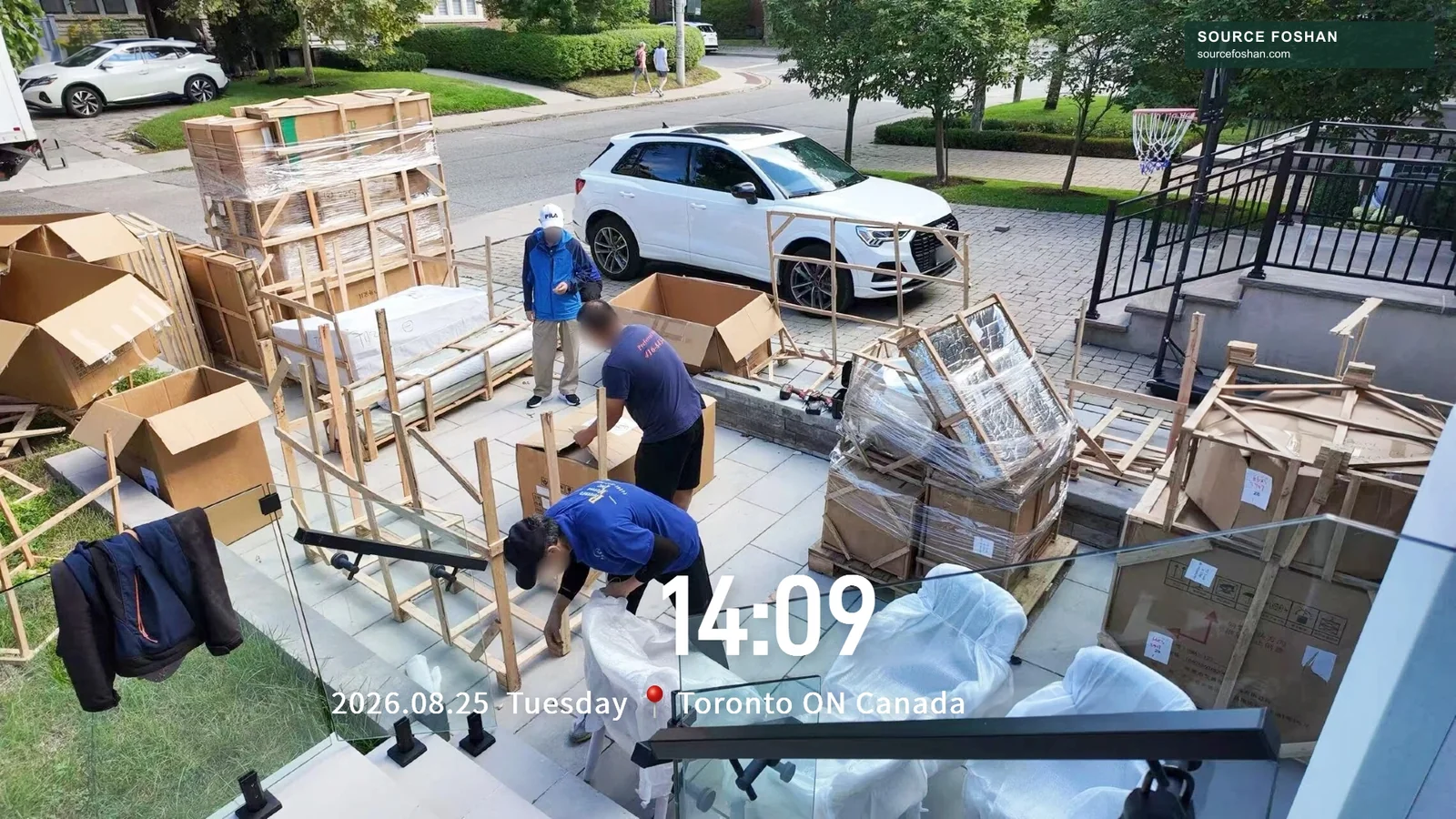
Combine suppliers only through an agreed receiving, storage, inspection, repacking and loading plan. Name the exporter and importer; reconcile commercial invoice, packing list, transport record and destination-specific origin/material/test documents. ISPM 15 applies to raw-wood packaging, with processed-wood packaging such as plywood excluded from that scope; raw-wood skids in a mixed crate remain a separate issue. Product timber/biosecurity requirements are different checks.
Get current shipment offers against confirmed cartons and the named destination. Do not assume all custom orders fit one HQ, all routes take four weeks, or every warehouse offers free storage. Check the project’s local installation, building/product requirements and importer responsibilities before the order, through the объёмом перевозки и installation handover pack.
Common issues to plan for include wrong dimensions or revision, colour mismatch, mixed fabric batches, unapproved hardware, corrosion at joints, damaged packing and schedule slippage. Prevent them with specific references, traceability, checks and contractual release decisions, not a claimed universal defect rate or moisture-content number. Agree actual closure/restart dates with the factory before a holiday.
On receipt, record delivery exceptions and item/carton IDs, preserve packaging where practical, and collect measured photos/video. Notify the seller/carrier/insurer promptly under their separate deadlines. Distinguish survey error, production mismatch, transit handling and site installation before agreeing repair/remake, credit, freight and timing. No fixed parts-remake period, automatic refund or insured outcome is promised; see обязательствах по обслуживанию.
Custom order questions
Can I order without visiting China?
Yes, subject to an agreed remote process: identify the maker/seller, review relevant live production, approve drawings and physical references, and define inspection/release records. Confirm courier, testing and reporting scope rather than assuming a video establishes every product feature.
What minimum order makes custom sourcing worthwhile?
Supplier quantity/material minimums, the published USD 10,000 service starting value and shipment economics are different constraints. Compare the actual complete order and accepted scope; no universal minimum CBM or savings threshold is asserted.
Can I use CAD drawings or just a photo?
Agree file formats and versions. A photograph helps define appearance but needs dimensions, materials, construction and permission to use the design. The supplier’s production drawings and relevant local measurements still require approval.
How long until delivery?
The illustrative nine-stage sequence totals 16–27 weeks to shipment readiness; actual ocean routing, clearance, delivery and installation are additional. Overlap and delays depend on the order. Get dated milestones, not a universal 10–16-week promise.
Is factory-direct always cheaper than a showroom?
No. Compare the exact specification, accepted quantity and included handover, plus service and logistics costs. A lower goods price can exclude services or a material change; there is no verified market-wide percentage discount here.
How do I establish the real manufacturer?
Check the legal entities, production address, relevant operations, outsourced work, current capacity and order-specific evidence. A license, exhibition stand or showroom by itself does not prove who will build the product.
Who owns the mould or design when I pay for a prototype?
Put ownership, permitted use, exclusivity if agreed, storage, maintenance, return and disposal into the contract. The fee alone does not automatically transfer all tooling or intellectual-property rights.
How are service fees and balances paid?
The written proposal defines fee basis, scope, payees and timing. Agree each deposit and balance milestone against the actual approval conditions. No ordinary account is automatically escrow, and inspection is not a blanket guarantee.
Ваш следующий шаг
Send the drawings and sample questions.
Include dimensions, quantities, material and finish references, destination, approved budget and the decisions your sample needs to resolve.