Quality & inspection · Cluster guide
Furniture inspection in China: when to check, what to check and who should do it
Furniture inspection in China happens at 4 points: materials, production, pre-shipment and delivery. What to check, who should do it and what to do on a fail.
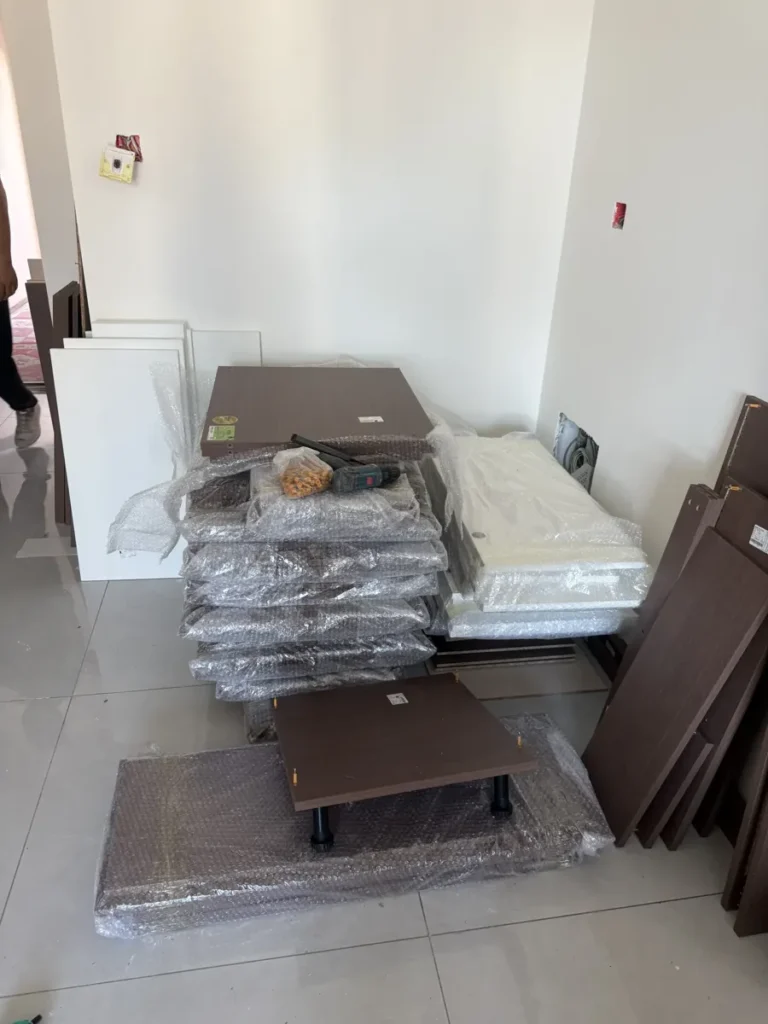
- The decisive inspection is the pre-shipment check before the balance is paid; after that, a buyer abroad has little leverage left.
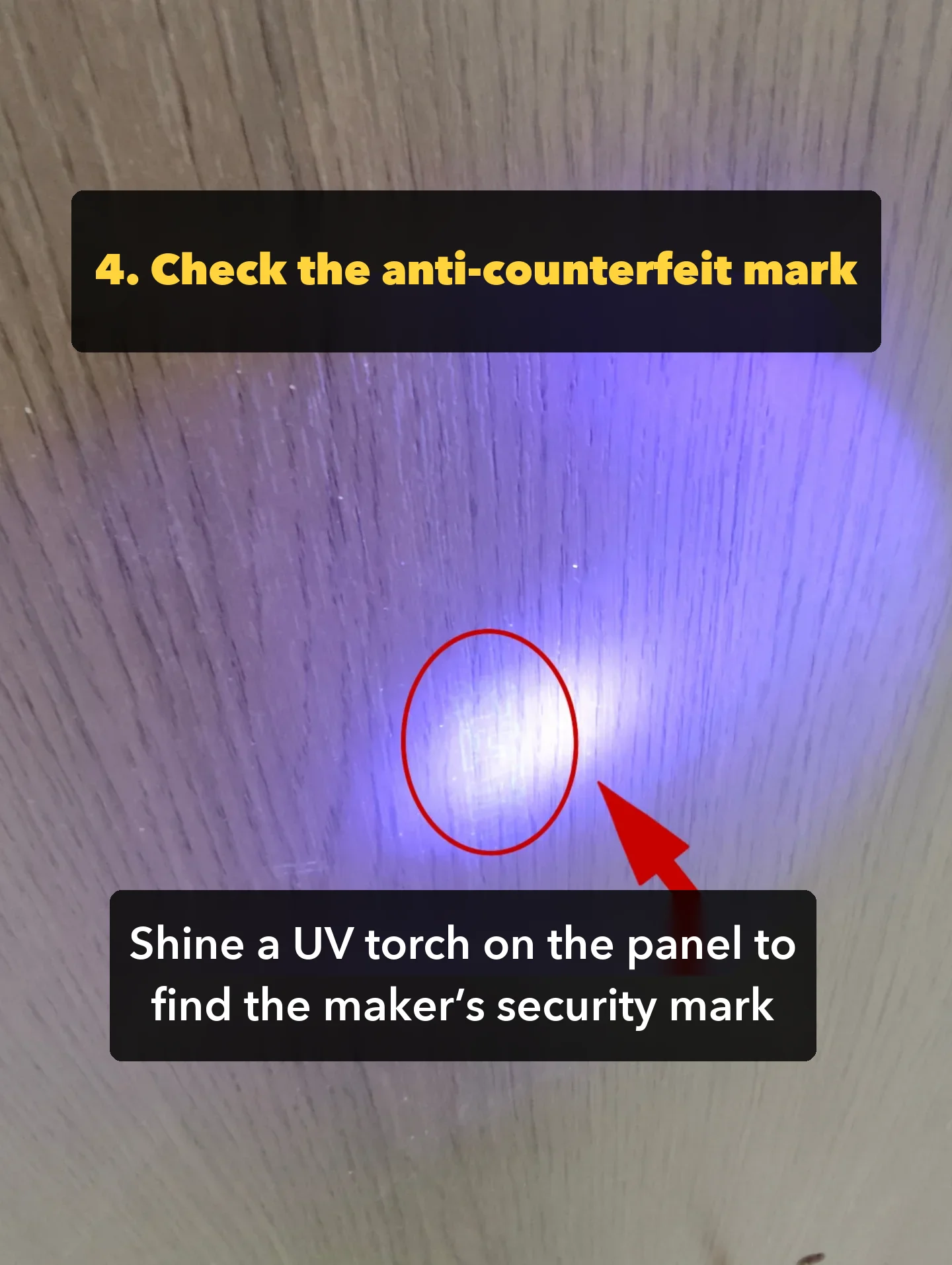
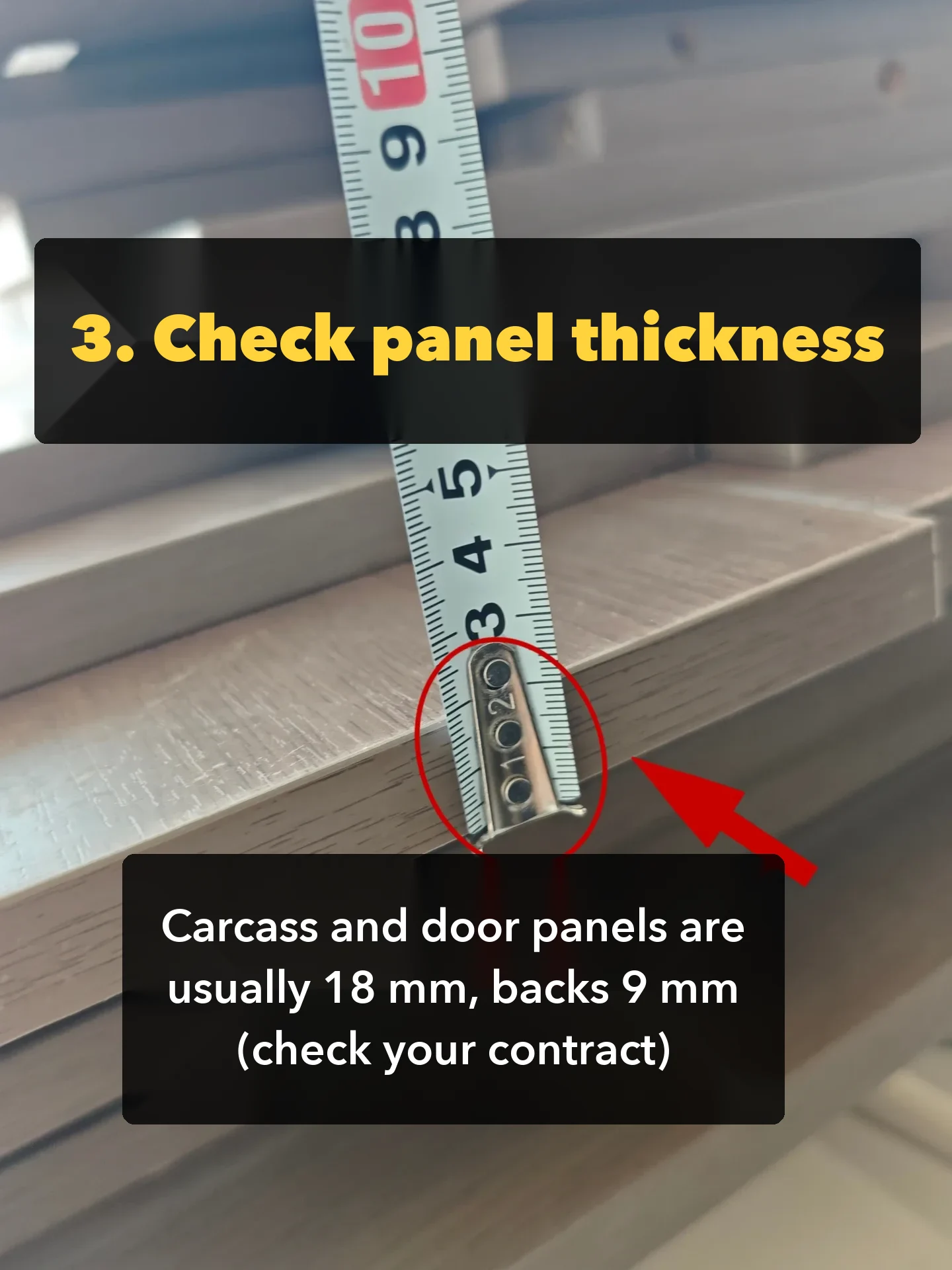
- A Tianjin buyer on Xiaohongshu checked a custom-panel delivery with a UV torch and a tape measure: ENF watermark, 18 mm carcass panels, 9 mm backs and no more than 0.5 mm variance per board.
- She writes that some sellers quietly supply 16 mm boards where 18 mm was agreed — a fault only a measurement catches.
- Fire (TB 117-2013 in California; the 1988 Fire Safety Regulations in the UK) and formaldehyde (CARB Phase 2 / TSCA Title VI in the US) are checked on paper, then against the materials on the line.
- Factory QC reports to the factory; an independent inspector or sourcing agent reports to you, and an agent can also hold the balance until re-work is done.
Furniture bought from China should be inspected at four points: when materials are confirmed, during production, before the balance is paid and the container is loaded, and on delivery. Each check compares the goods with a written specification — dimensions, materials, finish, function and packing — plus the fire and formaldehyde paperwork your market requires. An independent furniture inspection service or a sourcing agent can do it, but only if the specification was precise enough to fail against.
When should furniture be inspected when you buy from China?
At four points: when materials are confirmed, during production, before the balance is paid and the goods are loaded, and again when the goods reach you. Most buyers think of inspection as one visit at the end. By then, the choices that decide quality — the board, the leather, the foam, the stone slab — were made weeks earlier, and an inspector can only reject what is already built.
| Etapa | What is checked | Why it matters from abroad |
|---|---|---|
| Material confirmation | Samples or swatches of the actual leather, fabric, board, stone and hardware, photographed with labels | Substitution usually starts here; it is cheap to fix and expensive to find later |
| During production | Frames before upholstery, carcasses before finishing, first piece of a repeat order | Hidden structure is only visible at this stage |
| Pre-shipment (final) inspection | Every piece or a sample of a large run, against the written spec: dimensions, finish, function, labels, packing | The last moment you still hold the balance |
| Carga | Count, packing condition, how the container is stowed | Damage claims later depend on these photos |
| On delivery | Outer packing, count, visible damage before signing | Carrier and insurance claims have short windows |
The step-by-step order of these stages within a whole purchase is laid out in our guía paso a paso para comprar muebles en China. The final stage, at your door, has its own routine: see what to check when furniture is delivered, before you sign.
What does a furniture inspection actually check?
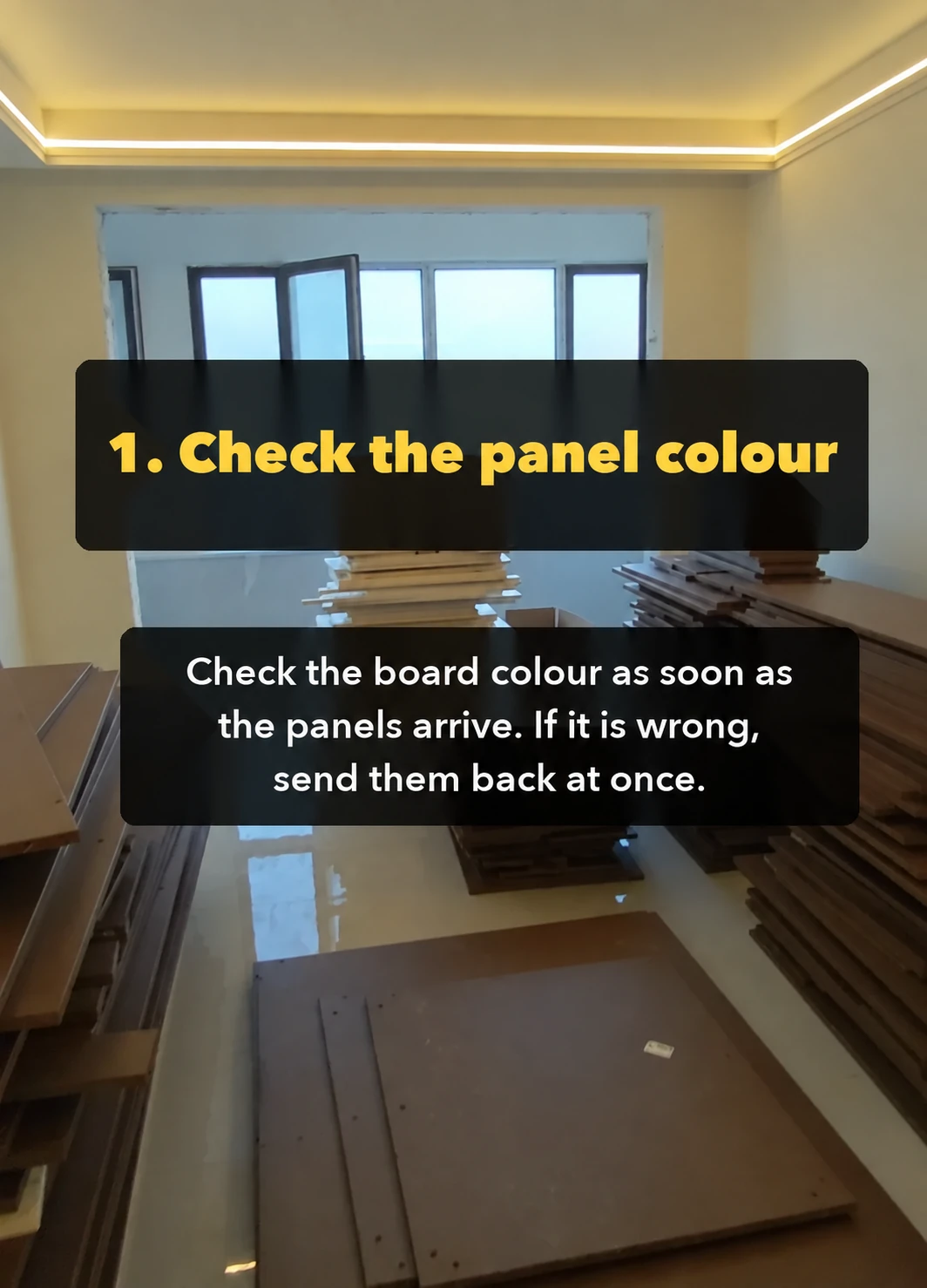
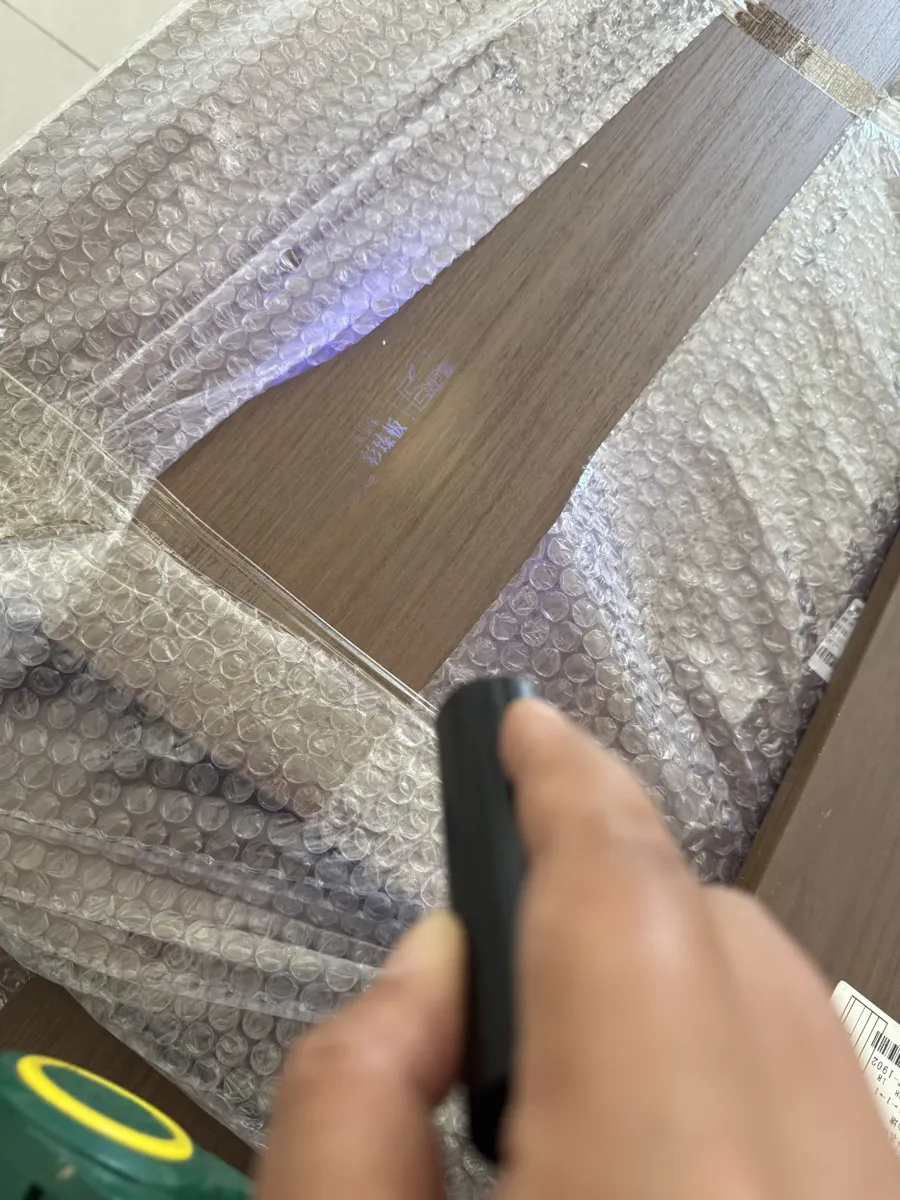
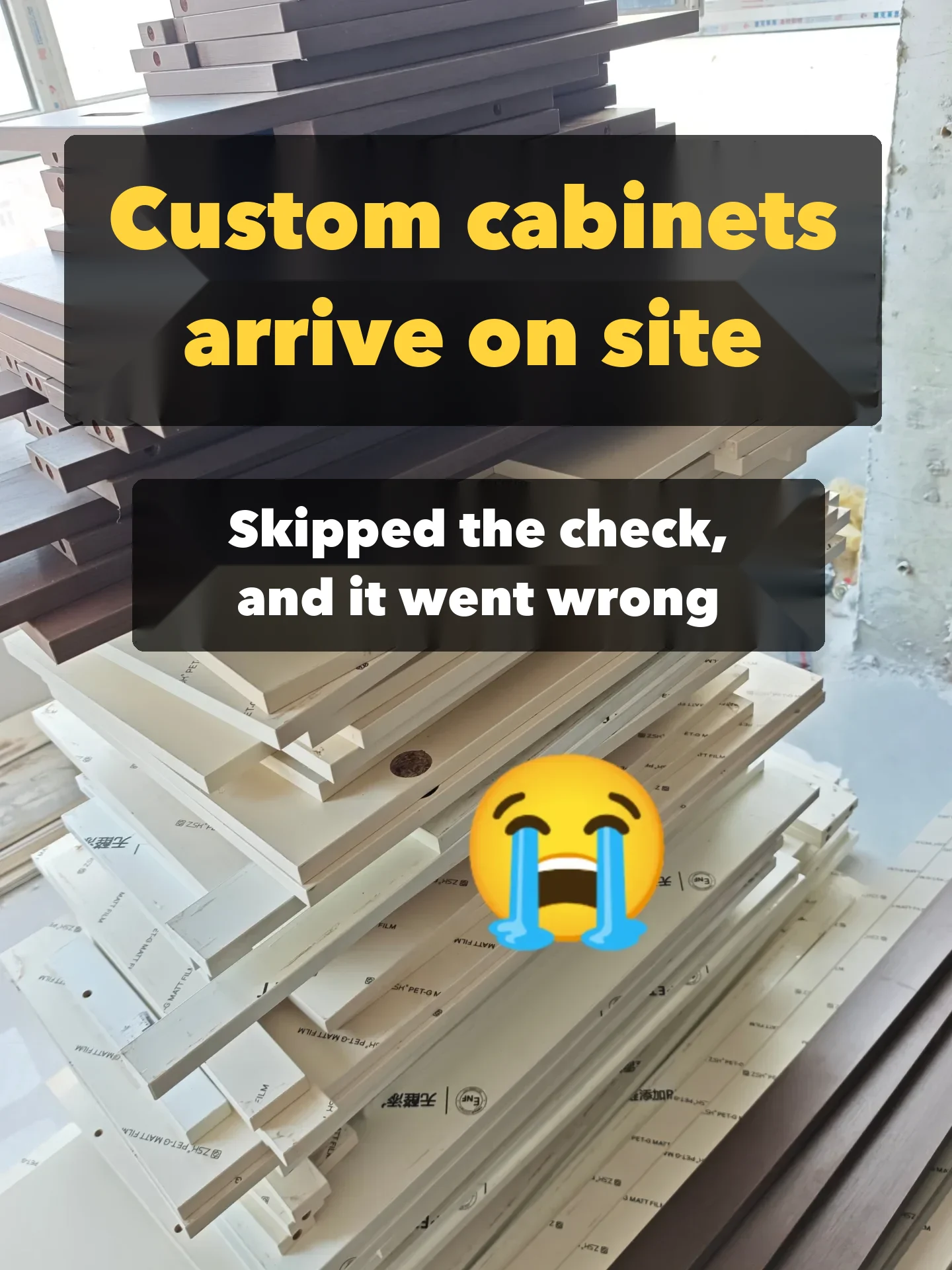
Five things: that the piece matches the written specification, that it is made of what was promised, that it works, that it is finished cleanly and that it is packed to survive the journey. A useful way to see this in practice is a Xiaohongshu post by a buyer in Tianjin (315 likes, 96 comments) who refused to let her installers start until she had checked a delivery of custom cabinet panels herself, with a UV torch and a tape measure.
- Grade marking. Her contract named an ENF-grade board from a branded maker. Under UV light, genuine panels showed a hidden watermark with the brand and the ENF mark; she treated a missing or blurred mark as grounds to refuse the delivery.
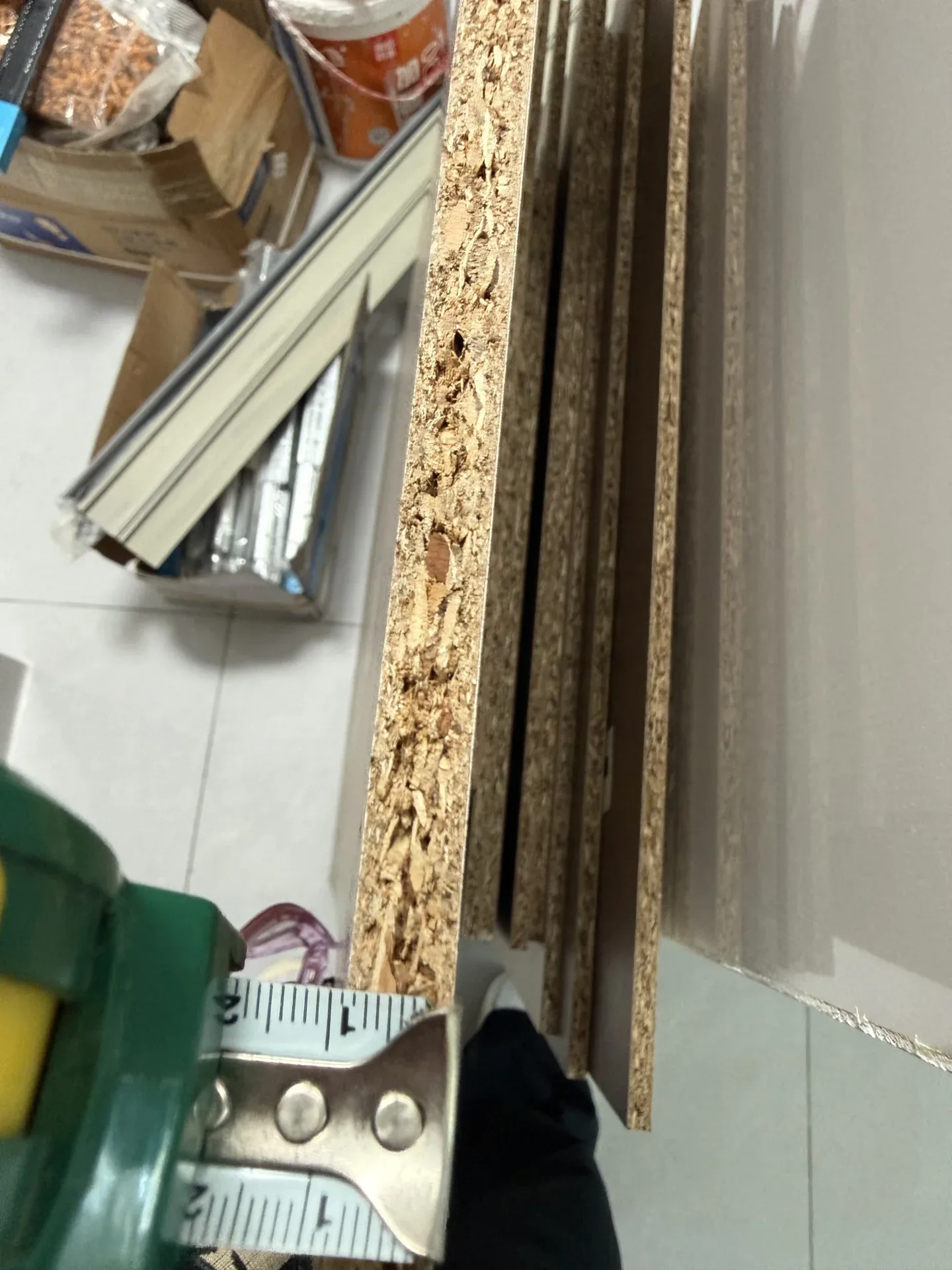
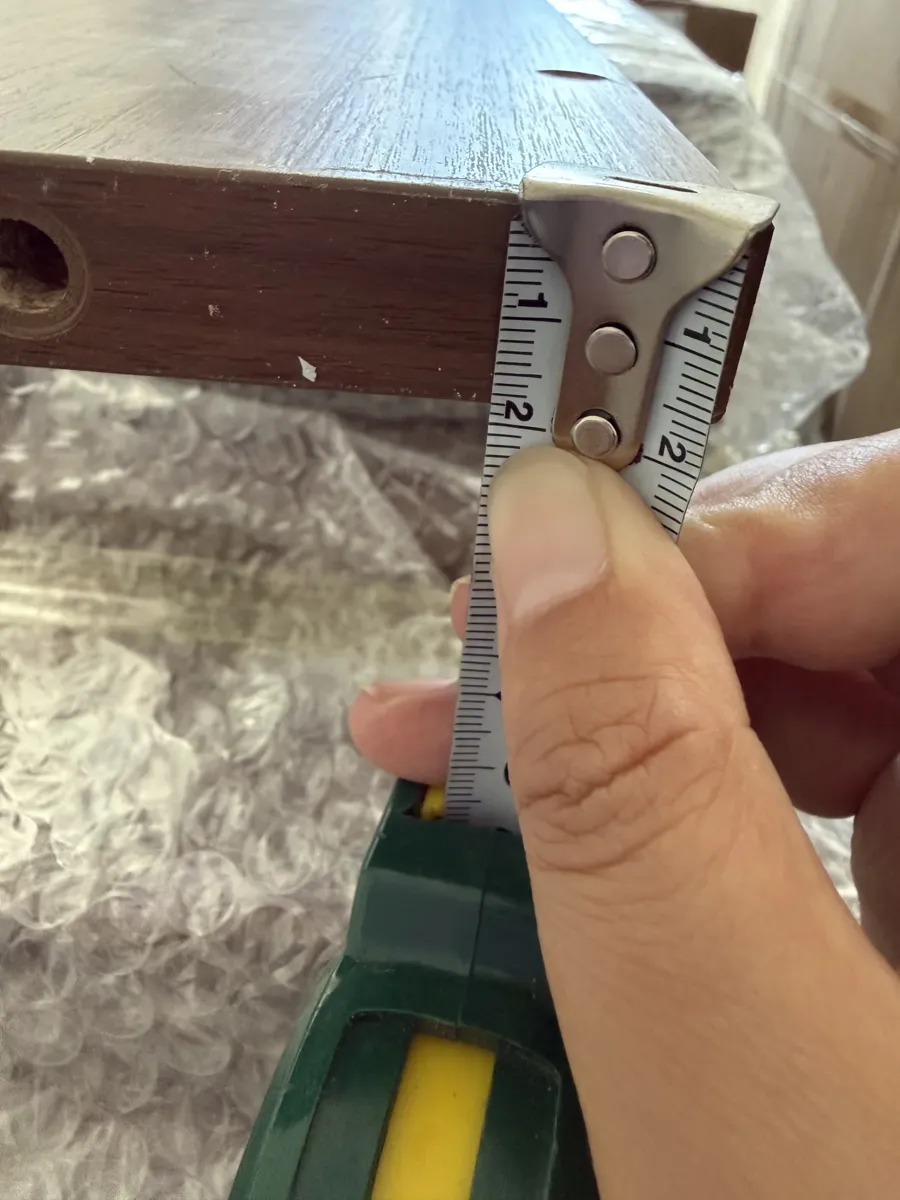
- Thickness. Carcass panels were specified at 18 mm and back panels at 9 mm. She measured every carcass panel, allowed no more than 0.5 mm of variance, and writes that some sellers quietly supply 16 mm boards instead.
- Core and edges. The particleboard core should be dense and even, with no voids or loose chips; edge banding should be smooth, without burrs, glue squeeze-out or lifting.
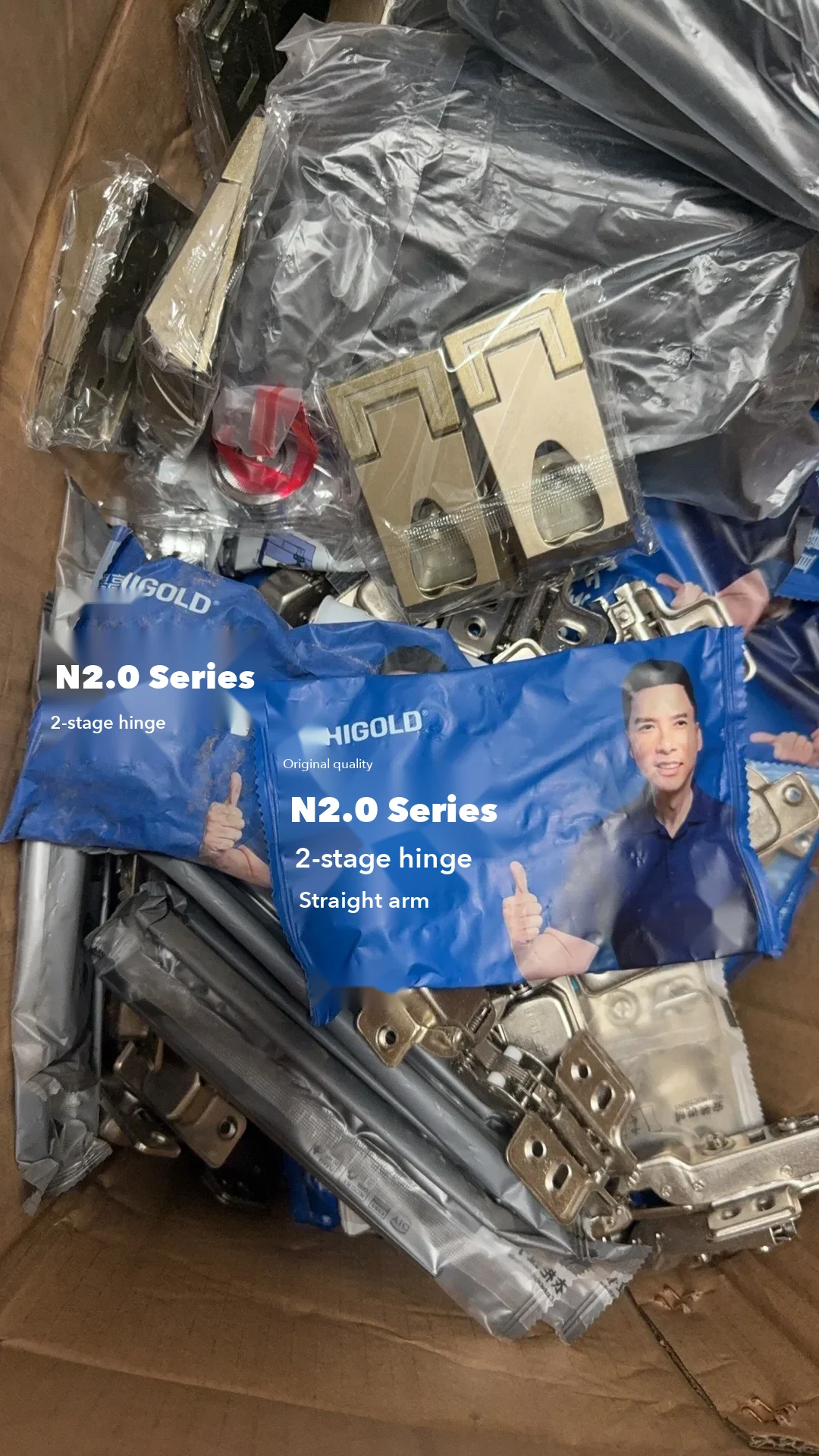
- Hardware. The contract named a specific brand of two-stage soft-close hinge; she checked that every hinge arrived in the maker’s own packaging.
- Sundries. The sealant supplied was a standard type, not the mould-resistant one kitchens and bathrooms need, because nobody had written it down.
Each of those checks has an equivalent for other materials, and each has its own guide in this cluster:
- Sofas and chairs: how to tell full-grain, top-grain, split and bonded leather apart, y what Martindale and Wyzenbeek rub counts mean for upholstery fabric. Our existing post on judging Foshan sofa quality covers frames and foam density.
- Casegoods and tables: how to tell solid wood from veneer and MDF, with a worked example in our QC report on a custom extending oak table.
- Stone tops: sintered stone and marble tables — slab thickness, edges and breakage risk.
- Moving parts: how to check hinges, drawer slides and gas struts.
The Tianjin buyer’s last line is the principle behind all of them: only call the installers once every board has checked out.
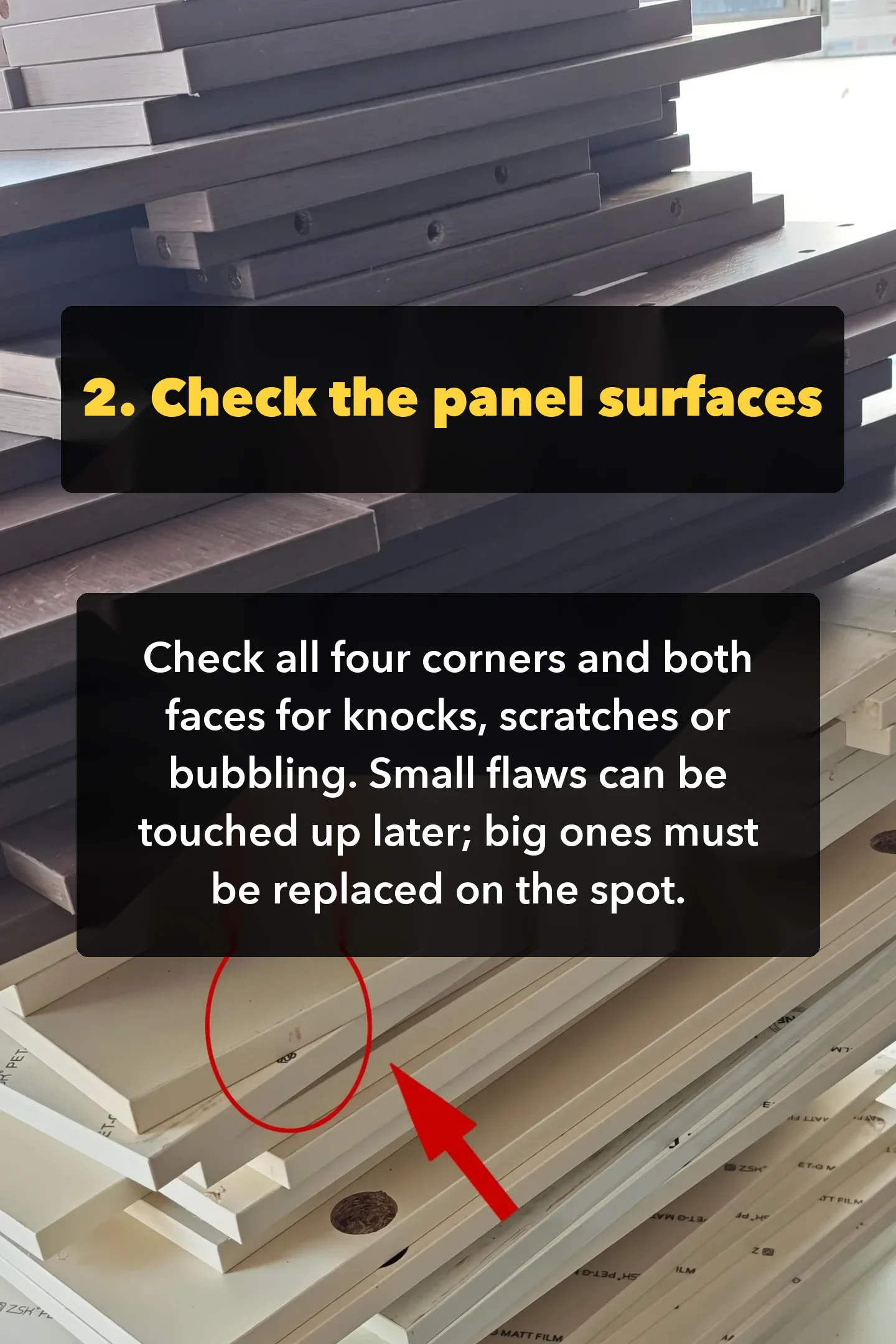
The Tianjin buyer had one advantage an overseas buyer never has: she stood at her own door with the final payment in her pocket. Import the method, not the timing — every check she made at delivery has to happen in Foshan, before the balance, because by the time a container is unloaded abroad the money and the leverage are gone. And an inspection can only fail what the order wrote down: 18 mm, ENF, a named hinge, a mould-resistant sealant. Vague specifications produce inspections that pass everything.
Which safety and emissions documents should be checked alongside the furniture?
For upholstered furniture, the fire rules of the destination market; for anything made of board, formaldehyde emissions; in both cases the test report should match the materials actually used. These are not things an inspector can see by looking. They are checked on paper — test reports, labels and material declarations — and then cross-checked against what is on the production line.
- Fire. Upholstered furniture sold in California generally needs to meet TB 117-2013, a smoulder test with a label. The UK’s Furniture and Furnishings (Fire) (Safety) Regulations 1988 cover cigarette, match and other ignition-source tests and require permanent labels. Other markets have their own rules. Our guide to furniture fire safety regulations in the UK and California explains what to ask a Chinese factory for.
- Formaldehyde. Composite wood (particleboard, MDF, hardwood plywood) sold in the US falls under CARB Phase 2 and TSCA Title VI. China grades wood-based panels under GB/T 39600-2021 as ENF, E0 or E1, with ENF the strictest — the grade the Tianjin buyer checked by UV. See formaldehyde, CARB and E0/ENF emissions standards.
Requirements change and differ by product and market, so confirm current requirements with your importer or a testing lab before the order is placed, not after the goods are made. An inspector’s job is then simpler: check that the label, the report and the material on the line all describe the same thing.
Who should inspect: the factory, an independent furniture inspection service or your sourcing agent?
The factory’s own QC is necessary but not enough; an independent furniture inspection service or a sourcing agent gives you a second pair of eyes, and the right choice depends on whether you also need someone to act on what they find.
| Quién | Strengths | Limits |
|---|---|---|
| Factory QC | Knows the product; checks every piece as it comes off the line | Reports to the factory, not to you |
| Independent inspection company | Neutral, standardised reports, usually sampling-based for large runs | Typically one visit per booking; does not negotiate re-work or manage re-packing |
| Sourcing agent | Wrote or knows the spec, visits more than once, can hold the balance until defects are fixed, consolidates several suppliers | You need to know how the agent is paid — a separate fee, not supplier commission |
| Freight forwarder’s warehouse | Some unpack and check goods on arrival | Sees the goods only after production is finished and often after the balance is paid |
The last row is more common than it looks. A buyer in Germany who shipped about 40 pieces from China writes that her forwarder’s warehouse unpacked everything on arrival; staff spotted a cracked dining-table leg and she arranged a replacement with the factory before loading. That caught the problem — but only because the factory was still willing to act once it had been paid.
Whichever you choose, the inspector needs a checklist written for your order. Our lista de verificación de inspección de muebles is a starting point, and the el control de calidad y el envío page shows how we run it.
What should a furniture inspection report include?
A good report ties every finding to a line in the specification and shows it: item by item, with measurements, photos, video of moving parts and a clear pass, fail or re-work status. A report that says “all goods OK” with ten general photos is a delivery note, not an inspection.
At minimum, look for:
- Item list matching the order, with quantities counted, not copied.
- Key dimensions measured against the drawing, with the tolerance you agreed.
- Material evidence: close-ups of leather backs, board edges, stone edges, hardware markings, labels.
- Function: drawers and doors opened, recliners and extending tables operated on video.
- Defects listed by piece and location, each with a photo and a decision.
- Packing: corner protection, crates for stone and glass, carton marking by room.
We walk through a real layout line by line in a furniture inspection report sample, explained.
What happens when a piece fails inspection?
It is re-worked, replaced or accepted at a discount — and the decision should be made while the balance is still unpaid. In the Tianjin buyer’s case, the leverage was the final payment: a wrong board or a thin panel meant a deduction on the spot. Overseas buyers can keep the same leverage only if the pre-shipment inspection comes before the balance, as in the terms described in our guide to furniture deposit and balance terms.
Practical rules we follow:
- Classify defects. Wrong material, wrong size or a structural fault is a fail. A small finish mark is re-work. Colour variation in natural materials is judged against the approved sample, not against a catalogue photo.
- Re-inspect after re-work. Ask for new photos and video of the corrected piece, not a promise.
- Do not ship “to fix later”. Repairs abroad cost more than the piece often did.
- Document before crating. Stone, glass and lacquer need photos taken after packing too; see our notes on export packing for furniture.
Cómo lo gestiona Source Foshan
Inspection is built into how we work rather than booked at the end. Our QC team checks custom pieces on site during production and sends weekly photos and video; before loading, every item is inspected against the confirmed specification and you receive a photo and video report. The balance is released only after you approve that report. Goods from several suppliers are received into our Foshan consolidation warehouse, re-packed to export standard and labelled by room, and loading is photographed. Our fee — 3–5% of order value — is agreed in writing before any factory is contacted, shown as a separate line, and we take no commissions or rebates from suppliers.
If you would rather buy pieces that have already been through a defined quality process, we recommend Arcaya Living. Its catalogue of more than 10,000 pieces is sourced to confirmed specifications, with a five-stage quality process from material confirmation to export packing, and inspection, packing and loading photos for project orders.
El proceso de calidad de cinco etapas de Arcaya · Entrega e instalación · Explora las colecciones
Preguntas frecuentes
What is a furniture inspection?
It is a check of finished or in-production furniture against the written order: dimensions, materials, finish, function, labels and packing. For goods bought from China it is usually done before the balance is paid and the container is loaded, so defects can still be fixed at the factory’s cost.
How much does an independent furniture inspection service cost?
Independent inspection companies usually charge per inspector-day, and prices vary by city and by how many pieces are sampled, so ask for a quote against your item list. A sourcing agent normally includes inspection in its service fee; Source Foshan’s fee is 3–5% of order value and covers production follow-up and pre-shipment inspection.
Should every piece be inspected or just a sample?
For custom and one-off pieces, inspect every piece — each one is effectively a different product. For large repeat runs, inspectors normally check a statistical sample; agree the sampling level and what counts as a fail before the visit.
Can I inspect furniture in China remotely?
Yes, through a live video call or a detailed photo and video report, provided someone on site follows your checklist and measures rather than just films. Remote checks work well for dimensions, finish and function; material questions such as leather grade or board type need close-ups of edges, backs and labels.
What should I do if furniture fails inspection?
Do not pay the balance until the fault is fixed and re-inspected with new photos and video. Decide in writing whether each defect means re-work, replacement or an agreed discount; never ship a piece on a promise to repair it later.
Seguir leyendo
Fuentes
- Xiaohongshu buyer source note (2026-06-25, 315 likes, 96 comments). Ver fuente
- Xiaohongshu buyer source note (2025-05-13, 121 likes, 43 comments). Ver fuente
- Xiaohongshu buyer source note (2026-07-29, 0 likes, 0 comments). Ver fuente
Want your order inspected before you pay the balance?
Send your item list and specification. We will tell you what can be checked at each stage, what the report will show, and what we need written into the order so the inspection has something to fail against.