Foshan and Dongguan / Supplier and material decisions
Foshan vs Dongguan Furniture Factories: Offers, Materials and MOQ
Choose the actual supplier and component construction. Includes an editable two-offer comparison, a material checklist and seven practical qualification checks.

Supplier and material decisions / Compare the actual offers
Choose between Foshan and Dongguan by comparing named factories against the same sofa specification, quantity, sample, packing and handover. A city does not determine MOQ, quality or price. Choose wardrobe materials component by component: solid wood, veneer, MDF and plywood describe different things, and none guarantees a longer service life. Verify the proposed construction, moisture exposure, fixings, finish and relevant compliance evidence before ordering.
Reviewed 31 October 2026. The comparison arithmetic uses assumed offers; it is not a quote, measured city-wide saving, lifespan study or proof of factory acceptance.
01 / Location helps organise a visit; it does not accept the order
Foshan or Dongguan for custom sofas and upholstery?
Both locations are worth considering when the actual supplier has the required product capability. Shunde’s government profile describes Lecong’s furniture trade and Longjiang’s manufacturing/materials activity. Houjie’s government furniture profile describes manufacturing, materials and exhibition links. These are regional orientation sources, not audited comparisons of individual factories.
| Решение | Check at the named Foshan supplier | Check at the named Dongguan supplier |
|---|---|---|
| Product fit | Actual sofa/frame/upholstery operation, drawings and relevant sample | The same checks, including outsourced processes |
| Accepted quantity | Written model/colour/material minimum and one-off charges | The same quantity and material split; do not assume a higher MOQ |
| Sample and changes | Cost, permitted rounds, ownership and revision approval | Equivalent deliverables, dates and credit conditions |
| Quality evidence | Actual configuration, tests, traceability and correction process | The same end-use requirement and inspection access |
| Origin handover | Named place, packing, collection, storage and consolidation charges | Actual route/collection offer, readiness and handling |
No verified 30 km supply-chain radius, city-wide 10–30 versus 50–100-piece MOQ, universal export/customer profile or fixed trucking premium is established here. A factory in either city may accept a small project or decline it. Ask the supplier and forwarder for current, address-specific commitments.
For a mixed package of sofas, cabinets and other items, compare the complete collection/receiving/loading plan. Consolidating near one cluster may help your particular order, but moving another supplier’s cargo adds handling and readiness questions. The market-versus-factory guide и объёмом перевозки help define the handover before discussing savings.
02 / Compare one specification and an explicit set of costs
Which factory is cheaper after samples and origin work?
For illustration, compare 24 sofas: Offer A, an assumed Foshan supplier, USD 480 each plus USD 1,800 of entered non-unit costs; Offer B, an assumed Dongguan supplier, USD 445 each plus USD 2,600. The entered sums are USD 13,320 and USD 13,280, a difference of USD 40. At one unit they become USD 2,280 and USD 3,045. Neither calculation establishes that the supplier accepts that quantity or that the products are equivalent.
Editable planning illustration
Does a lower unit price still give a lower entered sum?
Positive difference means the entered B sum is lower; negative means A is lower. This compares arithmetic only, assuming matched specifications and handover. It does not verify material equivalence, performance, MOQ acceptance or a city-wide advantage. Every unpriced scope still needs a quote.
The non-unit lines could contain an explicitly quoted sample, agreed test or origin collection charge, without duplicating anything in the unit price. Define each line and named handover. Service fees, international freight, import duties/taxes, local delivery and installation remain excluded unless specifically entered as part of the same comparison scope. Unknown costs are not free.
A lower sum does not select the supplier: an unsupported material substitution, missing safety evidence, rejected MOQ or different warranty can make the comparison invalid. Reconcile quote scope and exclusions, and use the import-versus-local framework for a separate delivered-cost decision.
03 / Name the component, substrate and surface separately
MDF or solid wood wardrobes: which lasts longer?
There is no defensible universal winner or ten-year lifespan prediction here. Solid wood, MDF, plywood and particleboard need the appropriate grade, design, fasteners and use conditions. A real-wood veneer is a surface over a substrate, which may itself be MDF, plywood or another construction. A wardrobe can legitimately use different materials in its frame, carcass, back, shelves and doors—if the schedule states them.
| Строительство | What to establish | Evidence and design questions |
|---|---|---|
| Solid wood component | Species, solid/laminated/finger-jointed construction, grain and finish | Conditioning, movement allowance, joints and intended environment |
| MDF component | Actual board grade, thickness, density where specified, surface and edging | Relevant exposure, fastening, span/load, edge protection and emissions records |
| Plywood component | Actual veneer construction, grade/bond, thickness and surface | Voids/quality, connection design, intended conditions and emissions evidence |
| Particleboard component | Grade, thickness, face/edge treatment and fixing system | Span, joints, screw engagement, damage protection and use conditions |
| Real-wood veneer finish | Species/appearance, substrate, adhesive and finish | Edges, repairability, matching and the complete material description |
Он USDA Wood Handbook, particularly the chapters on moisture relations, composite materials and drying/dimensional change, explains why moisture and construction matter. It does not certify a supplier’s wardrobe or support a fixed lifespan. Specify the actual environment and relevant component evidence rather than prescribing one moisture percentage, MDF density or thickness tolerance for every product.
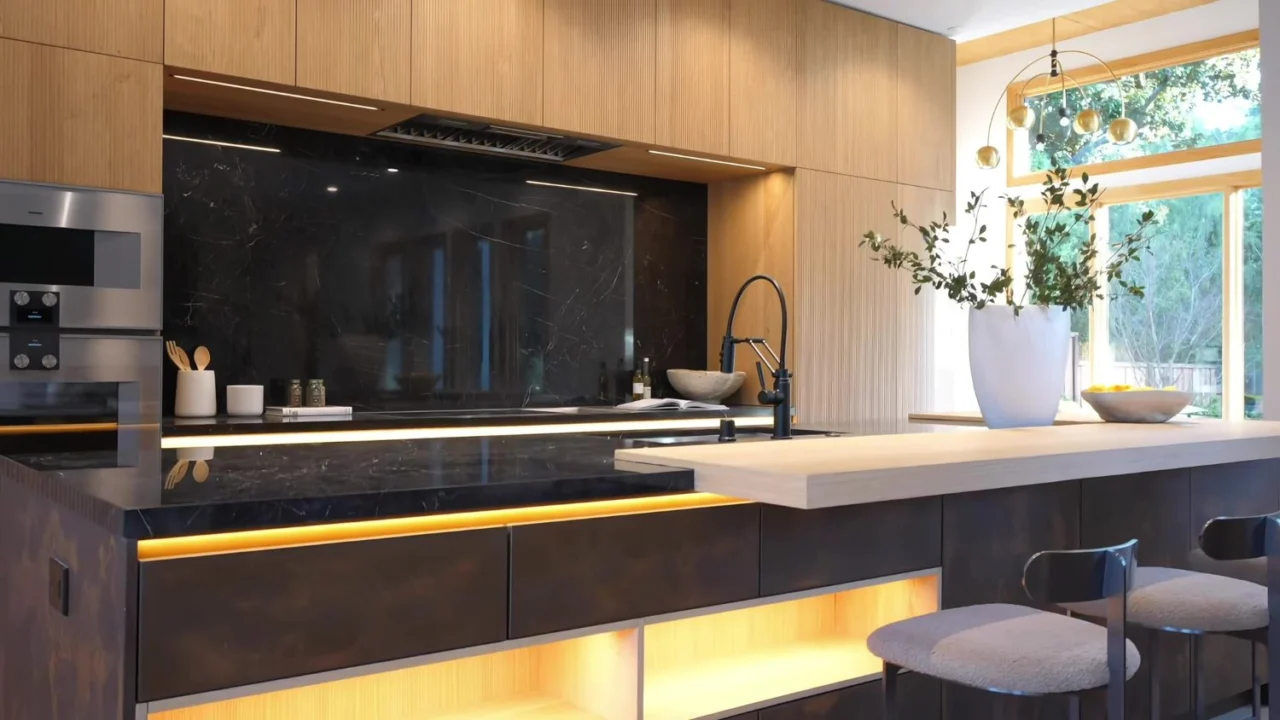
Water exposure, cleaning, ventilation, fixing, loading and installation also belong in the brief. “Moisture resistant” must identify the product/grade and its conditions; it should not be interpreted as permission for unlimited wet use. A heated room does not prove all solid-wood doors will crack, and a composite panel is not automatically stable in every assembly.
Record each component in the drawing/BOM and ask how it can be checked before finishes obscure its construction. Agree material identification, accessible edges/cut samples where appropriate, traceability and any laboratory work. The material specification guide и cabinet interface reference expand the component questions.
04 / Value engineering needs an approved change
Which material or finish alternatives can reduce cost?
Ask for a priced alternative against the original component schedule. For example, compare a veneer/substrate door with a solid-wood door, an identified panel carcass with another specified panel, or two upholstery constructions. Keep size, intended use, required performance, packing and handover explicit. “PU”, “genuine leather”, a hardware brand or a foam density alone cannot establish equal quality or a known saving.
Separate the unit saving from sample, tooling, testing, extra packing and maintenance effects. No verified 15–40% saving, universal leather/PU wear ranking or foam-density-to-lifetime conversion is assumed. A cheaper hardware option requires its own model, loading, fixing, adjustment, cycle and spare-parts assessment; an expensive brand also needs the correct application.
For emissions, ask for the correct destination evidence. US regulated composite-wood articles have TSCA Title VI certification, labels and record requirements. EU furniture/wood-based articles within scope face the документ REACH об ограничении формальдегида after 6 August 2026: 0.062 mg/m³ under its specified conditions, with exemptions. E0/E1, CARB and chamber results are not automatically interchangeable, and different test units cannot simply be converted. Have the lab verify the actual product/material scope.
05 / A useful visit resolves the order’s uncertainties
How do you compare two factories before committing?
- Identify the entities: Chinese legal name/code, seller, maker, exporter and proposed corporate beneficiary; check current registry records.
- Locate production: actual address, relevant live work and outsourced operations, not only a showroom or exhibition stand.
- Match capability: the cutting, welding, edging, sewing, upholstery, finishing or assembly needed by your item.
- Trace materials: incoming identification, storage, component batches and substitution control.
- Review quality decisions: inspection methods, findings, correction and release authority, including any untested features.
- Test the offer: identical drawing/reference, quantity, materials, packing, exclusions, payment and remedy.
- Close open points: agreed sample/tests, dates, records and named approver before production or payment release.
A business licence, management-system certificate, workshop size or customer-logo list is not enough by itself. Request permitted project references and establish the supplier’s actual role. Do not infer a manufacturer’s reliability from comment counts or a claimed export volume. Source Foshan’s company and engagement checklist applies the same discipline to the sourcing service.
Agree the visit/audit scope, people, access, fees, report deliverables and timing in writing. The available evidence here does not establish a guaranteed 24-hour visit, a set number of factories per day or a standard report-photo count. Inspection of an order is a different task from qualifying a factory; use the inspection guide for that plan.
06 / Tolerances belong to a feature and a method
Which drawing formats and tolerances should the supplier receive?
Agree a dimensioned PDF and editable/native files the supplier can actually use, such as DWG/DXF or an agreed 3D format. Record the item number, revision/date, quantity, mm dimensions, materials, finishes, hardware models, fabric direction, seams and intended function. Confirm design rights and who prepares production details. A photograph or moodboard can communicate appearance but leaves construction and dimensions unresolved.
Choose tolerances for the actual features and interfaces: overall size, diagonal/squareness, gaps, alignment, movement and fit. State measuring points, method, condition and the agreed reference. There is no universal ±2 mm overall tolerance or door-gap number for every sofa, wardrobe and installation. For fitted work, a local survey/installer must approve site interfaces before drawings are frozen.
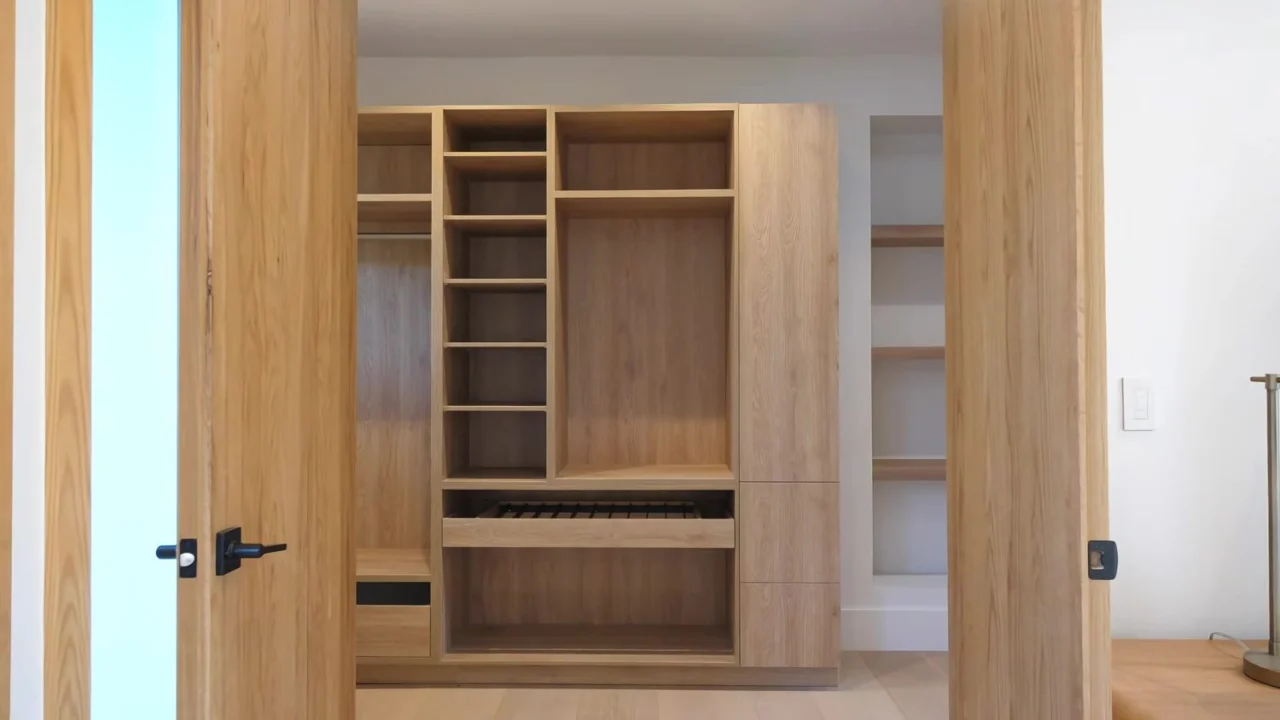
Keep the approved drawing, finish/material sample, prototype and first-production reference distinct. Changes need a revision and written acceptance, with affected quantities and cost/time consequences. The custom order process explains those release decisions and sample/tooling ownership.
07 / Small quantities still have a complete responsibility chain
Can I order one unit, and what do design review and samples cost?
A stock item, a first prototype and a custom production run can have different acceptance conditions. Ask the named supplier whether it accepts one piece, what material/tooling minimums apply, and whether the sample is credited against a later run. There is no verified city-wide MOQ or standard sample surcharge. A model calculation at one unit is not an offer to supply it.
Separate design review, factory drawings, sample manufacture, tooling, testing and courier into named deliverables. Agree their fees, revision rounds, ownership and refund/credit conditions before work begins. Source Foshan’s published policy states 3–5% on an agreed basis, no supplier commissions and sourcing orders from USD 10,000 of goods. A smaller arithmetic example does not establish an accepted standalone service order or free design review.
After supplier selection, get actual approval, production, inspection/correction, consolidation, carrier and destination dates. Confirm current shutdown/restart and split-shipment costs instead of assuming a four-week production cycle or a fixed inland-trucking rate. The package planner и hotel sofa/wardrobe guide connect these decisions to larger orders.
Supplier and material questions
Is Foshan or Guangzhou better for sourcing furniture?
Choose the relevant named supplier and complete handover, not a city ranking. Compare the same item, quantity, evidence, fees and delivery responsibilities; confirm the actual production address before a visit.
Should I buy from Lecong or direct from a factory?
A showroom can help compare products; a factory offer can help develop a suitable repeat item. Both need a written scope, accepted quantity, specification and responsible seller. Neither channel automatically guarantees a lower delivered cost.
How can I identify the real manufacturer?
Check the legal seller/maker, current registry information, actual production, relevant processes, outsourcing and order-specific evidence. Match the corporate beneficiary and proposed contract; a licence or a showroom alone is not a production audit.
Is plywood always better than MDF for wardrobes?
No universal answer applies. Compare the actual grade, component, connections, finish, exposure and performance evidence. A surface veneer is distinct from its substrate, and a material name does not establish a fixed service life.
Can you compare suppliers remotely?
Agree the live views, relevant site visits, physical samples, documents and report scope. Remote coordination can support decisions, but video cannot establish every hidden feature or replace required tests and local site measurements.
Which certificates should a hotel factory have?
Determine the destination and product requirements, then verify exact test/certificate holder, configuration, method, edition, date and scope. ISO/BSCI-style organisational records are different from product safety/emissions evidence.
What is the minimum service order?
The published Source Foshan policy states sourcing orders from USD 10,000 of goods. Confirm the current proposal, scope, fee basis and any minimum/fixed fees; supplier MOQ and shipment economics are separate conditions.
Can I send only a photo for a custom piece?
Send it as a permitted appearance reference, then resolve dimensions, construction, materials, finish and intended use. Agree production drawings, sample fees, tolerances and approval before manufacture; the photo is not a complete specification.
Ваш следующий шаг
Send the two offers and the material questions.
Include the same drawings, quantities, components, proposed alternatives, destination, budget currency and the evidence still missing.