Buying Guides
Factory-Direct Furniture From Foshan: A Six-Step SOP, the Traps at Each Step and How to Close Them
Value ÷ price, the six-layer channel mark-up that turns a ¥5,000 sofa into ¥20,000, why Foshan, five hard quality indicators, and the four traps of factory direct — rebuilt as a step-by-step SOP for overseas buyers with a Source Foshan control on every step.
In short
- 01
Most people never pay for the furniture; they pay for the channel. A ¥5,000 factory sofa becomes ¥15,000–20,000 by the time it has passed through a national agent, a provincial agent, a dealer and a mall — two to three times the making cost, before any “Italian design” label doubles it again.
- 02
Value for money is value divided by price, not a low price. Two sofas that look identical in a photo can differ in frame timber, foam density, hide layer and spring construction — invisible for two years, obvious in five.
- 03
Foshan’s advantage is not corner-cutting but a supply chain where every component of a sofa is made within 50 km, by craftsmen who have done it for decades, in the town that sets the country’s styles.
- 04
Five hard indicators beat any brand: frame material, filling density, cover grade, hardware brand, and a written warranty (frame 10 years, foam 5, cover 3).
- 05
“Factory direct” has its own four traps — resellers posing as factories, bait prices with swapped materials, no after-sales, and freight/stairs/assembly billed later. This SOP puts a check and a Source Foshan control on every step.
A sofa that costs ¥30,000 in a showroom and ¥8,000 from a factory is not always the same sofa — and when it is, you have just seen where your money goes. A Foshan furniture wholesaler published a plain-spoken buyer’s guide to “factory direct” for Chinese consumers: the value formula, the six-layer channel mark-up, why Foshan, five indicators to judge any piece, and the traps that make “factory direct” a lottery. We have translated it into a step-by-step SOP for an overseas buyer, kept every number, and been blunt about the traps — because there are more of them from 8,000 km away — with the control we apply at each step. Source Foshan is a sourcing agent based in Foshan, China, and this is the sequence we run on every factory-direct order.
Based on a buyer’s guide published in September 2026 by a Foshan furniture wholesale operator, translated and restructured as an SOP by Source Foshan. Channel mark-up figures are the author’s worked example; the five indicators and four traps are theirs; the overseas controls are ours. RMB at ¥7.1 to the USD.
Most buyers define value as cheap: bed A is ¥5,000, bed B is ¥3,000, so B is better value. The assumption hiding in that sentence is that the two beds are the same — and in furniture, nine times in ten, they are not.
Two leather sofas, identical in photographs. One: full-grain hide, imported pine frame, high-resilience foam, serpentine springs over webbing. The other: split leather laminated to look like top-grain, MDF frame, ordinary foam, a single layer of webbing. You cannot tell them apart in a picture or in a five-second sit. In year three, five and ten, one is still comfortable and the other is a hollow. Value for money is value ÷ price — materials, construction, durability and comfort on top; what you paid underneath. Watch only the denominator and you buy low quality, not high value.
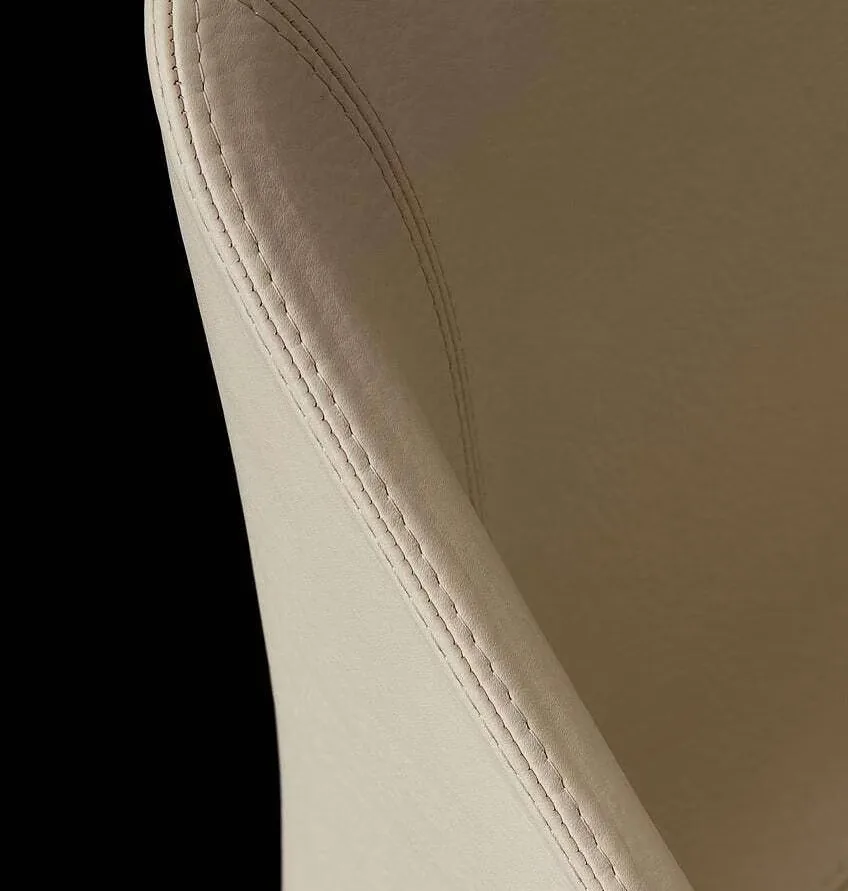
Between the factory gate and your living room a piece of furniture may pass through six hands: factory → national agent → provincial agent → city agent → dealer → mall → you. Each takes 20–30%. Six layers roughly triple the price before the mall adds its rent, fit-out, sales staff and advertising. The author’s worked example, for a sofa that leaves the factory at ¥5,000:
| Factory gate | ¥5,000 | Materials + labour + factory profit — the only line that is “sofa”. |
|---|---|---|
| National agent | ¥6,500 | +30% |
| Dealer | ¥9,750 | +50% |
| Mall: rent, fit-out, sales staff, marketing | ¥15,000–20,000 | +50–100%. Of a ¥20,000 ticket, ¥5,000 made the sofa and ¥15,000 moved it. |
| “Italian design” / “Nordic original” label | ×2 again | Same factory, same line, same workers; a brand logo and a premium mall. |
| The overseas equivalent replaces the mall’s ¥15,000 with your own landed costs — packing, freight, duty, delivery, typically 40–90% on top of ex-works for a full container. The difference: those lines are visible and negotiable. See the cost stack in how to buy furniture from China. | ||
The trap at this step is the mirror image: a price that is absurdly low did not squeeze out the channel, it squeezed out the materials — MDF for solid wood, split for full-grain, recycled foam for new. The question is never “expensive or cheap?” but “can I find a channel that removes the water without removing the quality?” That is why informed buyers go to Foshan factories — and why the traps in Step 5 exist. Who is actually selling to you online is mapped in six business models behind “we are the source factory”.
Step 2 · Know why the answer is Foshan — and why that is not the same as “any Foshan seller”
Ask the team about thisChina has many furniture towns; one is called the furniture capital, and it is Foshan — specifically Shunde’s Lecong and Longjiang. Not because of fame, but because the supply chain is complete to an almost absurd degree.
- Every component within 50 km
Timber processing, hardware, leather and fabric, foam, finished assembly and freight forwarding are all a half-hour drive apart. Materials for a sofa that would take a tour of several cities elsewhere arrive the same day here. Transport, storage and coordination costs fall to the floor.
- Craft passed master to apprentice for decades
Mortise-and-tenon joints, leather seaming, frame sanding — details machines do not do, experience does. Many well-known brands are made in Foshan on the same lines by the same hands; the logo multiplies the price by five.
- The country’s style bellwether
What is fashionable next year appears in Foshan first; the “designer pieces” you see online usually trace back here.
- The trap here
Foshan’s value comes from cluster efficiency, not corner-cutting — but the same cluster also hosts tens of thousands of resellers and marketing teams who borrow the word “factory”. “It is in Foshan” is where the due diligence starts, not where it ends.
Send us the quotation you were given. We will tell you what is missing from it.
A free second look from a local team that reads Foshan quotations every week: unit specs, add-on risks, packing and freight lines, payment terms. No commitment.
You do not need to be an expert. Check these five and you will choose better than most of the trade’s customers.
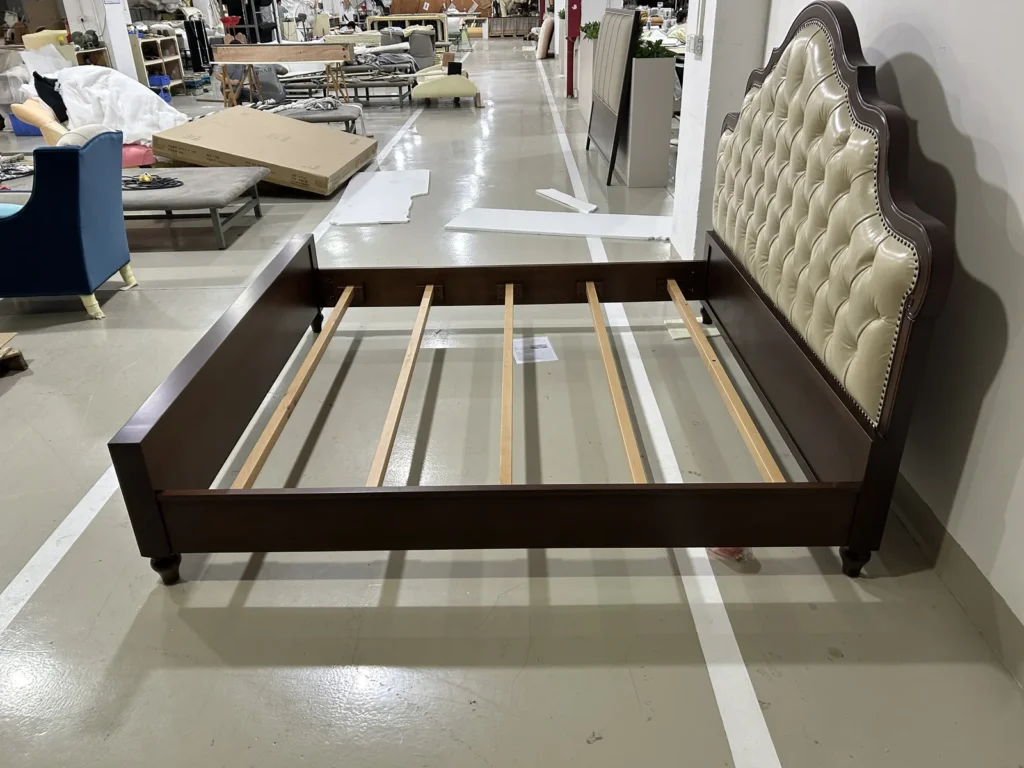
- Frame material — decides how many years it lasts. Good: solid wood, ideally imported pine, oak or beech. Poor: MDF, particleboard, plywood or joined offcuts. Test: lift it — a solid-frame sofa is heavy for two people; a board one, a single person can carry. Then lift the dust cover underneath and look.Trap: “solid wood frame” on a listing with no species. Our PI names the species and the board grade, with a frame-stage photo.
- Filling — decides how it feels in year five. High-resilience foam, at least 40D (40 kg/m³), springs back fast and holds for a decade; low-density or recycled foam is a dent in two years. Test: press hard, release; if it does not recover quickly, walk away.Trap: “45D” with no brand — two 45Ds can differ widely. We record density per layer and the foam maker, and photograph the bare seat.
- Cover — decides how it wears. Leather grades in descending order: full-grain > semi-aniline > embossed > split > microfibre > PU. Fabric: the denser the weave, the harder-wearing. Test: rub the fabric — pilling is a no; scratch it — snagging is a no.Trap: “genuine leather” (真皮) legally covering bonded hides. We write grade, thickness in mm and covered surfaces, and check the hide back at inspection.
- Hardware — decides the life of the details. Slides, hinges, legs, connectors: the small parts that fail first. Branded fittings (Blum, Hettich and equivalents) run smooth for a decade; anonymous ones rust and loosen inside six months.Trap: hardware never mentioned in the quote. Ours names the brand and alloy; every drawer and door is cycled at inspection.
- After-sales — decides whether you can sleep. A confident factory gives a written warranty: frame 10 years, foam 5, cover 3. One that will not either doubts its product or plans a one-off sale.Trap: “lifetime service” with no clause and no return-freight term. Our supplier agreements carry warranty, mismatch, delay and environmental clauses as standard — see the eight traps and the four contract lines.
Buying furniture is not buying a picture; it is buying materials, workmanship and after-sales. Pass all five and a cheap piece is a good piece. Fail all five and an expensive one is a tax on trust.
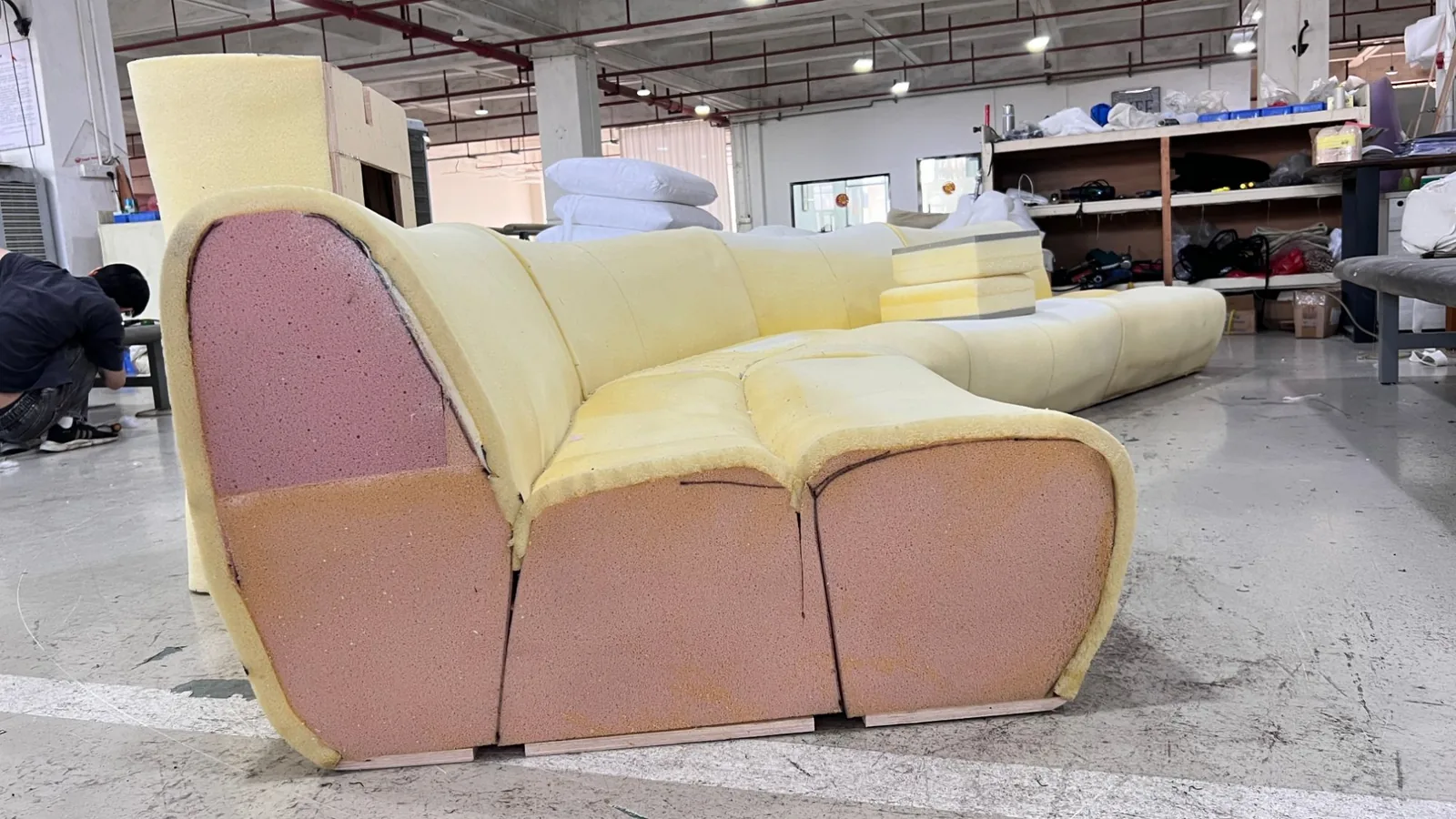
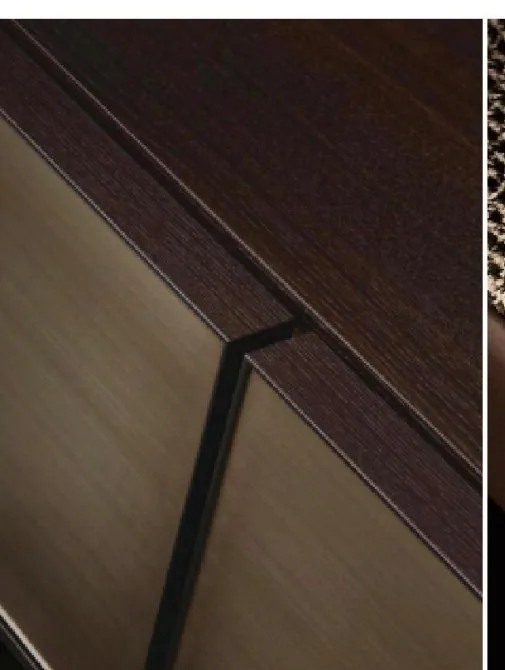
The wholesaler’s guide stops at “check these five”. For an overseas buyer there is a step between checking and paying: writing. A pro-forma invoice that names species, density, hide grade, hardware brand and warranty is the only version of the five indicators you can enforce when the container opens in another country. Anything that stays verbal in Foshan stays in Foshan.
Step 5 · “Factory direct” has its own traps — do not be fooled by “source price”
Ask the team about thisBy now you may be thinking: then I will just buy from a Foshan factory. Good — but the water is deep here too. Not everything called “factory direct” is a factory, and the wholesaler who wrote the original guide lists the four ways insiders have been caught. From overseas each is worse, because you cannot drive back.
Trap 1 · A middleman posing as the factory
Countless accounts fly the “Foshan factory direct” flag with no workshop of their own; they take the order and subcontract it to a small plant, pocketing the difference and losing control of the spec.
Trap 2 · Bait price, swapped materials
An impossibly low price gets the order; then full-grain becomes split, solid wood becomes MDF. Outsiders cannot tell; by the time they can, they have been blocked.
Trap 3 · No after-sales, nobody answers
Small workshops selling one-off deals disappear after delivery: the phone is not answered, messages go unread, and there is no one to find.
Trap 4 · Freight, stairs and assembly billed later
The quote looked low; after the deposit, freight is extra, carrying upstairs is extra, assembly is extra. Add it up and the mall was cheaper.
The wholesaler’s one-line summary: factory direct saves money only if you find a reliable factory; save a little with a fake one and the repairs and the aggravation cost more than you saved. From overseas, add: and you will do the repairing yourself.
- 1 · Don’t worship brands
Many big names are made under licence in Foshan. Most of what you pay is brand premium and advertising.
- 2 · Don’t look only at price
Cheap is not necessarily bad, expensive is not necessarily good. Materials, workmanship and after-sales are the three that count.
- 3 · If you can buy from the factory, do
Squeeze the water out of the channel and buy the same quality at half the price. That is real value.
- 4 · Ours: from abroad, “buy from the factory” needs someone at the factory
Rules 1–3 assume you can lift the sofa, press the foam and drive back on Saturday. Overseas, someone has to do that for you, on a fee you can see rather than a commission you cannot.
Everything above is what an informed local buyer does with a car, a free Saturday and fluent Cantonese. Source Foshan does it for buyers who have none of those — as a sourcing team based in Foshan, working for you on a stated fee, taking no commission from the factories.
- Step 0–1 · Value and channel. We quote the same written spec from two or three factories, tell you which grade each sits in, and show you the full landed cost — factory, packing, freight, duty, delivery — in one sheet. Furniture sourcing & consolidation
- Step 2 · Foshan, verified. Licence, address and maker-or-dealer status checked for every supplier before it reaches you; showrooms used to shortlist, factories to price. Guided sourcing visits if you want to walk the floors yourself.
- Step 3–4 · Five indicators, on paper. Species, density, hide grade, hardware brand and warranty on the pro-forma invoice in both languages; frame-stage and bare-foam photos during production (the seven zones where those photos are taken). Custom pieces add a signed drawing and a prototype.
- Step 5 · Traps closed. Payment 30/70 to the licensed company; item-by-item inspection with photo and video before the balance; export packing to a written standard; freight and duty quoted up front. Quality control & shipping
- Step 6 · Still here. One container from several suppliers, delivered to your door, and a company in Foshan you can reach when the sofa is three years old. Start with your list — a quotation you already have is a fine place to begin.
Furniture is something you live with for ten years. It is worth a little time to choose well — and, from another continent, worth having someone on the ground who has already made the mistakes this guide lists, on other people’s orders, so that you do not make them on yours.
Questions about factory-direct furniture from Foshan
How much cheaper is factory-direct furniture from Foshan than a showroom?
Domestically, a sofa leaving the factory at ¥5,000 typically retails at ¥15,000–20,000 after national and regional agents, a dealer and a mall each add 20–100%; a brand label can double it again. Buying at the factory removes those layers. For an overseas buyer the channel is replaced by landed costs of roughly 40–90% on top of ex-works for a full container — visible and negotiable, unlike a mall’s rent.
What are the five indicators of furniture quality?
Frame material (solid pine, oak or beech rather than MDF or particleboard — lift it, and look under the dust cover), filling density (high-resilience foam of at least 40 kg/m³ that springs back fast), cover grade (full-grain > semi-aniline > embossed > split > microfibre > PU; dense weaves for fabric), hardware brand (Blum, Hettich or equivalent), and a written warranty (frame 10 years, foam 5, cover 3).
What are the traps of buying “factory direct” in Foshan?
Four recur: a middleman posing as the factory and subcontracting your order; a bait price followed by swapped materials (split for full-grain, MDF for solid wood); no after-sales once the goods have shipped; and freight, carry-up and assembly billed after the deposit. From overseas each is harder to catch and costlier to fix, which is why written specifications, payment after inspection and pre-quoted freight matter.
How do I tell whether a “Foshan factory” is really a factory?
Ask for this week’s video of the workshop, production line and warehouse; check that the business licence names a manufacturing company at that address; confirm that the deposit account belongs to the same company; and ask for photos of your model at the frame stage. A reseller can show a showroom and a borrowed video, not your frames.
Why is Foshan furniture good value?
Cluster efficiency, not corner-cutting: every component of a sofa — timber, hardware, leather, fabric, foam, assembly and shipping — is made within about 50 km of Lecong, by craftsmen trained over decades, in the town that sets China’s furniture styles. Transport, storage and coordination costs are minimal, so the same materials and workmanship cost less to produce than elsewhere.
Can Source Foshan apply this checklist to a quotation I already have?
Yes. Send the quotation and any photos through the project form; within one business day we will tell you whether the seller is a maker or a dealer, which of the five indicators are missing from the quote, which price grade it likely sits in, and what the same piece would land at in your country.