Заметки с места событий
When a Lecong showroom is a reseller: how to trace responsibility
Map the seller, producer, inspector and after-sales roles behind a Lecong showroom quote, with evidence gates and six questions to ask before a deposit.

The short answer: a Lecong showroom can help an overseas buyer discover and test furniture even if it does not manufacture the item. Before ordering, identify who will contract and invoice, who will make the approved version, who will check it, who will arrange each handoff and who will handle a defect claim. Ask the contracting seller to confirm those roles in an attributable written record. A label, salesperson’s explanation or factory visit may be a useful clue, but none alone establishes the responsibilities in your order.
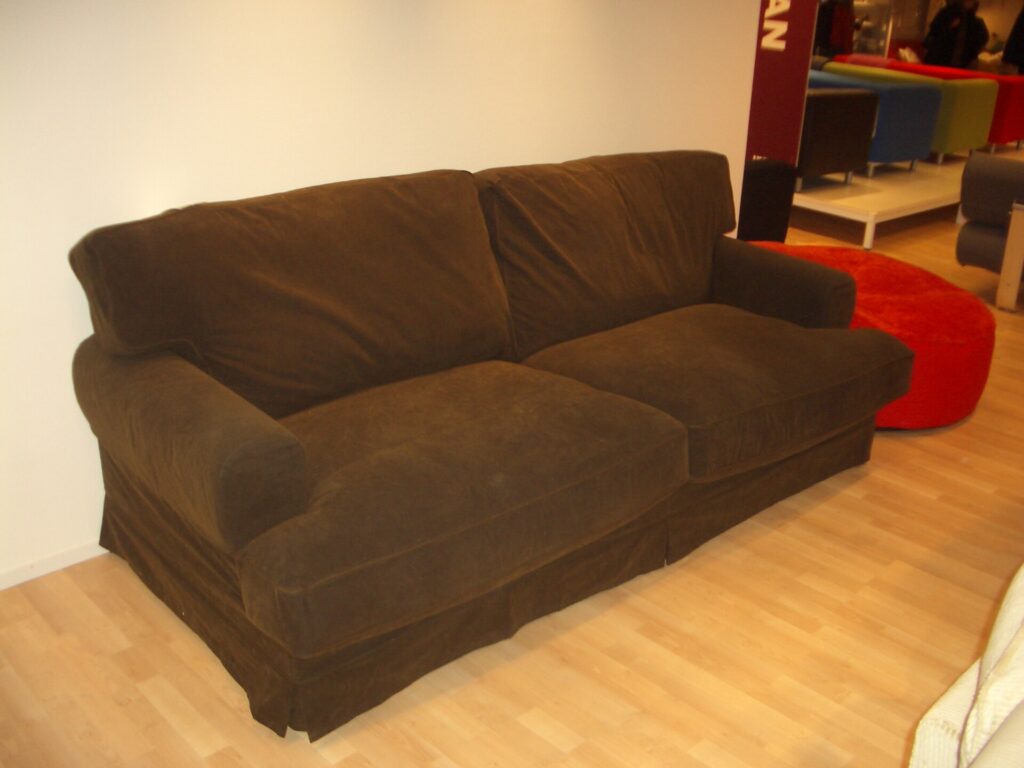
путеводителе по мебельному рынку Foshan explains the scale and variety of the shopping area, while the mall-versus-factory showroom guide helps a visitor understand different sales channels. This article begins when a buyer likes a sofa on the floor but finds three names: one over the shop door, another on the product label and a third on the quotation. The eight real photos below are unrelated licensed illustrations. None depicts the seller, factory or order in this example.

Start with roles, not an assumed hierarchy
Make a one-page map with five roles: showroom contact, contracting seller, producer, inspection decision-maker и after-sales contact. Add freight or consolidation party if someone outside the seller handles the goods after production. One company may fill several roles; several companies may share one role. The map is useful only when it names the entity, contact and document that supports each entry. A familiar brand name without an identified contracting entity does not fill the seller row.
A showroom reseller may be a perfectly workable counterparty if it is willing and able to define the product, issue the offer, accept the order and take responsibility for the work it promises. Conversely, a factory display does not by itself guarantee that the factory will be the invoicing party, accept the buyer’s specifications or handle an export issue. Ask “Who will sign or acknowledge our purchase order?” before asking whether a business is “direct.” The answer determines whose written commitments the buyer must collect and whom the buyer can contact when a promised action is missed.
Record the trading name on the offer, invoice details supplied by that business, and its designated contact. Check that the payment beneficiary specified in the final commercial documents is consistent with the approved counterparty; resolve any difference by a separate verified channel before payment. This is an operational identity check, not a statement about the legal status of a particular Lecong shop.


Treat a product label as a question to investigate
A first-person Xiaohongshu visitor described finding a different brand name on a sofa label in a Shenzhen shop and asking the salesperson about it before visiting a Foshan showroom. The salesperson reportedly said the brands belonged to the same company. The visitor’s observation of the label mismatch and question is relevant here; the relationship explanation, prices, quality comparisons and factory status were not independently verified and are not adopted as fact. The original visitor account illustrates why an attentive buyer asks for a written identity trail rather than guessing from a tag. The visit involved Longjiang as well as Shenzhen, so it is an analogy for a Lecong decision, not evidence that a named Lecong showroom is a reseller.
When names differ, request a concise explanation: Which legal entity owns or uses each brand? Which entity will issue the quote and invoice? Is the labelled product the same model and configuration as the one offered? Who will produce an approved order? Ask for model and material references that can follow the item from display to quotation, approved sample, production record and packing list. The buyer does not need a corporate family tree to buy one sofa, but must be able to tell which entity has made each promise.
Do not convert a marketing phrase such as “factory price,” “our factory” or “no middleman” into a conclusion about ownership or margin. Those phrases may describe a business arrangement, but they are not a substitute for a purchase document and traceable product definition. A buyer can leave a disputed ownership claim unresolved while still requiring the seller to specify the factory, inspection access and remedy path relevant to the order. If the seller will not do so, the uncertainty should be visible in the approval decision.


Build an evidence ladder before issuing the order
Use four evidence levels. Observed means a buyer personally saw a showroom item or label on a stated date; it does not prove the producer. Represented means a named seller stated that another party will make or deliver something. Documented means a dated offer, specification, acknowledgement or other attributable record states the arrangement. Verified for this order means a relevant action, such as a permitted production visit, accepted preproduction sample or inspection, supports the specific model and batch. Do not promote an observation to the next level merely because the story sounds plausible.
For a planned order, ask the seller for a written matrix containing at least: product model and agreed variant; proposed production location or producer contact where disclosure is possible; seller’s role in approving substitutions; who checks dimensions, finish, packaging and quantity; who authorises release; who responds to a failed inspection; and who coordinates a remedy after delivery. If the seller will not disclose a producer, record that limitation and decide whether the seller’s own quality evidence and contractual commitments are sufficient. A buyer may legitimately work with a reseller without direct factory access; the risk changes when the chain is opaque and no one accepts the missing responsibility.
Используйте sourcing report comparison guide only after each candidate has an attributable offer and answer to these role questions. A low number from one seller and an all-inclusive commitment from another cannot be compared fairly until product and service scope match. Do not equate showroom rent, business size or staff confidence with the ability to resolve an order problem.

Tie every responsibility to one identifiable product
Create a buyer reference such as LC-07/S01 at the first visit. Put it on the photo sequence, dimensions, material swatch, model sheet and quote request. Require the seller to cross-reference that code to its own model. If the seller later proposes a substitute factory or variant, ask for a revised specification and a new approval. Without this connection, an impressive site visit may establish that a workshop exists but not that it will make the product the buyer approved.
For example, a display sofa may have a 2.3-metre width, a specific fabric and a particular leg finish. The written offer might use a family name covering two widths and several upholstery grades. Ask the quote issuer to pin the exact billable variant and approved tolerances. If the showroom offers to order from a producer, ask who sends the approved specification to that producer and who checks the producer’s acknowledgement. A responsibility chart should point to this concrete object, not to a general claim about all furniture sold in a building.
An inspection arrangement also needs precision. “We check quality” does not say whether a buyer can examine a preproduction sample, receive in-process photos or commission a third party before dispatch. Define the checkpoints, the evidence to be supplied and the person empowered to hold release. A visible workshop photo cannot establish material inside the final sofa or the condition of a future batch; inspect the relevant product at the agreed stage.


A fictional defect shows why the chain matters
Imagine a buyer orders 12 sofas through Showroom A, which says Workshop B will make them and Agent C will collect the finished goods. All names and quantities here are invented teaching devices. The buyer’s approved swatch is F-12; a pre-dispatch image appears to show F-21. The useful question is not first “Is the showroom a middleman?” It is: which party is authorised to stop release, compare the physical batch with the approved swatch and issue a correction instruction? If Agent C collects the goods while the colour is unresolved, the parties may argue later about which stage was accepted.
The written matrix should answer this before production: Showroom A, as the proposed contracting seller, confirms the approved specification and sends it to Workshop B; a named inspector checks the batch against the physical or documented reference; the seller authorises release only after the buyer’s specified evidence is complete; and Agent C receives the goods under a documented handoff. The buyer may negotiate a different arrangement, but the roles must be explicit. Do not presume that a reseller or a producer automatically bears a particular remedy under every jurisdiction. The final agreement and applicable law require specific review when a dispute arises.
If the image merely has a colour cast, ask for a daylight image or a measured swatch comparison instead of asserting that the fabric is wrong. Record the question, seller answer, inspection result and decision date. If the batch is actually wrong, require a written correction plan, revised timeline and responsibility for any new inspection or movement cost before release. A good issue log keeps the relationship practical even when the buyer cannot visit the factory in person.


Make the handoff and claim path visible
Ask where the seller’s work ends physically: at its loading area, at a consolidation warehouse or at another agreed point. State who arranges packaging, loading, local transport and receipt evidence. If the parties incorporate an Incoterms 2020 rule, the ICC’s original Q&A explains why the chosen rule, named place and version should be clear; the rule does not itself specify the furniture or every payment and remedy term. Do not infer the handoff from a showroom address or from the presence of a freight agent.
An after-sales path should be just as concrete. Ask the seller to name a contact for missing parts, transit damage and suspected production defects, with the evidence each claim requires. Separate a packing or freight claim from a product-specification issue; the responsible parties and evidence may differ. Agree how quickly a buyer should report a problem and who can approve a replacement or credit in the actual transaction. The goal is an operational escalation path, not a generic promise that “we will handle everything.”
Preserve the signed or accepted offer, seller acknowledgement, product drawings, approved sample record, inspection notes, packing list and handoff receipt in one version-controlled folder. Label the final approval version. A contact may leave the company or a workshop may change, but the buyer should still know which contracting entity accepted the order and which agreed document controls the specification.

A usable six-question approval gate
Before paying a deposit, ask the proposed seller six questions in writing: (1) What entity issues the offer, accepts the order, invoices and receives payment? (2) Which exact model and variant does the offer cover? (3) Who will produce it, or what evidence will substitute if that producer is undisclosed? (4) Who approves the specification and any substitution? (5) Who performs and pays for each inspection and delivery handoff? (6) Who handles a defect claim, and what evidence and time window have the parties agreed? Put unanswered questions in a pending column with an owner and date. A salesperson’s immediate oral confidence is not a completed row.
Approve only when the unresolved rows are either immaterial to this purchase or explicitly accepted as risks by the buyer. If a role is material and nobody will name an accountable party, pause order release and ask for a revised offer. If the seller supplies a credible written answer, a reseller relationship need not be a barrier. The decision turns on an attributable commitment and evidence chain for this order.
The next practical action after a promising showroom visit is to send the six questions and the buyer’s product reference to the proposed quote issuer. Ask for one consolidated reply attached to the revised quotation. That creates a traceable route from the sofa you saw to the party who promises, produces, checks, delivers and responds if something goes wrong.


Photo credits and limits
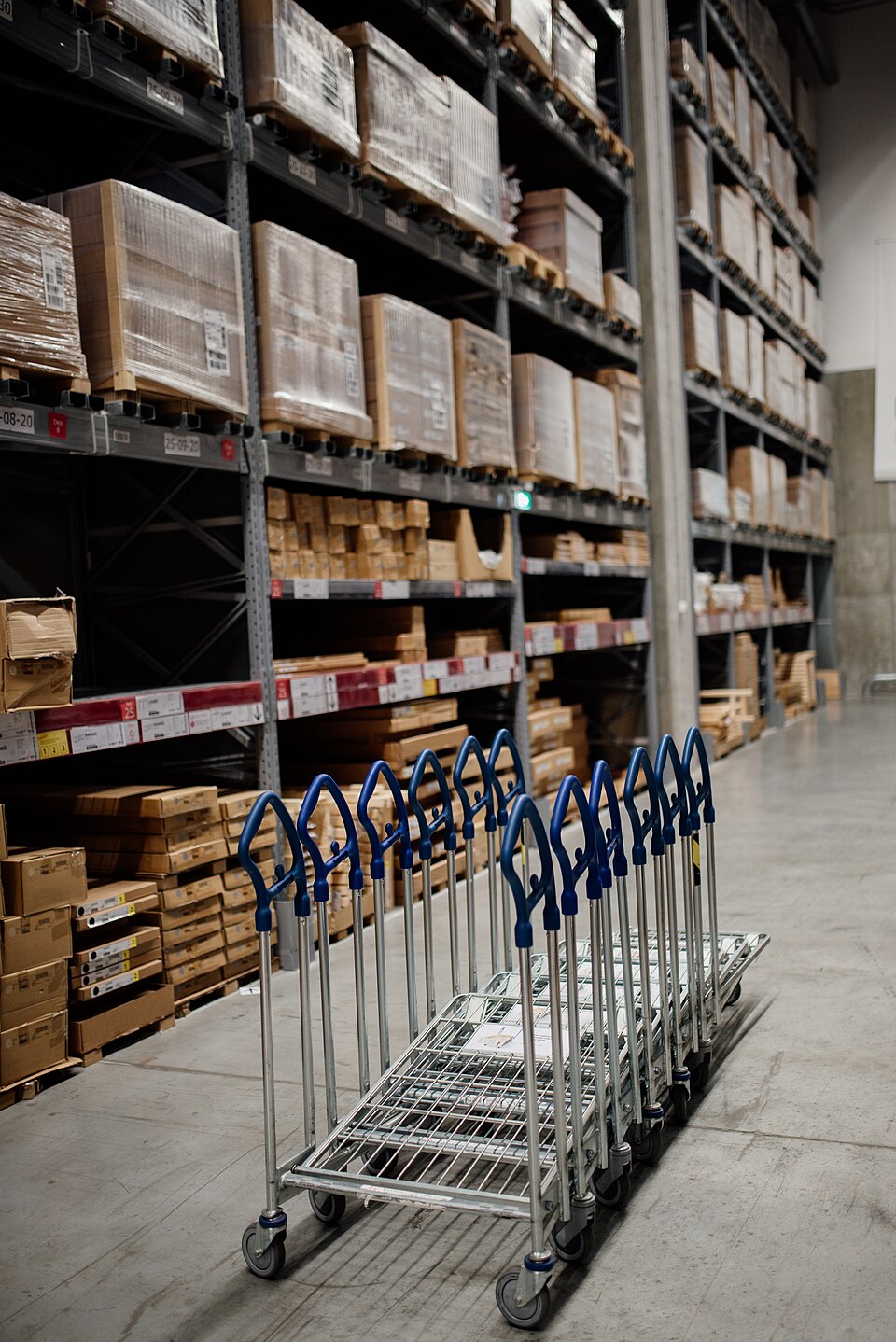
Each linked caption credits the photographer, original Wikimedia Commons file page and licence. All eight real photographs are unrelated illustrations of a showroom, label, workshop, product, frame, records, warehouse and written agreement. They do not identify or verify any Lecong reseller, manufacturer, Source Foshan staff member, supplier, customer or project.