Australia / Melbourne shipment planning
Shipping Furniture from Foshan to Melbourne: Costs, Transit Planning and Customs
Build the shipment from actual cartons and a delivery postcode. Compare complete charges, import GST, origin evidence, biosecurity and the final handover.
Foshan → Melbourne
To ship furniture from Foshan to Melbourne, establish the packed CBM and gross weight, compare matching LCL and FCL scopes, appoint the importer/broker, and confirm destination delivery access. For a taxable import, GST is generally 10% of customs value plus international transport/insurance and duty. Duty and ChAFTA eligibility are item-specific. Get actual cargo-ready, sailing and release dates; an ocean ETA is not a furnished-home delivery promise.
Australian official guidance checked 19 October 2026. Cost and programme examples are planning assumptions. No current freight quotation, Melbourne customer invoice or measured project transit time is asserted.
01 / Compare the complete handover
How much does it cost to ship furniture from Foshan to Melbourne?
A reliable price starts with the packed carton schedule and delivery postcode. Obtain a dated quote stating currency, origin, destination, equipment, validity, inclusions, exclusions and free time. The ocean line alone does not cover every charge from the factory to the room. No live USD/CBM or full-container price is quoted in this guide.
| Группа расходов | Clarify in the offer |
|---|---|
| Origin receiving and export | Factory pickup, warehouse work, crating, export handling, documents and declaration |
| International carriage and cover | Freight, stated surcharges, insurance, route and cargo restrictions |
| Australian port / CFS | Terminal, release, deconsolidation, handling and storage; which are included? |
| Entry and biosecurity | Broker, government charges, inspection and treatment if required |
| Доставка и установка | Postcode, truck/access, unload, carrying, stairs, assembly and packaging removal |
Separate USD charges from AUD charges before converting. Confirm whether Australian service amounts include their applicable local GST. Avoid adding the same origin cost both inside an FOB price and again as a separate freight charge. A delivered quote needs an agreed importer and tax/document route, as well as a destination address.
Editable AUD illustration
How does duty change the import GST calculation?
Start with an assumed customs value, international transport/insurance and a duty rate to review with your broker. Zero duty below is a scenario input, not proof that the goods qualify.
Model: duty = customs value × entered rate; VoTI = customs value + entered international transport/insurance + duty; GST = VoTI ×10%. Government processing, DAFF, broker, port/CFS, local services/tax, delivery and installation remain outside this total. Unknown extras are not zero. This is a valuation illustration for ordinary taxable furniture, not a customs entry or quote.
With the same AUD 20,000 value and AUD 3,000 transport/insurance, an assumed 5% duty gives AUD 1,000 duty, AUD 2,400 GST and a modelled AUD 26,400 sum. The AUD 1,100 difference includes the GST effect of duty. Use the Melbourne quotation-scope worksheet to add accepted charges without pretending this subtotal is a door-to-door bill.
02 / Sailing is one stage
How long from the furniture order to Melbourne delivery?
| Этап | Allowance | What confirms the date? |
|---|---|---|
| Selection and approvals | 1–2 | Accepted item/drawing/material references |
| Производство | 4–8 | Supplier-confirmed programme from release |
| QC, correction and consolidation | 1–2 | Inspection findings and cargo readiness |
| Ocean planning allowance | 3–5 | Actual vessel, routing, cut-off, ETD and ETA |
| Entry and local delivery | 1–2 | Documents, release and delivery appointment |
| Separate contingency | 2 | Project buffer |
| Sequential model | 12–21 | Illustration, with no promised latest date |
Request a current direct or transhipment schedule from the booked carrier. Include origin receiving/cut-off and cargo-availability dates for LCL. Neither“18 days at sea” nor an ETA guarantees customs release, deconsolidation or a delivery slot. Inspection, a document query or treatment can extend the programme without a fixed number of days.
Obtain each supplier’s actual holiday closure and restart plan, rather than assuming a universal Chinese New Year shutdown. If a fit-out has a hard deadline, compare local stock and a phased plan for the essential pieces. The full buying process explains approvals that need to happen before the shipping clock starts.
03 / Price both scopes
At what CBM should I switch from LCL to a full container?
There is no universal 15 or 25 CBM switch. Compare LCL’s minimum, chargeable measure, fixed fees and destination CFS/delivery with a complete FCL quote. A bulkier, fragile or non-stackable order may justify FCL before the lowest-cost crossover; a well-packed small order may suit LCL. Neither option removes the need for inspection, correct packing or insurance.
Maersk’s nominal dry-equipment capacities are about 33.2 m³ for 20 ft,67.7 m³ for 40 ft and 76.4 m³ for 40 HQ. At a hypothetical 80% space use these become 26.56, 54.16 and 61.12 m³. These are calculations, not guaranteed furniture loads. Check the actual box, door opening, carton orientation, safe stacking, payload and road limits.
LCL/FCL/air comparison includes an editable crossover example and chargeable-weight explanation. At 28 CBM, nominal 20 ft volume alone does not establish that the order fits: get a packing/loading plan and quote the alternatives.
04 / Product size is not shipping size
How do I calculate furniture packing volume?
For each carton, multiply outer length×width×height in metres, then multiply by carton quantity. Include crates, pallets, protection and any non-stackable requirements. An illustrative sofa crate 2.40×1.05×0.95 m is 2.394 m³; two identical crates total 4.788 m³. Those dimensions are a maths example, not the standard packing size of a three-seat sofa.
Ask for item/room code, carton number, pieces per carton, outer dimensions, CBM, gross/net weights, material and packing method. Record whether legs, bases, glass and hardware travel separately. Knock-down construction can reduce volume, but only the measured packed comparison for the actual design establishes the saving.
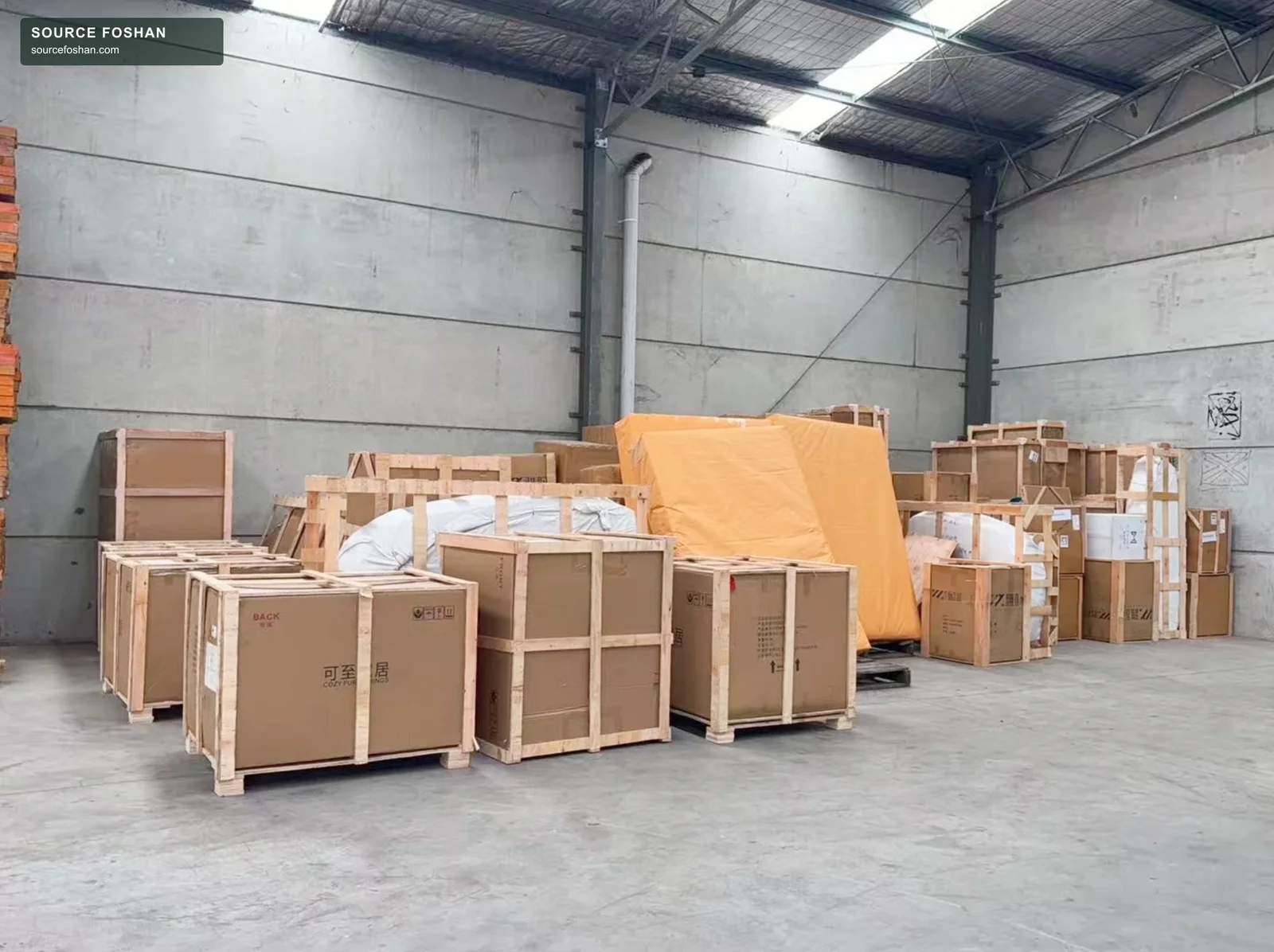
Specify protection for exposed corners, stone/glass, upholstery, moving hardware and moisture risks, with packing photographs and release checks. A thick carton or a timber frame is not automatically suitable for every route or stacking arrangement. Inspect quantities and hardware before sealing, and retain the container/seal/loading record.
05 / Align supplier cut-offs
Can several Foshan factories share one Melbourne shipment?
- Assign the schedule. Use item codes, suppliers, approved specifications and target readiness dates.
- Agree warehouse terms. Receiving, unloading, inspection, storage/free time, crating and late-supplier rules need a written scope.
- Receive and reconcile. Match cartons/condition to the order; quarantine discrepancies instead of losing their identity.
- Inspect and correct. Record checks and limitations; close agreed defects before release.
- Plan and pack. Confirm final carton data, fragile items, markings, loading arrangement and documents.
- Book and hand over. Appoint the exporter, forwarder, importer/broker and Australian receiver; reconcile the final shipment and release records.
No free-storage period, warehouse size, supplier-count limit or one-piece MOQ is promised here. Ask for an accepted proposal through shipping and consolidation. A shared shipment can combine orders; it cannot waive a factory’s material-run minimum.
06 / Classify, value and document
What duty, GST and import documents apply in Australia?
Classify each product before applying a rate. The ABF Chapter 94 schedule includes many 9403 lines at 5% general duty, with some items at Free. ChAFTA preference requires the actual origin and documentary conditions. The ABF ChAFTA guidance identifies authorised certificate issuers; a declaration in place of a certificate applies to consignments covered by an origin advance ruling, rather than being an unrestricted alternative.
ABF’s GST guidance explains the value of taxable importation. GST credit depends on the importer’s GST registration, creditable use and records; an ABN alone does not establish a credit. Ask the broker about identification and entry arrangements for your personal or business import. Low-value goods and personal-effects relief have their own conditions; new furniture is not automatically a tax-free moving shipment.
| Consignment value | Electronic | Documentary |
|---|---|---|
| Above 1,000 and below 10,000 | 50 | 90 |
| 10,000 or more | 152 | 192 |
Source: ABF import-processing charges. Separate DAFF, inspection, broker, port and delivery charges can apply. These figures are not a total clearance price.
Prepare a commercial invoice, item/carton packing list, transport/release document and the origin evidence required for a preference claim. The packer provides the relevant packing declaration; the importer/broker checks the current biosecurity document set. Treatment, timber legality, material and other product records depend on the actual goods. Do not request a generic certificate as a substitute for the correct document.
07 / Use the current season’s conditions
Will BMSB season or timber packing delay my furniture?
DAFF’s 2026–27 season notice identifies 1 September 2026 to 30 April 2027 inclusive for seasonal measures on relevant sea cargo. Its current BMSB page identifies China among emerging-risk countries, with random inspection provisions including Chapter 94 goods. That is different from saying every China-origin furniture shipment needs mandatory BMSB treatment. Manufacturing origin, routing and cargo details can change the assessment.
Wood packaging and the furniture itself are separate reviews. DAFF’s LCL declaration template distinguishes timber/bamboo packing and the relevant treatment evidence; it notes that ISPM 15 applies to timber packaging. Use the correct FCL/FCX or LCL document, with required identifiers and packer details. Declare actual materials and packing; selecting a non-wood crate does not exempt the furniture from all biosecurity rules.
Ask the broker to check BICON conditions for solid timber, bamboo, rattan, natural materials and any used goods before purchase. Budget a contingency and request actual inspection/treatment quotes if intervention is required. No standard delay, universal fumigation fee or guaranteed release date is offered.
08 / Port arrival is not room placement
Who handles delivery to my Melbourne address?
Name the responsible party for buying, inspection, export, carriage, Australian entry, port/CFS collection, truck delivery, unloading, carrying and assembly. A sourcing coordinator, carrier, broker and installer can all have different contracts. The procurement responsibility guide helps distinguish the goods seller from the coordinator.
Provide the postcode, street/truck restrictions, loading bay or parking, stairs/lift dimensions, floor, appointment rules, unpacking and assembly needs. Confirm tail-lift, labour, waiting time, storage and packaging removal. A“door-to-door” label does not settle those items; check the named delivery term and accepted service scope.
For Sydney, Brisbane, Fremantle or Adelaide, request the actual lane and postcode quote instead of applying a Melbourne price or timetable. At arrival, record cartons before opening, labels, condition and unpacking; preserve packing and notify the relevant party promptly under the contract/insurance deadline. Use the inspection report format to agree evidence before the goods leave China.
Melbourne furniture shipping questions
What does a 40 HQ to Melbourne cost today?
Request a dated quote for your route, carton data, cargo-ready date and postcode, with origin/destination charges listed. This guide provides no live carrier price.
Is South China to Melbourne always 18–22 days?
No. Confirm the booked direct/transhipment service, cut-offs, ETD/ETA and availability. Ocean time excludes production, consolidation, entry and delivery.
Should I order more furniture to fill a container?
Compare the complete LCL/FCL cost and the value of extra goods. Nominal free space is not a reason to buy unwanted items; obtain the actual loading plan.
Does ChAFTA remove all import charges?
No. Preference depends on item/origin/documents and does not remove GST or government, broker, biosecurity, port or delivery charges.
Can I ship just a few pieces?
Ask suppliers about model/material MOQs and forwarders about minimum chargeable measure, handling and local delivery. A small consignment may have high fixed costs.
Does the quote include carrying furniture upstairs?
Only if accepted in the delivery scope. Send access details and request explicit labour, stair/lift, assembly and removal inclusions.
Is China a mandatory BMSB treatment country for all furniture?
The current DAFF page distinguishes emerging-risk random inspection from target-risk treatment measures. Have the broker check the actual manufacture, routing, goods and season.
Can I see the furniture before loading?
Ask for an agreed inspection scope and photographs/video tied to item/carton IDs, with findings, corrections and release records. A photo set alone is not proof of every material or compliance requirement.
Your next step
Send the carton list and Melbourne postcode.
Include item quantities, packed dimensions, gross weight, materials, cargo-ready date and postcode/access. Flag estimates and unknown costs.
Sources and limits
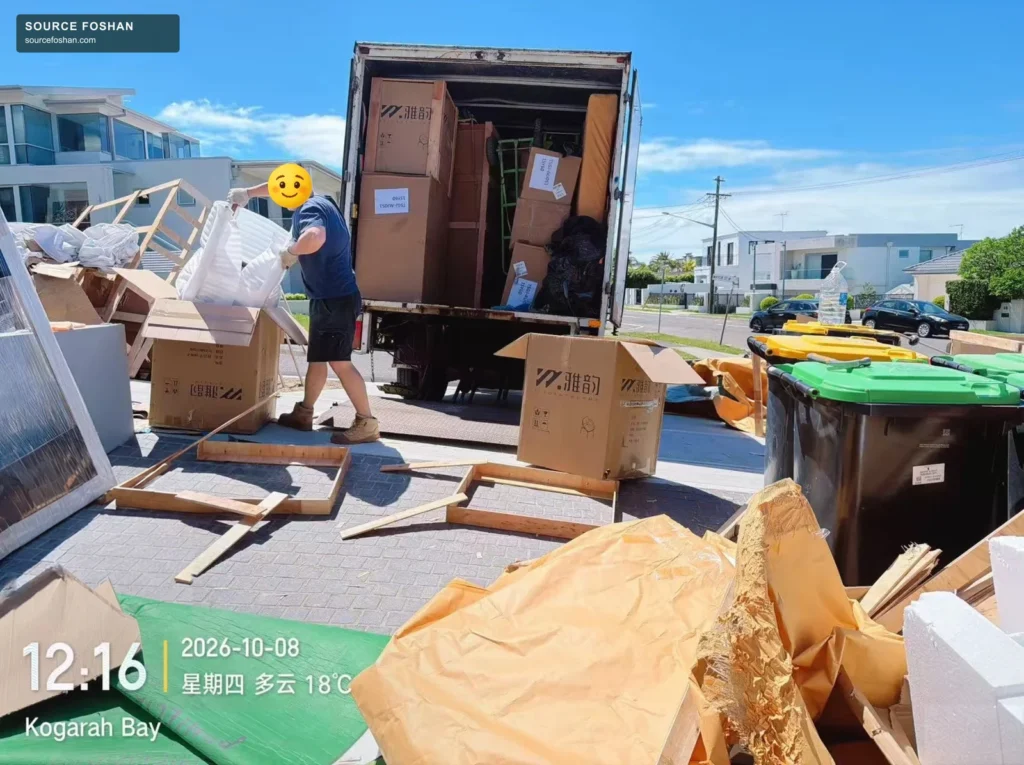
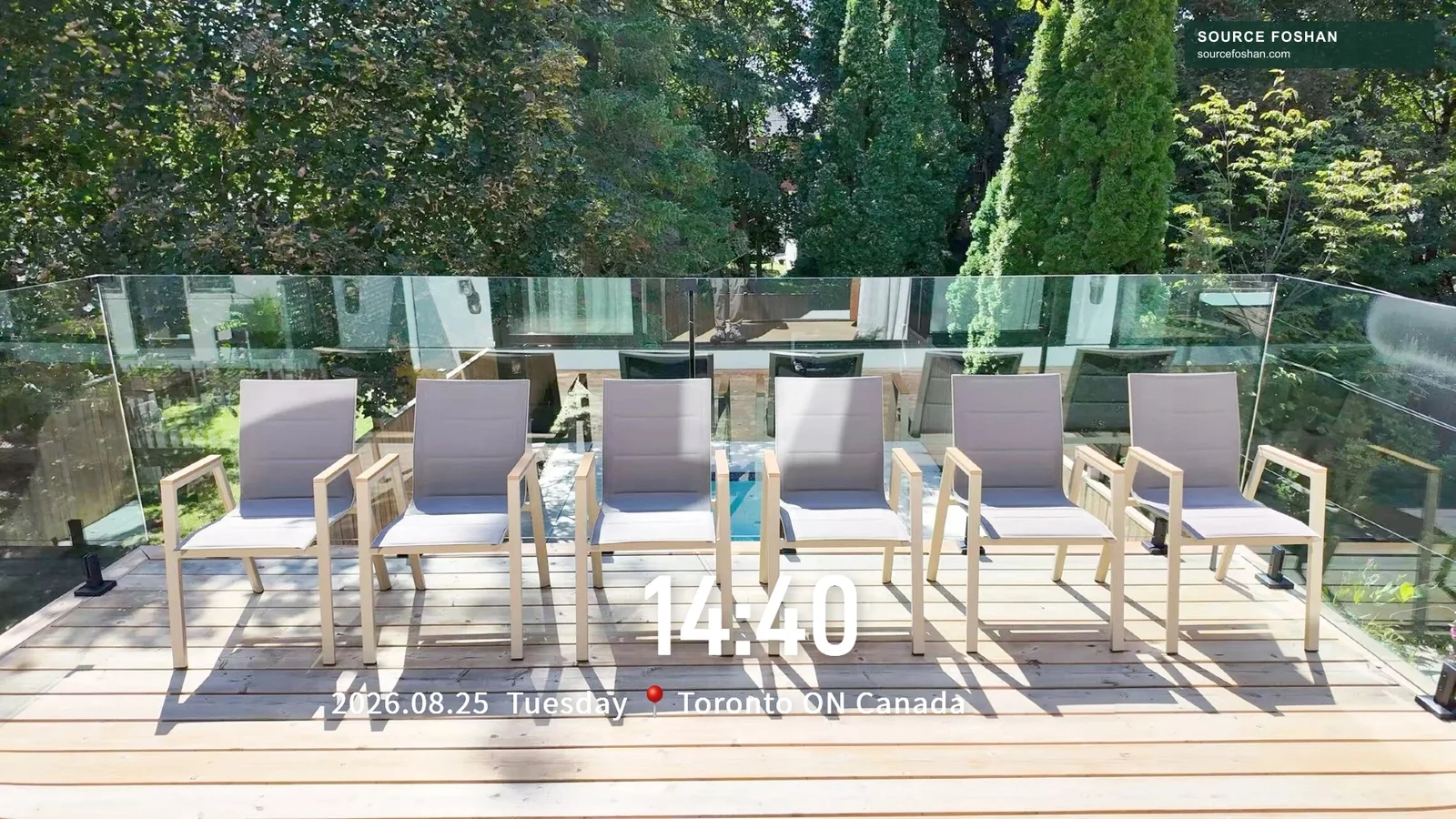
ABF and DAFF sources are linked at the relevant claims. The money/programme/CBM examples are calculations using stated assumptions, not customer invoices or rate surveys. Photographs show authorised Sydney and Toronto residential handling/placement; they are not presented as a Melbourne shipping case or evidence of treatment compliance.