Заметки с места событий
Foshan market price tags versus written export quotations
Turn a Foshan furniture price tag into a written export quote with model, currency, quantity, packing and delivery scope, plus a fictional cost breakdown.

The short answer: a Foshan showroom tag is a clue to a displayed item’s asking price, not a complete export order specification. Before an overseas buyer relies on it, request a dated written quotation from the entity that will sell the goods. That document should identify the exact product variant, quantity, currency, included options and packing, payment and production terms, and the precise delivery scope. If the parties choose an Incoterms 2020 rule, state the rule, named place and version in the contract. Treat any field the seller has not answered as TBD, never as a zero-cost inclusion.
путеводителе по мебельному рынку Foshan explains why a buyer may encounter very different retail displays and sellers on one trip. The mall-versus-factory showroom article helps distinguish the channel. This guide addresses the moment when a visitor sends a phone photo of a price tag to an overseas colleague and receives the reply “Can we order eight?” The eight genuine Commons photographs here are unrelated illustrations, not actual Foshan tags, Source Foshan quotations or client orders.
.jpg)
First anchor the number to an object
Write a visit code, seller contact and displayed model identifier beside the tag photo. A number photographed near a sofa may belong to a different size, upholstery grade, promotional bundle or floor sample. Ask the salesperson which exact item and variant the number describes. Note whether the tag refers to one unit, a set, a display piece, a standard configuration or a starting price. If a sales promotion or bargaining discussion changes the spoken price, record it as a separate dated statement until it appears in a seller-issued written offer.
Take a permitted overview photo with the tag and product identity in the same sequence. Then obtain dimensions, material codes and any model sheet. Do not assume the product in a catalogue or later quote matches the object sat on in the showroom. A seller can reasonably offer several variants of one family. The buyer’s job is to ensure the quote identifies the intended one. If the tag is missing a stable model code, create a buyer visit code and ask the seller to cross-reference it in writing.
For an overseas order, ask who will issue the invoice and receive payment. The mall’s name identifies a venue, while a brand, reseller, factory and contracting seller can be different entities. A visitor may not be able to establish the full relationship on the spot. Record the visible name and request the quote issuer’s legal or registered trading details before approving an order. An attractive tag photo does not resolve seller responsibility.

.jpg)
Build a tag-to-quote conversion ladder
Use five levels. Level 1: display identity is the physical object, seller and date. Level 2: product definition is size, materials, colour, construction and options. Level 3: commercial unit is quantity, unit basis, currency, price validity, and which services are included. Level 4: export handling is packing, local transfer, documents and the agreed place where responsibility changes. Level 5: accepted order is the buyer’s approved product and scope in a purchase order or other written agreement. The tag may help with level 1 and part of level 3. It rarely fills all five.
Give every unanswered line an owner and a date. A quote may be conditional if a fabric is not chosen or a destination delivery method is not yet priced. That is acceptable when it is explicit. It is dangerous when someone writes “all included” without defining what all means. Keep a scope gap register with field, tag says, seller written answer, buyer requirement, и status. The register is an editorial and procurement tool, not a legal interpretation of the tag.
| Поле | What a showroom tag might show | Written export quote needs to establish |
|---|---|---|
| Изделие | “3-seat sofa” and a number | Model code, dimensions, upholstery, legs, frame and accepted alternative |
| Unit basis | One display item | Price per ordered unit, set contents and required minimum quantity |
| Currency and timing | Local currency or an unlabelled figure | Quote currency, issue date, validity and price-change conditions |
| Упаковка | Often omitted | Carton/crate method, per-unit pack dimensions and responsibility |
| Local handoff | Often omitted | Collection, warehouse or carrier handoff point and party arranging it |
| Направление | Not specified by a tag | Any requested main freight, import, site delivery and installation as separate lines |
| Documents and payment | Often omitted | Issuer, invoice/product documents, payment milestones and exceptions |
The last column is a request list, not a claim that every seller must perform every service. If the buyer’s own agent handles packing or freight, write that allocation down. Do not compare a showroom-only tag with a seller’s door-delivered quote as if they were the same scope.


Look for variant and tax assumptions hidden in the spoken number
Ask whether the displayed finish is the one being quoted. A sofa with a premium leather display may be offered at an entry fabric price; a stone table may be tagged for the base size, not the slab and edge you selected. Have the seller identify each material or option code and write any change as an added or deducted amount. If the final quote moves to a different model, show it as a substitution rather than quietly revising the tag reference.
Do not assume what a local retail price includes for taxes or what an export price excludes. Tax treatment depends on the transaction and destination; the tag alone is insufficient to infer it. Ask the seller to specify whether the quote includes any local tax, export handling or invoicing charge, and obtain destination tax or tariff advice from the appropriate authority or professional separately. This article does not state a tariff rate, tax entitlement or customs classification.
Currency also matters. If the tag is in RMB and the quote is in USD, record the conversion date and who bears any exchange-rate change. A buyer’s spreadsheet can convert amounts for analysis, but the seller’s actual contractual currency and payment instructions belong in the written offer. Do not treat a salesperson’s chat message as a bank detail; verify payment identity through the agreed channel before making a transfer.


A fictional eight-sofa price bridge
Suppose a displayed sofa has a tag of RMB 5,200 for one standard-fabric unit. A buyer asks for eight sofas in a different fabric, export packing and delivery to an agreed domestic consolidation warehouse. The seller’s hypothetical written reply states: base sofa RMB 5,200 per unit; new fabric plus RMB 600; export packing plus RMB 240; local warehouse transfer plus RMB 180. The resulting seller-scope subtotal is 5,200 + 600 + 240 + 180 = RMB 6,220 per unit, или 6,220 × 8 = RMB 49,760. All amounts are invented teaching figures, not observed Foshan prices, typical charges or a market benchmark.
The arithmetic is useful only if every line applies to the same identified sofa and the seller confirms the quantity basis. If the packing charge is actually per order, the calculation changes. If the warehouse transfer is one trip for all eight units, it changes again. The seller’s quote must also state what happens to lead time, payment, carton sizes and any damage claim at the handoff. Main freight, destination import and final site delivery remain outside this fictional subtotal unless priced separately. Do not label them zero simply because they are not on the page.
Create three columns: seller priced scope, buyer or third-party costs, и unresolved scope. In the example, fabric, packing and local transfer appear in seller priced scope. Main international freight and destination work might be buyer costs, depending on the chosen arrangement. If freight is not yet quoted, list it under unresolved. This preserves an honest decision basis. A price tag may still be useful as a starting reference, but its relationship to the final amount is transparent rather than mysterious.

.jpg)
Write the delivery point precisely if using a trade rule
The original ICC Incoterms 2020 Q&A explains that the chosen rule, named place or point, and 2020 version should be clear when parties incorporate a rule into a contract. ICC also explains that these rules allocate certain obligations, risk and costs but do not define the goods’ specification, price-payment method, tariff or title transfer. A quote that says only “FOB” or “DDP” without an exact named location leaves a material gap. Request a complete expression and have the parties agree the precise physical point and included services.
The named place does not always mean the same thing across rules. ICC notes, for example, that under C rules the named place indicates a paid-for carriage destination and is not necessarily the delivery/risk-transfer point. Do not infer “seller bears risk until my house” merely from a destination written after a three-letter term. Equally, a tag price in a shop does not tell you who loads goods, obtains documents, pays the carrier or arranges import. Confirm the intended structure with the seller and freight partner before treating offers as comparable.
If the parties are not using an Incoterms rule, still write the local handoff and service scope in operational terms: exact address, who arranges loading, who pays for export packing, who books transport and what proof closes the seller’s handoff. This is purchase clarity rather than an assertion that one rule must be chosen. A buyer should not copy a trade abbreviation from another supplier’s quote without checking whether it suits this transaction.
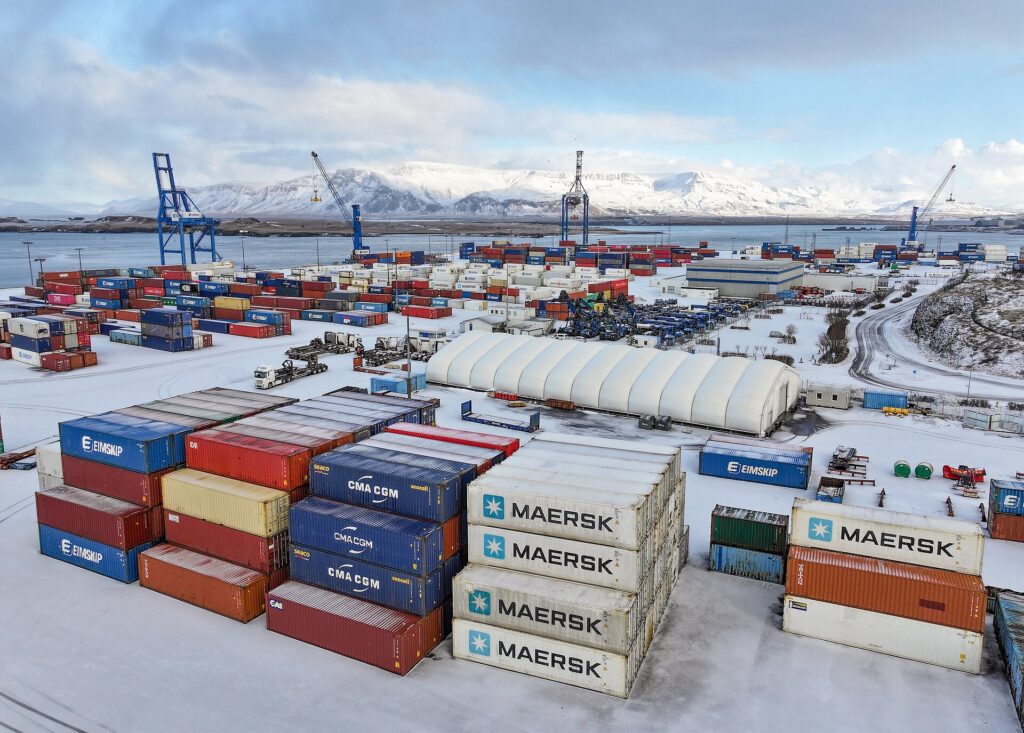

Request one attributable written revision
After the showroom conversation, send a concise clarification: “Please quote item LC-06/S02, quantity eight, fabric code F2, dimensions per drawing D1, export packing described by carton and unit dimensions, delivery to named point X, currency RMB, issue date and validity. Please list excluded services and confirm the entity issuing the invoice.” Ask the seller to reply with a revised document or an attributable message that can be attached to the final quote. Avoid a chain of screenshots in which each person assumes a different version controls.
The quote should identify what remains provisional. If the vendor needs a final swatch or destination measurement, mark it as a condition with an owner and deadline. Store the tag photo, first written quote, clarifications and revised offer together. Make the buyer’s accepted version easy to find. A later price discussion should modify a named line or issue a revised document rather than erase the product identity. The sourcing report guide then helps compare complete offers across candidates; this article stops at making one offer documentable.
A first-person Xiaohongshu visitor recounts seeing showroom price tags and hearing different negotiated numbers on a Lecong trip. That personal account is a useful reminder to keep tag, spoken offer and seller-issued quote separate. Its discount percentages, alleged overpricing, material claims and mall recommendations are not verified benchmarks and are not repeated here. Another buyer describes asking contacts for preliminary quotes before travel and finding that not every contact supplied one; that is a reminder to plan for a written follow-up rather than assume the tag solves the procurement question. See the first visitor’s original note и second buyer’s account as anecdotes only.


Release the order only against the agreed written scope
Before accepting a seller’s revised offer, check the product code, selected material, quantity, unit price and total, currency, packing and dimension data, delivery point, lead-time assumptions, payment milestones, document list and exclusions. If an item is missing but does not affect the decision yet, keep it conditional and state who will resolve it. If it affects product identity, final cost, import feasibility or destination access, hold order release until answered. This is a risk-based buyer workflow, not a claim that a tag has no value or that every quote requires the same page count.
Keep the final accepted quote with the purchase order and any drawings or approved samples it references. A later invoice or packing list can then be checked against the same item and quantity definitions. If the seller changes the model, material or delivery point, require a dated revision and buyer approval. The showroom tag remains part of the visit record; it is not the whole record of what the buyer agreed to purchase.
Your next action is to send the one-page request while the salesperson and model are still identifiable. Ask for a written revision that names each inclusion and exclusion, then reconcile the arithmetic before paying. That turns a compelling price photo into a traceable export buying decision.


Photo credits and limits
Each linked caption identifies the photographer, original Wikimedia Commons file page and licence. These unrelated photographs show a store, sofa, maker label, swatches, calculator, cargo terminal and records. None is an actual Foshan price tag, Source Foshan export quote, supplier promise or client transaction. Only a seller-issued document tied to the buyer’s item and scope can establish what that seller offers.