Поставщики
Factory ownership versus trading company: checking the legal seller
Reconcile the seller, maker, payee and exporter behind a furniture order using a role map and document checks, rather than relying on a factory tour.

The short answer: a factory tour does not tell you which legal entity is selling your order. Before paying, place five names on one page: showroom contact, contracting seller, actual maker, payment beneficiary and exporter/document issuer. They may be the same company, related companies or independent businesses. Ask for a written explanation of every difference, then compare the proposed seller’s registration details with the quotation, contract, invoice and payment instructions. A trading company can be a legitimate seller; “factory owned” can also be true but still irrelevant to who owes you delivery, quality and after-sales performance under the purchase contract.
руководство по производителям мебели Фошаня helps buyers understand the manufacturing landscape. The published руководстве по проверке фабрик covers site and company checks. This article narrows the issue to one proposed purchase: which entity is your counterparty, and what evidence connects it to the factory you saw? The eight licensed photos below are unrelated illustrations, not photographs of a Source Foshan supplier or a company verified in this article.

Separate marketing labels from transaction roles
“Factory,” “factory store,” “direct manufacturer,” “brand,” “group” and “export company” are useful starting descriptions. None alone identifies the party that will sign the order or receive funds. A showroom might belong to a retailer and display goods made by several factories. A manufacturer might use a separate export entity. A trading company might contract with a factory for production and accept responsibility to the buyer. A brand name may be a mark rather than the registered company name. Ask the person making the claim to name the relevant registered entity and its role in this order, not merely describe a corporate story.
Build a five-role party map with one row for each of the following: (1) who the buyer met and where; (2) who will sign or issue the sale contract; (3) who will manufacture the orderable item and at which site; (4) who receives the money; and (5) who appears on export and commercial documents where applicable. Put the registered Chinese name, supplied English name, unified social credit code if provided, address, contact and evidence file beside each. Do not assume that similar logos, a common phone number or a verbal “same boss” statement establishes a legal relationship. If two roles use one entity, write the same name in both rows. If roles differ, write the relationship asserted and the document supporting it.
A first-person Xiaohongshu account of a Foshan/Longjiang furniture visit describes a shopper noticing a different brand name on a sofa label and asking a salesperson why. The reply attributed the names to the same company. The observed mismatch and question are useful prompts; the asserted brand relationship was not independently verified and is not treated as fact here. The author’s merchant opinions, item prices, quality and delivery claims are also excluded. This article supplies a buyer-side document method, not a finding about that seller.
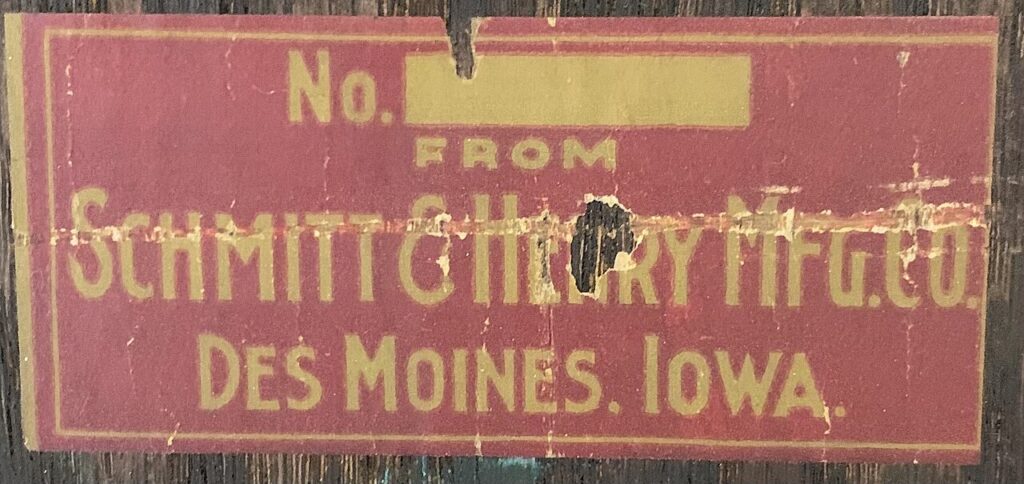

What a public registration check can and cannot answer
Ask the proposed contracting seller for its current registered Chinese name and unified social credit code. The National Enterprise Credit Information Publicity System is the official route for looking up an entity by name or code; China’s State Administration for Market Regulation describes its real-name query access. The portal may require registration or verification, and site access varies. Save the query date, searched name/code and what was actually returned. If you cannot access a record, mark it unverified and seek an appropriate local professional or official channel; do not treat a screenshot supplied by the seller as an independent search.
A registration match can help establish the existence and recorded details of a business. It does not prove ownership of a factory site, that a specific product was made there, that a trade name belongs to the entity, that an account number is safe, or that the company can perform this order. The site tour answers a different question: what activities and equipment were observable at one place on one date? A tour photo and a registration result should be linked to the same named entity only when the connection is supported. Avoid publishing a universal legal conclusion from one web record; check transaction-specific issues with a qualified adviser.
Reconcile the document chain, not just one business card
Request a current quotation and a draft contract in the name of the proposed seller. Compare their legal name and identifying number with any registration result. Ask who issues the commercial invoice, who handles export formalities, and whose bank account will be used. If the quotation comes from Brand A but the contract says Company B, ask whether A is merely a brand and how B is authorized to sell the item. If the payee is Company C, do not infer permission from a salesperson’s chat message; request an explanation in an approved, independently confirmed channel and apply your organization’s payment controls before transfer.
| Документ | Name or identifier to capture | Question it answers | Чего не доказывает |
|---|---|---|---|
| Showroom card or product label | Displayed brand, booth and salesperson | Where the buyer encountered the item | Contracting identity or manufacturing ownership |
| Registration result | Registered Chinese name and credit code | Whether an entity and recorded details can be found | Production of the specific furniture |
| Quotation and purchase contract | Issuer, seller, product code and revision | Who is proposing and accepting sale terms | That a separate factory will perform as promised |
| Factory statement or production plan | Named maker, site and item scope | Who is represented as making the order | Ownership without independent evidence |
| Invoice and payment instruction | Invoice issuer, beneficiary and account | Who bills and receives funds | Authority to substitute a third-party payee |
| Export/packing documents | Shipper, exporter and item references | Who performs document and handover steps | That the exporter is the maker or seller |
The goal is a consistent transaction story. Some differences are normal and explainable; unexplained differences are a hold point. The buyer does not need to force every task into one company, but does need to know who is accountable for each obligation and what happens if a party fails to perform. A later dispute is harder to resolve if the payment receipt, signed terms and supplier’s verbal promise each name a different organization with no documented bridge.


Test a factory claim against the specific item
If the seller says it owns a factory, ask which registered company owns or operates the premises, where your item will actually be made and whether any major process is subcontracted. The answer may be more complex than a yes/no factory label. Upholstery, frames, metal bases, stone tops and export packing may occur at separate places. The published Longjiang sofa and upholstery guide provides category context, but a district name does not identify your maker. Separate production sites are not automatically a problem; they affect inspection scope, production control and accountability. Ask for a process map or work-order reference for the quoted model, not a general company video. A trip to a busy workshop proves that work occurs there, not that the buyer’s future batch has been allocated to it.
Avoid confusing access with ownership. A trading company may have arranged a visit to a partner factory. An independently owned factory may operate a showroom under a related brand. A manufacturer may use an export agent. Write the asserted relationship and how it affects who approves substitutions, receives claims and pays for remedies. If the factory and seller are different, the buyer’s contract should make the seller’s product and quality obligations clear; the factory tour alone does not make the factory the buyer’s counterparty. Seek transaction-specific legal review for material contract questions.

Payee mismatch is a separate release gate
Account changes can be legitimate or fraudulent. Treat either as a controlled exception. Compare the beneficiary name with the contracted seller and the approved invoice. If different, stop the payment workflow and obtain a written explanation from an authorized person using a contact path established до the change request. Follow your own finance team’s independent callback or verification procedure. A forwarded chat screenshot, new QR code, free-email message or “urgent” instruction should not be enough. Record who verified the change, when and against which documents. Do not place bank account details in a public editorial file.
The same discipline applies when a deposit is requested before the final seller name has appeared on the contract. The buyer should know the identity of the recipient and the exact item/specification to which the payment relates. Never use a product photograph or floor sample as a substitute for a commercial document. When entities differ, the proper response is not to accuse the seller; it is to request a traceable responsibility and payment path that the buyer’s approver can assess.


A fictional three-name example
Consider an expressly fictional sofa order, model S42, 20 units. The visitor meets “Harbor Home” at a Lecong showroom. A catalogue refers to “Harbor Living.” The quotation arrives from “Foshan Harbor Trading Co.” and says the sofa will be made by “Shunde Comfort Furniture Co.” The salesperson calls all three “our factory.” None of these invented names represents a real company. The buyer should not collapse them into one identity or presume wrongdoing merely because they differ.
The buyer first asks which registered entity will sign the sale contract and issue the invoice. They request its Chinese registered name and code and check the official public record if accessible. They then ask for a written statement of the maker and production site for S42, including which company controls sample approval and inspection access. Finally, they compare payment instructions with the contracted seller and map any exporter separately. If the trading company is the seller, the contract can still specify the orderable sofa, production reference, inspection rights and remedy process. If the payee unexpectedly changes, the buyer holds the deposit until the change is independently verified. The same checks apply whether the seller is a manufacturer, distributor or trading company.

Map the exporter and handoff without guessing its role
Furniture may move from producer to consolidation warehouse, then to an exporter or freight provider. The name on transport or export papers can differ from the showroom seller. Ask who prepares the commercial invoice and packing list, who hands goods to the forwarder and who is responsible for correcting document discrepancies. Keep item and carton identifiers consistent across the handoffs. Do not infer from an export document that the shipper owns the product or made it. Those operational roles must be written in the transaction file.

Sign off the party map before deposit
The buyer’s approval sheet can be one page. Put the five roles across the top; attach the registration search, seller quote/contract, maker statement, payment verification result and proposed export-document issuer. Use three statuses: matched, explained difference и unresolved. A matched row names the same verified entity across relevant documents. An explained difference has a dated written reason and owner. An unresolved row blocks the action it affects: identity blocks contract release, an unverified payee blocks payment, and an unclear maker may block sample or production approval. Keep exceptions visible rather than hiding them in a paragraph of notes.
This is a buyer control, not a guarantee of title, corporate affiliation or legal enforceability. For a material transaction, a qualified adviser should review the contract and jurisdiction-specific questions. The next practical step is to take one current quotation and write the registered seller, proposed maker and payment beneficiary on three separate lines. If you cannot fill all three from attributable documents, request the missing explanation before sending a deposit.


Photo credits and limits
Each caption links the photographer, original Wikimedia Commons file page and licence. These eight genuine but unrelated photos illustrate a showroom, historic label, workshop, records, payment control, warehouse, overseas loading and signoff. They are not Source Foshan projects, a Foshan company, the Xiaohongshu visit, a verified factory or a real contract. Replace provisional images with permission-cleared company documents and site photographs before publication when available.