New Zealand / Room packages, shipping and border clearance
Furniture from China to New Zealand: Shipping Costs, GST, MPI Rules and Room Packages
Connect the room schedule to the shipping and import budget. Includes a package planner, NZD GST/levy model, current border requirements and quote checklists.
New Zealand / From the room plan to usable furniture
You can furnish a New Zealand new build or short-stay property from Foshan by starting with dimensioned plans and one room-by-room item list. Separate priority furniture from optional pieces, approve exact bed and mattress dimensions, and compare the full delivered scope. New Zealand import GST is 15% on the applicable goods, duty and international freight/insurance base. The furniture, wood packaging and sea container also need their own biosecurity checks. Package price and container fit must come from the actual specification and cartons.
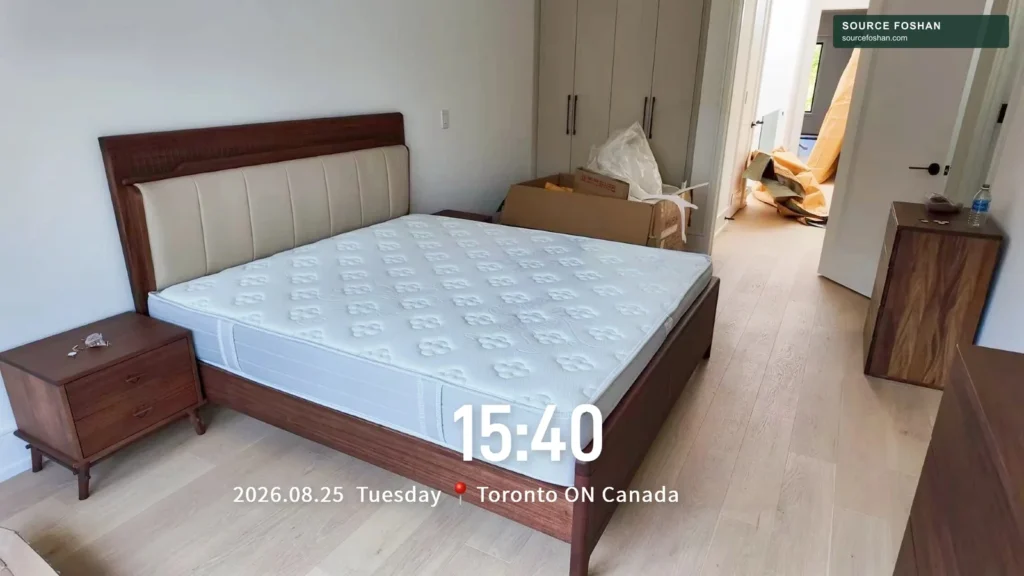
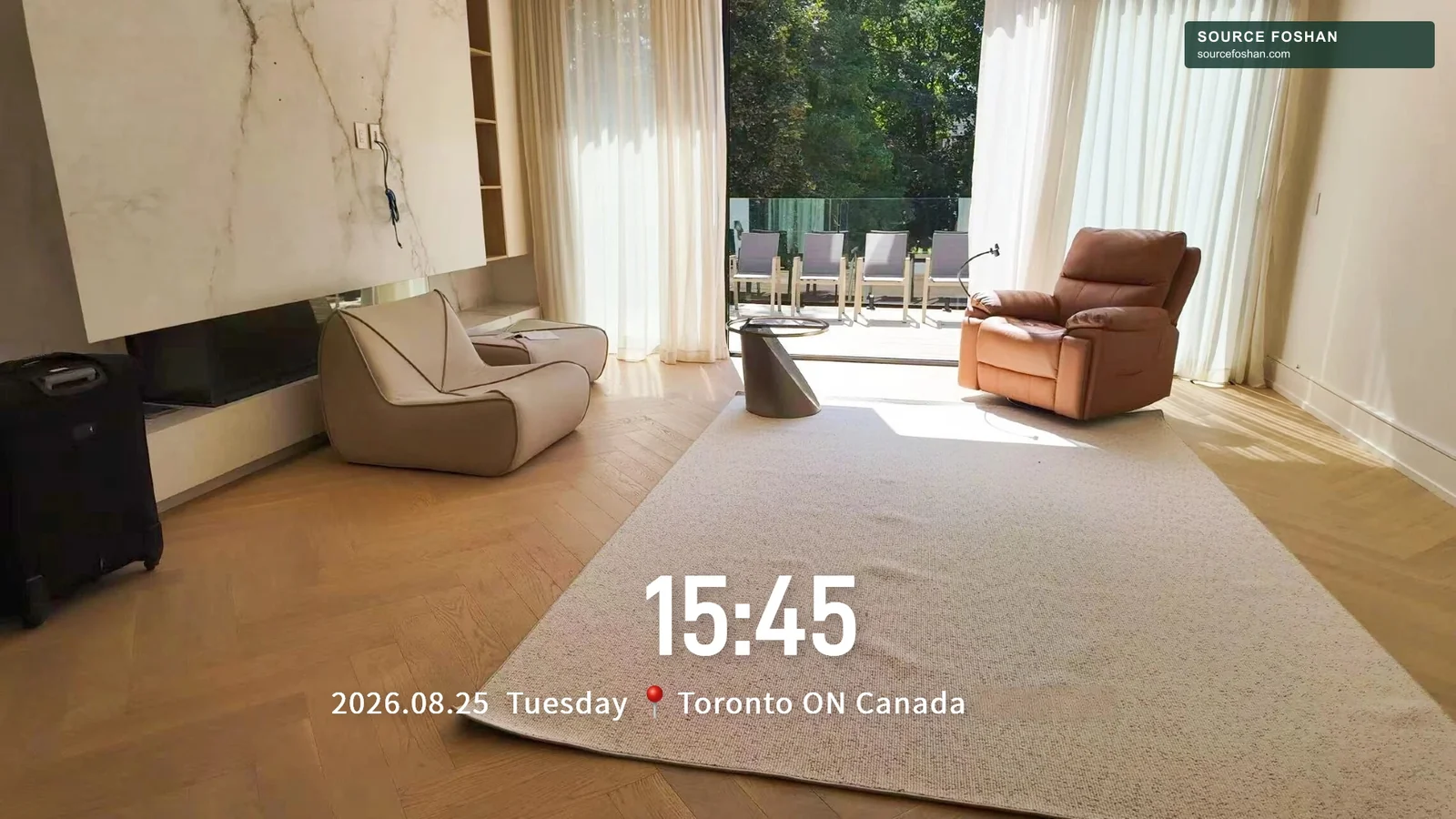
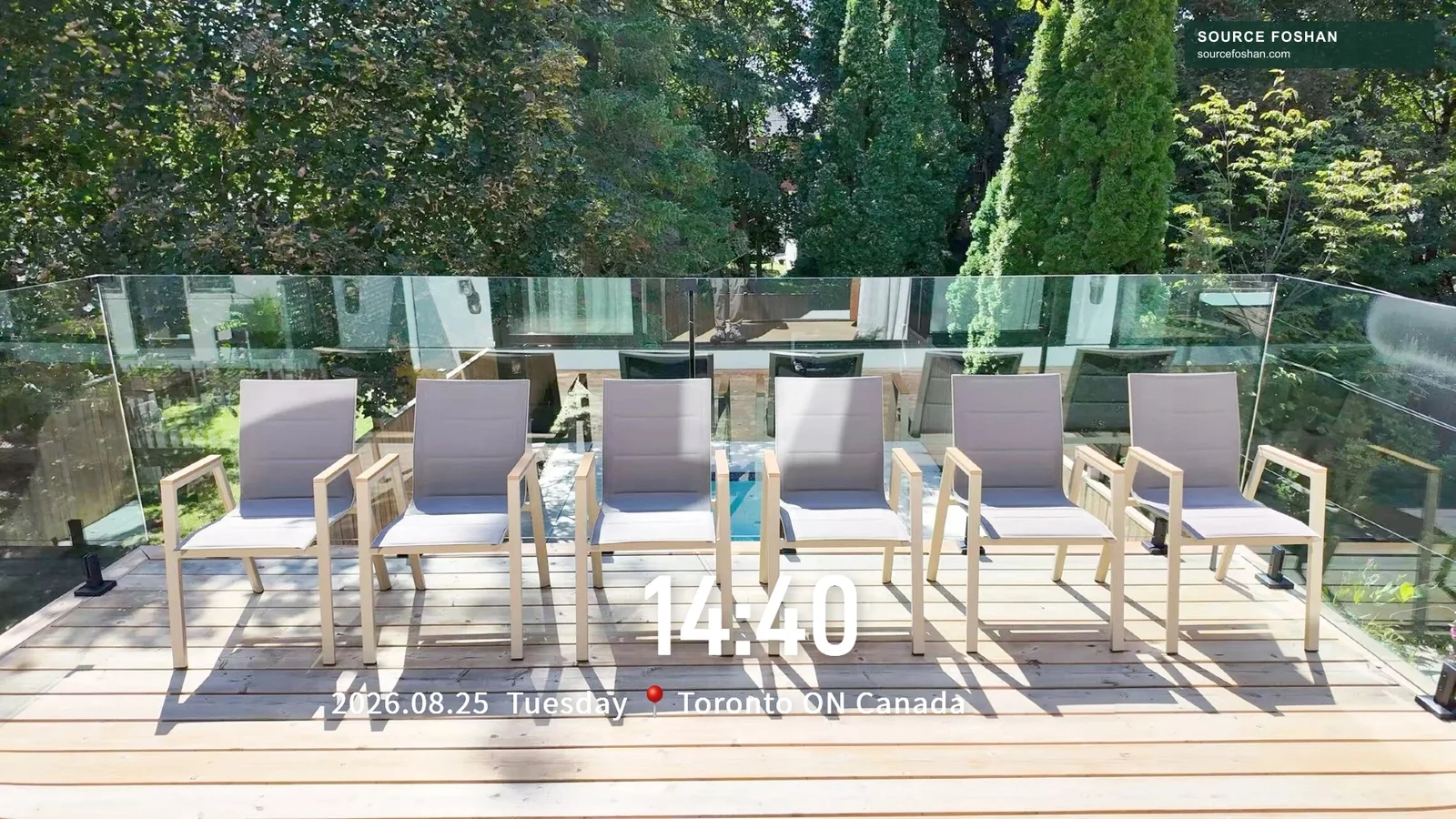
Package sources checked 24 October 2026; shipping, levies and border guidance updated 28 October 2026. The USD allowances, CBM and programme examples are illustrations, not quotations, measured New Zealand shipment averages or guaranteed savings. Photos below document a Toronto residential project; they do not establish a New Zealand import result.
01 / A package is a list, not a bedroom count
What does it cost to furnish a New Zealand new build from China?
Build the estimate from sleeping, living, dining and storage requirements. State the number of sleepers and dining seats, actual furniture dimensions, construction, finish and packing. A three-bedroom home with loose furniture is a different scope from fitted kitchens, wardrobes, bathroom furniture, lighting, curtains, appliances or installation.
| Planning scenario | Assumed goods allowance | Scope to define |
|---|---|---|
| One-bedroom rental | 3,500 | One sleep set, compact living/dining and limited loose storage |
| Two-bedroom home | 6,500 | Two sleep sets and a written shared-room list |
| Three-bedroom worked model | 10,300 | Three sleep sets, living/dining and two storage pieces, as below |
| Four-bedroom planning allocation | 14,000 | Four sleep sets and a separately sized common-room schedule |
These allowances give a way to test a list; changing materials or dimensions changes the quote. Freight, GST, any duty, inspection, service fees, MPI/broker work, delivery and assembly are outside these goods figures. Source Foshan’s published service starting point is USD 10,000, with a 3–5% fee on an agreed order-value basis. Smaller examples are comparison exercises, not confirmation that they meet our project minimum or a factory’s MOQ.
Editable room-package illustration
What changes when you adjust the rooms and optional pieces?
All unit allowances and carton volumes are assumptions. Enter the actual accepted item/packing schedule. One sleep set means a frame, mattress and two bedside pieces.
The count rounds volume / assumed planning space up to whole containers. Actual cartons, door clearance, weight, stacking and restraint can change fit. Freight, GST/duty, services, testing, MPI/broker work and installation are excluded, not free. The optional allowance is fixed in this illustration; request actual product offers.
At the default settings, the goods subtotal is USD 10,300 and the assumed packed volume is 30 m³. The model excludes уличной мебели until you select it. Use the room schedule and priority/optional worksheet to replace the allowances with line-by-line offers.
02 / Choose for turnover and replenishment
What belongs in an Airbnb package, and how many fit in a container?
A short-stay package needs a repeatable item code, cleaning method, replaceable components and a replenishment plan. List beds and mattresses, bedside storage, seating, dining furniture, luggage space and any desk separately. Linen, kitchen equipment, curtains, appliances and installation are included only if the schedule says so. Furniture count is not an approval of legal guest occupancy.
For the default three-bedroom example, each bedroom set means one bed frame, one mattress and two bedside pieces. Three sets therefore mean three frames, three mattresses and six bedside pieces. Dining quantities and sofa seats must be checked against the intended guest layout rather than inferred from that bundle name.
| Hypothetical packed package | Assumed volume | 20 ft at 26.56 m³ planning space | 40 HQ at 61.12 m³ planning space |
|---|---|---|---|
| Compact studio | 6 m³ | 4 complete packages | 10 complete packages |
| Larger studio | 8 м³ | 3 | 7 |
| One-bedroom package | 12 м³ | 2 | 5 |
The starting equipment volumes come from Maersk’s nominal dry-container data: 33.2 m³ for 20 ft and 76.4 m³ for 40 HQ. The 80% factor and package volumes are assumptions. Carton dimensions, door access, weight, safe stacking, separation and restraint can reduce fit. Do not buy a claimed “18–24 studios per container” without the complete packed list.
For a partial load, compare complete LCL and FCL offers using the shipping-mode comparison guide. Consolidating multiple suppliers is different from sharing another customer’s consignment. Shared sailings, importer arrangements, liability and cut-offs require an explicit offer; they are not automatically available.
03 / Approve the dimensions before the look
Can you propose furniture from our house plans and room dimensions?
Send a dimensioned PDF plan, reference images and any item list. If using DWG/CAD, include an accessible PDF and identify the drawing revision. Record ceiling height, finished floor levels, skirtings, door swings, outlets and the positions of fixed joinery. Mark the route from delivery access to each room: the narrowest doorway, corridor turn, stair landing and lift opening matter as much as the room’s floor area.
The proposal should state which drawings, layout assistance, renders and revisions are included and when they will be delivered. Do not assume free 3D design or a fixed first-draft turnaround. A rendering can show proportion and finish direction; it cannot prove seat comfort, construction or doorway clearance.
For an awkward access route, compare sectional or knock-down construction with the proposed assembled dimensions. Name who verifies the site measurements and who accepts the final shop drawings. The услуга по закупке товаров для всего дома explains the coordination scope, while the floor-plan-to-delivery process shows the approval sequence.
04 / A quote should preserve your line numbers
Can you quote from the furniture list in our attached PDF or spreadsheet?
Yes: provide one line per item, with the drawing/reference, quantity, dimensions, material, finish and intended use. A useful response retains your item code and identifies whether the offered product is a specification match, a proposed alternative or a separately priced upgrade. A similar photo is not proof of identical construction.
- Priority items: the furniture required for handover, with an independent subtotal.
- Optional items: pieces that can be omitted, phased or sourced locally without making the priority subtotal misleading.
- Each offered line: product image/reference, dimensions in mm, frame/panel and upholstery details, hardware, MOQ, unit price/currency, packing CBM/weight and production basis.
- Exceptions: mismatched dimensions/materials, unresolved compliance evidence, samples and anything still requiring a drawing decision.
- Commercial scope: Incoterms rule/place, service charges, payment triggers, defect remedy and excluded work.
Agree the response date after the schedule is reviewed; a 30-line list with bespoke joinery needs different work from a few stock items. Use authorised reference images and your own drawings for a lawful interpretation of the style. A retailer’s logo or protected design should not be copied as if permission were included.
05 / Make each upgrade explainable
What do Good, Better and Premium actually change?
| Категория | Good: define the basic scope | Better: price the useful upgrade | Premium: justify the requirement |
|---|---|---|---|
| Диван | Named frame, foam and cover; approved comfort sample | Specified removable/cleanable parts, replaceable glides and stronger evidence for repeated use | Project-specific materials, detailing and performance testing |
| Bed / storage | Exact substrate, finish, support and hardware | Named mechanisms and replaceable wear parts | Custom dimensions/finishes with accepted tolerances and installation details |
| Матрас | Defined support, finished size and cover | Pocket-spring/comfort-layer specification and serviceable protector strategy | Approved comfort trial, documented construction and a defined remedy |
| Dining furniture | Material, finish, joints and seating dimensions | Cleanability, replaceable glides and appropriate strength evidence | Special finish/use requirements with model-specific tests |
For an allocation exercise, you might compare USD 10,000, USD 14,000 and USD 20,000 goods budgets against the same three-bedroom list. These are assumed spending levels, not market price bands or guaranteed packages. Ask which line changes create the difference. Foam density, abrasion resistance and panel grades should be specified and evidenced; they do not turn “Premium” into a universal certification.
For a short-stay property, test guest comfort, cleaning and spare-part availability before paying for decorative complexity. Avoid declaring a fixed furniture replacement life without evidence of the product, occupancy and maintenance. Have warranty scope, exclusions, claim evidence, transport costs and response obligations written into the order.
06 / A size name is not an order dimension
Can Foshan pocket-spring mattresses fit New Zealand beds?
A mattress specialist can quote a written size and construction; a general showroom may source the mattress elsewhere. Ask who makes the spring unit, fills and finishes the product, performs compression and accepts the warranty. Specify the pocket-spring arrangement, comfort layers, finished thickness, edge support, cover and packaging. “Pocket spring” alone does not establish comfort or durability.
| Size name | Published width × length |
|---|---|
| Single | 915 × 1900 |
| King Single | 1055 × 2030 |
| Double | 1385 × 1900 |
| Queen | 1525 × 2030 |
| King | 1685 × 2030 |
| Super King | 1835 × 2030 |
Sealy’s guide also states a ±15 mm manufacturing variation for its handmade mattresses. Do not transfer that tolerance automatically to another supplier. Approve the actual mattress size, bed opening, support dimensions and bedding compatibility together. “China king”, “NZ queen” and a catalogue photograph are not sufficient purchase-order dimensions.
For roll-packed mattresses, request carton dimensions, gross weight, maximum compressed storage time and the model’s recovery instructions. Compare a recovered sample with the approved construction. There is no verified universal number of mattresses per 40 HQ or a single MOQ across factories. Ask the importer and laboratory to confirm the current New Zealand product and labelling requirements for the actual mattress; a generic overseas certificate is not automatic approval.
07 / Coordinate the house and the shipment
How long from quote to Auckland or Christchurch delivery?
| Этап | Allowance | Owner / record to agree |
|---|---|---|
| Brief and offers | 1–2 | Room/item list and scope |
| Drawings and samples | 2–3 | Approved references |
| Manufacturing | 4–8 | Accepted factory slot |
| QC and consolidation | 1–2 | Corrections and final carton list |
| Ocean planning allowance | 3–5 | Actual port/routing and carrier ETA |
| Clearance and local handover | 1–2 | Customs/MPI and delivery appointments |
| Separate buffer | 2 | Building and arrival contingency |
| Sequential illustration | 14–24 | Replace with accepted project dates |
Request the current routing for Auckland, Tauranga or Lyttelton and the final delivery postcode. Inland and inter-island work can change both cost and timing. Check every supplier’s holiday closure, material availability and restart plan. A quoted production period begins after the agreed approvals and payment release; it is not automatically the time from sending a first photo.
Align the shipment with practical completion, access, dry storage and installer availability. Define the local fallback items if an essential bed or chair is delayed. Order needed spares by model and part number rather than assuming a universal 2% package covers every risk.
Shipment planning / The cargo, entry and final postcode
What does a furniture container from Foshan to Auckland cost?
Obtain dated 20 ft, 40 ft and 40 HQ offers against the actual carton schedule, cargo-ready date and New Zealand postcode. Identify the China collection point/port, discharge port, transfers, currency, quote validity, free time and included work. No live ocean rate is quoted here: an online per-CBM headline is insufficient evidence for a delivered furniture budget.
| Группа расходов | Ask the provider | Owner to agree |
|---|---|---|
| China origin | Pickup, receiving, crating, stuffing/CFS, export work, documents and terminal charges | Seller / agent / forwarder |
| International carriage | Equipment or LCL weight/measure rule, minimums, surcharges, route and insurance | Named forwarder / insurer |
| New Zealand arrival | Terminal/release, devanning, approved transitional facility, free time and storage | Destination provider |
| Entry and biosecurity | Customs/MPI levies, broker, assessment, inspection and treatment if required | Importer / broker / MPI |
| Final handover | Postcode, access, unloading, stairs, assembly and packaging removal | Delivery / installation team |
Request Auckland, Tauranga or Lyttelton options and the inland/inter-island leg actually needed. Napier or Wellington availability must be confirmed in the current service offer. Avoid declaring a universal port premium or transit difference without the proposed routing. A vessel ETA is separate from MPI release, devanning and a booked delivery appointment.
LCL can suit a smaller shipment, but fixed destination/CFS costs may dominate. Compare it with a partly filled FCL on the same scope using the LCL/FCL decision guide. A claimed 15–18 m³ crossover is not transferable to every provider, density or postcode. Shared handling adds stages to manage; no measured comparative damage rate is asserted.
What replaced the old IETF fee in 2026?
New Zealand introduced new Goods Management Levies from 1 April 2026, shifting the relevant charging basis to consignments. Do not copy an old Import Entry Transaction Fee/Biosecurity System Entry Levy amount into a current quote.
| Компонент | Excluding GST | Объем |
|---|---|---|
| Таможня | 73.87 | High-value import by sea |
| MPI | 44.57 | High-value import component |
| Combined | 118.44 | Over NZD 1,000; confirm applicability/exemptions |
| Combined including 15% GST, rounded | 136.21 | Not a broker, port, treatment or delivery fee |
Customs’ levy table distinguishes high-value sea imports from air and low-value consignments. The official quick reference states the levies are subject to GST. The NZD 1,000 distinction is not a promise that a small order has no charges; the new system also has low-value levy categories. Do not add a pass-through levy twice if your broker already includes it.
Editable planning illustration
What does the NZ import cash illustration include?
High-value sea scenario only. Customs value here is goods × planning exchange input; the broker applies the actual valuation/rate. Import GST = (customs value + ordinary duty + freight/insurance) × 15%. Levy GST is calculated separately. Additional fees, assessment/treatment, trade remedies, valuation adjustments and unentered scope are excluded, not free. The levy can change and must not be counted twice.
The default goods input is USD 25,000 and the exchange input is an assumed NZD 1.70 per USD, producing NZD 42,500 simplified customs value. Freight/insurance is an assumed NZD 5,100, duty is a conditional zero-rate input, and import GST is NZD 7,140. Adding the levy including its own GST and NZD 2,700 additional entered costs gives NZD 57,576.21. The additional allocation comprises assumed sourcing NZD 1,700 plus destination work NZD 1,000; it needs an actual scoped offer. This is not a current freight quotation or complete customs entry.
For China–NZ FTA preference, the importer must substantiate the origin claim. A COO is one route; a declaration or other sufficient evidence may also support the claim. The Customs tariff classification, valuation and origin rules control, and Customs exchange rates can differ from the bank’s conversion. IRD’s GST guidance makes recovery dependent on registration, taxable use and records; cash paid at import and eligible input tax are different figures. A Customs payment/deferment arrangement needs separate approval.
Download the NZ shipping, levy and import-cost worksheet. Keep the earlier room-package worksheet for item quantities and assumed CBM; a goods budget and an import-cost calculation answer different questions.
How do BACC, wood packaging and treatment documents fit together?
Under MPI’s container process, the responsible packer/exporter provides the quarantine declaration; the importer or broker applies through Trade Single Window for the Biosecurity Authority Clearance Certificate (BACC). Arrange the approved transitional-facility route and any directions before domestic delivery. An import entry does not itself authorise unpacking at a home.
Review three separate pathways: the furniture’s material, regulated solid-wood packaging, and container cleanliness. MPI’s wood-products guidance points to woodware, wooden-panel and bamboo/cane/rattan/willow standards, including relevant low-risk categories. Do not assume every new finished chair requires the same fumigation, or that an IPPC crate mark substitutes for the furniture’s own evidence.
Have the exporter/treatment provider identify the applicable treatment method, timing and supporting certificate or mark under the actual standard. Do not choose methyl bromide, sulfuryl fluoride or heat treatment from a generic menu without confirming acceptance for that product/pathway. MPI notes additional inspection and treatment costs can apply. Such work, storage and delays are unquoted contingencies here, not a fixed zero or guaranteed number of days.
How do several factories share the New Zealand shipment?
- Agree the item/room schedule, factory minima and accepted references.
- Set each supplier’s cargo-ready date and the warehouse receiving cut-off.
- Inspect to the written scope and close findings before the agreed release.
- Receive/reconcile cartons, material declarations and item codes; record condition.
- Confirm packing, gross weight, loading layout and any storage/rehandling charges.
- Reconcile invoice, packing list, origin evidence, transport and quarantine documents.
- Record loading/seal and hand over to the appointed New Zealand broker and receiving team.
There is no verified maximum number of factories or universally free warehouse period. Consolidation coordinates orders; it does not cancel factory MOQs. Use the existing sequential programme in this guide, then replace its planning allowances with accepted factory, sailing, clearance and delivery dates. New Zealand hold/damage notices need prompt evidence, preserved packaging and the respective seller, insurer or MPI process.
08 / Three checks: goods, packaging and container
What GST, documents and MPI rules apply to imported furniture?
New Zealand Customs calculates import GST at 15% on the goods value, applicable duty and international freight/insurance. A simplified illustration using NZD 20,000 goods, NZD 3,000 freight/insurance and an assumed qualifying zero-duty treatment gives NZD 3,450 GST and NZD 26,450 for those entered lines. Broker work, Customs/MPI levies, treatment, local delivery and installation remain additional where unquoted. Zero duty is conditional; it is not a GST exemption.
Under the New Zealand–China FTA, the importer needs sufficient evidence for the origin preference claimed. A certificate of origin is one route; a declaration or other sufficient evidence can also support a claim. The actual classification and origin rule decide eligibility. Do not treat a Chinese seller’s address as proof of origin or a COO as universally mandatory.
| Record / check | Who supplies or arranges it | What it must match |
|---|---|---|
| Commercial invoice and packing list | Seller / exporter | Codes, materials, value, carton quantities, CBM and weight |
| Bill of lading and booking | Carrier / appointed forwarder | Consignee, route, container and handover |
| Import entry and Customs Number | Importer / broker | Actual classification, origin evidence and valuation |
| Wood product and packaging evidence | Exporter / treatment provider, checked by importer | Applicable IHS, materials, marks and certificates where required |
| Sea-container quarantine declaration | Responsible overseas packer / exporter | Container inspection, cleanliness and packing declaration |
| Transitional-facility and delivery arrangements | Importer / broker / destination providers | Approved clearance route before domestic delivery |
MPI’s wood-products guidance distinguishes manufactured wood furniture from bamboo, cane, rattan and other pathways. The relevant import health standard determines treatment, cleanliness and certification. An ISPM 15 crate mark does not approve the wooden furniture inside it.
MPI’s container process requires a quarantine declaration and advance arrangements for transport to a transitional facility. Do not assume a container can simply be unloaded at a residential driveway before the required clearance.
BMSB requirements depend on goods, origin/routing, container conditions and season. Vehicle/machinery rules or Australian country lists are not a blanket rule that every new Chinese furniture order must be fumigated. Have the broker apply the current MPI requirements before packing.
09 / Choose the decisions a visit will settle
Can I visit Foshan while I am in Guangzhou?
Yes, request a dated itinerary around the relevant products and factory appointments. Give your Guangzhou starting point, travel dates, party size and priority decisions. Lecong showroom selection and a manufacturer visit are different activities. Confirm transport, translation, accompaniment charges and who will follow up after you leave; do not assume free transfers or a fixed number of factories per day.
If working remotely, use physical material references, video calls and an appointed inspection plan. Keep a record of approved items and changes so a showroom choice does not silently become a different production specification. The New Zealand delivery service page is the starting point for the destination scope.
New Zealand furniture and shipping questions
What is the minimum order for a package?
Factory MOQ is model/finish-specific. Source Foshan’s published service starting point is USD 10,000; smaller planning examples are not accepted offers. LCL can serve partial loads where available, but compare all origin and destination charges.
Is importing always cheaper than New Zealand retail?
No. Compare the same specification, delivery/assembly, tax treatment, management time and remedy. Small urgent orders or products needing local support can favour local supply. No fixed saving percentage is established here.
Can multiple apartments use identical furniture packages?
Yes, request a repeatable item schedule, sample approval and room/carton labels. Confirm factory quantity breaks rather than assuming a discount. Phase deliveries around building readiness and retain identifiable spares.
Who inspects the furniture, and what if it arrives damaged?
Name the inspector, inspection scope and release owner in the order. Preserve packing, labels, condition photos and unpacking records on arrival, then notify the seller, forwarder or insurer under the actual deadline. Agree parts/remake freight responsibility in advance.
How are payment and service fees structured?
The published service fee is 3–5% on an agreed order-value basis, with scope and extras in writing. Negotiate the factory deposit/balance triggers separately. A 30/70 proposal does not by itself define inspection or refund rights.
Can you arrange delivery to Wellington or Queenstown?
Request a postcode-based offer with named importer, clearance and destination providers. Confirm whether unloading, stairs, assembly and packaging removal are included. Do not assume “door to door” means installation.
Can you match my Pinterest board or a retailer’s style?
Use authorised references to discuss proportions, materials and finishes. Approve drawings and samples for the offered design. Matching a look does not authorise copying protected designs or brand marks.
What should a short-stay owner be cautious about importing?
Consider local supply for items with demanding electrical approvals, frequent specialist servicing, urgent replacement needs or unverified weather/moisture performance. Compare the maintenance and compliance plan before combining them with loose furniture.
Ваш следующий шаг
Send your plans and priority / optional room list.
Include room dimensions, bed/mattress sizes, access, reference photos, intended use and your target budget currency. Mark which items are essential at handover.
Sources and scope
Customs, MPI and the named mattress manufacturer are linked beside the relevant guidance. Budget, packed volumes, package counts and programme allowances are illustrative. Toronto photos document actual residential placement, not a New Zealand quote, biosecurity release, durability test or measured saving.