Feldnotizen
Lecong market navigation for first-time overseas buyers
Plan a focused Lecong furniture market route with verified entrances, product questions, evidence goals and a stop-or-revisit rule for first-time buyers.
The short answer: navigate Lecong by decision and verified entrance, not by the number of furniture malls you can name. Choose one starting anchor, one or two relevant product zones and a fixed evidence goal for each stop. Confirm the exact building entrance and showroom location shortly before travel, then use a route card to record what you saw, what remains unverified and whether the next stop still deserves time. A first visit is successful when it narrows the purchase decision, even if you do not buy that day.
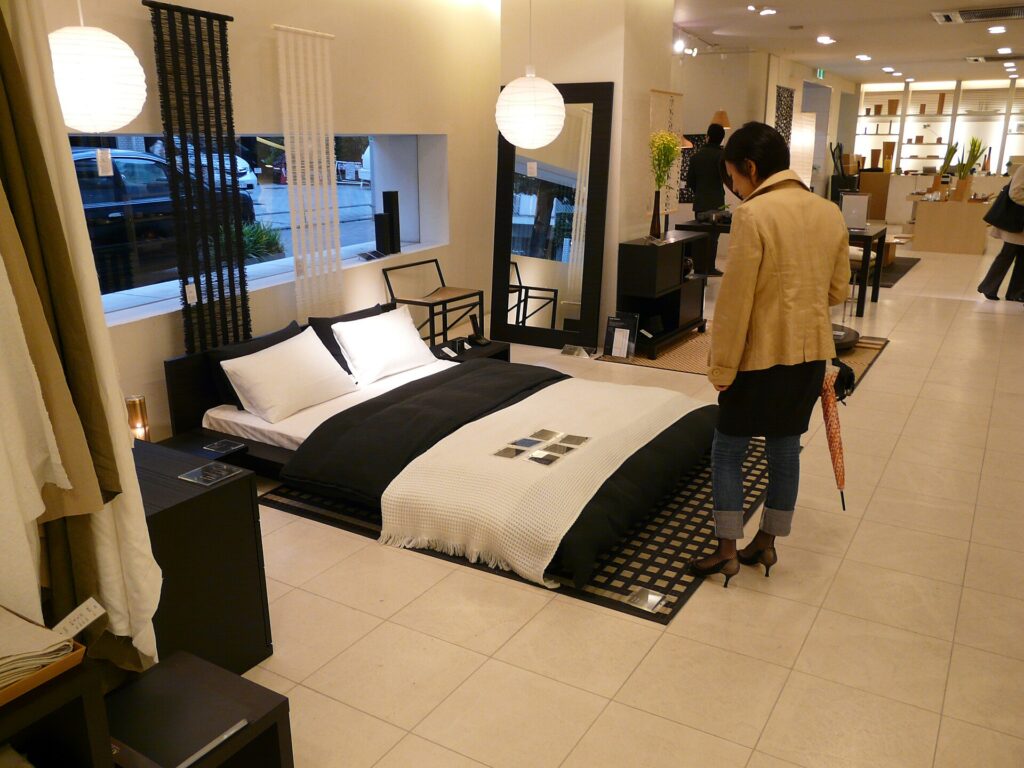
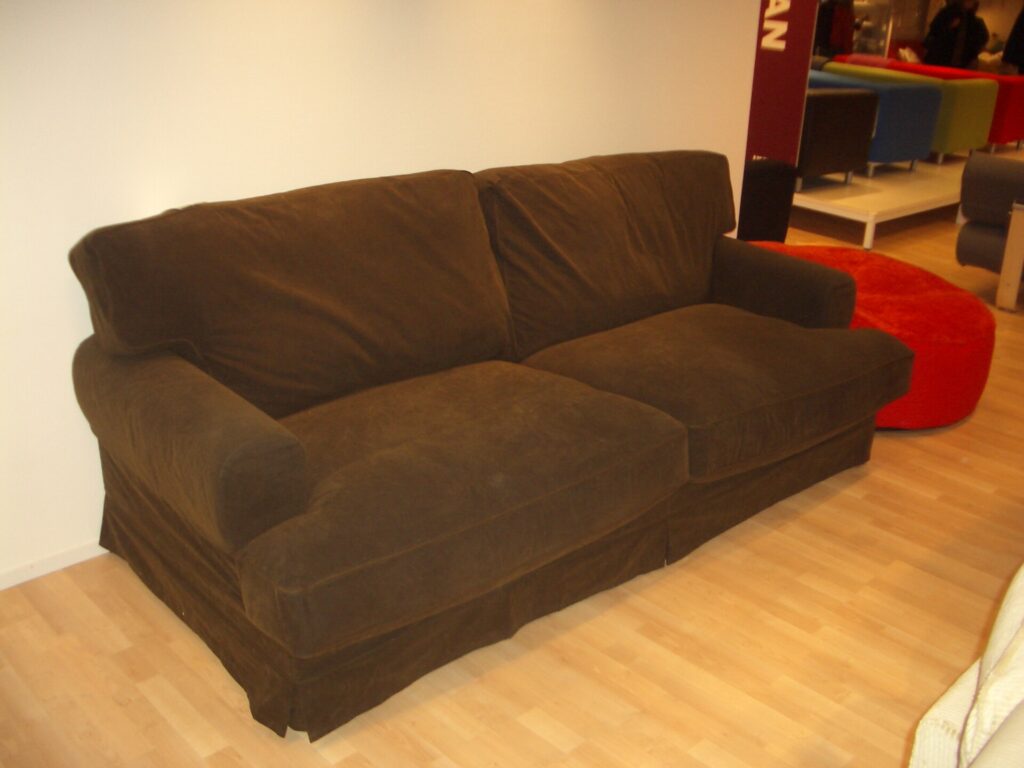
Die Lecong furniture market map und broader Foshan market guide provide area context. Treat any online map, including ours, as a starting reference: storefronts, entrances, displays and contacts can change. This article shows how a buyer with a sofa and dining-room brief can move inside and between candidate stops without converting the day into an unstructured showroom marathon. The eight photographs are genuine but unrelated Commons illustrations, not photographs of these Lecong locations or a Source Foshan guided tour.
.jpg)
Build a route card around four fields
Create a one-page card for each possible stop. Its fields are anchor, decision, evidence, und exit. An anchor is a current, precise location: map pin plus building, entrance, floor or booth, and named contact if relevant. A mall name alone is often too broad for a first-time visitor. A decision states why the stop exists: compare seat depth on two sofas, see a specific finish in person, or meet a seller who can document the construction. Nachweis names what you will take away with permission: model code, dimensional sketch, labelled swatch, seller identity or written follow-up. Exit states when to move on: the question was answered, a required sample is unavailable, or the allocated time has passed.
This compact structure prevents two common planning errors. First, a visually impressive room may absorb an hour without addressing the buyer’s brief. Second, a buyer may leave a promising booth with a photograph but no model code or seller name, making the visit impossible to reconcile with later quotations. Write the four fields before you enter. Keep one blank line for an unexpected discovery, but do not let every attractive display become a new priority.
| Route-card field | Example for an illustrative sofa stop | Evidence after leaving |
|---|---|---|
| Anchor | Confirmed entrance, floor and booth; contact LC-A |
Saved current pin and date |
| Entscheidung | Does the displayed model meet the target footprint and comfort brief? | Dimensions tied to model code |
| Nachweis | Permitted photos of tag, seam and swatch; seller’s construction sheet | Files labelled LC-A / sofa 02 |
| Exit | Leave after the key measurements and follow-up owner are recorded | Suitable, conditional oder not suitable |
The example is a planning device, not a report of an actual Lecong showroom. For a dining table, replace the sofa question with tabletop dimensions, edge profile, base clearance and packed-component access. For cabinetry, replace it with a drawing or material approval checkpoint. The same navigation structure remains useful because it focuses each stop on a purchase decision.
.jpg)
Choose stops by relevance, then join them into a route
Start with the brief, not with a supposedly universal “best mall.” List the product categories you need and the questions that require physical inspection. A buyer choosing a sofa may need to test seat height and compare fabric samples. A buyer ordering many identical hotel chairs may need to see construction details and a repeatable model code. Search the current shop or mall directory, ask a named showroom for an exact entrance, and verify that a suitable sample will be present. The Louvre furniture mall guide gives one venue context, but it does not guarantee that a specific model, floor or contact is current on your visit day.
Join only the confirmed stops into a route. Group stops that share a building or nearby anchor if their product questions fit the same block. Do not assume two shop names with similar branding share one address. Do not calculate a minute-by-minute walking plan from a screenshot without checking current entrances, road crossings and the actual floor of each appointment. For mobility, heat or luggage constraints, ask for the closest usable entrance and lift before the day starts. Leave room for lunch, translation, locating a booth, note-taking and a delayed meeting.
The route should have three legs: orientation, target examination, und comparison/exit. Orientation establishes where you are and checks the first anchor; it is not a licence to browse every floor. Target examination covers the one or two products central to the brief. Comparison/exit is reserved for revisiting the best candidate, clarifying a discrepancy, or leaving with an accurate follow-up list. If the first leg consumes the comparison reserve, shorten the number of stops rather than skipping evidence collection.
.jpg)
Use a stop, skip and revisit rule at each doorway
At a candidate booth, ask a fast screening question before committing a full examination: “Can you show the model or material that matches this brief today, and can you identify the person who would quote it?” If the answer is yes, follow the route card. If the exact item is absent but a related sample and competent contact are available, mark the stop conditional and limit it to the unresolved question. If the response has no relevant sample, no traceable model identity and no realistic follow-up, skip politely. A skip is a time decision, not a judgement about the seller’s integrity.
Make a revisit conditional on a new fact. For example, return if the seller produces the correct swatch, confirms the frame specification, or sends a written revised quote. Returning simply because a salesperson says “last price today” can displace a more valuable comparison. Ask for the offer in writing with the product reference and expiry if timing is genuinely material. Do not put down a deposit merely to preserve a verbal number while dimensions, finish or delivery scope remain open.
A first-person Xiaohongshu visitor described walking through several Lecong areas, finding the effort exhausting and leaving without buying. That account is useful as a reminder to budget attention and physical energy. Its claims about specific mall prices, discount formulas, product materials and shop recommendations are unverified anecdotes, not rules for this route. Read the original visitor note for its subjective context, and design your route around your own brief.
.jpg)
Record an object, a source and a question together
Inside a showroom, every photograph needs three companions: a specific object ID, a source identityund dem question it answers. The object ID might be the seller’s displayed model code plus your visit code. The source identity is the booth, seller and person who gave the information. The question might be “Is the seat depth within the target range?” A beautiful unlabelled room photograph rarely answers a remote approver’s question. Ask permission before photographing product tags, people or proprietary drawings; record a refusal as a normal visit constraint and request a shareable document instead.
For material samples, photograph the label and the sample with the product only when permitted. Record whether the swatch is the displayed finish, an offered alternative or a proposed custom material. Do not call a visual match an approved production sample. Ask who would hold the physical master, who would sign off an alternative and how the final purchase order would refer to it. These questions are particularly important when the person who places the order is not on the trip.
For dimensions, write the measurement name and unit. “860 mm” could mean seat width, outside width or carton width; without the label it is almost useless. If measuring is not allowed, request a product drawing. If the seller’s spoken measurement conflicts with the written sheet, mark the field unverified rather than quietly choosing one. A buyer can leave a good showroom with open questions as long as each has an owner and deadline.

A fictional four-hour route decision
Suppose a buyer has four usable hours in the market after transport and meals. These hours are illustrative, not a claim about how long any Lecong venue takes. They need one eight-seat dining set and one sofa model for an overseas home. They identify four candidate stops in advance: two with confirmed relevant displays, one with an interesting catalogue but no confirmed sample, and one general browsing area. The buyer reserves 30 minutes for orientation, 75 minutes each for the two confirmed examinations, 30 minutes for a targeted revisit, and 30 minutes as a buffer. The total is 30 + 75 + 75 + 30 + 30 = 240 minutes.
At the first stop, the sofa frame and fabric differ from the brief. The salesperson can show an alternative swatch but not a construction sheet. The buyer records conditional and assigns a written-document follow-up. At the second stop, the dining table fits the target footprint, but the packed slab dimension is unknown. The buyer uses the revisit block to confirm a model and request a packed-component drawing; they do not spend that block browsing unrelated bedrooms. The catalogue-only candidate is deferred to a video call. The general area remains a backup if one appointment cancels.
The outcome is not “two showrooms in four hours.” It is a comparison file with one conditional sofa, one conditionally suitable table, the exact gaps that prevent approval, and a remote follow-up plan. In a different brief, the right answer may be three short stops or one long technical meeting. Use the time allocation to protect the decision, not to manufacture a universal itinerary.

Keep a route log that another person can use
After each stop, enter five lines before moving: actual location, item/sample ID, answer obtained, missing evidence, und next owner/date. Attach permitted photos to the same coded folder. This takes a few minutes but prevents the most serious post-trip problem: remembering the product but not who offered it or what version was shown. If you are buying for someone overseas, send a short same-day review rather than an unstructured photo stream. Group photos by candidate and annotate the key dimension or material question.
Distinguish saw, heard, received in writing, und approved. You might have seen a frame sample, heard that the finished sofa uses that frame, received a generic catalogue and approved nothing. Those are four different evidence states. A route log that preserves them helps the remote buyer avoid treating a showroom impression as a contractable specification. It also allows a sourcing agent or colleague to revisit the right booth with a clear question instead of replaying the whole day.
When two sellers offer similar silhouettes, do not merge them under a style name. Keep seller, item, swatch and quote identity separate so the written offers can be compared after the visit. The visit record is the input to a later quotation comparison, not the comparison itself.

Plan the exit before making a purchase decision
Your exit card should list what would make an item approvable: a dated written specification, an identified seller and payee, exact dimensions and finish, sample reference, packing/access dimensions, delivery scope and remedies. Not every line applies to every retail purchase, but an overseas order with multiple handoffs benefits from a traceable record. If a destination doorway, lift or stair is tight, retain its measured clear dimensions and ask the supplier for the largest packed component. Do not infer fit from the assembled display size.
If the market day becomes tiring or contacts fail, stop with the evidence already gathered. A buyer who leaves with one correctly identified candidate and two precise follow-up questions has made more progress than a buyer who photographs twenty anonymous displays. Use a remote call for missing options, arrange a second visit only if physical inspection would change the decision, and keep the brief revision stable while collecting the replies. Before paying anything, confirm that the final written offer refers to the exact product and scope you examined—or explicitly records the differences.

Photo credits and limits
Each caption links to the photographer’s original Wikimedia Commons file page and licence. All eight photographs are unrelated illustrative scenes. None shows a verified Lecong shop, Source Foshan team member, client order or item inspected on this hypothetical route. Record your own permitted site photographs with date, place, seller and model identity if you visit.